


What Happens When You Take Back Your Story with Barry Du Bois



Listen now
About this episode
I’ve had many conversations about death, grief, and what it means to be prepared… but this one felt different.
Barry Du Bois is someone many Australians know from television. A builder, presenter, and now a powerful mental health advocate. But beyond the public image, Barry carries a deeply personal story shaped by cancer, loss, resilience, and a defining belief: “I won’t have anybody else narrate my story,” even when faced with a terminal diagnosis.
What struck me most in this conversation wasn’t just what Barry has been through… it was how he chooses to live because of it.
This episode explores what it means to face mortality head-on, draw strength from connection, and learn to live fully, one small, intentional step at a time, even in life’s hardest moments.
Remember; You may not be ready to die, but at least you can be prepared.
Take care,
Catherine
Show notes
Guest Bio
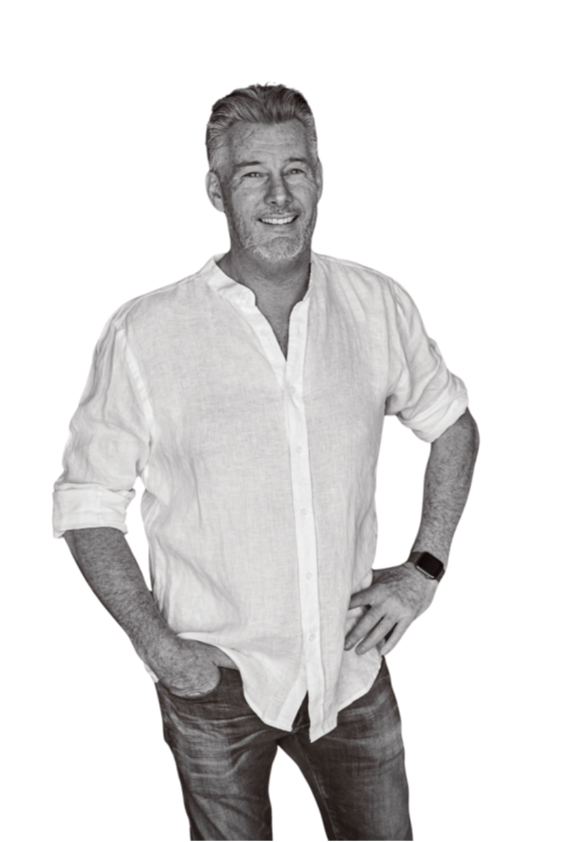
Builder, Television Presenter, and Mental Health Advocate
Barry Du Bois is a builder, television presenter, and mental health advocate whose life has been shaped by lived experience, not theory.
Many Australians know Barry from his television work on The Renovators and The Living Room, where his warmth and honesty made him a household name.
Over the past four decades, he has worn many hats, apprentice, builder, contractor, CEO, husband, and father, but it’s his personal journey through illness that has most profoundly shaped his perspective. First diagnosed in 2010 with a rare blood cancer, solitary plasmacytoma, Barry’s condition later developed into incurable myeloma in 2017. Since then, he has undergone extensive treatment, including surgery, radiotherapy, chemotherapy, and a blood stem cell transplant.
Barry is now an ambassador for the Leukaemia Foundation, advocating for better access to care and support for all Australians facing blood cancer. Through sharing his story, he encourages others to seek help and reminds people they are not alone, particularly when facing the silent pressures of illness, identity, and responsibility.
At his core, Barry is a devoted husband to Leonie and father to twins Bennet and Arabella. Today, through his work, The Art of Untangling Lives, he helps people navigate the challenges we often carry quietly, bringing empathy, insight, and humanity to conversations that matter most.
Summary
What you’ll hear in this episode:
- What it feels like to be told you have only months to live, and choosing not to accept that narrative
- The unseen impact of grief, identity, and “holding it all together.”
- Why human connection is one of the most powerful forms of support
- The difference between fixing someone and truly listening to them
- How resilience is built through adversity, not avoidance
Transcript
[00:00:00] We sat in front of three doctors and the very first doctor, the first thing she ever said to me, and I'd never met this person before in my life, she just looked at me and said, "Well, Barry, my best advice is to go home, tidy up your affairs, spend as much time as you can with your loved ones, you've got about three months to live." And I said to her, "Well, I'm afraid you don't know me and I don't know you. " But I said, "I'm stronger than that narrative and if you're not prepared to give me a little bit more latitude than that, I'd rather you leave the room. I'm not intereste ... Read More
[00:00:00]
We sat in front of three doctors and the very first doctor, the first thing she ever said to me, and I'd never met this person before in my life, she just looked at me and said, "Well, Barry, my best advice is to go home, tidy up your affairs, spend as much time as you can with your loved ones, you've got about three months to live."
And I said to her, "Well, I'm afraid you don't know me and I don't know you. " But I said, "I'm stronger than that narrative and if you're not prepared to give me a little bit more latitude than that, I'd rather you leave the room. I'm not interested in having you. If this is my team, I don't want you and the team.
Catherine: Welcome to Don't Be Caught Dead, a podcast encouraging open conversations about dying and the death of a loved one. I'm your host, Catherine Ashton, founder of Critical Info, and I'm helping to bring your stories of death back to life because while you may not be ready to die, at least you [00:01:00] can be prepared.
Don't be caught dead. Acknowledges the lands of the Kulin nations and recognizes their connection to land, sea, and community. We pay our respects to their elders past, present, and emerging, and extend that respect to all Aboriginal and Torres Strait Islander and First Nation peoples around the globe.
Catherine: Today I'm speaking with Barry Du Bois, a builder, television presenter and mental health advocate whose life has been shaped by lived experience, not theory.
Many Australians will probably know Barry from his television work on the Renovators and the living room, where his warmth and honesty made him a household name. Over the past four decades, he has worn many hats, apprentice builder, contractor, CEO, husband and father. But it's his personal journey through illness that has most profoundly shaped his [00:02:00] perspective. He was first diagnosed in 2011 with a rare blood cancer Plato Cytoma Myeloma Barry's condition later developed into the incurable multiple myeloma in 2017.
Since then, he has undergone extensive treatment including surgery, radiotherapy, chemotherapy, and a blood stem cell transplant. Barry is now an ambassador for the Leukemia Foundation, advocating for better access to care and support for all Australians facing blood cancer. Through sharing his story, he encourages other to seek help and reminds people they are not alone, particularly when facing the silent pressures of illness, identity, and responsibility.
At his core, Barry is devoted husband to Leone and father to twins, Bennett and Arabella. Today, through his work, the Art of Untangling lives, he helps [00:03:00] people navigate the challenges we often carry quietly bringing empathy, insight, humanity to conversations that matter most. Thank you so much for being with us, Barry.
Barry: Wow. That's certainly a journey when you listen to it like that, isn't it?
Catherine: I know we very, we very rarely, rarely hear our life told back to us. Do we?
Barry: No, it's interesting. It's interesting and I think it's some, it's quite cathartic. I mean, we do this as, you know, you, you, you're continually writing a bio for yourself, and I think it's cathartic. Even that part of it, just writing down your journey, it allows you to reflect on some of those moments and think about how you might have done things differently, how you could have done things maybe better and what good came of those things.
And I think it's really important to hear that every now and then.
Catherine: It is, it is. But you've had some, probably more profound moments than just writing your bio where you've, you've been forced to reflect. Can you perhaps talk us through what it was like with that, that diagnosis that you [00:04:00] first received?
Barry: The first one, yeah, it was a, it was a hell of a diagnosis. Interesting fun story in hindsight as well, if you're interested. I was surfing at Christmas time, I think it was 2010, the Christmas of 2010, 2011. And I went under a wave and the wave sort of clocked me on the side of the head, and I just got pins and needles right through my body.
It was incredibly painful, and I thought I'd done a really bad injury, and it didn't make sense either because the wave wasn't that big and it wasn't that heavy. And I was laying face down in the water and, and my body was in a, in a sense that I'd never felt before. And I thought, have I done something major?
Can I stand up here? Is everything all right? And after a few seconds, it felt like forever, that moment. But I, I stood in the sand and I stood up and another wave hit me and the pain was immense. I got myself to the shore and I just sat there waiting for my brother and my nephew to come in. And I said, I dunno, I've done, I've hurt my neck.
I can't move. I'm gonna go home and have a lay down. Well, [00:05:00] that was Christmas. And then in March. After going a physiotherapist and stuff like that, I finally got an x-ray. And um, when the doctor read the x-ray, she started to cry. She literally um, she said to me, have you got family Barry? I'd never met this woman before in my life.
And I said, yeah, of course I got family. What's wrong? And she said, well, there's this giant tumor at the base of your brain there, it's wrapped around your spine. And she said it's, it's effectively above her pay grade. And, um. that started one of the longest days of my life. I, I had to go straight to St.
Vincent's Hospital. I was connected with the right doctors and the right team of what I thought was the right team. And then by about five or 6:00 PM that evening, my wife who'd been by my side most of the day and been in tears most of the day. And I, we sat in front of three doctors and the very first doctor, the first thing she ever said to me, and I'd never met this person before in my life, [00:06:00] she just looked at me and said, well, Barry, my best advice is to go home, tidy up your affairs.
Spend as much time as you can with your loved ones. You've got about three months to live. I said to her, well, yeah, you, I'm, I'm afraid you don't know me. And I don't know you, but I said, I'm, I'm stronger than that narrative. And if if you're not prepared to give me a little bit more latitude than that, I'd rather you leave the room.
I'm not interested in having you in if this is my team. I don't want you and the team. And with the hierarchy of medicine she thought that was preposterous that I said that. And she sort of just looked at me across the desk and said, I'm not joking. I, I don't want someone like you in the room. And as she walked out, I said to the next guy um, you don't know my story but I know that I've come in here with a bad headache and I won't have anybody else narrate my story. I said, if you are prepared to do your best, I'm prepared to do my best. But, uh. not gonna give up because someone [00:07:00] believes a statistic that I, that I'm not interested in.
And that person and the next person. 'cause there was three doctors, they're still part of my team today. And um, you know, that was a, that was a, a polarizing moment for me. And, and it was a moment where the world changed, changed direction, if you will. and it was scary and it was exhilarating and it was, surreal all those things at once.
And yeah, so that, that's what happened. That was, that was the day I found out that I got cancer. And I've, I've talked to you about this in the past. None of us plan to get cancer, but I also don't plan to die in a hurry. So, just because, you know, just 'cause my, my narrative has got another word in it, doesn't mean I'm gonna change my plans to suit your narrative.
Catherine: That's really interesting that you, you took that stand, given the fact that you're obviously in that moment and you, you'd be probably suffering from shock, but where do you think that ability to actually have [00:08:00] that self-confidence to make sure that you were the one that was advocating for yourself and you were responsible for your narrative?
Because that isn't the normal story that we hear.
Barry: no it's not because we look at the world as a hierarchy as well, and too often we allow others to dictate our story. And it's really interesting for me, I've put a lot of thought into this in
hindsight, so I'll explain it in hindsight. You know, I'm dyslexic so I don't read and write very well.
Although I have gotten better Since I started writing and, and, and since I started TV particularly that medium is fantastic for, for someone like me you can just express thoughts and, and editors can capture those thoughts and present them beautifully. So, you know, I know what I wanna say inside.
And I, and I say it and, with the help of editing and stuff that can be a really powerful message. But my point for telling you about the dyslexia was that when I was going to school, I believed in my heart because my mom and dad were very [00:09:00] supportive. That I was smart and I was smart.
I was very smart as all children are 'cause we're developing When I try and write my thoughts down, the spelling and the grammar was so bad, it was hard for others to understand what I was trying to write down. so, and that used to be frustrating for me and obviously frustrating for my teachers because I sort of, in that system was labeled as a troublesome child.
I was someone who just didn't fit the mold that makes it easy for the world. And I had to learn to do other things to make up for that. And I learned that I wasn't allowed to say the way I felt. I actually wasn't allowed to express the emotion and the self-belief and the, and the other. Thoughts I had, I had to do my best to fit in that square box. I had incredibly strong parents who believed in our family and how special we were. So it was conflicting. Mom and dad are telling me you can do [00:10:00] anything you want, and teachers are telling me you are just an idiot. Literally in those days, that's what they'd say to you as well. So I had that but I had a, I had a dad who was, back in those days, I mean, you're a lot younger than me, but back in the days, like when I was growing up, the sixties and seventies, word, resilience wasn't a word. It was a way of life. And parents in those days, my mom made our clothes. My dad generally, or my grandfather and my dad built and, and our, our Christmas presents you know, so this is, we, I grew up in a family that had nothing but. Were blessed with everything because of love and ability to, not say no. So I had that but. Interestingly enough that that's childhood, and this is a long story. As I went forward, I, I, became an apprentice carpenter. I only had two choices. In those days. I had the choice of a apprentice c or apprentice mechanic. 'cause one uncle was a carpenter, one uncle was a mechanic. And
because I had no grades, I you know, that wasn't gonna help me out at [00:11:00] all. And so I became a carpenter, which was very creative for me and it was a great outlet.
I became very good at that. Very quickly, I found a real passion for design in that. And then I found a, because I had made so many mistakes, I found out a way to, like you as a producer would do just to create these lists and spreadsheets that I understood. Not everybody else understood them, but I understood them. And with that, I became a, a very successful. Businessman. I had a design construct and development company and I did really well at that. And I sort of, my inner strength, my self-belief that mom and dad gave me really started to mature and really started to come to the forefront. So I was every bit the hour for mail I think all men uh, wanna be, had a successful business. I had a beautiful wife. I was taking care of my parents. I was, I was seen to be taking care of everybody, and I really [00:12:00] loved that image. I loved the facade that I put up. Big, strong, powerful guy who could fix anything. And then what happened to me was um, I had a really bad accident, a physical accident.
I fell five stories off a building. I broke my back in three places. I broke my leg in a couple of places, popped the shoulder, broke these two fingers. So physical injury is something you can, if you don't treat it mindfully can really affect you. And I think you know that. I
mean, you've been through that yourself.
So that started to eat away at me. And because it, ate away at my strong. Beautiful facade that I'd created that started to emotionally affect me inside. So when people would say, how's your back? I'd say, my back's fine. Don't worry about it. I was in agony, but I was saying, don't worry about me. Not long after that my beautiful mom lost her, lost her fight with cancer in 2004. She'd been [00:13:00] fighting for quite a while. and again, that emotion of grief, I didn't handle that well either, because again, that looked like another dent in my alpha male status facade. And I wouldn't let that come in. I said, I'm fine. You know, I, I, I didn't cry at my mom's funeral. I refused to show the emotion it was inside. I think a lot of that came from my school days, but I refused to show that. And again, when you don't treat these things properly, though, I will start to eat away and you'll start a negative bias conversation in your own mind. And because Leoni and I had been married for a couple years now, we'd been trying to have children. And we were struggling with that. And we were, we'd had several attempts of IVF again, when you tell people you're pregnant and they're excited for you, and all of a sudden the picture looks perfect again, but then you have a miscarriage. And then for us, after, well, we had [00:14:00] 12 miscarriages, but after about six or
seven miscarriages, we stopped sh well, I stopped sharing that because again, it was more and more failures. You see what I mean? So. The facade looked really good, but on the inside I was getting beaten right up. And um, 12 months after mum passed away I was laying in bed and I heard that very familiar scream from the en suite. And I knew that the pregnancy we had going at that moment, which was, at that time we were 17 weeks with twins. I knew that was over. We'd listen to heartbeats and we'd looked at ultrasounds, but I knew that that was over. And again, rather than acknowledge the pain that there, I just kept ignoring it.
And, I won't take you too far into that, but in the end I crashed. That negative bias conversation took me to a place where I thought end of life was the best. Uh. It was gonna be the best thing for everybody around me. I, I didn't want them to see that I was failing [00:15:00] them. And, and I want you to understand this.
As an alpha male, I believed not controlling things that weren't in my control was a fault of mine. And I was taking, ownership of all these problems. I took ownership of my mum losing her battle with cancer. I took ownership of my wife miscarriage. I took ownership of Leone on the 12th miscarriage, getting cervical cancer.
And I just thought, it seems that everything you touch. It goes to shit. And you'd be better off and everybody around. You'd be better off if you just weren't here. So that's, you know, that's a really summarized version of a really dark time of my life. And thankfully thankfully a, a friend on the night that I had decided it'd be best if I took my life, someone contacted me and they wouldn't, they wouldn't let go, so to speak.
when they, um, were talking to me on the phone, my emotions [00:16:00] overcame me and they effectively just drove to where I was. And, I was so far down a, a dark hole. It wasn't funny. And by that person coming and, and insisting that we sit together and talk and, he and he just held me quite frankly.
Uh, that was the micro step it took to, to start building back my strength again. So I hope that's not too upsetting for anybody, but going to the depths of that type of depression and then having that first micro step out of that dark valley and then the thousands of micro steps that follow that, that's what gave, that's what gives me the resilience I have today. That's why when a doctor says, you are gonna die in three months, I can say, yeah, thanks for your opinion, but go away. I've beaten better than this already, so you don't know me, you don't know who I am. And um, that's where the resilience came from. It was a lifetime. We [00:17:00] all get our resilience from the way we approach adversity through our life. I approached it the wrong way for about three or four years, and that resulted in a really depressed state. And thankfully through human connection and care and conversation, I started my way outta that valley. And as a result, I like to think I'm an expert on leaning into adversity and creating resilience.
Catherine: Barry, how much do you think at that moment when you are sitting in front of that panel of those three doctors and you're told to, to go home and get your affairs in order, you've got three months to live,
Barry: yeah.
Catherine: given the fact that this was around about sort of seven years after your mom had died and that very dark period in your life, How much of the role of a support network provided you with a base to, to sit there and say that?
Barry: when I got to my [00:18:00] darkest point, I'd rejected all support. And this is what people that are going through mental health illnesses do or issues do they reject help. They think that everybody else just doesn't understand them. That's how I felt. I felt that no one understood my plight and they, they couldn't understand it because they're not me and they dunno what I'm going through. So like, as I said what saved my life that night, that Thursday night was someone reaching out. With a hunch that there was something more wrong than I was telling everybody. So was a micro step. I might not have realized it that night, but I do now. That micro step of human connection and I realize is so strongly now is the foundation for eternal strength. If you are connected, if there's someone standing beside you and you are connected to someone else, you are stronger than a single being. It's as [00:19:00] simple as that. And uh, so support it's not that I allow support network around me now. It's just a part of the, the pie chart of my life, you know, human connection, the curiosity to be better in every way.
That means be a better friend, be a better listener, be a better communicator, be a better father, be a better husband. That creates support within, within your own life. So, you know, yeah. All the, all the things that went wrong when, when mum passed away, when they only got cancer. I didn't accept help back then.
And I realized in hindsight and hindsight is a great thing that support for and human connection is one of the strongest medicines there are.
Catherine: And tell me, Leonie's cancer,
Barry: Hmm.
Catherine: how was that to be the one standing by besides someone else and supporting them?
Barry: Yeah, well, I've, again, I probably, I did, well, not probably, I didn't do anywhere near as good a [00:20:00] job as I could have. I just kept saying to her, you'll be okay. Where, you know, I explained it like this, and this will reference some of my courses. It's no sense to me telling you what I did, because what I did necessarily wasn't right, and it didn't help her that much, and it definitely didn't help me. But since then, and that's why I share what I do, I realize that there's three types of conversation. There's a social conversation as an empathetic conversation, as a solution based conversation. most alphas and most moms, most people who are carers, they want to go straight to a solution based conversation.
And that's what I did for Leone. What Leone needed from me was an empathetic conversation. She know I can't change. the fate of her cancer journey, all I can do is listen to how she feels and do what I can do to, to support her. What I did back then was say, what we need to do is this. I'm gonna take [00:21:00] control of that.
I'm gonna do this. Well, it's better off if the doctors do that and you support her with those things. Does that make sense to you?
Catherine: Yes, it, it does make sense to me and, and it's very typical of some of the stories that I hear.
Barry: Yeah. We, if you love someone, you wanna fix their problems straight away. Nine out of 10 times you will help a lot more if you just listen to them. And that's true connection. Listening intently, as you know, I'm on the board of directors of AO Okay Day, and it's a very important movement to me. And we say, listen. Your heart through your ears, and then offer support and and obviously follow up down the track there. It's a really important sequence of events.
Catherine: And so you mentioned there that perhaps what you've done in your guides and your talks and the resources that you've developed and provide now
Are based on that ability to look at your behavior and your [00:22:00] actions in hindsight.
Barry: Yeah. My lived experience
is the best lesson I can pass on. I, I, I frame myself as a modern day elder. I share the stories of my lifetime so that the young warriors, female and male warriors of our tribe can be better prepared for the hurdles that I know are gonna come their way. One in two people in this world are gonna get cancer. You know, I want you to be as prepared for that as possible. 'cause when, when my mum got cancer, and this is, this had had a profound effect on me. In hindsight, I can see that the doctors and the staff and everybody, and even our family to an extent just said, okay, they've said she's gonna die.
She's gonna die. I believe if my mom today got that cancer, there's no way she would die because so many people gave up on her. She just went on the tell, what do I call the tre later to, to death. You know what I mean? She just kept thanking everybody for, for her life. [00:23:00] And there was no sense that she would ever thrive again after treatment. In fact, I don't even believe the doctor thought she survived the treatment. So, um, it's just so important to have a belief system there that you can do better. And, and if you're forever being curious on how you can do better, you'll always do a little bit better.
It's as simple as that. Mm-hmm.
Catherine: Given the amount of insight that you have with your own personal experience through, you know, two different diagnosis, you know, obviously Leoni, your mom, things that you've experienced also, where you've, you've supported other people and you've heard stories. What are the gaps that you've identified Barry?
Barry: Yeah, I mean, that's a great question. And it's, it's obvious. Well, it's not, I was gonna say that, you know, somewhat individual, but it's not. The gaps are this, it's. The person that relays that information, relays that information every single day of their [00:24:00] life. The person receiving that information receives that information once, twice at best in their life.
And they haven't spent a second of their life preparing for it. which makes sense. I mean, who wants to prepare for a, a shocking diagnosis? But what I do is not in my guides, but what I do in my personal life, I say to myself every day this afternoon, if I have to step into the ring, am I prepared? And I will make time in the day. Might only be 30 or 40 minutes, but to, to do a couple of micro things that will make me more prepared if I have to get in the ring this afternoon. And as you said in, in some of the resources I offer, that's what I found is breath work really helps. Meditation, physical exercise, nutrition just simple mindset exercises. But as well as that is, is understanding your own personal [00:25:00] boundaries. Because when you, when you understand boundaries, you have a, a tighter group of people around you. They're not people that are there just to, to fill in numbers. They're there because they matter. And I think I think those top five people in your life are really important to have that, that top five, that, that know everything that's happening to you, and you can share the burden of the ups, and you can share the successes of the share the burdens of the downs and, and share, share the successes of the ups with those people, and they become closer to you and, and they like you become more prepared for whatever comes your way.
Catherine: Was that challenging for you? Because I'm assuming with your elevated profile comes a, a, larger pool of, of audience, of acquaintances a larger network. How did you, how did you work out who your five were? Barry?
Barry: Oh, you know, I mean our five comes naturally. And and it changes as well, it [00:26:00] changes through through life. That's a really good question you just asked there. 'cause I, I think about this and I, as you know, I, I talked to a lot of people going through different, different, journeys and it's funny how often I hear stories of toxicity with ex best friends. You know, she used to be my best friend. He was once my best friend. And isn't it funny because we we put so much onus on one person. Now I, I've got a best friend. Make no mistake about that. But you know when you are, I've realized now, I mean, I, I didn't have my children to, I'm 52 years old and I used to be that guy saying to my mates who have got three kids, when are we going out?
When are we going out? But I, the boys ask me now 'cause they're grandparents, when are we going out? I say, oh mate, you forget what it's like. The kids are everything to me. So when the kids are everything to you going out to the footy with your mates or going out for nights and, and that, that they're just not important.
So obviously things are gonna mold and change. But I wanna say this 'cause you asked the question, which is [00:27:00] different for me than a lot of people. My second cancer came along in 2017. And that was a shock, there's no doubt about it. because of my self-belief, I thought I'd beaten this cancer for sure. and when Dr. Sam told me it was back and it was a multiple myeloma, which is a lot worse than the original one, I was now a, a father of two beautiful twins. and I was in a place I was really enjoying. I was sitting alongside Amanda Keller on the living room couch, and I had my two great friends sitting in front of me and we were just having the best time of our lives making that show.
It's just a beautiful show. And, the second person I told about the cancer diagnosis was Amanda. And, um. she said to me, if you believe you're gonna be okay, I believe it too. She said, if it was anybody else, I wouldn't have the same faith, but if you say that you're gonna make it, I'm with you. So, and you know, we discussed then after that, sharing that with our audience because she said, [00:28:00] and I said it to her, this treatment is tough.
I'm, I'm gonna go to the, to the depths of the darkest depths, you know? And I said, but I am gonna come back and I'm gonna thrive again. And I said, I think this is something we could share with our audience and show them. I wanted to show them what, no one showed my mom that you can get cancer and you can live every day of your life. The best way you can live it. You shouldn't live it thinking you're about to die. No one has the right to tell you that I don't care if it's a week, a month, or 10 years. If you believe that you are living your best life for that amount of time, you live your best life. And that's what I wanted to show the audience. And we're a little bit nervous at the start and I announced that live on tv. And a, a beautiful, a really beautiful thing has happened to me ever since that moment. It wouldn't go a week in my life where I [00:29:00] don't have people come up to me in the street or send me a message or, or a Facebook post to say, my dad was going through cancer while you were on tv. And every week you showed up. It gave him strength or it gave her strength. And that's an incredible gift to be given. To be told by people that you empowered their journey. And so many of 'em say he's, they're, they're thriving now. they wouldn't have believed they could have, but you gave them that self-belief.
So, you know, you're right. My network is huge. I'm, embraced and I embraced hundreds of thousands of people that are going through a similar journey to mine. And thankfully up to today, I've lived every day the best way I can. and I've shared that journey so that others can believe that they can do the same.
Catherine: I remember that moment that you spoke about your return of your cancer on the living room.
Barry: Mm
Catherine: That was [00:30:00] such a powerful moment in television history.
Barry: Yeah. It is. And it's interesting. I get emotional talking to you about it now. And it's funny, back in 2006 when we were going through those miscarriages and my mom's passing and leone's cancer, I didn't get emotional like this. And something I wanna share with your listeners is that I'm much stronger alpha male now than I was not.
'cause I'm vulnerable, I'm not even fussed on that word, vulnerable, but because I'm brave enough to share my emotions. and I think that's a really important message, particularly for men, but for women as well. Bravery isn't h hiding your emotions. it's sharing your emotions and you need resilience and, and through sharing comes resilience.
And, to gain resilience, we have to learn lean into things that are tough. There's no doubt about it. We've got, you know, before TV or any of these things the two things I was scared of was failing and public speaking. Now I speak [00:31:00] most days about failing and how that empowered me.
Catherine: And what's interesting is that you talk about the fact that the two things is failure and public speaking, but the one thing that's remained at the core is the ability for you to actually have hold of your own narrative and the direction that it goes.
Barry: Yeah. Yeah, definitely.
Catherine: And tell me how was, if we can just step back to the fact that, you became a dad at the age of 52,
Barry: Mm-hmm.
Catherine: how did you and Leone have the courage to decide again to try to become parents?
Barry: Yeah. Well, Leoni never gave up. Leone's the most resilient woman I've ever met in my life. She's a rock. she believed in us even when I didn't. She believed in the strength of us, and through that she stood beside me. To give me the [00:32:00] strength to try again. And after our 12th miscarriage, we only got cervical cancer, so we lost the ability to naturally have children or what's the word for it? Common way. We went on the adoption trail for a couple of years but because Leoni had had cancer, that was never gonna happen. They weren't gonna allow us to adopt. And then we discovered surrogacy and interestingly enough we had seven attempts of surrogacy as well. And each hurdle, each heartbreak, each emotional letdown just gave us more resilience.
And, um, we knew, we knew how hard it was, and we knew we could take it. So we tried again. And yeah leaning into adversity gives you the muscle of resilience and that gives you the strength to live and all those things and a whole lot of love and a whole lot of support. The result was my Beautiful Twins.
Catherine: [00:33:00] And you've turned this lived experience, not only into a story that you tell others that, so other people can learn from your experience, but you've also developed some really insightful resources that give insight that don't normally, you know, get discussed. So the ones that I'm specifically referring to is, you know, the caregiver's compass.
So that's obviously
Barry: That's a free resource Yeah. On my website. Yeah.
Catherine: That's looking at it from a caregiver's perspective, which a lot of people forget in the equation.
Barry: Yeah. Well, well, that's what I was effectively as a caregiver, and I failed because, you know, I, I did, I didn't set boundaries. you know, and that's what the caregivers Compass is all about. It's just understanding that you need to give yourself some love. You need to fill your own tank because you can't, you, you can't pour from an empty cup. So, setting boundaries, giving yourself moments of kindness and self [00:34:00] love, understanding the difference between not working and failure. There's a whole lot of things there and I, I do a lot of work with the caregivers gateway through Benevolent society as well. They're incredible people, just magnificent people. and because I get to meet so many carers, so many of them are burned out and exhausted. That's not helping anyone. And so many of them were like me. It's that they want to control everything and they want to, they want to be the key helper. Having someone else help isn't a failure. It's just lessening the load on both of you, therefore increasing what can be done and the benefit of the person that you're caring for.
So that's the caregiver's gateway. The other, I've got a couple more, I'll, pitch 'em now, if you will, but it's the Cancer Patient's Guide to Parenting. I've said this to you in the past. I know that no one plans to get cancer no one plans. So they, they haven't got a roadmap for [00:35:00] that. And I know what it was like the second time when my, my kids Were a part of my life then, and I was gonna have to go home from the hospital and then navigate explaining that to them, that dad was gonna lose his hair and dad was gonna have to spend a month in hospital and they weren't gonna be able to visit him and stuff like that.
And, and working with psychologists on that particular one. And other parents, because I coach a lot of people going through their own cancer journey. You know, it's different when, for teenagers it's different for, younger children. And you've gotta learn how to speak on their level at those, at those points, making sure that they're not, getting information that isn't gonna help the situation. Like, yeah there's no sense. Explain to your kid that you've got a Plasmacytoma Myeloma or multiple, multiple myeloma, no daddy's sick, and the doctors are gonna give him some medicine and he's gonna spend some time in the hospital where [00:36:00] he is safe you know, and, and how to, how to speak to those things.
We all have our own language, but I just set a guide for that. I've also set a guide that that I think is really important if I will, you know that I call it the big C as the preparation from. You know, the first 30 days you, you've been diagnosed and just simple things at the back there. my, my daily steady session, you know, it's what will I do? Who, what will I focus on today? What's one small action I'm gonna take to steady my mind? What's the one thing I'm gonna do , to support my body today? Because it's so easy to go down this negative bias track of what's it matter. I may as well eat rubbish now. You know, so many people I've, I've heard they, indulge in all the things because they believe it's over. but no, we don't indulge in those things and we prepare ourselves. We're about to go through the hardest treatment you're ever gonna go through. So now's the time to get ready.
[00:37:00] Who's my support group? Who's gonna come with me to the doctor in here? Just a simple thing as well. Just a list of questions. The amount of times that I walked out of the doctor surgery, Leon and I were on the way home when she was going through cancer, when mum was going through cancer, and when I was going through cancer.
I, I was, I wanted to ask him about that. Remember we said we were gonna talk about that. Just simple things like that. So in the, preparation for treatment, I've, I've got areas where you write those questions in and the doctors are happy to share that information as well. That's a really important one. And yeah, I've got my signature course is The Five Days to a Calmer Stronger You, and that, that's a, bigger course and that's a paid course, but that comes with a whole bunch of videos, comes with a workbook and just allows you. First and foremost, to set your own boundaries to support yourself with love and kindness to become mindful. Uh, There's a guided breath work in that as well. [00:38:00] There's a whole bunch of stuff. If you go to the website, and I, I think I mentioned to you I will drop a code in your um,
Catherine: in the show notes. Yeah,
Barry: in the show notes there. So, and they can get a bit of a discount on that stuff.
Catherine: that's very generous of you, Barry. But what strikes me is that you've provided support guides in areas that aren't normally spoken of. You know, recognizing the important role that. Unpaid care has when something like this happens and how there's very little support for people who are, you know, the one that is the unpaid carer that's supporting
Barry: Yeah.
Catherine: And the other thing is, is the fact that that continuity of care from, you know, that moment when you get that diagnosis and you're sitting there in front of those three doctors to the days, weeks, or months that comes after waiting for the treatment appointments.
Barry: mm And, and yeah, I mean, there's so much we could talk about that. I mean, [00:39:00] the amount of times that I've had these meetings with doctors and I'll walk out and I dunno, a thing they've said, I, I can't remember a single word. I dunno what drug I'm gonna be on. I dunno. I know he said something about the 15th of April.
That's what I know. You know, your brain isn't wired to take that sort of information. And so, so I know that but it's also um, just why you were saying that, and this is also important, you know, my mom was a gem. It was so funny, you know, if she. She didn't care how much she did for someone else just so long as she was doing something for someone else.
That was a, a real key part of her life. And I remember she started up the cancer support group in Sussex Inlet where she, where she lived. And she just created a, a network where if you had to go to hospital for a treatment or whatever, there might be someone who can drive you. And that might be that opportunity for that partner to have a break from it.
Do you know what I mean? So [00:40:00] it is just thinking about that. And the caregivers gateway, they do so much of that is just help with transport so that your primary carer can get a break, you know? It's stuff like that.
Catherine: And it seems to be that at the, the center of all of the resources and your experience that. It seems to be making sure you ask the questions and you have informed
Barry: Yeah.
Catherine: resources, support networks around you. What do you recommend to someone if they find themselves in a situation where they are diagnosed?
You look at life in a very holistic manner in how you look at it.
Barry: Mm-hmm.
Catherine: What are the first, you know, few things that you'd suggest to them to do?
Barry: Oh, well, it's, it's all there in the guide, of course, but it all comes down to this forever. Be [00:41:00] curious on how you can do better. I'll say to you now, openly breath work to me is something I do breath work at least 15 times a day. It's just a three minute breath work. I did it before we did this podcast.
I'll probably do it after this podcast and I'll make some notes after I've done the breath work. But breath work, nutrition is incredibly important when it comes to cancer. The treatment for cancer is horrific. So get your gut in the best shape it's in, because the better shape it's in, the better it's gonna come back after the treatment destroys it, because that's what's gonna happen. The treatment for most cancers destroys your gut health. So you as a holistic human won't be able to fight the cancer until your gut is in. Its back into fighting mode, back ready to get in the ring again. So the better it is before you go into the treatment, the quicker it's gonna be for you to get back where it's gotta be again, just. Lean on your support group. Let them [00:42:00] know that any help is, is good help. and just take notes for everything. I mean, those three, those four things are, are really basic, but they will go a long way. But, but without doubt, and this is the main thing, and, and, and I really want to look straight at you when I say this. Believing you are going to thrive after the treatment turns this really negative moment into a stepping stone, to a positive place. It doesn't matter if it's a year or 10 years. Live every second the best way you can. Living, loving, caring for yourself, caring for others with empathy and joy and love, and. Whatever the length of your life, you're gonna live your best life, and that's all you can ask for.
Catherine: I think that's really beautiful, Barry. When you refer to getting in the ring,
What are you [00:43:00] referring to?
Barry: Just that every single day. I've, I've been a competitor my whole life. I've stepped into the boxing ring. I played footy. I was an athlete. And Larry Bird, the basketball player, said that you, you can't go and uh, practice hoop Saturday morning for a game, Saturday afternoon every day, and this is the gift of getting cancer. See, I say it like this, we're all living. In the river of life, we're all floating down this river of life. Sometimes you go over some eddies or rapids, maybe you go over a bit of a waterfall. Sometimes you're in these big beautiful lakes and the sun shines just shining on you and it's perfect. Some other times other people are in the river with you. But what happened to me when they told me I had three months to live, what I got to see, and I wish everybody could see this without having to go through what I went through, but what you see is what I call the waterfall of mortality. I see when I get to [00:44:00] that point, that lady said it was 90 days away, I'm gonna go off the edge and there's no coming back. So what you do is you start paddling backwards as hard as you can. Now, you can't fight the rapid, so what you do is you look for things that is just gonna give you one extra meter. You look to get rid of things that aren't helping you fight the current. you look to spend time with the things that give you the most joy and those three basic things. but, you know, just understanding that this is a river of life and you know, what was your question again?
Catherine: It doesn't really matter, Barry, because you lost me when you actually gave me the waterfall of mortality and you, you had me on the raft because that is an amazing and very beautiful
Barry: That, that, that
sort of how to be, getting into the ring is what you said.
And so so what I say for, for me, getting in the ring, what that means every single day, I, I push myself into some [00:45:00] adversity. Because you know, if you don't lift any weights, you, your arms aren't gonna get any bigger. If you don't face adversity, your resilience won't get stronger. When you step into the ring. If your resilience is at its best and you faced a whole lot of adversity, even money to beat the champion. You know, if you are at your best, you've won the fight. that's my opinion. So, so breath work, food. These conversations mean so much to me too because I hope that out of this conversation it'll strengthen my society a little bit. And when you've got 13-year-old twins and you live with a blood disease like I do, I'm not gonna be around forever. I know that. So every day, one of the little things I do, apart from my breath work, apart from my nutrition, my exercise, I try and strengthen my society so that my children will be able to. Grow up in a society that they can thrive in. Even if I'm not [00:46:00] here, see, if I'm not here, I want to know, like if I'm on my deathbed and I think, you know, I, this society is terrible, is not the best it could be because I didn't work on it. I'm letting them down. So it's just all these little micro, micro things.
Like I said, talking to you is a micro step forward for future of my children. So that gives me strength.
Catherine: That is a beautiful way to look at your legacy, Barry.
Barry: But we all, we, we, we can all leave legacy. And I think it's important to leave legacy as bigger or smaller as it is. If you've done something good, it's not a hard investment, is it? You know, I even say this, I smile at people. I smile at just about everybody that goes past. It's a tiny little investment. And then. Eight outta 10 times, someone will smile back to me. That's a great dividend. I'm an investor, so I invest in really easy things for simple returns. Talking to you is a simple investment and it'll give a beautiful return of a strength in [00:47:00] society. Hopefully someone's listening to this might be going through their own journey and they think I can do this 'cause he did it.
You know, it doesn't cost me anything. And I, and, and I think monetarily or holistically, there's a great return.
Catherine: Well, I think that your story has really provided such insight to a side of life that we don't normally get to experience. And also, you know, a side that has been very publicly displayed in, in sometimes your very worst moments. So thank you so much for spending time with us Barry.
Barry: It's a pleasure. I will say this because you just triggered me there. If everybody was told I had 90 days to live or ask yourself, if someone told you you had 90 days to live, what would you do differently? Because that's what you should be doing. That's how you should be living your life.
Catherine: I think we couldn't end the conversation [00:48:00] any more powerfully than just that. Thank
you, Barry.
Barry: Thank you very much. Good luck to everybody.
Catherine: We hope you enjoyed today's episode of Don't Be Caught Dead, brought to you by Critical Info. If you liked the episode, learn something new, or were touched by a story you heard, we'd love for you to let us know. Send us an email, even tell your friends, subscribe so you don't miss out on new episodes. If you can spare a few moments.
Please rate and review us as it helps other people to find the show. Are you dying to know more? Stay up to date with. Don't be caught dead by signing up to our newsletter and follow us on social media Head to Don't Be Caught dead.com for more information and loads of resources.
Read Less
Resources
A little extra support for our listeners
If this conversation resonated with you, Barry has generously shared a range of free resources to help you feel more prepared, less overwhelmed, and supported through life’s more complex moments.
His work through The Art of Untangling Lives focuses on preparation, legacy, and easing the burden on loved ones.
Barry also offers a short, practical online program, 5 Days to a Calmer, Stronger You, designed as a gentle starting point for people who may appear to be coping on the outside, but don’t always feel that way underneath.
You can explore his resources at: barrydubois.com
As a special offer for our listeners, you can use the code BAZ10 to get 10% off his paid courses and guides.
Barry is also releasing a new guide, “The Big C: Preparation for Treatment”, which supports individuals navigating a cancer diagnosis and the steps that follow.
Follow Barry and continue the conversation:
Instagram: @Baz_DuBois
Facebook: Barry Du Bois
- Make Death Admin Easy with The Critical Info Platform
A simple system to sort your personal paperwork for when your information becomes critical.
- My Loved One Has Died, What Do I Do Now?
Our guide, ‘My Loved One Has Died, What Do I Do Now?’ provides practical steps for the hours and days after a loved one's death. Purchase it here.
- Support Services
If you're feeling overwhelmed by grief, find support through our resources and bereavement services here.
- Support the 'Don’t Be Caught Dead' podcast with a one-off or regular donation to help Critical Info, a certified social enterprise, keep creating free, high-impact conversations about death, grief and planning—every contribution fuels our mission to reduce the burden on families and build a more death-literate, compassionate community. Donate now.


Share