Episode Highlights
Nikki Domeney: But the more that I, realize that we're not just, our sk- skin color. So there's a beautiful thing, I don't know whether you've seen it, where it looks at the teabag. The teabag is, you put tea in a, in water, it's always black. Then if you put a little bit of milk on there, it might look caramel and then, you put more milk in there and it's white, but underneath the essence of us is still Black.
Nikki Domeney: collaborate with So they walked in. We, the next minute we're yarning, the four of us, my daughter and I and the, the two of them just...
Nikki Domeney: And I'm actually giving them back the stories that they didn't know about Aunty, the- that was her auntie and my mum she didn't get to. And I'm looking at this woman, and she looks like my mum and yeah, it was just a really profound moment.
Nikki Domeney:
Nikki Domeney: I remember each morning we'd come back and have reflection, and this one morning I was able to say, "I feel like I've been able distinguish between what my grandmother's grief was, what my mum's was, and what mine is."
Nikki Domeney:
Intro
Speaker: Welcome to Don't Be Caught Dead, a podcast encouraging open [00:01:00] conversations about dying and the death of a loved one. I'm your host, Kathryn Ashton, founder of Critical Info, and I'm helping to bring your stories of death back to life. Because while you may not be ready to die, at least you can be prepared
Speaker: Don't Be Caught Dead acknowledges the lands of the Kulin Nations and recognizes their connection to land, sea, and community. We pay our respects to their elders past, present, and emerging, and extend that respect to all Aboriginal and Torres Strait Islander and First Nation peoples around the globe
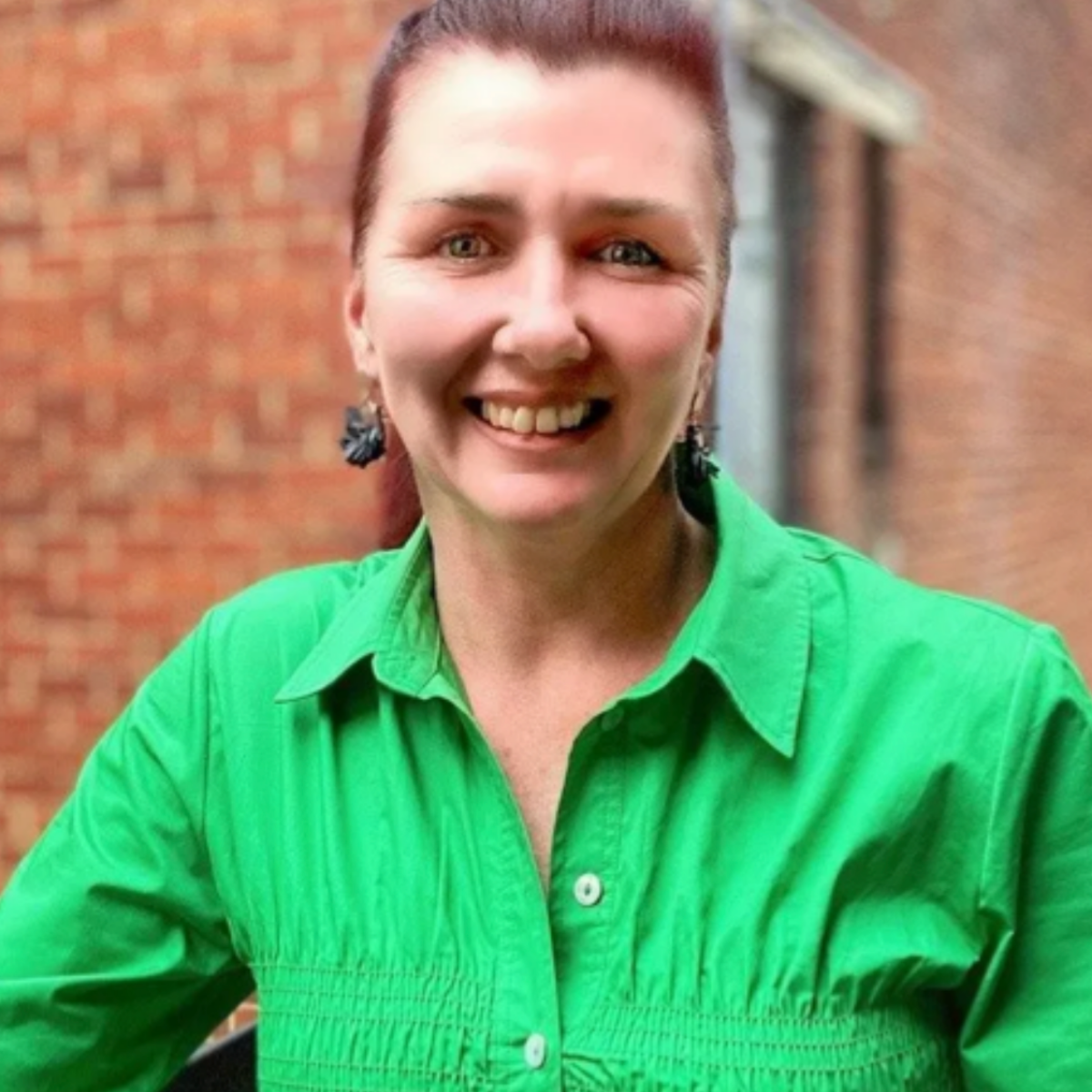
Catherine Ashton: Today I'm speaking with Nikki Dominey. Nikki is a project coordinator at Social Engine, a Melbourne social enterprise supporting vulnerable young people into employment, and sits on the board of Black Duck Group, an indigenous-led organization providing young Aboriginal and Torres Strait Islander people with pathways to thrive through [00:02:00] mentoring and tailored programs.
Catherine Ashton: She brings more than two decades of experience in people, culture, and coaching to her community work, with a particular focus on trauma-informed practice and wellbeing. Nikki describes her own heritage as being both indigenous and Celtic, and her work sits at the intersection of culture, healing, and connection to country.
Catherine Ashton: She has a strong interest in Wayapa Wuurrk, an earth-centered wellbeing practice grounded in indigenous knowledge that uses storytelling, movement, and mindfulness to help people reconnect with the land, community, and themselves. Across her various roles,
Catherine Ashton: Nikki's focus returns again and again to belonging, identity, and what it means to walk between cultures and generations. Thank you so much for being with us today, Nikki.
Nikki Domeney: Thank you, Catherine.
Catherine Ashton: So Nikki, we met at a Frankston Social Enterprise event a few months [00:03:00] ago, and you had started to tell me about, your story about being in between two sort of, heritages.
Catherine Ashton: you had started to describe to me your, particular heritage, that are bridges between Indigenous and also Celtic. Do you wanna tell us a little bit about
Bridging Two Cultures
Catherine Ashton: that?
Nikki Domeney: Yeah. and the, the bridge is an interesting thing 'cause, I feel like there's many brid- bridges. And I think, I gravitated to, towards your your way on that day because of what you were endorsing around, exploring grief and things like that.
Nikki Domeney: And so yeah, with identity and shedding identities and walking those bridges and choosing which bridge you're gonna go on, it is actually grief. There's grief that's unraveled in all of that. having unpacked a lot of, intergenerational work, on myself personally, and then helping others, in a mental capacity in my roles, I've e- even so I've worked with Social Engine with the refugees, but I also work with [00:04:00] Indigenous people.
Nikki Domeney: and then also understanding, as you said, the Celtic route, where all of us have had experience of being displaced at some point. And so there's some characteristics within trauma and then their grief because of, the paths that we've walked. And the bridging bit is really around how we can talk about these lived experiences in a way to support each other's journey to, I would say self-sovereign and how, we identify, Interestingly enough, I was talking to my sister on the weekend, and she-- We've got Scotland in there as well, Scottish, and, she was saying that she resonates more with the Scottish part and I the Irish part. Yet fundamentally what I know deep- the more that I do this work on my Indigenous heritage, I've always felt that there was, something unknown.
Nikki Domeney: 'Cause part of the Stolen Generation, my mom and my grandma, so only found out f- about fourteen years ago and, have really just been reclaiming that culture and what was stolen. But with [00:05:00] that comes letting go of things, and that means circles of people that you thought were your circle of influence or the people that would lift you up, and then all of a sudden you're in situations where you kinda don't know whether they're getting what you're going through 'cause yeah, it's unpacking a lot and yeah, I'm noticing that in all avenues of my work at the moment.
Catherine Ashton: And that's a, a term that people may not be familiar with, and if you can just explain it. the, self-sovereignty. What do you refer to when you talk about
Self-Sovereignty & Identity
Catherine Ashton: that?
Nikki Domeney: It's returning to yourself and being advocate for yourself. in a world that's really loud and telling us how we should be, or how we've been conditioned as we've grown up, it actually
Nikki Domeney: You get to a point where you realize that's actually not the core of who you are. Not all, but I work with a lot of individuals who on their cultural path trying to work out what it means to them. another example, I went on country with my daughter at the beginning of the year, which was a really profound moment, and it [00:06:00] was a kind of, way of me helping reclaim what was stolen, being supported on country, and then saying to my daughter, "It's really good to know where you've come from to know where you might want to go."
Nikki Domeney: It may not inform you. It might inform you that you don't want to go down that path. You don't identify as indigenous, that doesn't resonate with you. But as a little girl, I always had this feeling of something. I saw the world from a lens that I didn't have a, a kind of anything to bounce off because I wasn't brought up with country and culture.
Nikki Domeney: But that, that's what underlining when I'm in these places. So for me, my own journey of that is, who did I try to be to fit into society or the pressures that you have from, family members who see you a certain way to actually reclaim the version of me that I missed out on.
Nikki Domeney: and if I can do that work with especially young people, to have the capacity and the tools to determine that sort of thing for [00:07:00] themselves, I think the greater we are, at supporting one, one another in terms of that inclusive and diversity piece, whether it's in business, community, home. Yeah.
Catherine Ashton: And tell me, you as a young child felt that you always s- you describe it looking at it through a different lens. When was it that you discovered that you had that indigenous connection and how did it impact how you viewed your identity and your life prior to that? Like- talk us through
Discovering Indigenous Heritage
Catherine Ashton: that.
Nikki Domeney: Yeah. It was an interesting time. I was at a bit of a crossroads. I found out probably about 18 months before I actually, se- made, separated from my, son's dad actually. And I say that because I was already starting to recognize that I was trying to fit myself into something that actually wasn't, wasn't supporting that sovereign, journey for myself.
Nikki Domeney: for me, I found out about my, indigenous heritage and learned that my mom had connected with my mob about 18 months before she passed. [00:08:00] And, I ... It just, there was this moment of clarity and, oh, like that makes sense. That really makes sense. However, it wasn't linear. It wasn't like all of a sudden I was racing to try to claim that.
Nikki Domeney: there was this confusion around what were my ... what I was entitled to in terms of, I hadn't been brought up with the same challenges that people who have been on country. the fact that my skin is- doesn't look indigenous. there's a whole lot of those things that I had to unpack myself to, to get to the point.
Nikki's Mum & The Stolen Generation
Nikki Domeney: And so I met my g- my, mob on my mum's deathbed. and I was newly single mom. I had my two children with me. and- But yeah, through that process, interestingly enough, just before mom passed away, we had this call from my sister. the four, four of us got on a call 'cause my dad, my stepdad said, "Oh, look, I think th- this is serious this, this time."
Nikki Domeney: So mom was sick, and with, I think sick, she was disconnected from c- culture. she didn't know her mom, [00:09:00] so she had trauma and, she had some physical ailments that meant her quality of life had been, reduced because of these experiences. So anyway, she-- we get the call from my stepdad and he says, "Okay, I think this one's serious."
Nikki Domeney: So we're on the call with my three siblings, and my oldest sister says, "Nic, can you stay on the line?" As, as we were about to close the call, and I said, "Sure." And then she just said to me, " Is this happening?" And so she's five years older than me, and in that moment, I, in reflection, what I realized was that she had always relied on that spiritual part of me, this intuitive part of me that kinda knew, and she was seeking guidance from her kid sister as to whether this, this was the end for my mom, this was when she was passing, and I knew it wholeheartedly.
Nikki Domeney: But I grew up as a little girl having that kind of wisdom and intuitive knowledge, and yet had nowhere to put it. So to reclaim that and now be in spaces, going on country and being s- celebrated and take this knowledge and take it back has been like the [00:10:00] profou- like a feeling of coming home.
Nikki Domeney: So i- yeah. And I feel that there's a lot of people feeling that displacement, what- what, whatever culture. I've-- And some of the work that I do with The Way Up, in particular, I've had amazing, participants who have done that, that have been able to connect to parts of themselves in a different...
Nikki Domeney: From, India or, they could, they can identify with an element that brought them back to what they knew, but then they're also reclaiming what, w- what sovereignty looks like for them here in Australia. So yeah, that's a bit of my
Spirituality & Connection to Country
Nikki Domeney: journey.
Catherine Ashton: And so talk to me about, the sort of level of spirituality that you felt that had clearly your older sister had identified in you early on.
Catherine Ashton: and how do you think that has changed as you've gone through the work and especially Wayapa as well?
Nikki Domeney: Yeah. So I ... when I went on country for the first time, I wasn't actually sure. I didn't wanna put any expectation on this idea that I'd feel different. people that I know that have been on this journey have said [00:11:00] that you will feel different, but I just went with a real open mind.
Nikki Domeney: And then when I literally put my foot on the dirt in Dirbandi where my mom, my grandmother's birthing tree is, and the, the ceremony where it took place, where the burial ground and all that, and my cousin actually saying, "Can you ... Do you feel different?" And even in that moment when she was asking me, she was kind of-
Nikki Domeney: allowing me to actually feel, and I did. I felt this real connection to the earth. And so all of a sudden, this sense that I had as a little girl didn't seem like it was, was weird, 'cause I grew up thinking I had two heads, 'cause I had nowhere to put it. And so here's my cousin giving me permission to ask me to connect to that earth, and to tell me what she felt, what I felt. And so in that moment it was like, yeah, coming home. And so with the Way Upper work, what's really beautiful is, it's an earth mindful connection practice.
Nikki Domeney: So the, we- there's a lot of mindful practices out there that I just, I endorse and I also practice. but there's something [00:12:00] about, the, the capacity to use these elements from, being the tree with solid roots and then, the trunk and feeling really solid and then just feeling that connection to earth.
Nikki Domeney: and then, one of the other things, like I was just sharing recently, I'm in... I live in Brunswick, and it's, quite built up and, we... There's this, childcare center up the road, and I've just walked the dog, over the course of maybe eight months, and there's this tree, little branch that was sticking out of the side of the building.
Nikki Domeney: And each time I go for a walk, what I'm noticing is that tree is actually growing outside of... it's gotten bigger and bigger. And in those moments it helps me connect to the fact that we are larger than the fear that we have around climate change. I'm not saying that's not real, but it's it mirrors back to you the resilience Mother Earth, Father Sky has.
Nikki Domeney: yeah, and I think I always had a deeper connection to those things, so it's just helped me return to it and help others
Catherine Ashton: You described it then as two
Distinguishing Intergenerational Grief
Catherine Ashton: heads
Nikki Domeney: Yeah. [00:13:00] Like weird. Like, why do I feel different? why is it that... I grew up in, Wyndham Vale, which is, in Werribee, and it was a little, it was a little s- little suburb at the time.
Nikki Domeney: and yeah, I just always had this feeling that, there was something more, and I would say that to Mum. And, the beautiful thing that happened when I was doing the Way Upper, facilitation, I remember each morning we'd come back and have reflection, and this one morning I was able to say, "I feel like I've been able to, distinguish between what my grandmother's grief was, what my mum's was, and what mine is."
Nikki Domeney: It was like something parted ways in the, in this work that we were doing. And not, no one in that room looked at me like I had two heads. They were just, nodding, like they understood that's actually, part of, yeah, that, celebrating and, recognizing that spiritual part of myself and
Intergenerational Trauma & Epigenetics
Nikki Domeney: yeah
Catherine Ashton: Because we know research clearly tells us, and also the work of epigenetics is always actually telling us more things as we, [00:14:00] we evolve, that intergenerational trauma is a thing.
Catherine Ashton: It is real. It is something that you can feel, and it does change your genetic makeup. And so when you had this moment of clarity distinguishing the trauma that your grandmother, your mother, and then yourself experienced, is that something you can elaborate on just to give us some insight to that?
Nikki Domeney: Yeah. So what I'm loving is the, the more that I do this more work, I'm also doing some work with, a company called First Nations Incursions. it's an anti-racism grant, workshop for teachers to help them, navigate around this climate of, racism and how, Yeah, and so I'm try facilitating that with Gundagurra and Uncle Mark Brown, and, it, that's one of the topics, and so i- it's...
Nikki Domeney: your... Yes. I can't... Your nervous system is re- goes back to, if you have a look, there's some, some research that sugg- suggests that I was in my grandmother's womb, so [00:15:00] I therefore, because I was in my mom's womb, and then the seeds are... that by, way of, the DNA has impacted my nervous system.
Nikki Domeney: And knowing that has actually been really validating because it means that I have now strategies to deal with that. in Wayapa we talk about the, as being cellular memory, so there's a, there's this beautiful thing about, the eel, for instance, that, that travels up from the south to the north, has its babies, and then those babies, without the guidance from the mom, knows how to make its way back.
Nikki Domeney: So we all have this beautiful gift. So there's intergenerational trauma, but there's, some beautiful qualities around that as well. What I do know is that I've done quite a lot of work to try to say, "It stops here with me," so my children don't have it. But the reality is it sits in our bo- bodies, like it's thousands and thousands of years.
Nikki Domeney: So most of us are carrying some sort of intergenerational, I'm gonna say trauma, 'cause I think there's a lot of us that are [00:16:00] navigating unconsciously those sort of things that are in our nervous system. So it affects how we ch- show up every day. And now that I'm more aware of it, and we're having discussions around it in forums, normalizing it, it just leads to capacity to, to be kind to it, to actually understand where it comes from.
Nikki Domeney: Yeah
Catherine Ashton: Because when you think about it, it's like having an inherited medical condition
Nikki Domeney: Exactly the same. But yeah, Western medicine didn't necessarily look at it that way. But as you said, there's so much more going on about it. so it is. it's in- invisible, it's not, something that you can tap into.
Nikki Domeney: So that's the other reason why it's really important to know where you come from, to help claim where you want to go with it. because yeah, it's a real thing. Science is backing it up
How Nikki's Mum Found Her Family
Nikki Domeney: now.
Catherine Ashton: And Nikki, your mum only found out, a short time before she died where she came from. do you mind sharing that story with us and how she found out?
Nikki Domeney: Yeah. So it was just by chance. my [00:17:00] brother-in-law was doing our family tree and, he just was able to piece it all together and then share that with Mum. But then he then went on to actually try to contact these people, and through Facebook. So social media has its place and, he was, he was received really well.
Nikki Domeney: my, my cousin, was like, "Yeah, I know who she is. I know her, mum." And so that was happening in the background. So she sh- They're all up in Queensland. So yeah, they came to visit Mum a couple of times. and sh- for her, I think it gave her a sense of clarity, she grew up not knowing why her mum had left.
Nikki Domeney: we believe it's suicide or, an overdose, but we're on that journey. She's got an unmarked grave in Tasmania, which I've visited a couple of times. So for her, I think before she passed and having them on, on Mu- uh, you know, as she passed, was [00:18:00] such a beautiful kind of way of her being held by her ancestors as well.
Nikki Domeney: yeah, it was actually very significant and again, can't help but feel like the ancestors were up there, l- leading her home and yeah. It's pretty, pretty profound I think she was at peace.
Catherine Ashton: And so prior to this research that was being done into your family history, did your mum have any idea where she'd come from?
Catherine Ashton: Did she have any connection with, direct correct connection with her
Nikki's Grandmother's Story
Catherine Ashton: mother?
Nikki Domeney: No, and it's really interesting 'cause if... We used to think that Mum, because she had this dark skin, and we couldn't place it, 'cause we just thought we had Scottish and Irish. but here she was, with this, this, this brown skin and we...
Nikki Domeney: Yeah, so she had no, no, no idea. She never mentioned that she felt a thing. But I used to say to her, "I feel a thing without knowing." And she goes, "I know." [00:19:00] But still that was it. But I think it was quite, traumatizing for her 'cause sh- yeah, she was brought in and out, brought, brought up by my grandfather, but he was, He was a sailor, so he was away a lot of the time.
Nikki Domeney: So she was pretty much in and out of foster care, and she'd experienced some pretty horrendous things there. So she didn't really have that place that she called home. yeah, and I, again, I can see how that affected... Now I understand that my grandmother, we f- we think that she's come over to Tasmania because she was in love with my grandfather, but soon after has two children.
Nikki Domeney: She's felt displaced because she's way away from her country, and she leaves her two children, at toddler and infancy stages. and we know she passed away soon after. so that says a lot, I think, but, yeah.
Catherine Ashton: And when you made that connection, where was that connection to country?
Catherine Ashton: where was her mob
Connecting to Country: Gamilaroi
Catherine Ashton: from?
Nikki Domeney: Gamilaroi, which [00:20:00] is, it's quite a big country up north and sits on, New South Wales as well. The town that she's from, where my grandmother's, birthing tree is, where they did dance, is in a place called Dirranbandi, which is, I drove from Brisbane with my daughter.
Nikki Domeney: It's five, five hours from Brisbane, in- inward. and it's really interesting 'cause when I met my cousin, who came through the door, that's a story in itself, but, she looked like my mum. It was just uncanny. yeah, so it's interesting that Mum found her resting place up in Queensland 'cause, she'd been in Tasmania, then moved to Melbourne, and then, in the nine- 1990, I think it was, because of her health, decided to move up north because it was better for her lungs and things.
Nikki Domeney: so I don't know, it was lovely that s- some of her people were able to just drive to her to visit. yeah, I think that was an interesting thing that she ended up back north, closer to, her
Mum's Passing & Missing Connection
Nikki Domeney: roots.
Catherine Ashton: And when your mum knew that she was going [00:21:00] to die, what impact did that have on her connecting to country?
Nikki Domeney: Yeah, I feel like that was missed for her. Mum was always in the garden. She was always connected to that, that, you know, and moving up north was about the weather, it was about, being in, as much fresh air as possible and things like that with her lungs.
Nikki Domeney: but I honestly feel like her last breath was taken, and I remember having this moment, and I didn't... It wasn't a- It was just something that landed with me that it was, there was something that I was being asked to do with that. And so finding Wayapa, and then also now just working in the space, helping, other people connect to country.
Nikki Domeney: Whe- wherever they are, wherever they're from, we can all connect to country. It's there for all of us. So I feel like sh- yeah, she missed out on really doing that. so I'm doing it for her, and my grandmother, I [00:22:00] feel like. Yeah, there's the, the story's still left to be told, in terms of the next chap- chapter to help them, return, I feel
Catherine Ashton: And tell us about your experience of returning to
Returning to Country: Dirranbandi
Catherine Ashton: country.
Nikki Domeney: Oh my goodness. it's a... I'll tell you the little, the story of it. So my, my, my cousin had been saying for years, come on country." And in that time I'm shedding identities. I've worked in corporates environments. I'd felt I was, like, working in spaces where I was le- leading, people that had a corporate mindset and, it was starting to become something that I realized that I couldn't, I wasn't aligned with anymore.
Nikki Domeney: But I was shedding the identity, being s- single mom, working out what success looks like, if I can use that word, and that was an unveiling of a whole lot of different things, And, Yeah. Then what was the question again? Sorry. Oh yeah, that's right. So I finally am ready. I [00:23:00] have this moment where I just feel like I've got some work in, up in Queensland.
Nikki Domeney: it's fits around the anniversary of my mom's passing. My son was away, and my daughters was free to go on this trip, and it just felt right. I kept reaching out to, my, my cousin saying, "Hey, I'm ready." And, that went on for months and he didn't get back to me. And so I was going up there.
Nikki Domeney: So my daughter and I went... flew up to Brisbane, met with my, my stepdad, which was really beautiful. and we did. We sat actually in this beautiful landscape just memor- mem- remembering Mum, which was lovely, and my daughter got to hear stories about her grandmother that she didn't get to know.
Nikki Domeney: so it was almost like helping her have an identity or connection with her. And then we still then hadn't heard, so I decided let's just drive there anyway. I feel there's this calling to do it, and I just wanna drive up there. So did, did my work the next day in Brisbane, and then the, the next morning we drove up.
Nikki Domeney: we stopped in a town called, [00:24:00] Goondiwindi, which is also Gamilaraay country, I believe. And then two hours later, with driving up, to this little place called Dirranbandi and Sinead's "Mom, this is just a dirt town. this is just a dirt town." So we literally...
Nikki Domeney: They had an information center. We drove in there and then, I walk in and I just said, "I think I've got family here." And the lady asked a couple of questions, and I told her who my uncle was, or my cousin was and then he, she said, "Oh, hang on. I know an elder. I'll give her a call." So she gets on the phone and you could hear them chatting on the end, and then the next thing, she gets off.
Nikki Domeney: She goes, "He's not here, but your cousin, other cousin's here." she's gonna give her a call anyway. Two minutes later she calls back. They're on their way. So the next minute my cousin and her husband walk in, and it was the most profound moment, that whole experience. That I, yeah. So they walked in. We, the next minute we're [00:25:00] yarning, the four of us, my daughter and I and the, the two of them just...
Nikki Domeney: And I'm actually giving them back the stories that they didn't know about Aunty, the- that was her auntie and my mum she didn't get to. And I'm looking at this woman, and she looks like my mum and yeah, it was just a really profound moment. And then, yeah, they took us on country and showed us, yeah, where everything was and the dancing.
Nikki Domeney: like for instance, the dancing for me is something that's always been really- I always loved to dance, and, just going on there helped inform me of the work that I might want to do in that space. But yeah, I just walked away with just the greatest sense of, comfort, n- a knowing, a real knowing, and the connection that I have.
Nikki Domeney: I was at an event recently where I was talking about my cousin and some of the work that I'd like to do, with Mob around, supporting them with their creative arts. And, I was at an event talking about her, and within minutes she's texting me, "Hey, Cuz, how you going?" And it's like this [00:26:00] unspoken connection there that's, that, yeah, it's undeniable for me now that's, it is.
Nikki Domeney: And, the more that I speak to people in this space, the more that they feel the same. A- and again, when I was doing, anti-racism facilitation, a few weeks ago in Broadmeadows, and there was a woman that came up to me afterwards and, she just said, "I just felt so much more connected to my ancestors again just by you talking about that."
Nikki Domeney: And then she was just so grateful, that she had access to be able to reconnect and, and feel the space to talk about these things in these forums. And a- as early educators, I think that's amazing, to be able to bring that into how we, we talk. I'm trained to do the wayapa with, early, w- early education as well.
Nikki Domeney: So there's these, these beautiful things that are happening where my job with that was to help young people never forget how to connect, and then, integrate some of the wisdom from our ancestors and then, and their own ancestors. But then also with the [00:27:00] older, like going into corporate events or community spaces where I'm s- I'm helping others remember how to connect to thing, the, the...
Nikki Domeney: Yeah, and that's part of the sovereign- sovereignty journey for all of us, is, how we connect to country, how it helps connect with ourselves and tho- those around
What is Wayapa Wuurrk?
Nikki Domeney: us.
Catherine Ashton: And tell us a little bit about what Wayapa Wuurrk is for people who are very- Yeah ... not familiar with that, that term or the work that is involved.
Nikki Domeney: Yeah. it's been established by, an indigenous, couple. initially it wasn't, it was co-founded, but now there's, it's two indigenous, people.
Nikki Domeney: and Jamie was asked- He felt there was a need to, to connect people to the country. So he actually went and spoke to the, his elders and then, got their feedback on how they could do that. So it's, it involves for- 14 elements, and it looks at, the connection to yourself, and then it's the, the sun and the [00:28:00] moon and the wind and the trees.
Nikki Domeney: Then you've got the animals. You've got the kangaroo. and each one of those elements helps, through the storytelling, helps people connect to the things that resonate with them, So we're talking the kangaroo, but it could be the characteristics of that animal that, is similar in a dog, for instance,
Nikki Domeney: the presence of a dog and the way that they operate in the world. And in Indigenous culture, we're all connected to everything, so it's going through that journey to help people reclaim that 'cause we all come from somewhere. We're all First Nations from somewhere, so it helps, people just reconnect with that.
Nikki Domeney: And in corporate settings, it's amazing how you can see the difference. People come in and they got their corporate, I'm gonna say colonized sort of thing, and then yet they come out and their energy has just shifted, and then they've got an access to that. it's a school-ready, funding program for little people, the government, Victoria Government in particular, is seeing the benefits of doing this within, in, in the early [00:29:00] education center to get them ready for school.
Nikki Domeney: So it builds resilience, trust in others, and yeah, it's got a national focus as well. But, yeah, it's, it's actually... I was trained in it, three years ago, and it's just keeps getting more and more traction and 'cause I think there's, people are seeing the benefits of it.
Nikki Domeney: Been practicing it in day-to-day life. So whilst it's a 14 element thing that, I take people through, the goal is that it leaves people feeling that they could do that practice at home, but also that they get, they build strategies on how to find those places, like the tree that I told you that was popping out of the concrete.
Nikki Domeney: it's like how to find the trust in, in, in what, the environment that we've got around us.
Catherine Ashton: And what have you seen, it help with people who might be
Wayapa & Grief Support
Catherine Ashton: grieving?
Nikki Domeney: I might have told you this story. I don't know. I was facili- co-facilitating a PD for, I think it was like 75 early educators that had come from a, a [00:30:00] national, early education center, and, in a break, one of the, participants came up to us and, She s- she started crying and she was like, "This is gonna sound really random, but I've just left from Queensland to come here, and one of our little, students has passed away, and we knew he was going to pass away, but I'm now left with, as a leader, this feeling of grief, and how do I help my team deal with that grief?
Nikki Domeney: And then how do I help the little people deal with that grief? And there was something about my wisdom, it was fed back to me later that, "Oh my gosh, Nikki, you just knew what to say." Which is why I think I gravitated to speaking with you because we need to normalize grief and, in Western culture, we don't, do that so well.
Nikki Domeney: So I just said, "All right, the first thing is the relationship you have with grief. You can't go and help somebody else or, these little people or your..." It's again, that [00:31:00] self-sovereignty. What-- How can you connect to your grief and make sense of it? So we use the elements, and I just gave her some tips to, is it the, the rain?
Nikki Domeney: It's like the thunderstorm rain or whatever. Feel the emotion. we need to actually acknowledge that. in Western culture, it's almost suck it up and get on with it, whereas, by using the elements, the idea is that you can find that resilience, you can find a place for that grief and normalize it.
Nikki Domeney: So I asked if she wanted a follow-up check-in after that, and so she did, and, she reached out to me and said, "I was at the memorial and, when you text me the follow-up and, I've come to terms with it." and I didn't ask her what element she dropped into, but I did have the pleasure of going up to Brisbane and facilitating it again with another-- her team.
Nikki Domeney: And so by default, I felt like she'd done the work enough to then go, "Okay, I'm ready to have my team do it." And in terms of grief with that too, there was one of her participants there, oh, sorry, one of her staff members, a [00:32:00] participant, who again started crying, and she said, "I'm really angry." And she said, "I grew up in the country.
Nikki Domeney: I grew up in the country, and I never knew how to connect with country like you just explained it." And, yeah, it was just so lovely to be held space for that. she was angry, which is a form of grief, and we held her, and she felt, And then, her leader was able to share her experience of her g-grief journey, and then through that it was able to say, now that you know that, how do you wanna, use these to help reclaim it?"
Nikki Domeney: So that the next time she goes back home into a country town, she's gonna be able to find those things that she probably might have taken for granted, but is able to connect with on a deeper level, which then informs her how she's going to help little people deal with grief. The big emotions that come up The grief could be just because they thought they had a sprinkle sandwich and it's banana ,
Nikki Domeney: how do you... Because grief has got so many [00:33:00] different, ways we, and we feel it. This, it's happening all around us every day. change is often associated with grief. Yeah
Catherine Ashton: And tell me, what are some of those things that someone who might be listening now feels like, "Oh, wow, I relate to that person who's from the country"?
Catherine Ashton: I am not indigenous from that area. I, like you, I- they may have, Irish, Scottish background. You even mentioned the person who you helped from India have their connection to country and find that now they're living in Australia. What advice do you give to people to find that
Finding Connection to Nature
Catherine Ashton: connection?
Nikki Domeney: It's everywhere. It's maybe just taking a different look. Once you know this work, and you can even go and have a look at our, Wayapa Wuurrk, W... So it's W-A-Y-A-P-A W- double U- double R-K. And it, you, it'll take you [00:34:00] through those, those elements. But it's really about seeking every day intentionally how you're gonna seek out those, those things.
Nikki Domeney: And m- remember the story that you had with that, that element, yeah, mine's definitely the tree. I have a strong connection and, my sister and I were talking about that, tomboy me used to be climbing trees and, and those things. And yeah, so how, yeah, just looking for it in every day, but y- be deliberate about it.
Nikki Domeney: The, the mindfulness and the wellbeing piece that I think that we're all walking in this day and life is to be intentional about what your wellbeing practices look like and connecting with earth wherever it is. I live in Brunswick, as I said. the, I'm not too far from, the rivers. I always find connection with water as well.
Nikki Domeney: Most of us do 'cause we are all made of high percentage of water. But, it's finding the parks. and when you go to those places, what happens is there's a community of people in those parks that actually [00:35:00] then help you feel connected to the larger community. So it's finding it, in every, wherever you can.
Nikki Domeney: It's everywhere where you start to... the sky's always there. The sun always comes up. yeah, and that, that again helps with the grief bit because you know that we all have seasons, and so we have to f- you know, honor those seasons. The sun and moon talk to one another, but they're not necessarily there at the same time, and it's not linear.
Nikki Domeney: But
Catherine's Connection to Water
Nikki Domeney: yeah
Catherine Ashton: I grew up on the Gippsland Lake, so water is always my thing. I was always in the water. and that's how I always make sure that I'm around water or near water. and it, something about remembering what you used to feel like as a kid and what made you feel safe and comfortable, I find, before we actually put all of the other layers on top of who we are.
Nikki Domeney: Yeah. That's amazing. Because the other thing is one of the elements is the child, and so the child... So we've got the hunter and the gatherer, which is feminine and masculine energy, but then we [00:36:00] have the child, and returning to the child. last week I had the pleasure of sitting in, a kindergarten for, three-year-olds doing Wayapa, and their faces, it was just such joy.
Nikki Domeney: And what that did, I was co-facilitating it, and we both looked at each other, "We get paid to do this." But it's, it really helps you return to that childlike, and in, in work that's what we need to do as well. We need to remember how to play. We need to remember how to connect to that child. And in grief, that's what we also need to do as well.
Nikki Domeney: We need to be able to nurture that little part of ourselves. But yeah, the cr- the child is, an amazing... Yeah, I just, I love the child 'cause it just, yeah, it's, There's a, a kind of ceremony about the pro- the series of milestones that, you take as a child to get to being an adult.
Nikki Domeney: But reality is we all, you know, yeah, return to the child. even when you're sharing that story, the smile on your face, you've got the memory. It's endorphins, and it's unconscious a lot of the time, but [00:37:00] you know how you feel when you get there, and then now, once you know that, that's where you go with intention.
Nikki Domeney: I need to go and drop in." So yesterday I need to go in nature, get right in there. Even if it was raining, I was out there with the dog just connecting with the water and, yeah, on the, Mary Creek where I'm at. So
Challenges of Walking Two Worlds
Nikki Domeney: yeah.
Catherine Ashton: And what are some of the challenges... W- when you were talking earlier, you were saying how i- your complexion is not what people would expect of someone who has indigenous, heritage, because you have a lighter colored skin.
Catherine Ashton: What are some of the other challenges when you find out that you have indigenous connection and that you have to deal with on daily basis?
Nikki Domeney: Yeah. For me it's... And again, this is walking two worlds, and it was actually explained to me this last week by a, a lovely woman who I'm working with at the moment, and she's been brought up with culture.
Nikki Domeney: And so the, the journey that I've been on is to recognize that I [00:38:00] have not experienced what they have. their trauma is a lot different to mine. and- Yeah, she just basically said, yeah, she was able to identify with the wisdom. she knew it. She didn't, but she was able to express it in that case that, she understood that my journey was different, but not any less challenging.
Nikki Domeney: Because There's a guilt that can sit there, and that I have to un- unpack that, that I hadn't experienced that. But then also knowing the work that I've done on the intergenerational stuff, how I've experienced that. the stories of my grandmother, running and hiding 'cause she could see the black car coming down the driveway.
Nikki Domeney: Understanding that means I know that has had a direct result on me. and so speaking about it has, is a way which to move forward and there's a lot of people-- I've been in spaces where people have actually said that and, there was a period of time in my [00:39:00] identity journey that I actually felt like, yeah, I probably don't have a right to this.
The Teabag Metaphor
Nikki Domeney: But the more that I, realize that we're not just, our sk- skin color. So there's a beautiful thing, I don't know whether you've seen it, where it looks at the teabag. The teabag is, you put tea in a, in water, it's always black. Then if you put a little bit of milk on there, it might look caramel and then, you put more milk in there and it's white, but underneath the essence of us is still Black.
Nikki Domeney: yeah, and it is a real challenge. And yeah, it stands out in those spaces. When I was doing the Way Up, it was really interesting. There was a woman in there that she had been born on country and she was from my mob and it was just a really beautiful coming together and, But there, there is this nuance that sits there because they've ex- they were driving to the w- session and had the police pull them up and we don't-- I haven't had that, that discrimination against me.
Nikki Domeney: So that's something that I can't even fathom to understand. All I know is I'm here to, to hold space for them and, recognize, yeah, that their [00:40:00] journey is different to mine, but, also honor mine as well. And yeah, role model that for those that I mentor or collaborate with
Catherine Ashton: And looking forward, Nikki, now that you're doing the work that you're doing, tell us a little bit about what the future holds for you and where your focus is now.
Nikki Domeney: Yeah. So I've, through this work and really going on country has been gi- And they gave me, it's almost like they gave me permission, said, "You've gotta take this." And I always knew, but it's transforming as I go, but I'm literally now moving into just working in the First Nations space. so mentoring, Young people, it, and then mentoring people in corporate positions that are feeling that pressure of trying to, what I'd say, maybe assimilate and, having had experience with that.
Nikki Domeney: it feels like the landscape is so expansive, and so I'm even doing some work with a company, a little group, in Brunswick that are looking at the importance of the [00:41:00] refugees and, First Nations indigenous people walking that re-reconciliation path. So for me, it was always around creating harmony in workplaces and community.
Nikki Domeney: and, and the storytelling element of me that I've come to realize is that I am. I've studied performing arts. and there's probably, a short film out there that I've put a synopsis to, that I'm working with a mentor on that sort of helps educate people on some of the challenges wrapping their head around this, the ambiguity around, yeah, what it means to be of a, a particular culture, And I again, I think it's universal. I'll tell it from a lens of my story, my grandmother and mum's, but it's really a story that I think is there for all of us to do. So it's, yeah. in my HR or people and culture space, where I'm consulting leaders, it's work around unpacking the concept of lore versus law.
Lore vs Law in the Workplace
Nikki Domeney: I don't know whether you know that, L-O-R-E versus L-A-W. I had this, bri- epipha- epiphany, doing this trauma informed course a few years ago [00:42:00] that I'd studied HR, but I would call myself a P and C leader, people and culture leader, and, the word HR never resonated with me. And in that moment, I understood 'cause they set the room up for, for the weekend and, okay, L-A-W, it's compliance.
Nikki Domeney: it's not negotiable. we're not throwing chairs at each other. We're not swearing at each other. Safety is relevant in all of what we're doing this weekend. And then there's L-O-R-E, which is a way of being, and in that case, it was reciprocity, respect, relatedness. And so in that world, yeah, it's realizing that, oh, that's what I do.
Nikki Domeney: I think if we do more of the L-O-R-E, and my job is to help business leaders and businesses to help identify what that is, which again, is that self-sovereignty piece. You need less of the L-A-W, which is a Western construct. It's buil- built on lack of trust. But if you trust in a way of being, then the L-A-W becomes less of a, of an issue.
Nikki Domeney: You still need it. I've always, from a HR perspective, have that lens. But if we bring [00:43:00] in these practices and old ways of being, then we need less and, more harmony in workplaces and communities
Catherine Ashton: And personally, Nikki, you mentioned that you have decided and made a conscious decision that- what your impact is on your future generations.
Nikki Domeney: Yeah.
Catherine Ashton: What does that look like for your daughter and future generations moving
Future Generations & Legacy
Catherine Ashton: forward?
Nikki Domeney: Yeah. So I've got two children and one stepdaughter. for me, firstly, they know where they've come from, and for me that, having that explained and given back to me- I can't even explain what that void is, and I imagine there's a lot of people that feel that they haven't...
Nikki Domeney: have got those pieces that haven't been told. And so for me, my daughter in particular is a nurse. She just started studying, she graduated as a nurse, and I'm sure it's gonna inform her best practices around it, 'cause it, I can see it in the way that she [00:44:00] behaves, that she's got this beautiful spirit as well.
Nikki Domeney: She's not just Western, she's, she is, she has got this sp- spiritual. My son is the same way. He's doing year 12 and, I've had conversations around helping him sovereign, be sovereign to himself in, in, in those school systems that, where, there's so much work that's happening there, which as I said, I'm grateful to be part of with the anti-racism thing and, but it really is helping them.
Nikki Domeney: Like that's always been my why, my intention, and, it, the timing it all came about when I knew that I, I was ready to do that for myself as well as them. but also the work that I'm doing with, the, it all talks to each other, the Wayapa, the mentoring I'm doing, f- with for youth, indigenous youth, and the work that I've done with the refugees as well.
Nikki Domeney: yeah, and then helping the teachers on this journey as well, just to have the support. And the, the beautiful thing is I can see it. So it's being handed down as we speak. there are people receptive to this. there are people that are in corporate Western [00:45:00] constructs of businesses that are asking for this as well.
Nikki Domeney: So it's pretty exciting landscape.
Catherine Ashton: is there any last piece of wisdom that you'd like to share,
Final Wisdom & Outro
Catherine Ashton: Nikki?
Nikki Domeney: I think it is to trust yourself, to trust and look for places and ways in which to connect to nature, 'cause that helps connect with yourself. And everybody is a storyteller, I believe. so the more you share your story with those that you feel safe with, the more that we're all on this kind of healing journey.
Nikki Domeney: yeah, the more that we're sovereign to our selves, I think the better the future's gonna be, in business and community, in f- in families
Catherine Ashton: Nikki, I can't thank you enough for sharing your personal story and giving us insight into Waiyapa work and the difference that practice is doing to connect people to country, and really, improving everyone's self-sovereignty. [00:46:00]
Nikki Domeney: Thank you so much, Catherine, for having me
Speaker 2: We hope you enjoyed today's episode of Don't Be Caught Dead, brought to you by Critical Info. If you liked the episode, learnt something new, or were touched by a story you heard, we'd love for you to let us know. Send us an email, even tell your friends. Subscribe so you don't miss out on new episodes. If you can spare a few moments, please rate and review us as it helps other people to find the show.
Speaker 2: Are you dying to know more? Stay up to date with Don't Be Caught Dead by signing up to our newsletter and follow us on social media. Head to dontbecaughtdead.com for more information and loads of resources.