


The Questions I Lived With After Suicide Loss with Todd Maguire



Listen now
About this episode
Trigger Warning: This episode includes conversations around suicide, trauma, and grief. Please listen with care.
—
I’ve sat in many conversations around death… but this one stayed with me in a different way.
Today, I’m speaking with Todd Maguire, a former undercover police officer who spent decades on the frontline of humanity’s darkest moments. From violent crime to suicide, from delivering devastating news to living with the aftermath of trauma, Todd has seen more than most of us ever will. But what struck me most wasn’t just what he witnessed… it was what he carried.
Todd shares the story of losing his partner to suicide, the years of pain, recklessness, and self-destruction that followed, and how he slowly found his way back. Not perfectly. Not cleanly. But honestly. And in that honesty, there is something incredibly powerful.
This conversation isn’t just about death. It’s about what happens after. It’s about grief, identity, healing… and the quiet, often messy work of choosing to live again.
Remember; You may not be ready to die, but at least you can be prepared.
Take care,
Catherine
Show notes
Guest Bio
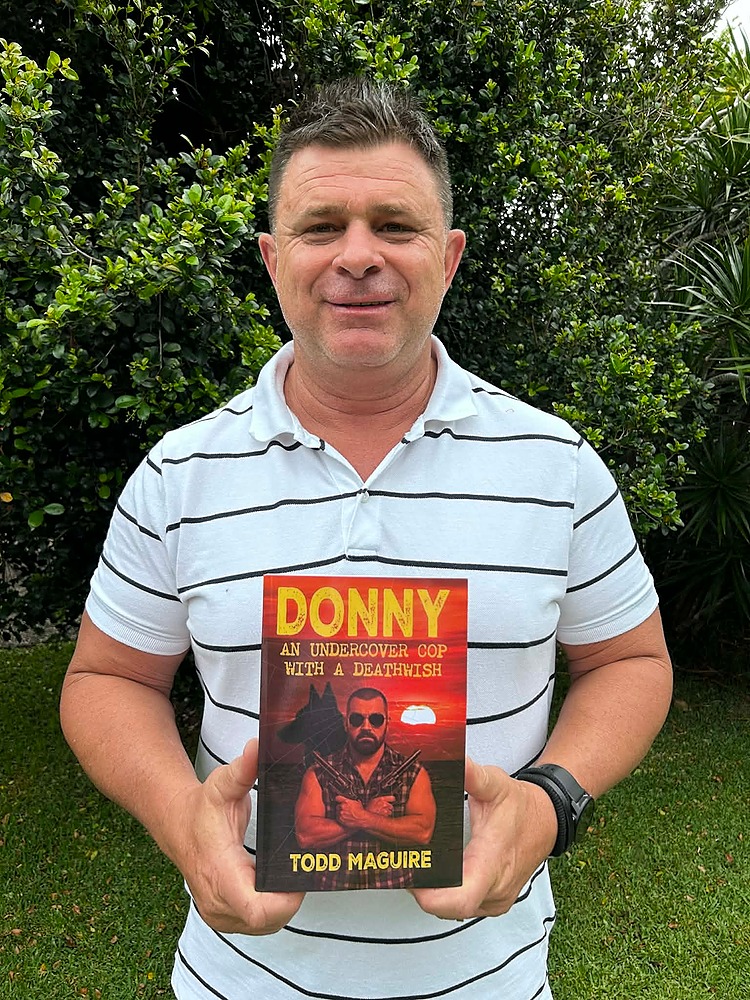
Author - Retired Undercover Police Officer
Todd Maguire spent 27 years with the Queensland Police Service, working across undercover operations, major crime, tactical response, counter-terrorism and bomb detection. He played a key role in dismantling organised crime networks, contributing to more than 500 charges, and received both a Certificate of Recognition and a Commissioner’s Citation for his work.
But behind the commendations is a very different story.
Todd spent decades on the front line of humanity’s darkest moments — violent crime, suicide, fatal accidents, domestic violence and child abuse. He was often the one knocking on doors to deliver devastating news, holding people in their grief, and carrying experiences that don’t simply fade when the job ends.
For a long time, he didn’t speak about the toll it took — the trauma, the drinking, the fallout, and living with complex PTSD.
Now, through his book Donny: Undercover Cop with a Deathwish, Todd is sharing his story with raw honesty — not as someone who has it all figured out, but as someone who has lived through it, lost himself, and fought hard to find his way back.
Summary
What you’ll hear in this episode:
- What it’s like to lose a loved one to suicide and live with unanswered questions
- The hidden toll of working in undercover policing and exposure to trauma
- How grief can lead to self-destruction, and what that actually looks like
- The turning points that begin the healing process now
- How Todd’s undercover persona, “Donny,” became both a source of release and a way to externalise and name his PTSD when it arises now.
- Why purpose, connection, and selflessness can change everything
Transcript
[00:00:00] Todd: I look at undercover as it allowed me to have a full release and just not be me for a while. I enjoyed being Donnie, 'cause Donnie was carefree. He had no worries in the world where Todd had a lot of baggage, a lot of stuff that he was trying to process. I drank all day every day. That was the only way that I could cope. I engaged in just reckless behavior. I got in fights. I hated the world. I hated everyone. I hated things that I used to love. The world didn't make sense to me anymore. Everything that I believed I questioned and didn't agree with anymore. Catherine: We ... Read More
[00:00:00]
Todd: I look at undercover as it allowed me to have a full release and just not be me for a while. I enjoyed being Donnie, 'cause Donnie was carefree. He had no worries in the world where Todd had a lot of baggage, a lot of stuff that he was trying to process. I drank all day every day.
That was the only way that I could cope. I engaged in just reckless behavior. I got in fights. I hated the world. I hated everyone. I hated things that I used to love. The world didn't make sense to me anymore. Everything that I believed I questioned and didn't agree with anymore.
Catherine: Welcome to Don't Be Caught Dead, a podcast encouraging open conversations about dying and the death of a loved one. I'm your host, Catherine Ashton, founder of Critical Info, and I'm helping to bring your stories of death back to life because while you may not be ready to die, at least you can be prepared.[00:01:00]
Don't be caught dead. Acknowledges the lands of the Kulin nations and recognizes their connection to land, sea, and community. We pay our respects to their elders past, present, and emerging, and extend that respect to all Aboriginal and Torres Strait Islander and First Nation peoples around the globe.
Catherine: Today I'm speaking with Todd Maguire. Todd has spent 27 years with the Queensland Police Service working across undercover operations, major crime, tactical response, counter-terrorism, and bomb detection.
He played a key role in dismantling organized crime networks contributing to more than 500 charges, and received both a certificate of recognition and also a commissioner's citation for his work. But beyond the commendations is a very different story. Todd spent decades on the [00:02:00] frontline of humanity's darkest moments, violent crime, suicide, fatal accidents, domestic violence, and child abuse.
He was often the one knocking on the doors to deliver the devastating news, holding people in their grief and carrying experiences that don't simply fade when the job ends. For a long time, he didn't speak about the toll it took, the trauma, the drinking, the fallout, and living with complex PTSD. Now through his book, Donny Undercover Cop with a Death Wish.
Todd is sharing his story with raw honesty, not as someone who has it all figured out, but someone who has lived through it, lost himself and fought hard to get his way back. Thank you so much for being with us today, Todd.
Todd: Thank you Catherine,
Catherine: Wow, that is quite a lot. You've packed into your life, isn't it?
Todd: Yeah. And there's a hell of a lot more [00:03:00] too. Yeah.
Catherine: So how did you get started in the police force?
Todd: It was actually uh, something that I didn't realize I was going to do. I didn't start until I was 23. I thought I was gonna do a, job in, in hospitality. I, I thought I was gonna be a public or a HR manager. And it was just by chance that a friend of mine sort of said, why don't you give this a go?
I, I sort of got me at a bad time. I was a little bit overworked and I was working at the height at Sanctuary Cove on the Gold Coast and working many, many hours. And, and then a friend of mine said, why don't you just give this a go? So I just shut him up to say, okay, I'll apply and if I get in, I'll get in if not too bad.
And I got in. So, and then I never looked back. I actually loved it. I really loved it once I got in and it was really good.
Catherine: And tell me what was it that you loved about it? Todd?
Todd: Uh,
it was the um, camaraderie. It was the people, it was the, the characters and, and the, and the people that I worked with. There were so many different good [00:04:00] people. You know, there was minimal bad people that I sort of worked with. Uh, Mainly just characters, just funny, funny blokes, funny women. and you just, you just had a lot of fun.
You really did have a lot of fun. It was just a good time back in the, it was a late nineties you know, we just had, you know, we chased crooks and we had a lot of fun doing it. It was very, very much the old play hard and uh, work hard.
Catherine: And tell me, I'm assuming that you don't start in undercover. Is that something that you are having to apply for after you go through your recruitment? Tell me about it. how someone who has no idea, how does that process work? How do you, how do you get into undercover?
Todd: Well, my um, the transition for me to go undercover was, was a pretty very unique sort of way. And, and that's, that's basically the, the premise of how this whole book started. 25 years later. it started from New Year's Eve on, 1999 I, I'd actually been living with.
With my girlfriend Karen, and we [00:05:00] were, you know, we were, we were starting a life. she'd already had a, a failed marriage and she had a, a young boy who was four and we'd been living together for 18 months and, and things were going quite well until the morning that I woke up on, Year's, day 2000. and she'd taken her life in the garage and she'd, she'd hung herself and things went south pretty quickly. I'd work the night shift and I'd picked her up after her going to the um, new Year's Eve celebrations. And if you remember back then, for all of us people of our age, it was Y 2K
Catherine: the world was gonna end.
We didn't know what was gonna happen. Yeah.
Todd: Yeah. And i'd actually been out the night before with, with Karen and, and a few other friends and we were having dinner before we started work at, well before the men started work at 10 o'clock. And the women went out and had a, a party and, and enjoyed themselves and, we kept in contact with 'em.
But, but at dinner, my old phone was doing like a pocket dial in my, in my jeans and I, I pulled it out and I thought, oh, I'll just lock it because [00:06:00] remember the old um, 61 tens, the, no, you had to do the, you know, press okay and star or something to um, unlock it or lock it.
But then I looked at it and it said 6, 6, 6 on it. And I said, Hey, hey, look at this people. Looks like we are gonna bloody die tomorrow. Laughed. Anyway, didn't realize um, how, how serious that was gonna be the next day, but unfortunately, I did wake up and, find her. She had taken her own life. I hadn't seen it coming.
There was no note. There was nothing that gave me any idea, even in hindsight, even knowing what I'd own now, there was still nothing that gave me any indication that this was gonna happen. I'm still searching for answers. It's one of those things that you, you know, I've had to make peace with it to say I'll never know.
and I suppose it just takes you that long to work that out because I have for so many years tried to take the blame off myself. [00:07:00] I've had to try and try and work out why it happened and how it happened, and who and why and every question in the world, but. As the day actually happened, you know, I was, I was asleep and the young fella had woken me up at, you know, just after one 30 and he was saying, mommy, where are you?
Where are you? And I, I thought she was in bed next to me and, and I, I rolled over and, you know, she wasn't there. So I said, oh, let's come, let's, let's go and find her. So I picked him up and we're walking around all the rooms and no, she's not in there, not in there. You know, my eyes were hanging out.
I didn't know what was going on. I didn't think anything was going to happen. I just thought she was in a different part of the house. So we went downstairs and that's where the laundry was, and I thought that she was down there, but as I opened the door, I, I saw her and, and she was, she'd used a, an electrical cord to wrap around her neck and, and she was hanging from the rafters. And my initial thought was to [00:08:00] throw the young fella as, as far as I could, I didn't want him to see his mum like that. At the time I thought I could probably handle it, but I think later I found out I probably couldn't.
But I felt better that he didn't see it. And you know, I've said this numerous times that. You know, I'm a, I'm a big tough footy player that played lots of rugby league and, you know, whatever. But that, that knocked me for six, the physical pain that, that, that I felt as I saw her in that position, it was like a freight train had hit me.
It was like a truck had hit me. It was like my whole chest had been slashed open. My legs couldn't move. just, the pain on the inside was, was indescribable. I was screaming at her just crying, asking, why, why, why, what is this? What's happened? Like, I thought I was in a dream. I really did. And I went to try and pick [00:09:00] her up to try and take the weight off her.
It just wasn't working. I couldn't get the, the cord from around her, around her neck. I eventually ran upstairs and got a, a kitchen knife and, and cut that and then commenced CPR and, eventually, I mean, there was a lot of detail in, in, in terms of that, but after a while I worked out that it wasn't happening.
I decided to go outside to try and find Clark. I don't know if it was 10 minutes, an hour, two hours. I have no idea. Time just stood still for me, and um, I ended up. Picking him up, ringing my mum and dad. I rang a mate and then rang the police as well and the ambulance and said, come and, you know, come and help me.
Come and do what you have to do. I don't know, I was a little bit lost and um, obviously things just spiraled from there, but one, one thing that came outta that particular day. It was a couple years later. It was six years [00:10:00] later when I spoke to the young fella when he was 10. And I said to him, and, and the parents actually said, he actually now wants to know what happened that day.
We think he's old enough and he's asking questions. And I told him pretty much everything that, you know, what I've said now. And, and he said to me, but why was the big black dog pinning me up against the wall? And I said, mate, we. I didn't have a dog. There was no dogs in our street. I didn't see a dog, it took me years and years to work out what he meant by that, and I've now worked out whether it's true or not.
It's what I believe is that Karen's black dog had actually left her her soul and had pinned him up against the wall, and either making him safe or. Has transferred into him and I because I think that was a really, really important moment in the day. And one of the messages that [00:11:00] I do say out of all of this is that if you think that you are going to leave this world because you're a burden on people because you've got the black dog, just remember that it's gonna go into your loved ones when you leave, and we've gotta live with it for the rest of our lives.
Catherine: That is such strong imagery that you've just mentioned there, Todd, and it is that ripple effect that it does have when someone chooses to take their own life, that it does leave an imprint on everyone who is left behind.
Todd: It does, it does. It's, it's been 25 years, 26 years now for me I've spent many of those years asking questions, searching for um, some sort of answers. I still don't have them. I've had to make peace with it. To say that I've had to put it away and go, I'm never gonna find it. It is what it is. Let it go.
You've gotta live your life now. And that was exactly why I [00:12:00] decided to write a book because I never used to be able to talk about this. and I thought it's time. I've got the maturity now. I've got the time in my head and time in from work that I can now do something with it and write a story and tell my story, and hopefully it helps someone down the track.
Catherine: It sounds like that it's taken you, as you said, some time to, to come to the position where you are now, to have that clarity and that maturity to write about your story. A lot of people don't ever get to look at their life in reflection in relation to this,
Todd: Hmm.
Catherine: what was the moment where you thought, you know what?
I really have to write about my story so other people can learn.
Todd: I think it was when I, um, left the police two and a half years ago, it gave me a bit of time to reflect on it and, and remember it and try and think about [00:13:00] it. It also coincided with when I left the job. I had to start my very first day with my new job. My mum had passed away and I, I spent the night with her and I was holding a hand, and she passed away, and, and it made me think right then and there that, It made me sort of, it worried me that that I was gonna go down the same track as what I did when Karen passed away. You know, there were two very important people in my lives that passed away. And I was concerned that I was gonna spiral like I did with, with losing Karen. But I think with my maturity and, and what I'd learned, I said to myself.
What would mum be proud of? You know, she knew that I didn't handle Karen's death well, and she was always concerned and she was always very caring and, and loving over it. and I thought to myself, you know, if she's looking down, [00:14:00] I wanna make her proud and say, you know, I handled it with dignity, I handled it with maturity and, and didn't go down.
dangerous lines that I did when, when Karen died 25 years earlier. So that was something that made me sort of think when I thought, okay, would Karen have been proud of what I did when she passed away? I don't think she would've I think it made me decide, okay, I need to write something about this.
I wanna tell my story and I want to get it out there. It made me sort of also realize that, that I need to open up and be vulnerable to people because I'd been so insular. I'd been keeping it to myself. I was ashamed of it. I was afraid of telling people. I was also just so worried of what people would think of me and.
I dunno if it's maturity, the age bracket I am [00:15:00] now, you know, hitting 50 a couple of years ago and where I absolutely don't give one rats what people think of me anymore. and it's actually, it feels pretty good.
Catherine: I have to say it is quite liberating as you get older, the, the less you care about what other people think of you. But you mentioned that you felt ashamed and afraid at that time. Why were those emotions that you were feeling, especially ashamed? What was, what was that coming from, do you think?
Todd: Well, the way that I looked at it was, it was the, you know, it really hits. Someone's self-esteem when a person chooses to end their life rather than be with you. It's the ultimate breakup. We have no recourse. You dunno, if it was you, you dunno if it was anyone else. You dunno if it was just them that made that decision.
You don't know. but your self-esteem [00:16:00] gets a real knock around where you go, well, this person would rather kill themselves than be with me. And it takes you a while to work out that that's not the case. But because you're in such grief and, and, brain's not working correctly, you, that's what you think and you think a million other things as well.
And I was ashamed of that you know, I blame myself for so many years that, you know. Albeit, I was only a police officer for two years, or two and a half years. I felt that I probably should have seen something. I should have. You know, I'm supposed to be trained to do it. I'm supposed to all of these things.
And and I failed to see any signs whatsoever. So there was a lot of, there was a lot of blame. There was a lot of guilt. There was a lot of shame. Yeah.
Catherine: When you made that decision to tell your story, how did you start, Todd? Like did you just sit down at the computer or what? Talk me
Todd: Yeah, it wasn't easy, but
Catherine: Yeah.
Todd: the way that I, the way that it started was [00:17:00] I'd started reading ex Queensland undercover cop books. Keith Banks and Mick ler and there was another one, Dan Crowley, who played for Australia Rugby and stuff. And I was, I was, I was reading those ones and, and I was just like, I was just ama like going, oh God, I remember the good old days under a cover of work and this and that and, and I was just, I loved them, absolutely loved it.
I read them, read 'em back to front twice and three times sometimes and, I initially started thinking that I wanted to write an undercover book, but then I also realized that in one of my, you know, counseling, many, many counseling sessions that I'd had over the past 20 years, I, one of the counselors had said to me, you know, write down everything that happened on that particular day.
You know, 1st of January, 2000, and it was just sitting in my. top drawer, it was gathering dust, hadn't opened it in years. And what's in the book is exactly what's on that piece of paper. I, I put it in exactly how it was, [00:18:00] and for some reason I just had this light bulb moment where I went, how can I sort of merge 'em?
How can I make 'em together? And, and then I was talking to one of my cousins. Which I'm really good friends with, and, and I, I sort of said, oh, I've got this idea of writing a book, you know, about when, you know, my undercover days. And, and he was right there with me throughout it. And, he saw what was going on and, and I said to him, I said, oh, I really think, you know, I was on a bit of a death wish back then.
You know, I wasn't sort of acting real smart, was I, I said, oh, I'm a little bit, you know. I was doing some stupid things, wasn't I? He goes, oh, duh, we all saw that. Like, we knew that you were not well and you were not going well, and we, but we couldn't stop you. and it sort of just went from there. And I went, well, Donny was on a death wish.
He didn't wanna die, he just didn't want the pain, you know? I didn't want the pain. And, and Donny was a representation [00:19:00] of. Me trying to get through life and get over that pain and hopefully get through it. But Donny was that reckless and he was in that much pain that he threw himself into undercover work , and did things that probably shouldn't have been done by a normal undercover person.
they went through doors and did things that. You probably shouldn't have done, but I, I had reckless abandonment that I didn't care what happened to me, and I had numerous guns to my head. I had a a hundred thousand dollars Vietnamese triad hit out on me. I had you know, knives, I had all these things.
And not one of 'em did I care about because didn't really care what happened to me. I suppose what I'm trying to say through this book is, is that now, you know, I've got a beautiful wife now and I've got a son. I've got a great job outside of the police. My life's great now. It really, you know, it's taken me a while to get through it and it's been [00:20:00] a, it's been great for a long time, but I wanted to get that message out to say, you know, everyone goes through.
Hard times in their lives. And, you know, mine was hard, but it's probably not, you know, there's, there's people that have probably gone through harder. But I just want the message to get out there to say, you know, life is good and you really, really can if you, if you work at it and, and if you work, if you realize that, you know, there's some really nice parts about it, and do the right stuff and work at it, life can be good.
And you just gotta expect that at times things aren't gonna go well.
Catherine: And can I ask you about that time where Karen had just died and you have Clark as a 4-year-old and you've just started, what, two and a half years into the police force? At that stage,
Todd: Yeah.
Catherine: obviously probably didn't have much [00:21:00] time off work and had to go straight back to work, I'm assuming.
Todd: No, I was, I was pretty lucky. I, I was, I was allowed to have three months off on leave. Well, I think it was good, but it was also bad because I then just started drinking.
Catherine: Yeah. Right.
Todd: that gave me the opportunity to drink at any time of the day, any night, any time. there was no structure, there was nothing.
And it really started a, a bad process for me. And what I also say in my book that I wrote is, you know, this book is not about what to do when you go through a, a tragedy uh, is just as much as what not to do as well. And I think that I found. I found, you know, too many answers in the bottom of a, a bottle, and there certain things that I, I wish I didn't do Now.
Catherine: you've obviously written about them in the book, but tell me some of those things that you perhaps regret that [00:22:00] you, you do mention in the book when you look back on it now.
Todd: Well, I, I drank all day, every day, pretty much. That was the only way that I could cope. I engaged in just reckless behavior. I got in fights. I hated the world. I hated everyone. I hated things that I used to love. The world didn't make sense to me anymore. everything that I believed I questioned and didn't agree with anymore.
I know that when I did go back to work, I lived on the north side of Brisbane. So after this had happened down the Gold Coast, I'd moved back to my sister's place over at the Gap in the north side of Brisbane and I was working at Indra Pill Police Station. And I would, you know, for example, I'd drive home through this place called the Gap Creek Road.
And it was it was a bush sort of road with no lights whatsoever. And I would just play, [00:23:00] you know, even after I'd be drinking as well and I would turn the lights off on my car and I would do the 10, 9, 8, 7, 6, 5, 4, 3, 2, 1, and then turn 'em back on and see what, see if I was still on the road. Like little things like that, like just stupidity.
I couldn't even think of doing that now. But that's how much. I was reckless, but yet nothing ever happened. I was, you know, maybe I did have something, something or someone looking over me, I don't know.
Catherine: And what was the point, Todd, where you realized that you couldn't continue behaving in that manner?
Todd: there was a couple, and it's taken me many, many times of sort. Falling off, getting back on again, falling off, getting back on. It hasn't been a, a simple ride. It hasn't been an easy or clean sort of thing. It's been quite messy, but one of the first ones was in undercover and I'd been doing it for 18 months and I,
I'd [00:24:00] done this job in, in the valley where it was just a cold start where you sort of, started. Drugs. Yeah. And it was MDMA, it was just pills. and it was just a fellow who had fell odd, hard times as well. He had a, a broken marriage and, and so forth. And he just bought from the wrong bloke one night, and we became mates and, and then he became a target.
And unfortunately, he, he got himself into a, into a thing with the QPS where he, he was now. He sold that many drugs to me. He was looking at a trafficking charge and he got, he got arrested and charged and, obviously he was told that I was the undercover cop. So he rang me one day and that was the first time after he got arrested.
And I thought he was gonna give me a bit of a spray and go, I always knew you were a na, you know, how, how could you, you know, double cross me, all that sort of stuff. But. It wasn't that at all. He'd actually called me to say that he was standing on the, on the cliffs at the Brisbane River, on the Fortitude Valley at New Farm sort of area.
And, and he was gonna jump and he said, you know, can you tell my [00:25:00] kids I love them and blah, blah, blah. And, and I said, mate, no, no, no, no, no, no, no. Where are you exactly where, where are you? So I raced exactly to where he is you sort of half knew that he wasn't really gonna do it. 'cause most people weren't gonna do that.
But anyhow, I, I was a bit reckless as well and grabbed his hand and I said, well, if you're gonna do it, let's do it. And I said, come on, let's jump, you know, I put one foot over the edge and, and he goes, Hey, heck, what, what the hell are you doing? And he was gobsmacked. He's going, whoa, whoa, whoa, whoa, whoa, whoa.
And I said, what? Aren't you gonna do this? Like you said you were gonna do it. Let's do, let's do it. and I said, come on, 1, 2, 3, let's go. And he go, he yanked me back and he goes, no, no, I, I don't really want to do this. And I said, oh, well why would you say you're gonna do it then? You know, we, we fell on the ground and, you know, we ended up crying.
And we ended up talking for about three hours after that. And he was telling how much he couldn't do it to his kids and his, his ex-wife and his family and his mom and [00:26:00] dad's and, and that, and it wasn't until then that it hit me where I went. Oh, that's exactly what I've been doing. You know, I, I didn't realize I was doing it.
I was just, I was just in the zone. I was just that angry at the world. I was just so unhappy and I was just so missing Karen and in so much pain that I was just on this freight train that just wasn't stopping. And that was the first time where it sort of pulled up a bit and went, hang on, I've gotta stop what I'm doing here.
This is stupid. And I remember going home to my safe house and just sitting by myself and I, I, I cried for hours and it was the first, first time I'd really cried in a long time. And it made me realize, yeah, okay, you gotta stop this. You really gotta stop this. And, you know, I'd only had about six months left in, in the undercover world after that.
And I do recall, I, I started sort of. Being a little bit more [00:27:00] cautious than what I used to be. So that was a really good kick up the ass for me.
Catherine: What's also interesting about that story for someone who doesn't know anything about the undercover world or or police work, was that it's interesting that someone who you had. Seen as a target, so obviously was getting information about, and, and, and building a case against you had also developed such a good relationship with this person that they were, you were the one that they called when they were feeling like that.
Todd: yep. Yeah, I know. And it makes you feel pretty shit about yourself. You feel like you, you really did double cross him, but I genuinely did like the fella and he obviously did like me. And we had formed a very good connection, but he had, He'd gone through, you know, a similar feeling as, as myself, where he hated the world.
He had estranged a lot of his friends and family and he really had no one left [00:28:00] and I was his only other mate
Catherine: It says a lot about the tight bonds that you must create when you are doing this undercover work. How long are you working on cases when you were, were doing this sort of work, Todd?
Todd: Uh, anytime from three months to nine months was probably my times. I felt that there wasn't too many that I formed great bonds with them. There was a lot that I was very happy to. Put in jail. But there was a small amount of people that I, I did actually really like, but the rest of 'em were, you know, there were some pretty, pretty low sort of people and I was quite happy to do that job.
Catherine: And it seems like it must've been a period of time where you had such sort of duplicity going on because you were a policeman yet being undercover. You were a policeman, yet also drinking every day. Like there was a lot going on with you at that time, wasn't there?
Todd: Yeah, it was, yeah, it, [00:29:00] I look at undercover as it allowed me to have a full release and just, not be me for a while. I enjoyed being Donny 'cause Donny was carefree. He had no worries in the world where Todd had a lot of. lot of baggage, a lot of stuff that he was trying to process. and I think Donny allowed Todd to just be free for a while. You know, I, I grew my hair long. I, I've got earrings, I've got eye rings, I've got tattoos, I've got all these sort of things that, you know, to fit in the, in the persona of it.
And it sort of allowed me to just not be the person I was used to being, which was liberating for a while. And then I sort of cleaned it all up after that and, and went back to being who I was and then, and then started healing process, to be honest with you.
Catherine: it's one of the very few roles that it sounds like you can, in that situation, be paid for that escapism and create an entire other [00:30:00] persona where you don't have to face the reality of, of, of what you were dealing with. You know, as Todd though.
Todd: Yeah, exactly. Yeah. Yeah. I'm very lucky that that was the case. It allowed me to eventually have the deposit, buy a house later and that sort of started the recovery of, you know, losing pretty much everything to start again. So it was a bit of a bonus. I.
Catherine: So when you had that moment. In the safe house where you found yourself crying and, and really sort of looking at where you were at that point in, in time, what were the next steps for you? Like, where do you go from there?
Todd: I dunno. I just remember picking myself up and saying, okay, well tomorrow's the next day. And I just know that I just had changed. I'd changed massively. I didn't go and do stupid things anymore, and basically just rolled [00:31:00] into, you know, I rolled down to the sort of the end of the undercover world. And, and I talk about it in my, in my book where I did a, a job on it took me down to Sydney where I had to do some, an undercover job on, on some some cops down in Sydney that had a pill press and they were, were drug dealers.
and it sort of, it's, it had a bit of a funny, funny ending where they, they always knew that I was an undercover cop and set me up and maybe have some, some drugs and, and I didn't sleep for a couple of days, that was the way to sort of finish things off. You know, it wasn't too dangerous, it wasn't that bad.
It was just a, a fun sort of finish. Where I knew that there was probably no danger because everything was sort of out in the open. But finishing after that sort of started a whole new world for me. getting back to normal normality was, was almost impossible. you know, I've gone from living in Sydney in a, in a high rise overlooking Hyde [00:32:00] Park, driving a BMW, being in strip joints every night, just living a criminal's world.
And then I've answering phones at Crime Stoppers from eight to four.
Catherine: Wow, that's quite the shift.
Todd: Yeah, it didn't go down well. It didn't go down well. I um, I remember, you know, you live that life for so long. You, you keep that attitude up where you are anti-police, you are very criminal minded because you have to sort of live in that world and, and be believed.
And I remember a, you know, a bloke just ran crime stoppers and it was. Obviously unprofessional of me, but you know, that was my mindset at the time. And he was telling me about, you know, he was dobbing on, people smoking drugs next door. And I started saying to him, mate, do you know what happens to, you know, dogs mate, they get killed, you know, all that sort of shit.
And I was like yelling at him like, because [00:33:00] I thought I was still in that world. And, um. the senior sergeant raced over, grabbed the phone and gave it to someone else and said, come for a walk down the road. Todd holy hell, are you okay? He goes uh, I don't think we'll get you to answer phones anymore, eh, how about we just get you to do some filing? It took a long time to get you, get, get back.
Catherine: Yeah. Yeah. Not, not exactly customer 1 0 1 on that one, customer service. Um, but that would've, like, would that probably have been the first real indication that they, because I'm assuming that you were, were, were pretty much by yourself all the time. Quite autonomous in the role when you are undercover.
So then to be working in a, a call center. It would've been, it, it, it was only a matter of time before you stood out. Todd.
Todd: Yeah. I remember they said, you know. Make sure you're there at eight o'clock. 'cause the whole idea was to get you back into normal life with some structure and as easy as possible it's supposed to be. But [00:34:00] I hadn't woken up before eight o'clock in, in years. So, I think I rocked up there at, you know, 20 past nine and I had no idea about what the time was and I said, oh.
I thought I was early. I'm sorry. So yeah, it was a, it was a big, it was a big change. Yeah.
Catherine: I'm, I'm sure they got a shock too.
Todd: It's funny. Um, You know, I've, I've ran into people over the years and they, they said, oh, geez, I remember you when you came back from undercover. And I, I said, I, I don't recall that at all. I said, yeah, yeah, you went well. You weren't good at, you weren't in a good space. I went,
Catherine: Yeah. And how does that make you feel when you hear those stories? And, and certainly your cousin was very much aware about the fact that you were spiraling outta control after Karen's death. Like, was there anything that, that anyone could have said or done for you at that stage that that would've [00:35:00] helped?
Todd: I don't think so. No, I've sort of thought about that over the years. I can't think of anything where I would've gone. Yep. Okay. I believe you. was in that much pain and I just hated what had happened to me that I was just on a destructive mode and I dunno, you know, that was one light, you know, light bulb moment.
Where it happened on the bridge, but on the cliff, 'cause we're looking at the bridge and I'm sort of going, I wonder what else had happened. I don't know. I mean, I think it's just time. You can't keep living like that forever. You only got a certain amount of lives really.
Catherine: And physically it must've been taking a toll as well, carrying all of that load of what you were carrying as well as just living that lifestyle, I'm assuming.
Todd: Yeah. When you say physically, like I remember putting on like 25 kilos 'cause I was just drinking all the time. Eating T-bone steaks for lunch and [00:36:00] dinner. just living in pubs all day, every day. I didn't like the way I looked, I didn't like the way I felt. I know that when I sort of did finish it, I sort of got back to trying to be fit again, trying to play footy again.
It took me a lot, a while to get back to it, but it took me a while. But I, I knew that fitness was, was certainly a way to get my, my life back into, into shape. I was very lucky that they also met a, another wonderful woman which we're still married to now. And um, we had a, a young boy and he's 20.
you know, that, that certainly was a, a catalyst for me to get myself back on track as well, you know, when he was born, it made me realize that it's not about me anymore. I gave myself a big kick up the ass. It made me realize that this young fellow doesn't give a shit what happened to me five years ago.
He needs a dad that's present. He needs a dad that is gonna be there for him. And I think I did my best. I [00:37:00] certainly wasn't perfect. I felt, as I said earlier, I, I fell off many, many times, but I kept on, kept on fighting and I kept on getting back on the horse. and I think that we're, we've done a pretty good job to where we are now, so,
Catherine: And just talk us through what those sort of years looked like for you. So it seems like that they. Was a five years between when Karen died to when you had your son. And that period of time there was obviously a, a period of transition. And then as you said that there seems to have always been, you know, not a linear process on the way through our linear, linear pathway.
It's, been bumpy along the road. What are the things that have you found that work for you, that have kind of. Brought you back to your, your purpose or, or, or why you keep doing what you're doing now.
Todd: it's funny now that, we now, we now use Donny as, you know, the symbol of my [00:38:00] PTSD that when, when I get irritable, when I feel a little bit down or whatever, which is not that often anymore, hopefully, fingers crossed. Is that, you know, either my wife or a friend or, or myself.
I go, oh, Donny's nipping at your heels again. And I sort of had that, I've got that in check now, and I, I know what to do and, and I know that, you know, fitness is a big thing now. just have a different mindset. I really, I've, I've had to focus on my sleeping leaving the police. I've noticed.
Going to bed at the same time, waking up at the same time, having a good, solid eight to nine hour sleep and eating healthy. I also found, you know, I always involved in, in rugby league 'cause I, I played football and, and then I got involved in, in coaching and it started with junior coaching with, you know, under twelves all the way.
Where last year I was, I was coaching 8th grade and every year of that was [00:39:00] always volunteering. I never got paid for any bit of the coaching and, and being involved in it, and I, I just found that whenever I felt a little bit down on myself or whatever, volunteering and helping people is what gives you purpose and being selfless.
And That's how I felt. It gets me through things and I, I find that's when you, you have the ultimate, happiness in life where it's not about you. You forget about yourself, and you focus on other people, and I believe that that's the key to happiness in my life.
Catherine: And you say that you've come to some sort of level of acceptance, and I'm not even sure whether that's the right word to use. Whether you, you have come to that sort of level of, that, but about Karen's death and, and the amount of questions that you are [00:40:00] asking. How did you get to that point, Todd, or
Todd: think it
was when I hit, I hit 50 and, and my mum passed away and my, my dad just passed away in, in January and it was both in close succession, but the catalyst was mum and then I started seeing a lot of. My parents, family, friends passing away and they were, they're in their seventies, you know, mid to mid to late seventies.
And it really gives you that, that panic where you go, things are real, shit's getting real. I've only got 20 something years left to go if I'm gonna follow what my family has done and what everyone else that I've ever known seems to be doing the same. Whether you're, pass away or whether your, your quality of life is different.
I've really only got 20 something years of quality life, and I said, I've been carrying this around, you know, and it's been bringing me down for so long. I said, I'm, I'm not gonna live like this anymore. I've gotta get it off my [00:41:00] back. And I think that this is the way to do it, because five or 10 years ago, I could not have said Karen's name without crying, and now I'm reliving this story over and over.
It makes me feel good about saying it, and it's a really, really healthy way of getting it off my back.
Catherine: It's interesting. It's like you're volunteering your story to help others. Again,
Todd: Well, I think I am, but I'm being selfish and I'm trying to help myself as well. ' cause I want, I don't want to live like this anymore. I want to live my next 20 to 25 years as the best 25 years of my life.
Catherine: And what advice would you give to people who find themselves in a situation where a partner or a loved one that's close to them has taken their own life?
Todd: Oh, it's, it's so hard to give advice. I mean, God, you can say what you should do and what shouldn't do, but your brain just takes over. It really, and your heart [00:42:00] takes over. If there's no right or wrong all, allow yourself to grieve all. Allow yourself to cry, all allow yourself to feel however you want to feel.
But at some stage, you've gotta get yourself outta the ditch and realize that that person made that decision because of themselves, not because of anyone else, and you've gotta start living your life again.
Catherine: And it sounds like you've had some exceptional support from professionals along the way as well with counseling.
Todd: I have. Yeah, I've, I've tried a lot. I can't say that, you know, there's not one thing that's worked perfectly, but I've, I've certainly always tried to, to do everything I can, and I think, you know, along with that. It's not until when you're ready to move on and ready to go and ready to do something, is that when it actually all comes together.
And I dunno, I, I, I can't put a finger on, sometimes you just wake up and you [00:43:00] go, I'm not doing this anymore. I'm not playing this game. I'm gonna, I'm gonna do it. I'm gonna fix myself. That's it. And then I think at the end of the day, I, you know, like everyone where they say, you know, you're not gonna change until you want to.
you have those moments where you go, okay, I'm gonna do it, I'm gonna do it. Hmm.
Catherine: And living with complex PTSD, what does that look like in every day for you, Todd?
Todd: Uh, to me it's no problem. It's just the people around me, I think, I'm not sure.
Catherine: Yeah, that's, that's true. Yeah. Yeah, yeah. Because you're right, like what you were saying before is that you now refer your friends and your family now refer and give you hints when, when Donny starts come nipping at your toes and your heels again.
Todd: Yeah. And I actually notice when I have a really poor sleep, I can be really irritable. I can start hating everything I get snappy. Yeah. [00:44:00] Little things like that. Yeah. I noticed that, but one thing that I have noticed, you know, playing Rugby League over the years is, you know, I've got a plate in my knee, I've got a plate in my arm.
I've had numerous fractured eye sockets where I see, I see double outta the peripheral on my left eye and the way that I view. The brain injury that I, that happened because of the, the trauma through no fault of my own is no different to the injuries that I've had on my leg, my arm, and my eye.
You know, none of them are perfect again and they're not gonna work exactly how they used to, but they still work quite well. The way that I look at it is that my brain's no different. My brain had a trauma through something that I had no control over. Which was obviously Karen. And then I'd have to say that subsequently it was my fault after that what I did.
But it is what it is. However, the [00:45:00] injury that's happened to my brain is still manageable. It's not the end of the world. It's not, it's something that I'm ashamed of anymore. I used to be, I used to think that it was, you know, a mental health disorder, but it's. It's a muscle or a or organ in my body that had trauma to it, and it's no different to any other part of my body.
And that's the stigma that I want to get out there to the rest of the world that's listening, that it's no different to having a broken arm. No different to having a fractured eye socket. It's the same thing, you know, I got that much metal in my body. It's it's no different.
Catherine: Yeah.
Todd: still work and my brain still works.
But you just gotta, you gotta do the right things. You gotta do the work to it to make sure that it works by eating healthy, exercising, reading sleeping well, sleeps one of the most important things for me.
Catherine: And I think that that's something that's really good to remind people is that, [00:46:00] you know, research nowadays tells us that, you know, when we do suffer trauma our brain is impacted directly and can be seen on, on MRIs and scans that there has been a trauma that has affected it. and also, you know, research into epigenetics and what that does for when trauma affects our, DNA as well, and that's, that's something that we are just starting to understand now. So, it's, it's great that you're actually raising awareness of that, that it is something that is a, an injury like any other injury.
Todd: What I've noticed um, since I've, you know, written a book and released it and, and discussed it even before I, I did that, is it's been generating conversation, especially with blokes. And I've just been blown away by the amount of times that it's opened up problems that you would not have known that my friends or colleagues or acquaintances have had.[00:47:00]
But it's needed someone to be vulnerable to open up and share their problem. And I've usually used that by saying, here's my book. This is my story. And next thing you know, they're telling me about, you know, something that, you know, has concerned them or, or, or their issue in their life. And it's been amazing.
It really has been a great journey and that is probably one of the most proudest things about it, is that I've now got all of these fellas that just say to me, you know, I'm proud of you. And thank you for doing that. It makes me feel comfortable being able to do it. You know, I've, I've looked at you, I, at no stage did I ever thought you'd be the sort of person that would do this.
And yeah, I've just said, well, hey, I think the real strength is being vulnerable. I think the real strength is being, you know, not being a fraud, telling people and being open to your mates or your colleagues or whatever. And telling 'em exactly what's going on in your life. [00:48:00] 'cause everyone has problems.
No one's gonna go through life without an issue, without a hiccup. And we all need to be there for each other.
Catherine: It's so true, Todd, and you know, death is the one guarantee that we all have and it comes in numerous shapes, sizes, and you know, forms and so does our response to that and the grief that goes with it. So I really appreciate you. Being really vulnerable and honest with your story with us today.
Todd: Thank you. Thank you.
Catherine: Thank you so much for spending time with us today, Todd.
Todd: Thank you. I've loved it. It's really good. And I've loved your um, podcast. It's, it's something that I've sort of followed for many years is, you know, the dark life of death and the positives, the negatives, I do have a, a positive about it and I, I actually do say to people, you know, we're all fearful.
Dying. But what if wherever they go or wherever we go, [00:49:00] is a million times better than here? You just dunno. Do.
Catherine: No, we don't. And. And, and it's one of those things where when I speak to people about death, it's never actually about death. It's about everything we do up until that point and the impact of that death on everyone thereafter. So we just need to live well,
Todd: exactly, and love people and enjoy life and be kind to people.
Catherine: yeah. Thank you so much again, Todd. I've really enjoyed our chat
Todd: Thank you, Catherine. It's been great.
Catherine: We hope you enjoyed today's episode of Don't Be Caught Dead, brought to you by Critical Info. If you liked the episode, learn something new, or were touched by a story you heard, we'd love for you to let us know. Send us an email, even tell your friends, subscribe so you don't miss out on new episodes. If you can spare a few moments.
Please [00:50:00] rate and review us as it helps other people to find the show. Are you dying to know more? Stay up to date with. Don't be caught dead by signing up to our newsletter and follow us on social media Head to Don't Be Caught dead.com for more information and loads of resources.
Read Less
Resources
Connect with Todd Maguire
Todd’s Website - https://toddmaguire.com.au/
Check out his book: https://toddmaguire.com.au/shop-2/
- Make Death Admin Easy with The Critical Info Platform
A simple system to sort your personal paperwork for when your information becomes critical.
- My Loved One Has Died, What Do I Do Now?
Our guide, ‘My Loved One Has Died, What Do I Do Now?’ provides practical steps for the hours and days after a loved one's death. Purchase it here.
- Support Services
If you're feeling overwhelmed by grief, find support through our resources and bereavement services here.
- Support the 'Don’t Be Caught Dead' podcast with a one-off or regular donation to help Critical Info, a certified social enterprise, keep creating free, high-impact conversations about death, grief and planning—every contribution fuels our mission to reduce the burden on families and build a more death-literate, compassionate community. Donate now.


Share