Family Conflict at Bedside
Stephanie Wood: And from having interviewed for my article the head of palliative care at St. Vincent's, I know that's a very common thing, that families, siblings can argue between themselves, with the healthy parent if there is still a healthy parent, about the care of the person who's unwell, and I just can't
Stephanie Wood: imagine how traumatic that would be.
Why Death Doulas Matter
Stephanie Wood: I reckon I'm gonna find myself a good death doula, and she's gonna be with me, and I will pay her or him, more likely to be her, or they. They will be with me. If I start to decline, they will be on my payroll. So that's what I've almost felt quite heartened to see that, that the talk about death doulas. But, I mean, you know, you could have children.
Stephanie Wood: You could be estranged from your children. Your children might live overseas. They might not be very good people. I don't think these days having children necessarily guarantees that they're the ones that are gonna be at your hospital bedside being your advocate. The head doctor of palliative [00:01:00] care at St.
Stephanie Wood: Vincent's who talked about how infrequently those advance care directives actually come into the hospitals with people. It's all very well having one, but you need to have it with you to show healthcare professionals.
Podcast Intro and Guest
Catherine Ashton: Welcome to Don't Be Caught Dead, a podcast encouraging open conversations about dying and the death of a loved one.
Catherine Ashton: I'm your host, Catherine Ashton, founder of Critical Info, and I'm helping to bring your stories of death back to life. Because while you may not be ready to die, at least you can be prepared.
Catherine Ashton: Don't Be Caught Dead acknowledges the lands of the Kulin nations and recognizes their connection to land, sea, and community. We pay our respects to their elders past, present, and emerging, and extend that respect to all Aboriginal and Torres Strait Islander and First Nation peoples around the globe.
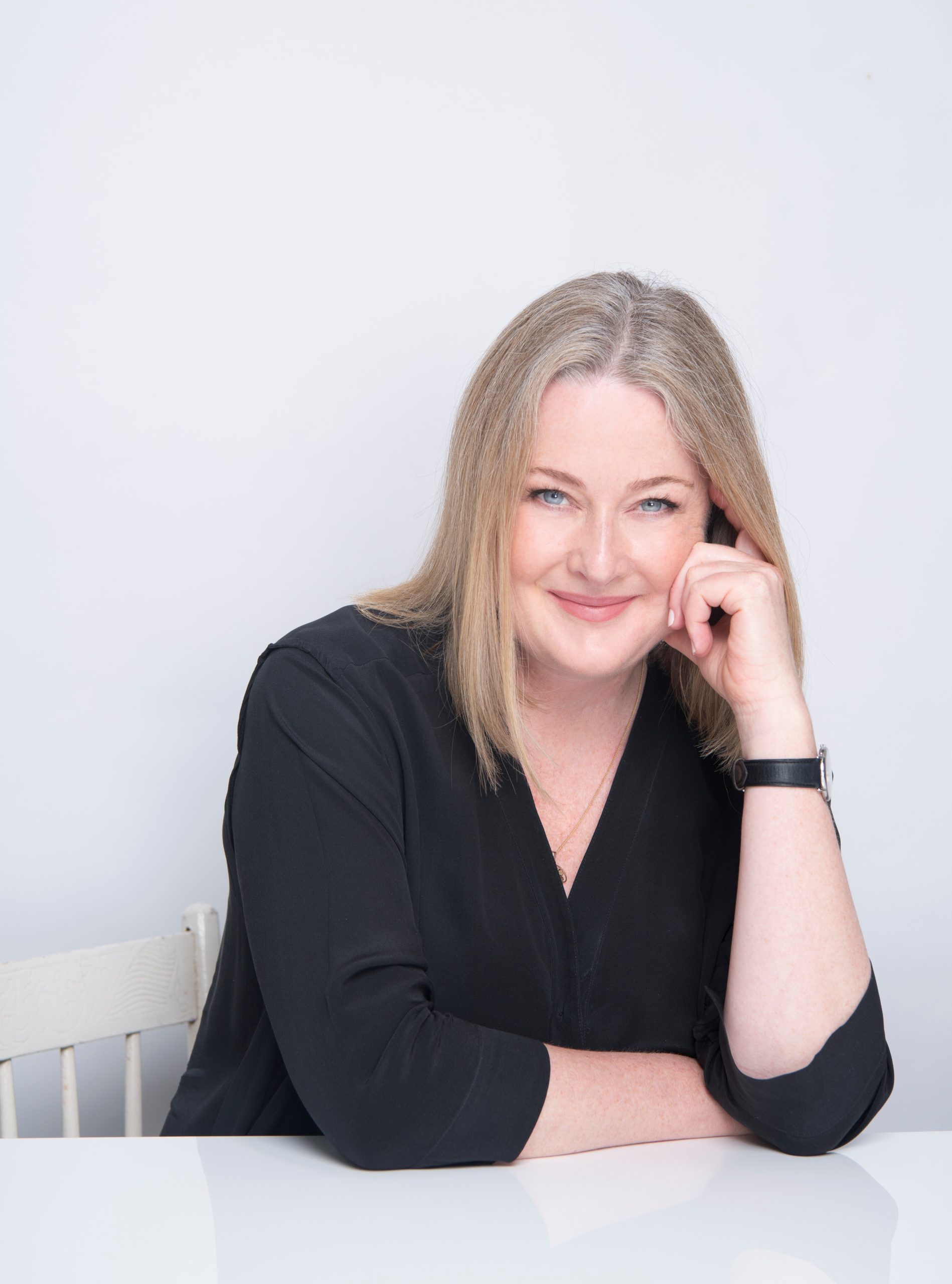
Catherine Ashton: Today, I'm speaking with Stephanie Wood. Stephanie is a Sydney-based award-winning Australian [00:02:00] long-form feature journalist who writes for The Good Weekend, The Guardian, and Vogue. Her reporting spans social justice and human interest stories from the 2016 Melbourne thunderstorm asthma epidemic to prescription opioid addiction, earning her the Jim Oram Award for outstanding feature writing at the NRMA Kennedy Awards and the Australian and New Zealand College of Anesthetists Media Award.
Catherine Ashton: She is the author of Fake, a startling true story of love in a world of liars, cheats, narcissists, fantasists, and phonies, a memoir about a relationship with a man whose promised future together turned out to be almost entirely fabricated. Named one of The Guardian's unmissable books of 2019, Fake was adapted into an eight-part Paramount Plus drama series in 2024, starring Asher Keddie and David Wenham.
Catherine Ashton: Stephanie [00:03:00] now writes Vamp, a weekly Substack newsletter on midlife imperfection, resilience, and meaning-making, with a recurring focus on ageism and the pressures women face as they age. Thank you so much for being with us today, Stephanie.
Stephanie Wood: Thank you for having me.
Catherine Ashton: Now, Stephanie, I have followed your writing for quite some time, and I also had the pleasure of being interviewed by you for an article that you were writing, and that article came out earlier this year, and it was focused on your father.
Catherine Ashton: Do you mind sharing a little bit with the audience that story?
Stephanie Wood: Yes.
Reporting on Care Directives
Stephanie Wood: Well, it was actually an idea I pitched to my editor at The Guardian, and my late father was not meant to be the focus of it at all. The origins of the story were at a lunch I- a friend's lunch that I went to at which I met this lovely woman, and we got talking, and it turned out she was a very senior palliative care nurse [00:04:00] at St.
Stephanie Wood: Vincent's Hospital in Sydney I was asking her, as you do, about her job and what it involved, and I sort of switch to journalism mode when I'm in social situations and ask lots of questions. And we started to talk about the sort of almost last requests, I guess, of palliative patients that she tends to and nurtures.
Stephanie Wood: And I thought, what an interesting idea for a story. You know, you're, you're lying in a hospital dying, and of course you're gonna have requests and needs and desires just as we always have throughout our lives. And I sort of asked her, "Do people put things in writing about what they want for their last moments or their last weeks in hospital?"
Stephanie Wood: And she said, "Oh, absolutely." And I- from memory she said something about, you know, you could put down in your writing that you don't want a banjo player, for example, coming into your, into your ward or your room, or you don't want music at all, or you do want music. You know, [00:05:00] that's obviously just a very specific example.
Stephanie Wood: But that is what set me thinking about the potential for a story on this. And in fact, the story turned out not really to be anything like that at all. It turned out to be far more about advanced care directives or advanced health directives. You, as you would know well, they have different names in different states.
Stephanie Wood: And generally advanced care directives aren't, aren't too much about the sort of music that might be played in your, in, in the hospital ward that you're in. It's much more about what sort of intervention or otherwise you might get, whether it be intubation or, which is artificial breathing, or intravenous feeding.
Stephanie Wood: I mean, you can, in your advanced care directive,
Catherine Ashton: as I'm sure you've talked about extensively with
Stephanie Wood: previous guests, you basically say how much intervention you want at the end of your life. And this is a legal document that not enough Australians have. Now I'm trying to remember what the stat is. You might remember, Catherine.
Stephanie Wood: What's the stat for how many [00:06:00] people in Australia have and don't have advanced care directives? It's not- Nowhere
Catherine Ashton: near enough ...
Stephanie Wood: even half, is it?
Catherine Ashton: No. It's- Yeah. Yeah ... it's somewhere- That's
Stephanie Wood: right ...
Catherine Ashton: even south of 40%, I think.
Stephanie Wood: That's right. That's what I'm remembering now. Exactly. And so my editor liked the idea. I interviewed the, the h- the head doctor who, of palliative care at St Vincent's, who talked about how infrequently those, those advanced care directives actually come into the hospitals with people.
Stephanie Wood: It's all very well having one, but you need to have it with you to show healthcare professionals. And I interviewed a c- a lovely couple from the Central Coast in, in New South Wales. The gentleman, the husband, has had very extensive health issues over many years, and after his last major heart episode- Where it wasn't, he wasn't expected to live.
Stephanie Wood: The doctors persuaded him to take out an advance care directive, so I had a chat to him and his wife about what that w- that, what they'd put into it. [00:07:00] I think I spoke to you and a couple of other people. Then sit, when you sit down to write, it wasn't even in my mind to start writing about my father until I actually sat down to write.
Stephanie Wood: And then you're always looking when you write for ways into stories that are the most compelling, that are gonna grip readers' attention, that are going to, lure them through the story to keep reading. And it just came to me, remembering my own father's death in 2010 in Queensland, just after Christmas, or New Year actually.
Stephanie Wood: New Year, 2010. And I just thought this is the way into the story. So that's how it started
Catherine Ashton: And I think it's so, such a great way to actually convey the elements, especially for someone who may have never experienced what it's like to be with someone when they are in their final days. Is that something that you feel comfortable talking through now, Stephanie?[00:08:00]
Stephanie Wood: Oh, absolutely. And Dad would be happy that I was as well. He was very open about all sorts of things, and, he was a politician and public service was his life, and I feel as if in my writing I'm often ... I like to think I'm carrying on that, that sense of public service in my writing, that I'm not doing through politics as he did.
Dad's Diagnosis and Decline
Stephanie Wood: He was the first person in my life close to me who had died, who was admitted to a palliative care ward at the Noosa Hospital. The dying room they call... It wasn't a ward, it was a room. They called it the dying room, which I quite like the, the frankness of that, that, that name. I mean, it was an absolutely horrendous
Stephanie Wood: It was a horrendous few years. He was diagnosed with prostate cancer from memory in 2005. I've had a lot of time to process it all. It was a very traumatic period. In fact, for about five years it was deeply traumatic. My father was my everything, [00:09:00] and he was diagnosed with prostate cancer in 2005, and pretty much quick- immediately started to have treatment, radiation therapy.
Stephanie Wood: In fact, I think it was the radiation therapy that was the biggest, the cruelest blow to him, not even the prostate cancer. And I wonder whether or not if he'd been in a city hospital rather than a regional hospital, having the radiotherapy at a city hospital, whether it might have actually been superior.
Stephanie Wood: And I certainly suspect that 15, 16 years on, or even actually it's two decades on from when he first started to have the radiation, I'm sure it's better. But it was, at that stage it did so much damage to his other organs, including his urinary tract and his digestive system, his bowels. And he lost continence, which was just absolutely dreadful for him.
Stephanie Wood: And I don't remember all the, the deep, gritty medical [00:10:00] details, but it really wasn't the prostate cancer which killed him. It was his kidneys started to fail, and that was where we ended up in two thou- early 2010.
Choosing No More Treatment
Stephanie Wood: The doctors said that he could go onto dialysis, and Dad said, "Nope, that's not what I want." No more treatment.
Stephanie Wood: And that's the stage at which the hospital put him in their dying room, as they called it. Um, which although that sounds really brutal, I guess it's very honest at the same time.
Catherine Ashton: And tell me, how was that for you when you heard him make that decision- Oh ... that he didn't want any more treatment?
Stephanie Wood: Oh, it was just devastating.
Stephanie Wood: I was angry with him. I tried to persuade him to have the dialysis. He was just very vehement. "Nope, that's it." And- I remember sitting on his hospital bed [00:11:00] crying, and he said, "It's okay to cry." And he handed me his handkerchief, which I still have and use from time to time. Um, yeah, it was terrible. We'd been living with this for so long, and then all of a sudden the doctors were telling us that if he didn't have dialysis, his kidneys would shut down within, oh, I think they said five or six days.
Stephanie Wood: And from that point on, he would be dead very, very soon after that. So from sort of living with this for five years, for it suddenly to have this very sharp, acute endpoint was just awful. And then the actual dying process is awful, awful as well. And if you've never had it, if you've never been through it with a, with someone you love, you don't know how terrible it is.
Stephanie Wood: And I mean, the good thing was Dad did have an advance health... He was very determined that he wasn't gonna have dialysis, and his advance care directive, which he had stipulated that he was not to [00:12:00] have any intervention other than to make him comfortable as much as possible and pain relief. But that did not make the process...
Stephanie Wood: I guess maybe it did make the process easier. I can't imagine how it would be if that hadn't been in place. And in fact, there was a day at the hospital where I went out to the nurse's station, and there was a family there that seemed to be having a very heated discussion with my father's doctor. And I, I think I overheard just tiny bits of their conversation, and my memory is that they were arguing between them.
Stephanie Wood: The family members were having a dispute between them about the best course of action for their father, and, or their mother. I can't remember whether it was a father or a mother. And from having interviewed for my article, my recent article, the head of palliative care at St Vincent's, I know that's a very common thing, that families, siblings can argue between themselves with their, with the healthy parent, if there is still a healthy [00:13:00] parent, about the care of the person who's unwell.
Stephanie Wood: And s- I just can't imagine how traumatic that would be if, say, my mother and brother and I had been arguing about the best thing for Dad. And, and it just would've added to the horror of, of what we went through and what Dad obviously went through. It's not, it's not pretty.
Catherine Ashton: And that period, how long did it last for?
The Final Days in Palliative Care
Stephanie Wood: he fell unconscious probably Five or six days after he was admitted to that room, the dying room. I remember the Noosa Hospital's set in very lovely sort of coastal bush landscape, and we'd wheel him in a wheelchair around the grounds of the hospital.
Stephanie Wood: And I remember the last time we did it, he was waving around him, and, he was starting to... I mean, what happens when the toxins fill your body from the kidneys not being cleaned out, is that your brain starts to be affected [00:14:00] by those toxins. And he was starting to be a bit weird and silly, and I don't know whether it was his kooky normal sense of humor or the delirium that he was almost waving goodbye to the world.
Stephanie Wood: Um, w- so strange, so weird, such a weird time. So I think he was conscious for about five days and then slipped into unconsciousness, I think, after that. And he didn't regain consciousness, and five days became about 12 days in the end in which he was unconscious and his body was shutting down.
Stephanie Wood: The room smelt of decay. I didn't know that's what it was, but my brother, who had once visited a morgue, later told me that that's what the smell was. And we just were with him for... One of us was there almost every minute of every day, or a family friend was there while he died. And, you know, I came to come into the hospital to look at the nurses' roster on the whiteboard [00:15:00] behind the nurses' station and just pray that my favorite nurses were on, because there were two in particular that I just remember vividly who were just so wonderful and so caring and so reassuring, whereas others were not so...
Stephanie Wood: we just felt that we needed to be wrapped up in just so much love from that, the hospital staff. And I, I, I remember just almost bursting into tears when I'd come into the hospital to start my shift with Dad, if w- if you like, and I'd look at the nurses' board and the ones that I...
Stephanie Wood: Wendy was one of them, and Gordon. Wendy and Gordon were their names. And if their names weren't on the board, I was just, like, distraught because it felt like I was on my own almost with Dad. And we weren't. They, the staff were great, but those two particularly were just wonderful. And I would say to the, whichever nurse was on, "I mean, does he know what's going on?"
Stephanie Wood: Because he's lying there with his mouth open and his mouth is drying out, and you're trying to swab his mouth to keep it moist. [00:16:00] And we would, I would say to the nurses, "Could he possibly know what's going on? Would he be distressed?" And they were reassuring us, "No, no, no. He's definitely unconscious. He's not aware of what's going on."
Stephanie Wood: But how do we know? I don't, I mean, it, it's impossible to know what that person in that bed knows.
The Nurses Who Helped
Catherine Ashton: So, Stephanie, what do you think it was about Wendy and Gordon that you found comfort in? What were they saying, what were they doing that gave you reassurance that you needed at that particular point in time?
Stephanie Wood: It's, it's very hard to pinpoint really. But I think it was just their presences or just something ephemeral almost about them. They were just warm and kind and patient and didn't mind, didn't get cross if I asked the same question 50 times. And [00:17:00] I was a very persistent advocate for dad, and was probably a pain in the neck.
Stephanie Wood: Does he need this? Does he need that? What can I do now? What should I do now? What can you do now? And they never once got cross with me. I'd be surprised if they, any nurse would get cross in that situation, but they never once, not even a flicker of irritation crossed their faces. Whereas perhaps others there were less patient with me.
Stephanie Wood: And I suppose there's a level of, which it's blurred now, the memories. But it's interesting that I remember their names so strongly so many years later because they just had something very special about them, the way they cared. And I think too, now that I think about it, they love... They were there when dad was still conscious, and I think he got on really well w- he had a wonderful sense of humor and was a lovely man.
Stephanie Wood: And I think they saw that in him before he slipped into unconsciousness. And so that probably, [00:18:00] that connection with him that they had, that perhaps other nurses hadn't established, meant that their relationship to him once he was unconscious was warm and strong perhaps.
Catherine Ashton: And how important is a sense of humor during that time?
Catherine Ashton: You were just talking about your dad, what you, in reflection, he was sort of waving goodbye to everyone as you were taking him outside in the wheelchair.
Stephanie Wood: Oh, listen, there wasn't a lot of sense of humor, I have to be honest. It was pretty grim. One night, my brother, who worked in, as a sommelier for a very major Sydney restaurant, and he bought a bottle of expensive, very expensive French champagne.
Stephanie Wood: This is after Dad had slipped in, into unconsciousness. And my mother and brother and I sat around Dad's bed drinking champagne and singing to him dreadful songs that my mother knew from her [00:19:00] childhood back in the 1940s. Pedro the Fisherman, I seem to recall. God help us. You know, what if Dad had been horrified and wanted us to shut up, but he couldn't tell us?
Stephanie Wood: That was about the funniest moment that I can recall, and the hangover the next day sort of eliminated any, any humor that was to follow, to follow. Yeah, it wasn't funny.
After Death Funeral and House
Catherine Ashton: And it's interesting that you were saying that your father was first diagnosed in 2005 with prostate cancer, and then you're now in 2010, and you are told that it's only days left for him to live.
Catherine Ashton: How much resilience did you still have left in you when you were given that?
Stephanie Wood: You don't have any choice, do you? You just have to front up for it. There was nothing you can do. I think I'm still exhausted from it all. You just had to do it. You know, I mean, you know, what options [00:20:00] are there? You know, he was the light, a great light in my life.
Stephanie Wood: And, you know, you don't walk away from that. And I w- even if he hadn't been a great light in my life, it's still something that's ... I mean, I'm not gonna be all sentimental about it and say it's an important pass- passage and ... It's shit, and I'm single and don't have children, so God knows who's gonna be there for me if it comes to that.
Stephanie Wood: But it's all you can do. And I mean, it didn't get easier because then I'm the organizer in the family, and my mother and brother let me organize the funeral single-handedly, which was a fairly substantial funeral because of his public position. And I'm glad about this, actually, but my brother went to view Dad's body the day before the funeral, and I didn't have time.
Stephanie Wood: I'm glad I didn't, now that I think about it. I don't think my brother is happy he did. I think he possibly regrets that. But I was just so busy organizing the funeral and you know, the everything, and it was just so exhausting. I don't want to make myself sound like a martyr, [00:21:00] but God damn, it was intense.
Stephanie Wood: And actually, I'm writing a story right now, before I got on the call to you, about packing up family homes, again for the same editor at The Guardian. And then I had to pack up the family home, and it was a really big house. My mother was an only child, and my grandparents moved to live with us. Mum and Dad put an extension on the house.
Stephanie Wood: And so it turned out to be a five-bedroom house with three bathrooms and a library and a billiard room, because we had to take my grandmother's billiard table, and it was just this thousands of books. They were collectors. My mother has hoarding tendencies, and it took me 12 years to clean the house out after Dad died.
Stephanie Wood: Not there. I live in Sydney. The, the house is in Queensland, so I'd fly up once or twice a year for a couple of weeks at a time to tackle it, arguing with Mom all the way, 'cause she didn't want to throw anything out. So that's the story I'm actually writing right now for, for The Guardian. What's the name of that book?
Stephanie Wood: The Body Keeps the Score. Is it about trauma? My
Catherine Ashton: body- Yeah, Bessel- ... remembered ... Bessel van der [00:22:00] Kolk. Yeah. Yeah. So-
Stephanie Wood: And- There you go ...
Catherine Ashton: a- and so there's two really significant things that you just mentioned there. Firstly, that huge task of the funeral, followed by then really packing up not only just your father's life, but it sounded like your grandparents, and also helping with your mother and, and downsizing.
Stephanie Wood: Mm-hmm.
Catherine Ashton: Like, they're massive tasks. Mm-hmm.
Stephanie Wood: Focus- I did them
Catherine Ashton: on
Stephanie Wood: my own.
Catherine Ashton: like what is it, the things when you look back now that you just sort of think, "Oh my goodness, I wish I'd known"?
Stephanie Wood: I don't know that knowing anything would've made anything different, to be honest. There, nothing like I know now could've changed anything. The house had to be cleaned out. Dad had to die. A funeral had to be organized. I, I don't know how to answer that question, because [00:23:00] make your parents clean their houses out sooner.
Stephanie Wood: But that's not easy, of course. I was trying to get my parents to do that, and they, Dad was so sick and he couldn't face that. And my mother doesn't like parting with things. We were having arguments over five centimeter pieces of string. That's a perfectly good piece of string, she'd say. And I'm looking at this house with built-in robes in every room, a storeroom, a double garage, not a surface in the place without something on it, or a cupboard that wasn't stuffed with stuff.
Stephanie Wood: And you almost had to lean against the cupboard doors to close them. Uh, in a really big house, and my mother's arguing about a small piece of string. You can't change people's personalities when they're old, can you? So I can't answer that question. I don't know how I would've done anything different.
Hoarding and Letting Go
Catherine Ashton: How did you handle the piece of string conversation?
Stephanie Wood: There was a lot of yelling. And I was extremely angry, and I probably drank an awful lot of wine every night [00:24:00] and got very, very cross.
Catherine Ashton: But, but it, it is. Like, it, it is those strange inanimate insignificant items that can be the undoing of everything.
Stephanie Wood: Yeah. I, I think Mama has some hoarding tendencies.
Stephanie Wood: So people who have those tendencies place emphasis on items that other people don't see the importance of. But for them, it, it's deeply ingrained. And as I've just been writing in this article I'm doing, Mum was born in 1936, and her parents had lived through the Depression. And I think that Depression mentality is very, very strong in her.
Stephanie Wood: She, you know, would say to me, "We had nothing," which wasn't quite true. She tends to exaggerate. She was not impoverished by any stretch of the imagination. But- Things were scarcer then. You know, we live in a time of abundance where, you know, peoples throw stuff out into the hard rubbish that has perfectly good life in it.[00:25:00]
Stephanie Wood: That never happened. That's a thing of the last 20 years. So the, the, the ethos that she grew up with, not to throw things away, to respect material possessions because they were hard to come by. It was hard to come by them. They were hard won, if that's ex- is that expression, I think. You can understand the why it might be difficult for someone who grew up in that sort of era, but also has hoarding tendencies, to really struggle to throw things away.
Stephanie Wood: It didn't make the task any easier because it just had to be done. We had to be ruthless.
Catherine Ashton: And what were the some of the, the items? Do you recall all of the, your, the sentimental stories associated with- Oh, yeah ... with the items?
Stephanie Wood: And I've written about this before. Particularly from my mother's side, the family history story is very strong and vivid, and I've looked into it.
Stephanie Wood: And we actually not only had my grandparents possessions in the house, it, but when they [00:26:00] moved to live with us, the removal truck arrived from Sydney where they lived f- I, I don't think anything was thrown away before that they were ... It was piled into the removal truck to come to us. But my mother had a great, an aunt who never had children, so my grandmother had inherited all of her sister's stuff.
Stephanie Wood: So it was actually, in effect, already two houses of stuff coming from Sydney to join our house of stuff. So the volume of stuff was immense. But now my problem is I took too much of it, and my own apartment is stuffed with it. And my aunt entertained a lot when she lived in America, and entertained a lot.
Stephanie Wood: So there's a lot of just really lovely dinner ser- beautiful dinner service that I actually used for the first time the other day because I decided can't stay in the cupboard any longer. And parfait glasses in, in red and for Christmas, and in green for St. Patrick's Day. Just really lovely stuff that, how can you throw it away?
Stephanie Wood: We did get rid of an awful lot of stuff, but I've kept a lot too. And so there's a lot of story and memory attached to an awful lot of things, and [00:27:00] there were discoveries that were wonderful, like that great-aunt, my great-aunt, my mother's aunt. I found her wedding dress from the 1920s, which is still in a box in my bedroom now.
Stephanie Wood: Yeah, lots of lovely things that all have stories attached to them. So I mean, there was some pleasure in... there were certainly moments of pleasure to discover things
Support Networks and Loneliness
Catherine Ashton: And you bring up the fact that you live by yourself, you're single. When you think of your support network, I think they say to us that it, you need at least five people around you to support you in a crisis.
Catherine Ashton: Who do you think of is your support crew that you could call on?
Stephanie Wood: It's, it's small, to be very frank with you. I have a lot of friends, but some of them are older than me. I've moved around a lot in my life, and so a lot of them are overseas or in inter- interstate. Well, I've lived in Sydney for- Nearly 20 years, but I didn't go to school here or university here.
Stephanie Wood: I didn't have my first job [00:28:00] here. And I landed in Sydney as a 40-year-old, single, when all my contemporaries were having children and making friends at school gates and so forth. So it has taken a while to establish myself here. It's not so easy when you've been so transient to suddenly land in a town when you're older.
Stephanie Wood: I have some younger friends, but I don't like to impose on people. But you know what, Catherine, that I've read about increasingly in the last few weeks, it seems to be an increasing subject of discussion and a increasing phenomena, is the death doula. Have you heard of those?
Catherine Ashton: Certainly have.
Stephanie Wood: I reckon I'm gonna find myself a good death doula, and she's gonna be with me, and I will pay her, or him, more likely to be her, or they. They will be with me if I start to decline. They will be on my payroll. So that's what I've almost felt quite heartened to see that, that the talk about death doulas.[00:29:00]
Stephanie Wood: But I mean, you know, you could have children. You could be estranged from your children. Your children might live overseas. They might not be very good people. You know, I don't think these days having children necessarily guarantees that they're the ones that are gonna be at your hospital bedside, bedside being your advocate.
Catherine Ashton: I think you clearly highlight that just even with the transient nature of h- how we live our lives now. We don't stay in the one place where we had our first job, went to school. We totally change numerous times in our lives. So th- there's a lot of us now who no longer have those sort of links to the, the community that we once had.
Catherine Ashton: And so it is interesting. A death doula, for those of you who may not know, is someone who is a non-medical support person that supports someone at end of life, or it could be in the planning stage, and also supporting after death as well. So it is something that is probably an emerging workforce that we will see.
Catherine Ashton: Yeah.
Stephanie Wood: I think you're right, [00:30:00] and as the population ages, I think there's gonna be more and more demand for this. And also, in the years of someone's life, if they are on their own or with little support, as they're aging, never mind a death doula. What about an age doula? Just someone who's there. But obviously there's all sorts of issues of trust and, and you'd need police checks and all sorts of things, but it's going to be huge because, I mean, how many people are out there even as we speak right now who have very limited support and are very, very unwell and old?
Stephanie Wood: I mean, it's horrifying.
Catherine Ashton: And also with the increased rates of loneliness and disconnection that we feel with even, we can be in a fully crowded room and still very, feel very much by ourselves. Doulas are also within dementia as well, so there's dementia doulas as well. Oh, I didn't- Uh, yeah, so it- there's another article in it for you, Stephanie.
Stephanie Wood: There definitely, I thought that just as we were just then. Yes, absolutely.
Catherine Ashton: Yeah. Yeah, [00:31:00] yeah. S
Advance Directives and Funeral Wishes
Catherine Ashton: o looking back now, and certainly when you were talking to people with your article about your dad, where did you feel that the fact that he had written an advance care directive, and given the fact that it was really 16 years ago that he did do that, did that make things easier for you?
Stephanie Wood: I guess it barely was noticeable at the time because it was just there. I think it would be, you would only notice how, that it wasn't easy if it wasn't there. Does that make sense? Like-
Catherine Ashton: Yeah. And that, I think that example of the, the conversation that you overheard with your father's doctor-
Stephanie Wood: Mm
Catherine Ashton: clearly highlighted perhaps another scenario that may have been-
Stephanie Wood: The only thing I was concerned about was, is he comfortable? Is he in pain? Is he comfortable? What does he know? That last one, even if he was in pain, I guess if you're in pain, even if you're unconscious, you would be exhibiting [00:32:00] signs of pain.
Stephanie Wood: But all we needed to worry about was that.
Catherine Ashton: And had you had discussions about what he wanted for his funeral?
Stephanie Wood: Well, let me try think. I think he'd stipulated some music, and I added a couple of tracks to the music list. He certainly stipulated he did not want it to be religious in any, any way, because he had lost...
Stephanie Wood: He was very religious when he was younger. He was an altar boy in the Anglican church when he was young, but became very, very atheist as he aged, and was very strident on the, on the subject that no religion, no religious element. My uncle, who, my dad was an identical twin, and so my uncle, who died last year, I've lost track of time, but he was the sort of emcee, if you like, at the funeral service, which was in a, a chapel at a funeral [00:33:00] place.
Stephanie Wood: I have a feeling they even took the crosses off the wall from memory. I'm not sure. So no religion. He loved opera and classical music, so there were a couple of... He certainly stipulated some music. Oh, yes. He told me, "You must not wear black." Because I had lived in Melbourne for many years, and people in Melbourne know that black is often the color of choice, if you live in inner Melbourne particularly, and he hated me wearing black.
Stephanie Wood: He told me I was not to wear black, so I wore pale pink, which was not me at all. What else? I think that was about the extent of it. Oh, he did tell me because he wanted me to write obituaries for s- the newspapers because he, of course, he knew I was a writer, and he did want some, some celebration in the form of an, an obituary of his career, political career and his public service career.
Stephanie Wood: Public service as in [00:34:00] serving the public, not as in a public servant. But two fairly cents.
Catherine Ashton: And did you write that obituary for your dad?
Stephanie Wood: Oh yeah. Was, yeah, I was sc- once I finished the eulogy after the funeral, I started on the obituaries that he'd listed for me. Thanks, Dad. Dad, I'm tired. Can I have a rest now?
Catherine Ashton: Is your mum still living in the home or have you downsized?
Stephanie Wood: In the last years of Dad's life, Mum and Dad were spending an increasing amount of time at the family beach house. I sort of lived in a modest place on the Sunshine Coast. And so the house, the family house was in Toowoomba, just sitting there empty except full of things.
Stephanie Wood: And it wasn't till after Dad died that I started the task of tackling the family house. So Mum was living by that stage permanently in the other house at the coast. And so we'd go backwards and forwards. So I'd fly to Queensland, fly into [00:35:00] Noosa, and then we'd drive up to Toowoomba and spend a couple of weeks there, and then we'd, I'd come back to Sydney.
Stephanie Wood: So a lot of my holiday time was sucked into that house. But it was empty, and then it was sold finally
Catherine Ashton: So people talk about emotional baggage, but you literally had the baggage of that entire house and all of that contents that you still had to deal with for years after.
Stephanie Wood: Mm-hmm. And my mother, being the collector she is, has filled another house with stuff.
Stephanie Wood: I will have in my life two houses to clean out, and she's 90, but she's going strong. She, she still lives in the house at the coast. Going strong, but it's very full of stuff as well, and I'm guessing that by the time I have to clean that out, I'm gonna be an old woman given my mother's robust state of health, and I can assure you I will not be doing it as carefully and as, with as much consideration for her feelings because [00:36:00] I mean, I expect she won't be there.
Stephanie Wood: I will be getting people in and just saying, "I've taken what I want. Do what you want with the rest of it."
Catherine Ashton: A
Legacy Stuff and Selling It
Catherine Ashton: nd that is the, the thing, isn't it, is that we are informed by the generations that have come before us, and it impacts how we look moving forward and the impact that we're going to leave behind. So how has that informed what you choose to actually hold and has moved into your own home, and what, how you actually then form your legacy moving forward?
Stephanie Wood: That's something I am addressing in this article I'm writing right at the moment. I brought way too much stuff from Queensland to my place in Sydney. I've got a reasonably large apartment here, but it's fairly full. A lot of old furniture from my mum and dad's house, a lot of books that I, I brought, and other odds and ends of things.
Stephanie Wood: And when I started this process, I was 15 years younger than I am [00:37:00] now, 'cause I pretty much started it in the months after Dad died in 2010. And with 15 years on me, I'm looking around my apartment now and going, "I don't need all this stuff." And while I only brought things that I really liked and loved and had meaning and a story to them- It's still too much.
Stephanie Wood: And I have two nieces and a nephew. I cannot imagine they're g- going to be... I think they think my place is really interesting. They're young adults now. But I can't imagine they're gonna want very much from it. You know, we're the Ikea generation now. I would like to start selling stuff off, but it's a, a glass, etched glass ice bucket in a sort of an amber-colored etched glass.
Stephanie Wood: And it's been sitting on Facebook Marketplace now. They've probably deleted the listing. It had no interest whatsoever. And I know what it is. It's, was a good quality object, but no one's interested in an amber etched glass [00:38:00] ice bucket. And I guess because I'm a freelance journalist, not earning a huge amount of money, I would really prefer to try and sell some of the nice stuff than actually just drop it off at an op shop.
Stephanie Wood: But I think there might be some op shop visits in my future because I have a lot of stuff to get rid of.
Catherine Ashton: When our friend died, we engaged a auction house to come and value everything, and that's how we cleared a lot of things very easily. But it is a challenge, especially when there's sentimental value too.
Catherine Ashton: And the best way to actually make sure that you get a return on the, on what you'd like.
Stephanie Wood: Mm, that's right. And people talk about brown furniture. No one's interested in brown furniture anymore, as in the old antiques. I sort of mix some brown furniture in with modern touches, so it's not all overwhelmingly antiquey and grandmotherly.
Stephanie Wood: But I don't think my nieces and nephew are gonna want any brown furniture whatsoever. The op shops are just [00:39:00] gonna be inundated and be saying, "No, we can't take it." And a awful lot of stuff is gonna be just sent to landfill, I fear
Catherine Ashton: A
Hard Won Advice and Paperwork
Catherine Ashton: nd given what you've experienced, Stephanie, what would you say to a family who has just been at that stage that your dad was in, in 2005, just with a, a diagnosis
Stephanie Wood: Well, make sure the documentation is in place that's necessary. Advance care directives, power of attorney. I'm trying to... Is there anything else? I can't remember. It will be all of the adequate documentation. And I think, you know, that just surround that person with love as much as you possibly can, and try and keep the family fights to a minimum because that's distressing for everybody, particularly the person who's unwell.
Stephanie Wood: I mean, not that dad saw that. We weren't arguing, but what, one of the things that the palliative care specialist at St. Vincent's told me when I interviewed her [00:40:00] was that frequently you will see that, she says that the tendency is that if a family is very fractious in, in life, they're gonna be very fractious at someone's deathbed.
Stephanie Wood: It's sort of, there's a continuum there, which is very sad for everyone
Catherine Ashton: And when you look back on those 12 days What is it that you do daily differently now based on that experience?
Stephanie Wood: I can't answer that question. I don't do anything differently. I, I don't know. I really don't know. It's just fucking hard. It's horrible and it's hard. I can't tell you. It's just awful. You don't want anyone [00:41:00] to go through that. Just pray that you're lopped off, your life is lopped off just like that. No ill health beforehand, that you just go, because it's miserable.
Stephanie Wood: Don't have advice. I really don't have any advice for anyone who is on the cusp of that experience, because it is hard and brutal, and even if you perhaps had a difficult relationship with the person and you didn't love the person as much as I adored my father, it's still hard and brutal, and possibly then comes with all sorts of really complicated conflicting emotions as well.
Stephanie Wood: Pray that you get great nurses. Pray that you're in a great hospital with great palliative care expertise. I could say go and meditate every morning before you go into hospital, but you're not, probably not going to do that, are you? Mm. You're so stressed and in such a state and in such a hurry and a panic that you're not going to be...
Stephanie Wood: Self-care is probably the last thing you're thinking of. It's [00:42:00] just a brutal time. The only thing that makes it slightly better is if there's no doubt about what the person who's dying actually wants. Get the paperwork in order, because that will clear away just a small amount of potential conflict
Catherine Ashton: Well, I think that's a good way to end the conversation, and I think that's great advice to end on.
Catherine Ashton: Thanks, Stephanie.
Stephanie Wood: Thank you.
Closing Resources and Next Steps
Catherine Ashton: We hope today's conversation gave you something to think about. If it brought something to mind that you haven't organized yet, talked about, or decided on, don't try to do everything at once. Start with one simple step. We've created a free three-minute critical info check to help you see what you've already got covered and what your next step could be And if this episode has brought up feelings for you of grief, loss, or bereavement, please note [00:43:00] that you don't have to navigate that alone.
Catherine Ashton: We have an after-death guide to support you, and you can find grief and bereavement support organizations through the Critical Info Resource Hub. The links are in the show notes. And remember, you may not be ready to die, but at least you can be prepared
Catherine Ashton: What if something happened tomorrow? A sudden hospital stay, an accident on an overseas trip, or something happening to someone you love. Do you know where the important documents are kept? Can someone speak for you when you can't? Do you know your loved one's wishes? You don't need to organize everything today.
Catherine Ashton: Take our free three-minute Critical Info Check. It helps you see what you've already got covered and what your next step could be. Three minutes, one next step. The link is in the show [00:44:00] notes. Critical Info is your backup plan for life's unexpected moments. If someone came to mind while you were listening to this episode, why don't you send it to them?
Catherine Ashton: Sometimes the easiest way to start a difficult conversation is to actually start with someone else's story.