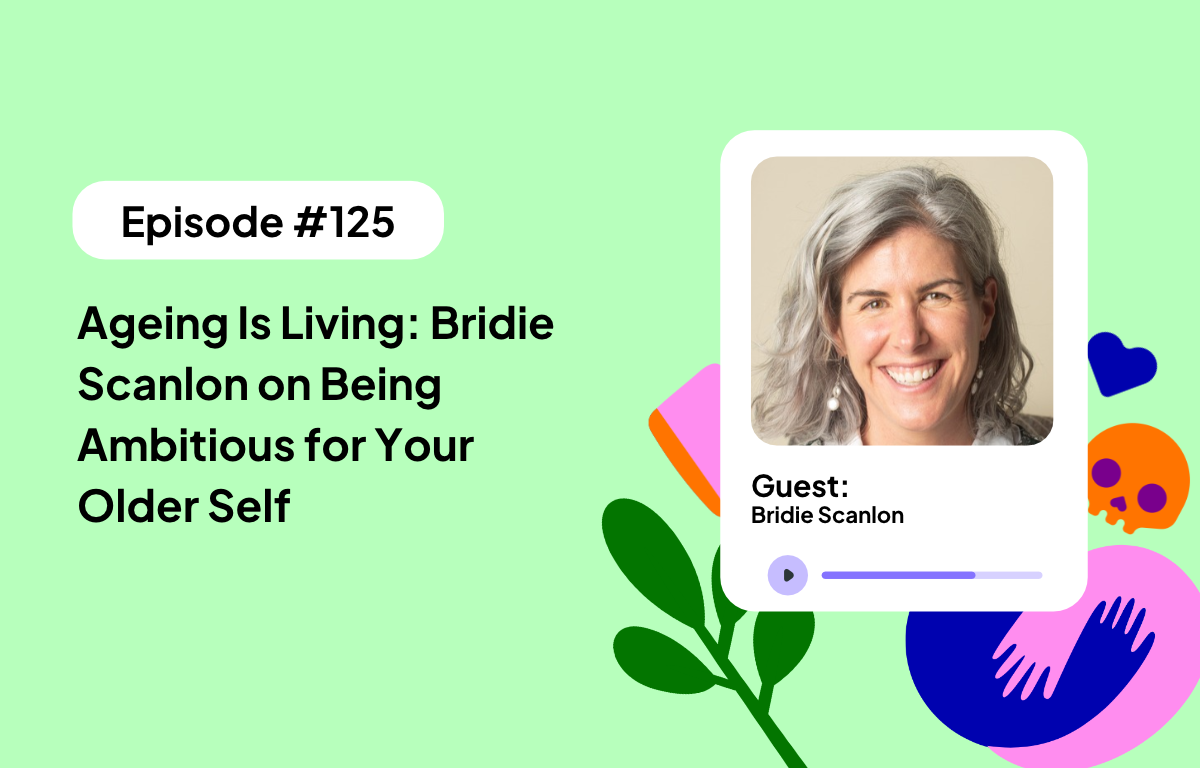




Ageing Is Living: Bridie Scanlon on Being Ambitious for Your Older Self



Listen now
About this episode
What do you want for your 80 year old self, and what are you doing now to give them the best possible life?
In this episode, I'm joined by Bridie Scanlon, a psychologist with more than 15 years of experience working in a multidisciplinary clinic, where she supports people living with chronic pain alongside physiotherapists and pain specialists. Bridie works with the biopsychosocial model of health, looking at the interconnection between biology, psychology and socio-environmental factors. She developed the Ageing Is Living project to help people better understand ageing, challenge assumptions about later life and make informed choices that support health, wellbeing, relationships and quality of life as they age. Bridie and I first met at the NARI Annual Summit earlier this year, where we bonded over end of life planning and a shared admiration for Jacinta Parsons.
Bridie explains why ageing is a process, not a disease, and why we should be just as ambitious for our older selves as we are for babies and children. Drawing on the Harvard Study of Adult Development, she shares the three biggest predictors of quality of life at 85: loneliness, fear of falling and ageism, and why people are often most ageist towards themselves. We talk about why life satisfaction tends to rise in our sixties, how grief tells us what matters, and the difference between having control and having agency, especially around our own death.
We also explore the four pillars Bridie uses when helping older adults plan their future, the power of the 85th birthday toast exercise, and practical ways families can navigate tricky conversations about safety, driving and independence. Bridie finishes with gentle, real world advice for starting that first conversation about planning with an ageing parent, and why it is only ever the first of many.
Remember; you may not be ready to die, but at least you can be prepared.
Take care,
Catherine
Show notes
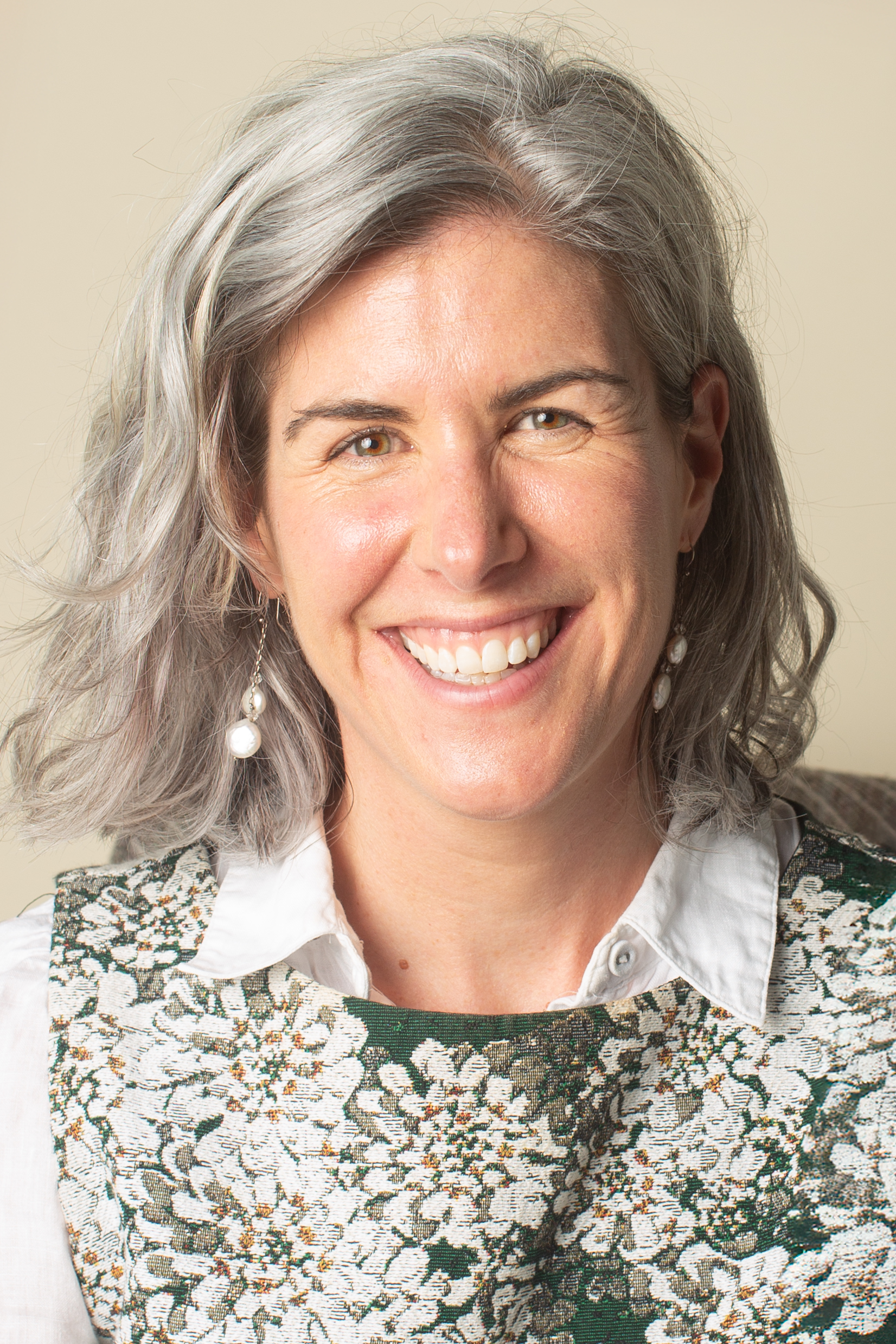
Guest Bio
Psychologist
Bridie Scanlon is a psychologist with more than 15 years of experience working in a multidisciplinary clinic. She works with the biopsychosocial model of health, looking at the interconnection between biology, psychology and socio-environmental factors. Bridie developed the Ageing Is Living project to help people better understand ageing, challenge assumptions about later life and make informed choices that support health, wellbeing, relationships and quality of life as they age.
Summary
What you'll hear in this episode:
- Why Bridie believes ageing is a process, not a disease, and what babies can teach us about how we talk about getting older
- Findings from the Harvard Study of Adult Development, including why the quality of life we can expect between 65 and 85 now mirrors what earlier generations had between 45 and 65
- The three biggest predictors of quality of life at 85: loneliness, fear of falling and ageism, and how each can be addressed
- Why life satisfaction, body esteem and emotional wellbeing often improve as we age, and the idea of socioemotional selectivity
- Grief as a measure of love, and why agency, not control, brings a sense of calm around dying
- The 85th birthday toast exercise, why thinking about your eulogy can be a bigger "kick up the bum", and how death helps us clarify our values
- Challenging the "I'm too old for" story, including a client in her 80s who trained her way back up the theatre stairs
- How to navigate family conflict about safety, driving and independence, and why acceptance is not surrender
- The four pillars of ageing well: legal and financial, where and how you live, mind and body, and purpose
- Why learning something new beats crosswords and sudoku for cognitive health, and what lifestyle factors may help reduce the risk of dementia
- Loneliness, Men's Sheds, intergenerational programs and making "friends in waiting" in your sixties and seventies
- How to start a conversation about planning with an ageing parent, and why it should be one of many
Transcript
Bridie Scanlon: [00:00:00] being born and dying are the two have tos in life. There's really nothing else you have to do. everything else is a choice, and sometimes it's a choice between crappy and crappier. But, I think it's a universal experience, death, therefore so is grief. and so I think, it's one thing that can connect people if we have a space to talk about it. And I think culturally in Australia, we don't have as many kind of practices of talking about death and grief, Aging Is Living Mindset Bridie Scanlon: Because really, aging it's not a disease, it's a process, and I think we ... Read More
Bridie Scanlon: [00:00:00] being born and dying are the two have tos in life. There's really nothing else you have to do. everything else is a choice, and sometimes it's a choice between crappy and crappier. But, I think it's a universal experience, death, therefore so is grief. and so I think, it's one thing that can connect people if we have a space to talk about it. And I think culturally in Australia, we don't have as many kind of practices of talking about death and grief,
Aging Is Living Mindset
Bridie Scanlon: Because really, aging it's not a disease, it's a process, and I think we talk about it like it's a disease. But I often say, babies are aging, and we don't begrudge them. We don't go, "Oh, have we got any anti-aging products for a baby?"
Bridie Scanlon: Of course not. We would encourage and we want to do everything we can to make sure that babies and children and adolescents and young adults all age, because it's a bonus really, if we're all able to get through life.
[00:01:00]
Bridie Scanlon: often in your sixties and seventies is a really good time to start new hobbies. good for cognitive strength. And, people mention doing crosswords and sudoku and things like that for your cognitive health. Although those things are really good, if you only do those things, you just become really good at doing sudoku and puzzles and crosswords. What's actually really helpful for cognitive health is new things, is the learning process. then that can also be really helpful for things like memory.
Welcome to Don't Be Caught Dead, a podcast encouraging open conversations about dying and the death of a loved one. I'm your host, Catherine Ashton, founder of Critical Info, and I'm helping to bring your stories of death back to life. Because while you may not be ready to die, at least you can be prepared
Don't Be Caught Dead acknowledges the lands of the Kulin Nations and recognizes their [00:02:00] connection to land, sea, and community. We pay our respects to their elders past, present, and emerging, and extend that respect to all Aboriginal and Torres Strait Islander and First Nation peoples around the globe
Catherine Ashton: today I'm speaking with Bridie Scanlan. Bridie is a psychologist with more than 15 years of experience working in a multidisciplinary clinic.
Catherine Ashton: Bridie works with the biopsychosocial model of health, looking at the interconnection between biology, psychology, and social environmental factors. Bridie developed the Aging is Living project to help people better understand aging, challenge assumptions about later life, and make informed choices that support health, wellbeing, relationships, and quality of life as they age.
Catherine Ashton: Thank you so much for being with us today, Bridie
Bridie Scanlon: It's a pleasure. I'm really excited to be able to speak with you
Catherine Ashton: So we met at a [00:03:00] NARI conference earlier this year, and we were both girl fanning over Jacinta Parsons, weren't we?
Bridie Scanlon: Mm. We were, it was almost like we were in line for speed dating. And so you and I had the first round, and then we're ready to have our round with Jacinta. It was great
Catherine Ashton: It was great. And that was the day that they were recording the live session for Radio National as well. and so it was very insightful.
Bridie Scanlon: recently was it
Catherine Ashton: It was, it was, and we can include a, a, a little, link to that in the show notes because it was quite insightful, that session and that panel discussion they had.
Bridie Scanlon: ம்,
Catherine Ashton: but we had a connection around about end of life planning and death.
Bridie Scanlon: உம், உம்
Why Bridie Started
Catherine Ashton: What got you started in the work that you're doing?
Bridie Scanlon: Okay. So, and as you mentioned with my work, so I-I've been in the multi-d clinic where we predominantly work with people with chronic pain. And so the multi-d means [00:04:00] the discipline that I work in, which is psychology, and then we have physiotherapists and pain specialists who are the medical side of things. And within the work I was doing in the clinic, there are a certain cohort, probably about 30% of the people that I was working with were older adults, and I had noticed a trend with, guess, messages that they were relaying partly word for word, but partly kind of what they have had absorbed from the people that they'd worked with, so previous clinicians, but also probably too family around them about to expect and what to kind of surrender to in a way in older age.
Bridie Scanlon: You know, it was a bit of, "Well, you're insert age now, what do you expect? And maybe you should slow down. Maybe it's time for you to give up XYZ." Which was very inconsistent with both the model that we worked with within our team, but also very inconsistent with the information that I had [00:05:00] been trained with.
Bridie Scanlon: And I was just like, "Why does this keep happening?" And then to do some training, specifically about working with older adults, and it-- that was when my kind of world just opened up around working with older adults and things that we need to update everybody about.
Harvard Study Takeaways
Bridie Scanlon: And i-in a nutshell, this, this workshop I went to, one of the main bits of research that it drew on was, the Harvard Study into adult development, which followed adults in America, throughout their life, and it's actually now spanned over three generations. And they would do a whole kind of range of tests for people at different stages of their life and then would be tracking essentially at end of life, their quality of life. And what was really interesting, I guess, from-- or the takeaway points I took from that training was two things. One, that at the moment for us, and this is true for Australians [00:06:00] too, the, the quality of life that we are going to have between 65 and 85 is the same quality of life that previous generations had between 45 and 65. So we need expect and plan to have a very full life until we're 85 What's difficult though is that a lot of our kind of social policies, our thinking about aging, know, opportunities for us as we age don't reflect that understanding. You know, basic things like the retirement age. Why do you have to retire in your 60s? And so then I was like, "Wow." The other thing that came from these longitudinal studies was the-- at 65, when they did all their range of tests, so we're talking cholesterol levels, grip strength, your education levels, your [00:07:00] relationships in your life, your financial status.
Three Quality of Life Predictors
Bridie Scanlon: When they measured those things and then they tracked those people into their 80s and they reflected back on all the data, the biggest predictors of quality of life in 85 for those at 65... Do you wanna guess? I love seeing what people think biggest predictors of quality of life at 85 are
Catherine Ashton: I think probably physical exercise
Bridie Scanlon: Mm-hmm.
Catherine Ashton: Social connection, diet
Bridie Scanlon: Great. All great and all very important. Social connection was one. Well, they it as, I guess, though, loneliness. And what they also stipulated with that, it's not about quantity, it's about quality, because there were lots of people who were in relationships who were lonely, and there were lots of people who maybe lived in a major city and were lonely.
Bridie Scanlon: So it's not [00:08:00] about the number of people you have around you, it's the kind of connection you have with them. The next one was fear, but interestingly, quite specifically fear about falling, which then led to physical activity. And so what happens when you have a fear is you're more likely to avoid. So people were avoiding physical activity as they aged, which then meant their, you know, strength, mobility, balance, all of that started to deteriorate and therefore it fulfilled that idea that as you get older, you become more frail, is not actually the case. Well, it can be, but it's not because of age. then the third one was ageism. So it was really about the attitudes that you held around age and, you know, in the past and possibly still now, it was very much, you know, worked hard, now it's my turn to work less," or, "It's my turn to do less." Or it might be, you know, these ideas about what should happen as you age would have an influence then on what you did as you age, which I think makes sense.
Bridie Scanlon: And what was also interesting [00:09:00] was that people were most ageist towards themselves. So they didn't necessarily expect it of others. They were more about expecting it of themselves, which then influenced choices and behavior. So I was like, "Right, we need to let people know." And those three barriers are things that we can address. They, at an individual level and certainly to, you know, when I get really, delusional, I think, "Yeah, we can change all of these social, norms and policies," even though I don't work in government or anything like that. But, you know, we can advocate and try and get those changes happening. But certainly on an individual level, we can make those changes, therefore we can increase the quality of life.
Satisfaction and Goals
Bridie Scanlon: The other thing that came from that around working with-- Well, what made me interested and what I wanted more people to know about aging again, with those longitudinal studies that have now been replicated all around the world as well, levels of satisfaction increase [00:10:00] your later years. Also, too, when we look at, prevalence of depression and anxiety, they're much lower in older adults compared to younger adults. Things like your body or your body self-esteem also improves as you age. And I think then with all the conversations I have with older adults in my life, and professionally, it's so cool hearing how little they care about what people think. and I'm like, "What? We should all be so excited that we're getting to..." That when you get older, it just sounds so liberating in so many ways, if you feel like you can do that in your older years. And there's these concepts too around with age, what contributes to those higher levels of satisfaction is-- it's called socioemotional selectivity. [00:11:00] Like I said before, faculty puts fancy words on straightforward stuff.
Bridie Scanlon: But essentially what that's saying is, with the change in kind of time horizon, you know, when you get that sense of, "Wow, I don't have as much time left," that tends to influence people's motivations and their goals. And what tends to happen is people are more likely to make what they call kind of emotionally motivated goals. And when people make those emotionally motivated goals, they tend to have more satisfaction. And you certainly do see that in older adults, but you also see that with people who've experienced death. Either, know, they have had someone close to them die or they've had a near-death experience. And I wanna pause 'cause I know I'm like, I could just keep talking forever, but I wanna check in. Your reactions, thoughts, yeah, but
Catherine Ashton: Oh my goodness, there is so many things that you've just put in all of that. so [00:12:00] firstly, levels of satisfaction, so that are actually higher, as we age
Bridie Scanlon: Mm-hmm
Catherine Ashton: I love the fact that we've become more accepting of our bodies as we age. I think that's fantastic. But was there a period of time that was noted in these longitudinal studies that said from like from the age of 65 upwards?
Catherine Ashton: Was it the age of 55? Like, at what stage do we actually learn to, be kinder to ourselves in our own internal voice? Because even when it comes to these, you know, emotionally motivated goals, it's again, that internal voice that seems to be, that we kinda control a little bit better as we age
Bridie Scanlon: We do. And there, it tended to be in the 60s, that, that kind of satisfaction and perhaps that more acceptance [00:13:00] and compassion can come through. There's still a lot of thinking and probably discussion and kind of studies going on to try and work out which variable is it that's contributing most to that in your 60s.
Bridie Scanlon: Some of the thinking or the theories are, it's partly through that kind of almost your stress tolerance has improved because you've been exposed to or experienced so many stressors by that time, if you've been lucky enough to get to that age, that when you're faced with those stressors in your 60s and beyond, there's a sense of, not that I've seen this before, but I have this belief, this kind of self-efficacy that get to the other side of it. And that instantly kind of reduces the distress and the doubt in yourself. so then you can kind of have that almost kind coach in you saying, this is awful. This is a curveball." And, you know, remember that A, B, C, [00:14:00] D times that you've dealt with it, there's probably something in those times that's gonna get you through this time. So just put one foot in front of the other and let's do that. So you kind of trust-- there's more evidence in a way within yourself that you can then trust that thought and that voice that can be more kind and compassionate. I think what-- though there is a bit of a dip sometimes in the 60s with that confidence in yourself and that, reduction in self-doubt because of transitions from often structured work, and that can be both paid work and unpaid work, so that could be being a parent, all of a sudden those structures drop, that sense of purpose and I guess satisfaction and contribution, the absence of that can then have a negative impact on people's, confidence. However, again, that kind of buffer of, hang on, I've had transitions, I've had challenges in my life before, I think this is one that I can manage, does tend to help [00:15:00] again, when people are making those kinds of moves in their 60s and sometimes now into their 70s as well.
Catherine Ashton: And it's interesting that there's that correlation with the experience after people have had a loved one die. and I, I noted this even yesterday. I was at a, an expo, and people would come across what the work that we do when I explain it's about end of life planning. It was very clear whether someone had had a personal experience or whether they hadn't, and their level of comfortability of talking about it, because I use a jigsaw to explain it and, and say, "This is what it feels like, you know, when you, you have to put someone's life together and you don't know all the pieces."
Catherine Ashton: And, and there's just this recognition in people who have gone through that, that they know straight away what that's like
Bridie Scanlon: Yeah, they do.
Grief and Agency
Bridie Scanlon: I mean, being born and dying are the [00:16:00] two have tos in life. There's really nothing else you have to do. everything else is a choice, and sometimes it's a choice between crappy and crappier. But, I think it's a universal experience, death, therefore so is grief. and so I think, it's one thing that can connect people if we have a space to talk about it. And I think culturally in Australia, we don't have as many kind of practices of talking about death and grief, but yours is obviously a wonderful one that we have. yeah, I can imagine that you could tell, as you say, if someone's been through it, because it seems to be something that they can comfortably relate.
Bridie Scanlon: Well, no, maybe not comfortably, but they can relate to it.
Catherine Ashton: Yeah, and it's one of the very few things that we do in life solely alone. We come into the world by ourselves and we go out by ourselves. So it is that even though the grief is [00:17:00] something that's felt universally, it is still a solitary experience
Bridie Scanlon: And I think, you know, often when I'm working with people in regards to grief, we think about it as a measure of love or what's important to you, and therefore every grief experience is going to be quite unique and quite individual because it's in relation to either the person or the thing or the experience that you are grieving. So then although, as you say, death is universal, it's also incredibly individual. you know, that's why it's worth contemplating what are the that if you can control... Not about death, like you can't control that death is going to happen, but as you're helping people realize there's things that you can have a say in about what happens around your death. And what we know too, again, for kind of sense of [00:18:00] satis-satisfaction, is what's that sense of agency, and agency's different to control. Agency's more like I'm in the driver's seat. I get a say, and my say is valid and heard. may not be agreed with, it may not be liked, but it's there. you know, whereas control is, you know, I, I push the button, I pull the lever.
Bridie Scanlon: I think agency around death is really, really important, and it gives people a sense of calm when they have had agency around their death
Catherine Ashton: And I think we see that with the increased interest that I've certainly noticed at public events with voluntary assisted dying, and the fact that that is now something that is a legal option across Australia, or to be introduced across Australia in Darwin most recently. and that sense of, of agency and control in something that we can't normally predict or have any control [00:19:00] o- over
Bridie Scanlon: Yeah. And, and too, again, because it's often, and this is something I've learnt through my work, but I also think too with some of the experiences of death in my life that, you know, informs life and, you know, just as grief tells you what's important to you, 'cause you don't tend to grieve things that are not important to you.
Bridie Scanlon: You don't tend to grieve the loss of people who are not important to you. and that doesn't mean you have to have a personal connection. You know, we all know people can grieve a lot for a writer or a musician who they may not have ever personally met, though they have a connection with that person and their work, and that's important to the individual.
Bridie Scanlon: Therefore, if that person or that work is gone, well, therefore they're gonna experience some kind of grief.
Values and Mortality
Bridie Scanlon: yeah, that death absolutely informs life, and this is actually an exercise that can be used in therapy, but it's also something that informs a bit of the work that I do with older adults and with planning with older adults, is to [00:20:00] think about your 80th birthday. And, you know, there's gonna be three people who make a toast. And don't worry about the reality of time or anything like that. It can be a friend from when you were 10, you know, and it can be your current, you know, best friend or anything like that. And when you picture these three people making a toast for you at your 80 or your 85th birthday, what would you be proud to hear? You know, would you be proud to hear them say, "Oh gosh, Catherine was fantastic. She was such a workaholic. All she did was head down, bum up. We never saw her. She was just, you know, at the computer, and we knew she was giving it all." Or, you know, would it be satisfying to hear, you know, "She just really liked being on her own and, you know, she didn't really, um, get stressed by anybody 'cause she didn't hear-- you know, spend time with anybody." The majority of people, when I give those two examples, they're like, "Oh, no." A lot of people are like, "Oh [00:21:00] God, if they're talking about my work at my 85th, like how boring." And these are people who are really accomplished and really competent with their work. They're like, "Oh, is that all?" Or... so it starts when people do that thought exercise, it taps into their values. And what is sometimes, though, is the practice of thinking about your eulogy, if someone was going to write your eulogy. and what's interesting too is there are some people who get quite confronted by it being their eulogy versus their 85th birthday. And sometimes it's because they're not far off 85, and they feel then that pressure to try, and they've gotta go and achieve all these things in two years. And you're like, "Well, that's not the point." but it tends to be when people picture their eulogy, it's a much kick up the bum than when they're, thinking about their 85th birthday. ' Cause again, I just think death is really telling us, [00:22:00] "Well, what do you want your life to be like?"
Catherine Ashton: And it's interesting you say that because again, it comes back to language. so, and, and the focus. So the difference in people's responses to imagining their 80th or 85th birthday, and then the difference in thinking about their eulogy. So, we also found that when people were going through end of life planning, there was a level of anticipatory grief that they were experiencing.
Catherine Ashton:
Bridie Scanlon: Mm-hmm
Catherine Ashton: storytelling and the opportunities to tell meaningful stories as part of that to sort of combat that feeling.
Bridie Scanlon: Yeah.
Catherine Ashton: But again, it comes back to, to language. you talked about ageism and that internal voice that we have about what we tell ourselves
Bridie Scanlon: Mm-hmm, mm-hmm.
Too Old Myth Busting
Catherine Ashton: What are some of the things that we tell ourselves as we age that we probably shouldn't be?
Bridie Scanlon: Mm. [00:23:00] Uh, gosh, where to start? I mean, I just think that there's the umbrella term of I'm too old for insert. You know, I'm too old for a concert. I'm too old to study something new. I'm too old to make new friends. I'm too old to, you know, walk on my own. And the thing is that, as I often say to people, like, "Where's the rule book that you're referring to that's telling you that?" you know, we have laws certainly around some things that pr- prohibited to people who are younger than 18, and rightfully so. I'm not aware of any law that says anyone's too old for anything. And even when it comes to something practical like driving, that's not about age, that's about your vision possibly, or your, you know, decision-making, and that can vary wildly, and there might be a 45-year-old who's not permitted to drive [00:24:00] for reasons, you know, that make sense, but not to do with age.
Bridie Scanlon: And so, yeah, it's just checking like what rule book are you referring to when you are Telling yourself that you're too old to do something, this is where fear comes into it. There's perhaps something else that's stopping you from doing that thing. Is it that, you'll look silly? Is it that you'll say something embarrassing?
Bridie Scanlon: Is it that you might fall down the stairs if you go into that concert? You know, what is it that's actually the scary or the, the barrier there? And there's likely going to be a workaround to that barrier. And it's not often that it's a quick fix, the workaround. So I had this wonderful client, she was in her 80s and unfortunately, you know, was starting to feel physically less capable.
Bridie Scanlon: Had some pain, had done a really good job in kind of reducing her pain and increasing her activity level. However, one of the goals that she had was to go into the [00:25:00] city to one of the theaters and to see a show. And her memory of going into the theater was that the steps were quite steep, and she just wasn't confident that, you know, she was easily going to be able to get up and down the stairs. She was also someone who had pride, you know, she didn't want then to get people to carry her up or down. she was happy for that to happen to other people, but it just didn't sit comfortably with her. And so then the physios were great. They're like, "Okay, let's do a program that's gonna build up your quads and your glutes," and wherever else that needed to be worked up.
Bridie Scanlon: And we just did a pacing up plan for going on stairs, and she would practice in different settings on stairs, and it would be gradually more busy, more steep, and she just persisted and got there and went into the theater. And then at the end she was like, "Oh, they weren't even that, that bad." you know, a- and that was something, I guess it wasn't really about [00:26:00] in the end certainly was partly strength, but it was more, I wanna be able to do this on my own. That's really important to me, and if I'm not able to do it on my own, it's not gonna feel satisfying for that person. And so we worked on that, and she did it, and it was great. And so now she's- Going to lots of shows.
Bridie Scanlon: and I think if there had been people around her who rightfully so were being cautious and caring and saying, "Yeah, perhaps it's about time to just, pull back on going into the city on your own. Perhaps it's time, you're not gonna get too go to those, or perhaps it's time we get you a, a mobility aid then." You know, and they're very reasonable suggestions, and at times that is a really suitable option for people. but it wasn't for this individual. And so that's what I find is important when we're working with older adults in particular, to just check around their agency. You know, what is it that they would like?
Bridie Scanlon: What sits comfortably with them? And to continue to be ambitious [00:27:00] for them. Because really, aging is not-- Well, it's not a disease, it's a process, and I think we talk about it like it's a disease. But I often say, you know, babies are aging, and we don't begrudge them. We don't go, "Oh, have we got any anti-aging products for a baby?"
Bridie Scanlon: Of course not. We would encourage and we want to do everything we can to make sure that babies and children and adolescents and young adults all age, because it's a bonus really, you know, if we're all able to get through life. so I think we've just got to be careful to not assume that any difficulties an older adult is having is because of age. It's just probably are some other difficulties there. And just to explore them. Just go, "Okay, well, if I had the physical capacity, I still want to do that thing?"
Catherine Ashton: That's a great question to ask, and I love the fact that you're inviting people to [00:28:00] explore the real reasons maybe behind what might be the barrier that they're feeling stopping themselves doing things. and I know
Bridie Scanlon: உம்
Catherine Ashton: something that even after my car accident and my recovery, just questioning myself, you know, "Is this because of something that's proven or is it because it's something that I'm fearful of?"
Catherine Ashton:
Bridie Scanlon: Yeah.
Catherine Ashton: very different questions
Bridie Scanlon: And, you know, to keep asking the questions. I think one of my colleagues, he's great, he says both to w- within the team, but also to, the people we work with, like keep asking until it makes sense. And so that can be true even when you're working with a clinician and they're explaining something to you, perhaps about why you can or can't do something. Like keep asking them why until it makes sense to you why it's good for you to do something or it's not good for you to do something. Because we know that, and it's not through poor [00:29:00] intentions, but it's just the delay of training and things like that. We know that some clinicians have outdated assumptions and outdated information, and so it's just checking what, what assumptions or, information are they referring to. And it's-- could be very trustworthy, good information, but just keep asking until you get that
Catherine Ashton: I love that. And there was, something that you were just mentioning about the role of values. How important are our values and understanding what our values are when we look at planning a healthy way to age?
Bridie Scanlon: They're really important, I think. You know, and that's probably very firmly with my psychologist hat on. I think, though, if I step back and think about, the work I do with older adults around planning for their future life, so, you know, we cover [00:30:00] these four pillars of aging well. So there's legal and financial, where and how you live, mind and body, and purpose.
Bridie Scanlon: And the reason that we've four is because we know if we don't consider all four, then we rarely get movement or productive kind of gains for people. for example, if somebody has covered, you know, their legal and financial, where and how they live is working well for them, and kind of physically and mentally they're very capable, but they have no purpose, they're not going to have that quality of life that they would like. And so purpose really fits with values. And so particularly when it comes to behavior change and anything you kind of need to do that's difficult, values tend to be one of many things that can help you go in a direction that makes sense for you. When I'm working with clients and I mean, I think even too for myself, you know, trying to make sense of what values are, they're not [00:31:00] often something that we sit down and explicitly It's not something... You know, I don't sit down with my mates and go, " What's important to you?" You know, it's something that kind of either is gonna come up with the other things that you're talking about or through the way that you behave. And a way to kind of make sense of values at times, I think could be your instinct a bit.
Bridie Scanlon: Sometimes you're in a situation, and you just have this sense of, just not sitting well with me. Something, this just doesn't quite feel how I would like it to be. And sometimes people, can have extended periods of their life where it feels like that, and that's really hard. I mean the-- the thing is with values is they're, they're not a, an achievement or a kind of something that you tick off.
Bridie Scanlon: They just tend to be a constant that's pushing you in a certain direction. A bit like north, south, east and west. You don't arrive at north, you tend to go in the direction of north. this is what values do. They kind of take you in a direction. And if your [00:32:00] behaviors are consistent with your values, it tends to sit most comfortably with you. the very kind of insignificant example I often give people when I'm introducing this is, you know, I really value yummy food, I value, being polite, and I value honesty. And so these are a few of, you know, the many values that I have. And so if I go into a deli and they've got some free testers of delicious cheese, I absolutely say, "Yes, thank you," and I will eat as, probably as much as I possibly can, and I really enjoy it. And the person says, "Oh, you know, can I give you some information about this cheese?" I go, "Yeah, go for it. Love to hear that. That'd be great. Thank you." And they explain it. It's very interesting. It's great. And then they say, "Oh, would you like to buy some of the cheese now?" And I don't. And I'll say something like, "Oh, I just, I don't have the right card on me today, so I'm...
Bridie Scanlon: I'll see you next time." And I walk out of there feeling like a bit of a, bit of a plodder. You know, that [00:33:00] was not ideal. And what I've done in that situation is I have prioritized the food and the politeness and not honesty. And so what I wanna do is try and shuffle them around. Don't get rid of them, but shuffle them around and find a way to behave that's more consistent with those three values.
Bridie Scanlon: So I might say something like, " Look, I really appreciate you taking the time to explain the product to me. I actually think it was delicious, and I've really enjoyed myself. I'm just not in a position to buy any today." They're fine. They go, "Yeah, cool. Thanks for letting me know." And then I walk out of there just feeling more comfortable with how I've managed that situation. and sometimes you do need to kind of turn them up and turn them down, your values. You know, because say for example with honesty, if I'm having a terrific week and, you know, it's a winning week, I've maybe just feeling on top of life and maybe I've just got a promotion as well, and then I catch up with a friend and they're having an awful week.
Bridie Scanlon: Just stuff is not going their way. Life is [00:34:00] hard. You know, they hate their job. And then they go, "Oh, Bridie, tell me, you know, but tell me about you. How's your day?" Probably not great for me to go banging out with honesty and go, " I'm killing it. Do you know what? Like, I'm absolutely smashing it this week." They probably want me to be honest, but they don't want me to have that as my leading value.
Bridie Scanlon: And so then I might say, "Do you know what?" Because maybe hopefully too I value friendship and I value kindness and I value compassion and I value patience that I can say, "Hey, look, there's a part of me that really wants to tell you all this good stuff that's happening, but I know that you're having a shit week, so let's not talk about that today.
Bridie Scanlon: We can come back to that next week." "What do you need? Do we get some, another block of chocolate?" And that's how values can kind of guide our behavior, which is then leading to that more satisfaction. and again, I think this is, you know, things like mortality and death and limited time [00:35:00] you to think about those things, and this is why sometimes regret, as uncomfortable as it is, what it's telling you. You would have liked to have done it differently. would have liked to have been able to say this. would have liked to have had this moment. You would have liked to have done X, Y, Z. that's what values are important to me. That does sit more comfortably with me. So it can be an uncomfortable process too
Catherine Ashton: And while we're in that uncomfortable space, you were talking earlier about, when we, you know, ask our physician, you know, keep asking questions until it makes sense to you.
Family Safety Talks
Catherine Ashton: What about when there is that conflict within family, around,
Bridie Scanlon: H
Catherine Ashton: you know, things that, that you were mentioning such as, as driving, whether it's still comfortable for people to be going to the theater and in the city by themselves and, and all of those things that [00:36:00] become quite topical as, you know, we do get older and, and people question our independence.
Catherine Ashton: how do you, how do you navigate that?
Bridie Scanlon: Yeah, good question. Two things are pretty important, I think, in conversations. It's around certainly safety and the concept of acceptance. You know, that in any part of our life, acceptance needs to be on the table, and acceptance is not surrender. Acceptance is not saying, condoning something that you don't like.
Bridie Scanlon: It's the process of just not resisting something anymore. And so if it is pretty clear with some objective measures that something's not safe- Then it would be really kind of putting that objective information on the table and saying, "We now need to accept that this is not a good option anymore." And measures I'm [00:37:00] thinking about, say, for example, with the lady who wanted to go and down stairs on her own to be able to go to the theater, we could measure that.
Bridie Scanlon: We could track that. We could measure that. We could test that. And so we had information to say, "This is where you're at." too, we accept that, you know, there is going to be a certain level of risk, and so you might have some contingency plans of, okay, and if you do have a fall, you know, or if you do get into trouble, these are the steps we want you to take. And when it comes to driving, I think, and this is something too that my colleague with, in the clinic, but with, with the planning service that we have, when we're looking at people not being able to have their own license anymore, really making sure that we've got some cons- other options on the table.
Bridie Scanlon: Because if you're saying to someone, "Hey, look, it's not safe. We need to take this option away," and then there's nothing else left, that's where it becomes, I guess, even more upsetting. And [00:38:00] when the upset or the distress is higher, then people are gonna try and hang on for longer. I think when you're having these conversations with family around, "Look, safety feels like it's been compromised here," I would really encourage people, as best as possible, to try and find out two or three other options.
Bridie Scanlon: You know, is it that we're gonna set up an Uber account, and the family's all gonna contribute, so you know that you can always afford to get one whenever you wanna go? We're gonna sign you up for the community bus, so we know that every Tuesday and Thursday there's gonna be someone who's gonna take you down to the shop, so you do have that interaction with everybody, and you do get to continue to pick up your own groceries, therefore keep your own physical strength and your independence. You know, or we're gonna do a roster within the family, and, you know, you'll know that there'll always be a car sitting out the front on a Wednesday, Friday, and a Sunday. or let's go, let's practice getting on the bus. Let's see how you go getting on the tram. That's also too where physical stuff comes into it.
Bridie Scanlon: You know, things [00:39:00] like balance. I don't know about you, but often on the tram and the bus, I've got to really hold on, and I need to work on being strong enough to do that. So you also need to consider those things. And so this is where it's about thinking about those pillars, that it's often not just one.
Bridie Scanlon: You know, because in that instance, we're talking about maybe where and how people live. We need to consider what's going on with their body, and we also need to consider their purpose. ' Cause it's good, you know, there are lots of wonderful community services, however, the individual often needs to fit in with the timetable of that service. And so then people can lose that, that spontaneity or agency, can be really hard to adjust to. So, if there's any way for us to have that flexibility for people, that's pretty important.
Four Pillars Explained
Catherine Ashton: And Brady, you talk about, the different pillars that you focus on when you look at someone. You've mentioned obviously the role [00:40:00] of purpose. Can you talk us through the other pillars that you focus on?
Bridie Scanlon: So as I mentioned, yeah, there's purpose, mind, and body, which really is covering are you physically and mentally able to do the things that you would like to do and that you need to do? And if not, are there things that we can recommend you engage with to help you be able to do those things? Similarly, Are there any things that you can be aware of, depending what decade you're in, that are helpful to be doing for your mind and your body? So for example, there's different kinds of exercises and, frequency of exercise that is helpful in your sixties versus your seventies, eighties, and nineties. this is what's great working with physios 'cause they can tell you this, but it, you know, it's like weight bearing versus stretching versus balance, all those kinds of things. and it could be things like, you know, often in your sixties and seventies is a really good time to [00:41:00] start new hobbies. good for cognitive strength. And, you know, people mention doing crosswords and sudoku and things like that for your cognitive health. Although those things are really good, if you only do those things, you just become really good at doing sudoku and pos- and puzzles and crosswords. What's actually really helpful for cognitive health is new things, is new, like is the learning process. then that can also be really helpful for things like memory. there are changes with memory. Everybody overestimates though what our memory is capable of doing. And these days, one of the biggest barriers for memory at any stage in our life is our attention. So you actually need to be able to pay attention well for you to absorb and encode information, so then it's able to be stored and then retrieved from memory. So again, in your sixties and seventies, it, and even eighties and nineties, you know, practicing your attention And that's gonna [00:42:00] help with, memory moving forward. Where and how you live is thinking about the home that you're in, the space that you're in. Like, do you enjoy it? both kind of, you know, aesthetically, are the windows clean so there's actually natural light coming in? are there things that you don't use anymore that you can get rid of? certainly too when mobility and balance is something that needs to be taken into consideration, just, you know, clutter, getting in and out of the bath. So there may be some installations that can happen that can be helpful at home. There's actually this really cool place in Frankston, the National Aging Research Center, and they have, uh, an example of a flat with all these modifications that you can make and like adjustable kitchen benches and these really cool things.but also too, it might be about the actual location of where you are, particularly is it making you [00:43:00] isolated?
Bridie Scanlon: Is it more difficult for you to get out and do the things that you would like to do? So we can help people consider that. and then with the legal and financial, that's a lovely kind of crossover with the work that you do, Catherine. It's, working with our financial advisor who will do a plan prompting questions around what you need and what you would like.
Bridie Scanlon: But then also too, have you got a will? Have you got a power of attorney? have you got an advanced care directive? you know, have you thought about, who you would like the sentimental things to go to? And, just starting to kind of really prompt people and then connecting them again with, relevant services or organizations that can help with that. and also too, we know that what people might need to consider under those four pillars in their sixties could again be different in their seventies versus their eighties. So it's kind of they can bounce in and out with the service.
Catherine Ashton: And it seems to be, when [00:44:00] you're describing the care team and the fact that it clearly is a multidisciplinary team, how important is it for the family members if they have concerns to actually communicate and be part of that process with that team?
Bridie Scanlon: I think it's really important and it's very helpful.it's interesting in the clinic, I tend to see that family members more often than not are too helpful, you know, and are too cautious. and so it's really important to give them the opportunity to tell us what they're worried about because maybe they have had to-- or maybe they've witnessed something actually really upsetting or distressing happening, and they don't want that to happen again, and that's, you know, something that they're working hard to avoid. but by being overly helpful, they can then kind of [00:45:00] contribute to the in-individual becoming a bit deconditioned. so it's really important though then to hear what they're worried about, so then if we can do some problem-solving with them, we will. when it comes to the, the work plan-wise that I do, certainly having family members involved is really important to make sure that they're aware of what the older adult wishes are, whether it be around how they want to spend their time or what they want things to look like after they die. 'cause again, I think that's where sometimes assumptions are made and often well-intended assumptions, but there are assumptions made. yeah, it's interesting. I think different families have different ways of communicating with each other, and it's not uncommon to have kind of thought that they've talked about something, but they haven't explicitly talked about something.
Bridie Scanlon: I think even if it is just about you know, involving them in the process so that a topic is on the [00:46:00] table, doesn't have to be resolved, but that's now on the table, I think that's worthwhile. I also think too, sometimes we don't get all the information, it be in the clinic or with plan-wise.
Bridie Scanlon: We don't-- Yeah, the individuals aren't always forthcoming with all the bits of the puzzle, maybe they haven't thought of it or seen it from their family's perspective, and so that is often really valuable information
Catherine Ashton: And especially, we, we know that statistically there is more cases of cognitive decline. Dementia is
Bridie Scanlon: Mm.
Catherine Ashton: the number one killer in Australia, at the moment. So
Bridie Scanlon: Mm.
Catherine Ashton: that adds another layer of complication as well, I'm assuming
Bridie Scanlon: Yeah. It does. It does. And I think similar to death, I think talking about the potential of cognitive decline when you're well is helpful, you know? [00:47:00] I think it's really scary for a lot of families and a lot of older adults, particularly if they've witnessed family members before them experience any kind of dementia. so they can then either not be looking out for indicators that might suggest that they're going down that same path, or they could unfortunately, to be having what we would probably see as normal cognitive change. might see that as an example of suggestion of, a serious cognitive change, negative cognitive change like dementia, and then they kind of start to become stressed and anxious about it. And unfortunately, increased levels of stress and anxiety do have an impact on concentration and memory, and so then can seem like a self-fulfilling prophecy as well. So I think, having that on the table, particularly if there's family history of dementia, there's increasing number of research coming out, you know, [00:48:00] highlighting the role of lifestyle factors on reduced risk of dementia. so as you mentioned earlier, things like diet and physical activity, particularly any activity that's going to contribute to vascular system. that are gonna get your blood pumping are potentially really beneficial to reducing the risk of dementia. And so again, these are the things that at PlanWise we try to let people know without overwhelming them. But, you know, did you know if you just include this kind of, you know, ten-minute walk, for example, or these kinds of, these kinds of weight training that you're reducing, contributing to, the reduced risk of dementia as you age?
Catherine Ashton: And I love the fact that you point out that what we are at 60 is not going to be the same as what we are at 70 or at 80, and the fact that we need to really check in and regularly review just where we're at and what,
Bridie Scanlon: Ja
Catherine Ashton: what we're, [00:49:00] we're doing to improve our quality of life. Uh, I really love that.
Loneliness and Connection
Catherine Ashton: And tell me, how important is the role of, you know, those three people that you have, speaking at your 80th or 85th birthday? How is it that you have that support network when we know that, you know, loneliness, is a contributing factor of,some issues as we, do age?
Bridie Scanlon: I know, I just find loneliness, it's such a big, heavy, sad exist- phenomena, you know. And it is a very real one, and that's why, you know, places like the UK have a minister for because it has effects. yeah, that kind of connectivity is really the main buffer that we have for loneliness.
Bridie Scanlon: And again, the connectivity It doesn't have to be as perhaps big as you would expect. And so this is [00:50:00] why community centers, even, you know, good old RSLs, the-- I actually did a talk yesterday at a Country Women's Association. even the local supermarket. So places that people can ex- can have access to easily, that matter what your kinda skills or experiences are, you can be a part of it. And, you know, really having, reducing any barriers to entry is, is a really important part for reducing loneliness. there's more thinking around how do we assist people if they are retiring from paid work where they've been there for a very long time. Because often the incidental interaction that people have had through their work has been a, a big part of their social connections. And so then if we take away the structure of work, we're taking [00:51:00] away that incidental socializing. So programs that, excuse me, can them in or transition them to other kinds of, activities is really important. know, things like Men's Sheds are amazing for that. And still acknowledging that we all have varied needs and levels of socializing that we do. So some people, you know, the socializing that they would do is being in a bird watching group. So there's not actually a lot of intera- you know, they're quite quiet when you go and do bird watching.
Bridie Scanlon: You know, it's not that you're actually talking a lot, but you are in the presence of other people and that experience of there's a group of people perhaps who will hold me in mind. if I haven't turned up in two weeks, someone might check in, have-- am I okay? That's that, antidote to loneliness, that there's this experience of there's a, a group or two people who are m- are aware that I am here, and they'll [00:52:00] check in if need be. you know, there's wonderful intergenerational programs are really great for combating loneliness 'cause then don't know if you ever watched those shows, Old People's Home for Four-Year-Olds and Old People's Homes for Teenagers.
Catherine Ashton: Oh yeah, always in tears
Bridie Scanlon: oh Oh, how could you not be in tears? I mean, you get something wrong with you if you're not crying at the end of those episodes. Oh my gosh, they got me every time. Again, this is where I get into my kind of ideological deluded self where I'm like, "Yes, let's have one of those on every corner. That would solve all the problems of the world." I think it would help a lot. I don't know how feasible it is to set that many up.again, I think any ways where we can have older adults playing a role, having a part, because they do. There's almost like a, skills drain when we cut off involvement for older adults. you know, and even within family structures, if there's a way for an [00:53:00] older adult to have a consistent role, you know, whether it be that they're the one that always brings the bread when you have dinner or, they're the one that writes the birthday cards or anything that can kind of give them a consistency and a connection is going to buffer from that loneliness. I think there's still more that we can do in a kind of community social setting. I also think too it's acknowledging that, that also too with older adults, the reality is their cohort starts to die. So they do have more friendships end because of death. And so then this is another thing to prepare really when you're in your sixties and seventies, being open to new friendships. And I know I'm not good at that even now I'm in my forties. You know, not because I don't like people, I love people, but I just get, I can't fit any more in, you know? [00:54:00] I'm not gonna be a good friend to someone right now 'cause I'm forgetting left, everything left, right and center. I just think though you've got to have this openness to friend, new friends at every stage of your life because the reality is when you are in your older years, more of your friends die, and your circle of friends can become quite small. So being open to, yeah, hanging out with people that perhaps you wouldn't have previously is an important trait to have
Catherine Ashton: I remember my 94-year-old grandfather saying to me, I would've been, in my, you know, tw- probably 12 at the time, and him saying to me, "All my friends are dead." And he said, "It's very lonely." And, and it just really stuck with me that, yeah,
Bridie Scanlon: Yeah
Catherine Ashton: all of his contemporaries, and he was the only one left at the age of 94, and this was back in the early '90s
Bridie Scanlon: Yeah. Wow. [00:55:00] Yeah, exactly. And so I think, excuse me, that's at times where retirement villages can be great for people. but there's also too a lot of adults who that, that just doesn't appeal to them. But I think what happens is there's a, there's a span of ages in the, in those communities, and so then they do have more access to meeting people.
Bridie Scanlon: again, this is where any activities where they're interacting with, with people who are not their usual friendship circle is that opportunity to have the friends in waiting, you know? they can come off the bench when your other friends, when they're dying
Catherine Ashton: And it's also supporting, that person or the loved ones of that person when they do die, because I know,
Bridie Scanlon: Mm.
Catherine Ashton: that she's very connected with her gym group. She goes three days a week, and they then become the support network when a spouse or a loved one dies in that group[00:56:00]
Bridie Scanlon: They do. And, and again, there's that-- We're almost going full circle, Catherine. You know, that idea of, relatability, that then when other-- there's are people in your circle who go, " I have a bit of an understanding of what it might be like for you because my partner has passed away," or, "My sibling has passed away," or, you know, "My friends have passed away," because that does become a common experience, particularly in your older years, that you have experienced someone who's died. and there's real comfort in that, and it's beautiful to watch. I think people who have experienced their own grief, yeah, they're much more comfortable the kind of turning up on the doorstep or, you know. I... Someone I witnessed, in a group where someone was grieving and there were a few people who had also experienced the loss of their partners, and they said, " What level of shittiness are you at today?
Bridie Scanlon: Do we hate the world or are we okay?" And I was like, [00:57:00] "Oh, wow, what a great question." and I just thought, oh, maybe you could only ask that if you've been in that scenario. And there was just this coh- They were probably all... think the youngest there was maybe, like, late 70s. and oh, they just had this richness of experiences, and they could really, really support each other and relate and were comfortable with meeting each other wherever they were at.
Bridie Scanlon: It was... Yeah, it was really cool to watch. and again, another thing that I go, "Oh, that's something you're gonna have when you're in your older years if you curate those connections." And that's again, something you might need to work on in your 60s and 70s.
Starting Planning Conversations
Catherine Ashton: Talking about working on something, the question that I get asked quite often, and I'm sure this will come as no surprise to you, Bridie, is how to have the conversations with our generations that may be older than, than where we are right now [00:58:00] about planning
Bridie Scanlon: Mm-hmm.
Catherine Ashton: where to start.
Catherine Ashton: Where there might be some challenges, there, there might be, just a bit of fear around it. What's a good place to start the conversation?
Bridie Scanlon: A good place to start is to know that it's going to be one of many conversations. Do not put pressure on yourself or the other person that you need to say everything and resolve everything in one conversation. that would be a pretty golden conversation if you were able to achieve that. That what can be helpful too is to outline your intention, and also then to describe what it's feeling like for you at that point, and just then leave it there. So the example might be, " Mom, I see you as super capable, and I think you're doing a really great job with everything. I have had the thought [00:59:00] that it might not always be like this, and I wonder whether it's worth we start thinking about that. I feel bad saying it to you because I feel like it might-- you might worry that, you know, it's because I see you as not coping, but it's the opposite.
Bridie Scanlon: I see you as coping, and it just might not be like this all the time. So I wonder whether we have a conversation." And that could be met with, "I don't know what you're talking about." Or, you know, it could be met with, "Oh, that's so lovely, Bridie. Thank you. I'm fine." Or it could be, "Well, let's just worry about it when we have to.
Bridie Scanlon: I am fine." And so you go, "Yep, no worries." you've done, though, is you've got a reference point that you can come back to later, and it might be that when there's an actual example of perhaps the person's situational capacity changing, that you can go, "Hey, Mom, remember when I [01:00:00] mentioned that it could be helpful just to think about what you'd like if things change?
Bridie Scanlon: is this example of that?" Or sometimes less confronting is if, say, a friend of theirs or someone, you know, maybe it's, someone within the family, wider family, that that older adult has needed to make a decision, because wherever their capacity's changed or maybe they hadn't prepared their finances and now they've died. that can then also be a good opener to say, "Oh, God, I really feel for Auntie Susie's family because they didn't get to have that conversation. Mom, remember when I mentioned, you know, how you got everything sorted and you're doing a great job right now? I wonder whether it's helpful for us to have that conversation so what happened to Auntie Susie doesn't happen to us." and so you're just coming back to, again, your intention You know, identifying [01:01:00] them as a capable person naming what it might be like for you. Go, "This feels awkward," or, "This feels hard," or, you know, or this maybe it feels exciting for you. I don't know. but it's helpful for the listener to have that context when you're putting that conversation on the table
Closing Reflections
Catherine Ashton: Bridie, I can't thank you enough for providing such insight to quite a few challenges, that, and fears that I think some people may have when it comes to having these conversations. But also what we need to consider as we do get older, in our 40s, 50s, 60s, and, and I love the fact that it is something that is viewed in a holistic way, and something that we just need to work on as we evolve.
Catherine Ashton: So I think it's really beautiful how you describe it[01:02:00]
Bridie Scanlon: Oh, my pleasure. As you can probably tell, I get very excited talking about it. I enjoy talking about it, and I could talk about it for hours, so you've done well to contain me. and I just really appreciate, yeah, being able to talk with someone like yourself about this, and I appreciate the work that you do, I just hope that we can keep having these conversations and supporting people to have these conversations in their own homes as well
Catherine Ashton: Yes. because, yeah, if we can keep people, in their own homes or wherever they are the most happiest, and identifying where they're the most happiest, that's a good step in the right direction. Thanks so much, Bridie.
Bridie Scanlon: My pleasure, Catherine. Thank you
We hope today's conversation gave you something to think about. If it brought something to mind that you haven't organized yet, talked about, or decided on, don't try to do everything at once. Start with one simple step. We've created a free three-minute [01:03:00] critical info check to help you see what you've already got covered and what your next step could be And if this episode has brought up feelings for you of grief, loss, or bereavement, please note that you don't have to navigate that alone.
We have an after-death guide to support you, and you can find grief and bereavement support organizations through the Critical Info Resource Hub. The links are in the show notes. And remember, you may not be ready to die, but at least you can be prepared
What if something happened tomorrow? A sudden hospital stay, an accident on an overseas trip, or something happening to someone you love. Do you know where the important documents are kept? Can someone speak for you when you can't? Do you know your loved one's wishes? You don't need to organize [01:04:00] everything today.
Take our free three-minute Critical Info Check. It helps you see what you've already got covered and what your next step could be. Three minutes, one next step. The link is in the show notes. Critical Info is your backup plan for life's unexpected moments. If someone came to mind while you were listening to this episode, why don't you send it to them?
Sometimes the easiest way to start a difficult conversation is to actually start with someone else's story.
Read Less
Resources
Connect With Bridie Scanlon and Ageing Is Living
Website: https://www.ageing-is-living.com/
Ageing Agitators Podcast: https://www.ageing-is-living.com/podcast
Planwise Australia: https://www.planwiseaustralia.com.au/
Resources Mentioned
Harvard Study of Adult Development: https://www.adultdevelopmentstudy.org/
NARI Annual Summit 2026, hosted by Dr Jacinta Parsons. ABC Radio National panel recorded at the NARI Annual Summit: https://www.abc.net.au/listen/programs/bigideas/the-future-of-ageing-what-will-growing-old-be-like-in-2076-/107140960
Independent Living Laboratory and Mobility Garden, National Centre for Healthy Ageing, Frankston: https://www.monash.edu/medicine/national-centre-for-healthy-ageing/simulation-facilities/independent-living-laboratory-and-mobility-garden
Connect with Critical Info
Want to get your paperwork sorted but don't know where to start? You're not alone. Most people know they should do something. They just don't know what comes first.
That's why we created the free 3 minute Critical Info Check, a short set of simple questions that shows you where you stand and the first thing to do.
- Make Death Admin Easy with The Critical Info Platform
A simple system to sort your personal paperwork for when your information becomes critical.
- My Loved One Has Died, What Do I Do Now?
Our guide, ‘My Loved One Has Died, What Do I Do Now?’ provides practical steps for the hours and days after a loved one's death. Purchase it here.
- Support Services
If you're feeling overwhelmed by grief, find support through our resources and bereavement services here.
- Support the 'Don’t Be Caught Dead' podcast with a one-off or regular donation to help Critical Info, a certified social enterprise, keep creating free, high-impact conversations about death, grief and planning—every contribution fuels our mission to reduce the burden on families and build a more death-literate, compassionate community. Donate now.


Share