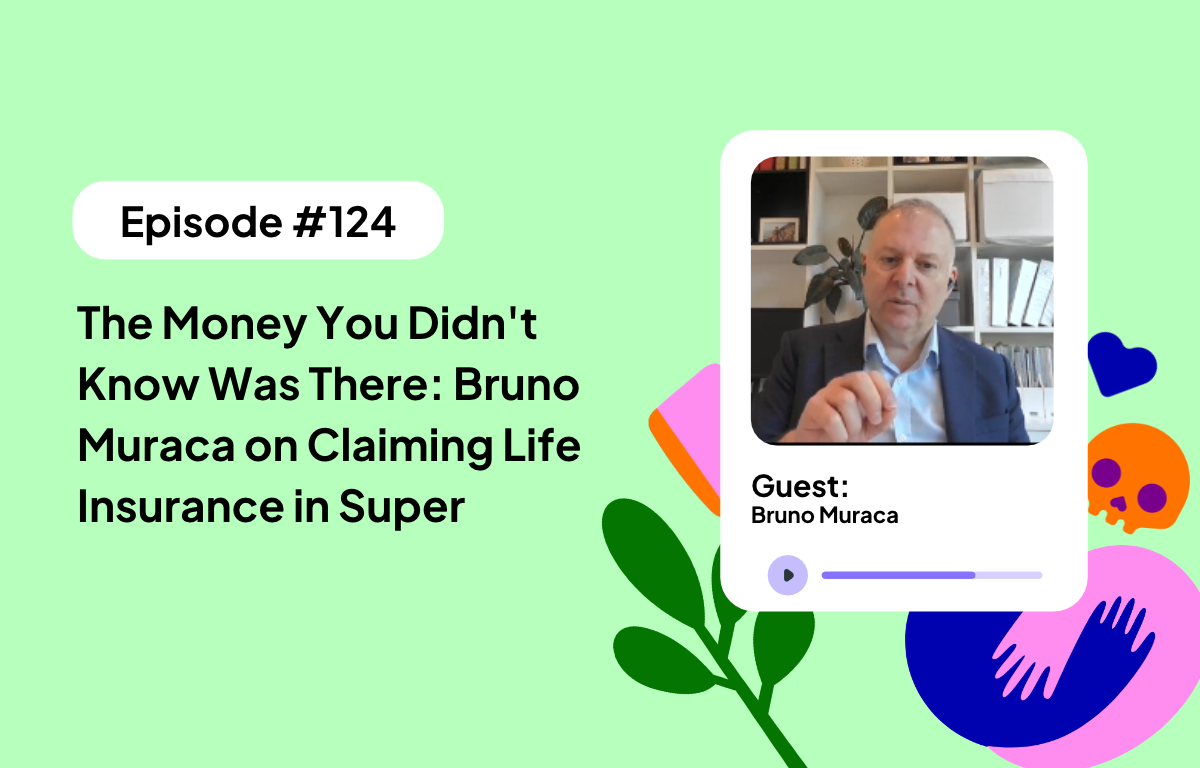




The Money You Didn’t Know Was There: Bruno Muraca on Claiming Life Insurance in Super



Listen now
About this episode
Did you know there could be life insurance sitting inside your super, and that most families have no idea it's there?
In this episode, I'm joined by Bruno Muraca, CEO of AFRM Claims Advocacy, a service that makes it easier for individuals and families to claim on their personal insurance when they are injured, ill, or have lost a loved one. Bruno brings more than 20 years of experience in financial services, and AFRM Claims Advocacy is the only claims advocacy business in Australia accepted by Funerals Australia, the National Funeral Directors Association, and the Australian Cemeteries and Crematoria Association. His work took on a deeply personal meaning after the death of his mother, when a single line on a funeral home checklist changed the direction of his career.
Bruno explains what personal insurance actually is, how default cover works inside superannuation, and why super and insurance often sit outside the estate. We unpack super dependents, nominated beneficiaries that quietly lapse, and the hierarchy super funds follow when deciding who receives the money. Bruno shares real stories of families who uncovered an extra $40,000 or $108,000 they never knew existed, and talks candidly about why the death certificate is the heaviest document of all.
We also explore how blended, de facto and same-sex families can demonstrate their relationships, what lost and unclaimed super means, and the simple conversations every family should have now, so the people we love aren't left searching for passwords and membership numbers on their darkest days.
Remember; you may not be ready to die, but at least you can be prepared.
Take care,
Catherine
Show notes
Guest Bio
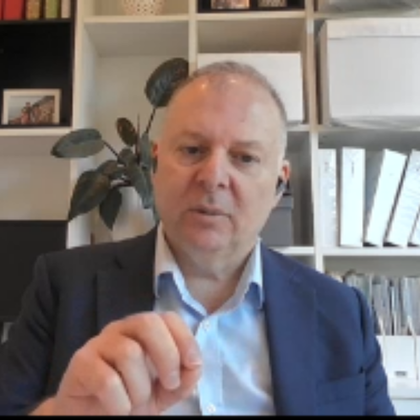
CEO of AFRM Claims Advocacy
Bruno Muraca is CEO of AFRM Claims Advocacy, where he helps lead a service designed to make personal insurance claims easier for individuals and families. He has more than 20 years of experience in the financial services industry, including senior marketing management, practice development, customer engagement and experience across wealth management and corporate superannuation. Bruno holds an Advanced Diploma of Financial Planning and a Bachelor of Commerce and is a member of the Australian Institute of Company Directors and the Association of Superannuation Funds of Australia. AFRM Claims Advocacy supports people navigating income protection, trauma, total and permanent disability (TPD), terminal illness and life insurance claims, including claims following the death of a loved one.
Summary
What you'll hear in this episode:
- What personal insurance is, including income protection, TPD and life cover, and how it is often included automatically in your super
- Why so few Australians know they have cover, and why it pays to review your level of cover while you're healthy
- How super and insurance can be paid outside the estate to a super dependent, and why that matters when a household suddenly drops from two incomes to one
- Why non-binding beneficiary nominations lapse every three years, and the hierarchy super funds follow when deciding who receives the funds
- Real stories of families who discovered tens of thousands of dollars they didn't know about, and how tax can change depending on who claims
- Using MyGov to find all of a loved one's super funds, plus how Protect Your Super rules and lost super with the ATO work
- Why Bruno calls the death certificate "the heaviest document out there", and why claims can begin before it arrives
- How de facto, blended and same-sex families can demonstrate their relationships to super funds
- How Bruno's mother's death shaped his mission to be "the hand that guides" families through the process
Transcript
Death Certificate Weight Bruno Muraca: the heaviest document out there is the death certificate I'll never forget where I had a mother call me, and said, "The death certificate's arrived. Bruno Muraca: I know it's arrived. I don't want to open it. Can I just post it directly to you?" It actually is that point where people realize it's-- obviously they know that their loved one has passed away, et cetera, but the document is really consolidating that. Bruno Muraca: Bruno Muraca: a daughter called me, her mother had passed away unexpectedly, and she started to do the claim herself and abou ... Read More
Death Certificate Weight
Bruno Muraca: the heaviest document out there is the death certificate I'll never forget where I had a mother call me, and said, "The death certificate's arrived.
Bruno Muraca: I know it's arrived. I don't want to open it. Can I just post it directly to you?" It actually is that point where people realize it's-- obviously they know that their loved one has passed away, et cetera, but the document is really consolidating that.
Bruno Muraca:
Bruno Muraca: a daughter called me, her mother had passed away unexpectedly, and she started to do the claim herself and about three weeks in, she sorta said, "Look, I'm just not sure.
Bruno Muraca: Mum always spoke to me about having two supers, but I'm only being talked about as one." it wasn't two supers, it was actually within the one super fund, it was accumulation in a pension investment, so two investments. When we then took on the claim, we identified that there were the two rather than the one investment within that super fund, and it meant an additional $40,000, [00:01:00] which the daughter didn't know about.
Bruno Muraca: So everything's on our phone, But when someone passes away, you don't have their passwords. So their super fund portal is on their phone, but no one can actually access it. or they may have received email statements that has a membership number and, but no one can access it.
Bruno Muraca: Who is your super fund? What is your membership number? Where do we find that information? I think that's really, really important
Catherine Ashton: [00:02:00] Today I'm speaking with Bruno Muraca. He is the CEO of AFRM Claims Advocacy, where he helps lead a service designed to make personal insurance claims easier for individuals and families. He has more than 20 years of experience in the financial services industry, but his passion is in helping clients and families to claim on their personal insurance if they are injured or ill, or have lost a loved one. After losing his mother just on four years ago, it highlighted the importance of helping families when they lose a loved one. Since that time, AFRM Advocacy is the only claim advocacy business in Australia who has been accepted by Funerals Australia, [00:03:00] the National Funerals Director Association, and Australian Cemetery and Crematorium Association. Thank you so much for being with us today, Bruno
Bruno Muraca: Thanks, Catherine. Thanks for having me
Personal Insurance Basics
Catherine Ashton: Now personal insurance, what is that? That sounds very vague and for, for someone who may not be familiar with it, talk us through it
Bruno Muraca: So personal insurance is insurance that is available to clients if they're injured, ill, or have lost a loved one. So by way of example, if someone has a stroke, then they might be-- what might be available to them is income protection, which supports them for a period of time whilst they're not able to work.
Bruno Muraca: typically, personal insurance is either purchased through a financial advisor or a lot of clients have it through their super, which is, default or automatically through their, their super. So if I go back to that example, if someone has a stroke and not able to work for let's say a period of six, eight months, they [00:04:00] can utilize their income protection, which might be in their super fund.
Bruno Muraca: That pays them an income each month whilst they're not working.if their medical condition progresses to the point where they're not able to ever work again, then they can draw upon their total and permanent disability cover, which is also a cover within the super fund. And if the worst case scenario happens and, and, and the policyholder, passes away, then they have life insurance or death cover within their super, or they might have purchased it separately.
Bruno Muraca: That can also support their family in providing them a lump sum payment
Awareness And Default Cover
Catherine Ashton: How many people in your experience have you found are aware of this personal insurance cover? Certainly like when you, you think of when you first start off at a organization, you sign a hell of a lot of papers. You don't really know what you're actually signing up to.are people surprised when they find this out?
Bruno Muraca: Yeah, it's interesting. It's, there was some research done by MetLife, one of the major insurers a period of time ago, and it [00:05:00] spoke to, how many working Australians were aware that there was automatic cover within their super, and it was something like less than forty percent of working Aussies knew that there was cover.
Bruno Muraca: In- interestingly enough, when we started doing some work with some of the families who'd lost a loved one, and we would actually ask them how many of, you know, h- how many from, from them, how many did they know or did, did they know that there was insurance, life insurance in their super, in their loved one's super, and a lot of them didn't.
Bruno Muraca: I think at the time we sort of had a, a small sample showed about eighty percent did not know that there was automatic life insurance in super. so the awareness is quite low, and I think that's always been a- an industry challenge just to ensure that people not only look at their superannuation for it as super, but also understand that there is some, default insurance cover within it that is available to them
Catherine Ashton: And the thing is, is it s- as you said, most people are not aware. That's a frightening statistic. Has this always been the [00:06:00] case, or is this a recent change? Can you talk us through about the, the, you know, say if someone has actually signed up, you know, 20 years ago, would, would it have been included then or is it only recent?
Bruno Muraca: Well, it's been around for a while. I think the theme, the way it works essentially is if we've got Barry with us today, and Barry's working, e-each month that Barry works, money goes into his super fund, and some of that money that goes into his super fund gets redirected to pay for that default or automatic personal insurance, that income protection or, and/or total and permanent disability cover and life insurance.
Bruno Muraca: And, th-that's been around for some time to, to ensure that, you know, working Australians are, are protected, have some form of, of insurance protection, if they get injured, ill or, or, or lost a loved one. So it, it, it's been there for a while, but it's one of those things where the awareness is, is quite low
Checking Your Cover Levels
Catherine Ashton: And for someone who wanted to check their insurance and whether it's, you know, what, what it involves, what do you suggest that they [00:07:00] do?
Bruno Muraca: Well, we'd always, like wh- whilst we can't provide advice 'cause we manage the claims, it would always be prudent to understand what cover you have. but that's like any insurance, you know. You always look at your car insurance and, and look at whether, your windscreen protection is, is part of that policy or not and, and so forth.
Bruno Muraca: And, and because sometimes you, depending on the type of driving you do, y- you might be more at risk of, of utilizing that sort of cover. Likewise with personal insurance, w- you know, often, there is, financial advisors who provide advice to, to clients as well, but it's often prudent for them the clients that is, to have a look at their super and, and seek to understand what, what insurance is available.
Bruno Muraca: And often the super funds, if they don't have an advisor, often the super funds can also provide them some information to, to work through whether that level of cover is, is adequate for them
Catherine Ashton: And that's a thing. Can you actually talk through that level of cover? Because that's something that, you know, you don't really review these things until you really [00:08:00] have to, most of us. and I know when I had my car accident, the income protection that I had through there and then also the TPD cover, was something that I hadn't reviewed
Bruno Muraca: Yeah, look, it really depends. It's really individual. So by way of example, often things like income protection is there to replace your income if you're not able to work for a period of time. so your income levels and my income levels and, and Barry's income levels that we spoke about earlier would be very different.
Bruno Muraca: So it's actually looking at it and saying, "Well, if I was not able to work, would that default level of cover be supportive enough for me? Would $1,000 a month or $3,000 a month or $10,000 a month be supportive of my needs given my lifestyle?" so it's, it's actually sort of in a broad sense, looking at it that way.
Bruno Muraca: And then there's also statistics available, where i-it looks at if, heaven forbid, you have a, a serious injury or, or illness and the [00:09:00] cost of care. So, you know, we look at the cost of care, and then you say, "Well, if I was to be diagnosed with a significant injury or illness such as a cancer, et cetera, then might I have enough cover to be able to support my treatment but also my day-to-day living?"
Bruno Muraca: So,it becomes really individual. So whilst the default level of cover I think is really important because it is some cover if there's nothing else, it's always prudent to check and ensure that it adequately meets your needs. And if it doesn't, to your point, whilst you're healthy, it's a good time to check 'cause when you can actually seek to increase or decrease your covers to accommodate, your needs as an individual
Claims Advocacy Role
Catherine Ashton: Where do you come in in the role of this, Bruno?
Bruno Muraca: Well, well, our purpose is really simple as a business. Our purpose is to make it easier for clients or families to claim on their personal insurance if they're injured or ill or lost a loved one. I suppose with the context of, today's audience, where we come [00:10:00] into play is where, someone's lost a loved one and their loved one is under the age of sixty-five, typically they will have superannuation, and within that superannuation they will have a default level or an automatic cover of life insurance.
Bruno Muraca: So when their loved one passes away, that life insurance can be paid to the family or to the correct beneficiary, if you like. So where we come in is, a lot of the funeral homes around Australia will actually inform families about our help. families then have the opportunity to contact me, and we can advise them as to what might be available in life insurance and super, that can then be paid to the family.
Bruno Muraca: and just so that we're really clear, what we do there is with the family's permission, we will contact the super fund of the deceased, if you like, or their loved one who's passed away, and we will identify how much super and how much life insurance is available, and then our role in that is to efficiently release that money to the family
Super Versus Estate
Catherine Ashton: Because that's [00:11:00] something that when, I speak is that always surprises people, is that everyone assumes that the superannuation is part of the estate and it will just naturally come to them. Could you actually talk about how that's structured and, and to give people an overview who may not be aware?
Bruno Muraca: Yeah. It's interesting 'cause the estate is quite broad. The estate can include things such as property and shares and, and, and other assets, so it can be quite broad. Superannuation and insurance is often separate to the estate if there is a super dependent. So let's just unpack that a little bit. The key thing being is that the insurance and super can be separate to the estate if there is a super dependent.
Bruno Muraca: What we mean by super dependent is if a loved one passes away and you are the partner or a child, adult or minor child of the deceased, then superannuation and insurance is completely separate to the estate, and it can be paid to a super dependent quite efficiently. Rather than it having to go through [00:12:00] the estate, wait for all the assets to liquefy and sell, et cetera, and then distribute it that way, it can be kept quite separately.
Bruno Muraca: The benefits of doing that for families is that, one, the correct person is, first of all, receiving the insurance and super. But then two, in addition to that, it's often a lot more efficient, so the families are receiving the money, quicker. And, and often, if you think about it, if someone under the age of 65 passes away, and we see this all the time, that family often moves from two incomes to one, or one income to none.
Bruno Muraca: So having that financial peace of mind quite quickly, i- is really important. So it can be not only more efficient in that regard, but, but often having to deal with the estate when it takes time, et cetera, often there's greater associated costs, whereas it can be a lot more efficient in doing it separately
Beneficiaries And Trustee Rules
Catherine Ashton: And so that was when you werereferring to dependents. The other term that's always referred to is, nominated beneficiaries. Is that the same thing?
Bruno Muraca: It can [00:13:00] be the same thing. I think there was a stat there the other day I read that it was 15.5 million Australians don't have a nominated beneficiary in place. beneficiaries do lapse every three years, which often surprises families as well. And we sometimes speak to families and they say, "Oh, I thought he or she had nominated me."
Bruno Muraca: And I say, "Oh, I'm sure they did, but it lapses every three years." So perhaps when they'd last nominated you, it's been three years and they haven't updated it. so look, it may go to the beneficiary. The funds may go to the beneficiary, in particular, if the beneficiary is either a super dependent, a partner or a child of the deceased.
Bruno Muraca: But by way of example, if, if I was to nominate my next door neighbor, Frank, who take-- who, who he and I go to the football as my beneficiary, and if I was to be, hit by a bus tomorrow, the super fund would, would use their discretion and say, "Well, that non-binding beneficiary is not valid because Bruno's nominated his neighbor Frank, but in actual fact he has a partner, he has a super [00:14:00] dependent," so the funds would go to the partner.
Bruno Muraca: So, so whilst the beneficiary is important to keep it updated, what one needs to also realize is that it, it needs to be a valid nomination at the end of the day as well.
Catherine Ashton: And I'm assuming it is the superannuation fund that has a policy that they're the ones that deem who is the, valid beneficiary
Bruno Muraca: Yeah, look, it's governed by the SIS Act, the Superannuation Act, and then there's a sort of hierarchy, if you like. There's a, there's, if there's a partner, it goes to the partner. If there's no partner, it goes to the children. If there's no children, then they seek a financial or an interdependent relationship, and if there's not one of those, it will go to a surviving parent.
Bruno Muraca: If there's not a surviving parent, it will go to a, a sibling. so that's sort of a way of, of sort of looking at it. But yeah, look, at the end of the day, the super fund or the trustee makes those decisions and, and they're decisions that are made obviously with a, with, a lot of consideration, let's say, that's part of what we [00:15:00] do.
Bruno Muraca: when a family calls us, whilst we don't make the final decision of who's going to receive the money, the funds, the insurance, and the super, we know based on the hundreds of claims that we've managed that it's likely to go in this direction. So therefore, we sort of help to manage the expectations of the family.
Bruno Muraca: Just, just by way of example, yesterday I, I had a call from a father who'd lost his son, an adult son, and his son has two children, of which they are, in the care of a guardian, but then the son was, w- was separated from the family. So in the father speaking to me, I said, "Look, you're considered a next of kin, but it's likely that the funds are going to go to the two children, and they're minor children.
Bruno Muraca: They're under the age of eighteen." And he was relieved. He said, "Well, that's exactly what I want to happen." He said, I, just need to get the ball rolling here." So I explained to him the process and how the funds would be kept into a trust account until the children are of [00:16:00] adult age and, and that gave him a lot of comfort to know that that was going to be the case and, and obviously would need to involve the guardian at some stage as well.
Bruno Muraca: But he was just starting the process because essentially he was, organizing his son's funeral, which is always, which is always really sad.
Getting Affairs In Order
Catherine Ashton: And how can we prepare, or what is the best way to get our affairs in order in relation to the, the insurance that we have and superannuation? What do you suggest?
Bruno Muraca: It's, I think always preparation starts with sort of where we started our conversation, a-and that is ensuring that the level of cover you have is adequate. The idea of life insurance, well, we see it all the time. i-i-it's there to provide financial security for that family.
Bruno Muraca: As I said earlier, often the families that we look after, their loved one who has passed away is under the age of 65. They've got a super fund, and they've got automatic life insurance sitting there. Now, we touched on it earlier, but that family will overnight move from two incomes to [00:17:00] one or one income to none.
Bruno Muraca: that event that has occurred, that losing that loved one is traumatic and emotional in itself, and that's paramount. But I often say, the bank will still knock at the door, and the landlord will still knock at the door asking for the rent and mortgage payments and the utility bills, and you still need to put food on the table.
Bruno Muraca: So I suppose the point I try to make there in preparation, the only thing that we could really do is, is just look at our level of cover that we have and say, "Well, if worst case scenario happened, would we still be able to continue to have the, our day-to-day living lifestyle of being able to remain in the family home or continue to put food on the table, have the kids go to school?"
Bruno Muraca: Whatever it is that's important to that family. So first of all, understanding your level of cover and whether that cover is accurate. I would still encourage families to seek to put a, a binding nomination in place for their beneficiary, their, their loved one or, or, or, or [00:18:00] their partner, et cetera, or children or whoever, that, that might be for them.
Bruno Muraca: that would also be really important. and I think the final thing I'd say to that is, if you have the right level of cover and yet, and, and, and you're comfortable that that cover is, is adequate for fu- the future family, I think it's actually having that conversation with the families to say, "This is who my super fund is.
Bruno Muraca: This is, this is where you'll find that information." It's really f- it's really interesting. We come across a lot of families, and they say, "I don't know her super fund. We've never really spoken about it." And what's happening at the moment as well is we're seeing a lot more of moving to a di-digital platform.
Bruno Muraca: So everything's on our phone, and I think that's great. there's efficiency in that. But when someone passes away, you don't have their passwords. So their super fund portal is on their phone, but no one can actually access it. or they may have received [00:19:00] email statements that has a membership number and, but no one can access it.
Bruno Muraca: so often we find the process of going through, and we ask the family if they have access to their loved one's MyGov, 'cause if they have access to their loved one's MyGov, it will list all the super funds that they have. It won't show the insurance, and it won't have an up-to-date balance, but it's a really good starting point, 'cause often it's not uncommon for people to have more than one super fund.
Bruno Muraca: So it might be a, Jackie has a HESTA super fund, and she recently started a new job three years ago, and now she's also got Hostplus. So MyGov will list those on there. So if the family doesn't have access to her, her phone and her, her portal or, or with the advent of no paperwork or less paperwork these days, that's often a way to sort of work that through.
Bruno Muraca: But, yeah, so having the right level of cover is really important and then also ensuring that your family is aware of what you have. Who is your super fund? What is your membership number? Where do we [00:20:00] find that information? I think that's really, really important
Documents And Claim Steps
Catherine Ashton: And with so many things when it comes to closing accounts and dealing with death, the laws are different in each state and the policies are dependent on each particular provider. Is that the same when it comes to personal insurance?
Bruno Muraca: Yeah, with life insurance, it's really governed by the trustees. so each trustee, so by trustee we mean super fund. So Cbus has a trustee office, AustralianSuper has a different trustee office, et cetera. their trustee will be slightly different, so their requirements may vary slightly.
Bruno Muraca: But the common theme that comes through all the time is when a family will engage us, we will ensure... So let's say, again, we'll go back to Barry, who's passed away and his wife, Sally, let's say, is there. So when a family engages us, it don't matter who is the super fund, we'll ensure that we provide, information about Barry, the deceased, and proof that he's passed away.
Bruno Muraca: That might [00:21:00] be a medical cause of death certificate or, or, or, or some form of interim, death certificate, if you like, a coroner's letter perhaps. We'll provide ID of Barry so that the super fund can verify that Barry's passed away and here's his ID, so they can verify him. And then we'll also demonstrate the relationship between Sally.
Bruno Muraca: So if they're married, we'll provide them the marriage certificate and then some proof of ID for Sally. So, and that seems to be a common theme for all the super funds. I suppose we would need to be able to identify the event, what's occurred. So there's been a death, and let's provide proof of that. Let's provide proof of, of, the person who has passed away, but also their family member and their relationship there.
Bruno Muraca: So in this case it was a wife, but if it was a de facto there would be a different set of documents, but that can be provided. If it's a parent, it's again birth certificates, et cetera, just to be able to show that relationship. So each trustee has a slight variation, if you like, but s- that common theme is, is, seems to be [00:22:00] consistent
Why Families Need Advocates
Catherine Ashton: And Bruno, when we're talking about themes, what are the common sort of challenges that you've identified and, and why do people need someone like an advocacy service to support them during this time?
Bruno Muraca: I think we touched on the point earlier, when someone loses a loved one, it often is unexpected. even if it's not, it is always quite challenging and families aren't at their best. There's a lot to organize, there's a lot to do, and families wanna be close to their loved one who's passed away to ensure that they memorialize them the way they should.
Bruno Muraca: And that's where the time and effort should be placed, too. in having someone like us to help them through that process, the idea is that we are able to, alleviate some of that time, and effort, and energy for them so that they can focus on memorializing their loved one.
Bruno Muraca: we often also do ensure that we can do it in an efficient way so the funds are received quicker. and look, you know, I, I suppose the theme there is that we've-- we [00:23:00] deal with all the super funds, so we know and they know us in terms of how to, how to most efficiently navigate the, the, the, the system and the process.
Bruno Muraca: sometimes there's been examples where families have tried to do the claims themselves, and they've come back to us and said, "Look, we're really struggling. We're not sure what the super fund's asking here," or, "They seem to be asking us the same things," or, "There's all this paperwork, and we're not really clear on how to do it."
Bruno Muraca: So we alleviate a lot of that. We, we, we, we're able to complete the paperwork on the family's behalf, have them review it with us, of course, and then once we lodge the paperwork, we will continually follow up the super fund until they receive the money directly into their bank account.
Bruno Muraca: So a lot of that heavy lifting of dealing with the super fund, completing the paperwork, knowing the rules. I suppose like all these things, if you know the pathway and you know the rules, then it just makes it more efficient. And, and, and efficiency is really important here because each time, you know, and we say this to super funds all the time, but each time you go back and ask [00:24:00] for another little bit of signed document or something else, y-you're having families to relive the, the, the experience.
Bruno Muraca: So we seek to provide all that information all at once, so as they do it once, and then we can keep them updated with progress from there. And sometimes there's other documents that are required or evidence that is required, but by and large, we're managing the expectations and, and they're always dealing with one person rather than speaking to one case manager at a super fund today and then having to retell your story tomorrow to another one.
Bruno Muraca: So that, that often helps families too,is what they've told us.
Timelines Under And Over 65
Catherine Ashton: Just on that point, there is so much paperwork, and there's some really obscure questions that you get asked, on those forms. what is the sort of timeline that people can expect to actually see a claim come through?
Bruno Muraca: Yeah. Well, with us, there's been examples where families have tried to do it themselves, and in some cases, some super funds have, [00:25:00] held the money for over a year and over, over two years in some cases. But with us, we have a two-step process. First of all, we advise the family how much is available, and we can often advise them within ten days, and that gives them that financial peace of mind fi-first of all.
Bruno Muraca: and then two, to have the money released to the family, for us to work with the super fund and complete the paperwork, lodge it, and, and, and have the money released to the family. We say to families allow a couple of months. So where there's Barry, Barry's passed away and the money's going to Sally, that's, you know, a super dependent, the wife's receiving the funds.
Bruno Muraca: Something like that should take two months. Sometimes we also need to accommodate that families do work at, at different pace. Like, some families will say to me, "Look, we're just now gonna park it till we've had the service." Totally understand. Some families, would prefer still that we post documents out to them rather than email, and that obviously adds some time to, to the process as well.
Bruno Muraca: But, by and large, allow a couple of months is what we often say
Catherine Ashton: And you've [00:26:00] talked about the claims for people who are 65 and under. What options are available for 65 plus? what bracket do they fall into? Talk us through that
Bruno Muraca: Yeah. It's interesting. So, under the age of sixty-five is where the life insurance remains automatic for su- for, for, for individuals. After the age of sixty-five, which is sort of that notional average sort of working age, if you like. And I know people are working a bit older these days, but, but by and large, after the age of sixty-five, the individuals or the, workers, if you're still working, you need to purchase the insurance separately.
Bruno Muraca: Now, if you're not working, then you still have the choice to purchase a life insurance policy. We typically help those under the age of sixty-five. But over the age of sixty-five, for those who are looking to access their super, given the-their age and what have you, they can just access their super tax-free anyway.
Bruno Muraca: That-that's why we don't get in-involved. They require financial advice at that point to access super and what have you. Under the age of sixty-five is, is [00:27:00] really where the insurance remains automatic, and that's where we're able to help families mainly
Unclaimed And Lost Super
Catherine Ashton: And is there such thing as, you know, unclaimed funds? Can you talk us through, what those unclaimed funds are and what it refers to?
Bruno Muraca: Yeah. So, some time ago now, there was some legislation that passed called PYS, Protect Your Super. And the idea of Protect Your Super was, as the name sort of says, it was there try- to ensure that funds or insurance wasn't eroding people's super balance. So it w- it was there to actually ensure that there was a, a greater consolidation s- of super.
Bruno Muraca: So moving all the supers into one rather than having three or four. But then in addition to that, there was a, some detail that came through where the legislation suggested that if you don't put money into your super for sixteen months, the super fund writes to you and says, "Hey Barry, noticed you haven't put money into your super for a while.
Bruno Muraca: Do you still want your insurance?" Unless you opted [00:28:00] in, unless you said, "Yes, I do," they would actually cancel your insurance.a- and, and so that was a really important to ensure that to protect the, the balance. But also what's, what's sort of come from all some of that as well, as being if your superannuation balance drops under six thousand dollars, then the super fund will send that off to the tax office's lost super.
Bruno Muraca: So in terms of unclaimed monies, that sort of sometimes falls into that category where, sometimes families will say, or when we engage the family and we find out that the super has actually moved from HESTA, they'll tell us that, "Oh look, we've-- on the twenty-third of July, we-- this year, we moved it to the ATO."
Bruno Muraca: Then we'll encourage the families to go and speak to the ATO because it's now lost super. It's moved from HESTA to the ATO and, and they need to be able to, access it that way
Catherine Ashton: Thanks for, demystifying what on earth that meant
Bruno Muraca: Yeah, it's [00:29:00] interesting, and there's also other websites. There's a really good MoneySmart website, which is a government ASIC website, and that actually looks more broadly than superannuation as well, and it says, you know, "Is there any bank accounts that's, remained open that have funds and other investments as well?"
Bruno Muraca: And that's often good for families to look into but as we know, most of the time, superannuation is one of those things that people will think, "Oh, look, I'll worry about it when I'm ready to retire." And I suppose that's probably another theme that sort of we touched on earlier. Know what you have.
Bruno Muraca: talk about it, because if you do need to draw upon it, You've lost a loved one or someone's injured or ill in the family, then that's really important
Real Claim Case Studies
Catherine Ashton: And talk us through, touched on it a little bit, but talk us through some of the scenarios where you've worked with families and, and I suppose, the, the challenges that they have had without your support
Bruno Muraca: It's interesting. Most of the time families will come to us from [00:30:00] the start after they've engaged with the funeral home. Funeral home say, "Look, it might be worth having a chat to the claim advocacy business because they can help you with the insurance and super." And often it becomes a never thought of it.
Bruno Muraca: I'll have a conversation and that sort of starts from there. Other times they may have gone down that path, but have progressed the claim themselves and, and, and, and look, that's fine and, but we've had examples where families have come to us halfway through and said, "Look, we're just, we're not sure that I'm getting the full picture here.
Bruno Muraca: my mum said that I had, she had two super funds, but the super fund's only talking to me about one." And this is one that comes to mind. And, a daughter called me, her mother had passed away unexpectedly, and she started to do the claim herself and about three weeks in, she sorta said, "Look, I'm just not sure.
Bruno Muraca: Mum always spoke to me about having two supers, but I'm only being talked about as one." And what it was, it, it wasn't two supers, it was actually within the one super fund, it was accumulation in a pension investment, so two [00:31:00] investments. When we then took on the claim, we identified that there were the two rather than the one investment within that super fund, and it meant an additional $40,000, which the daughter didn't know about.
Bruno Muraca: And when we went back and said, "Hey, look, we're, you know, we identified that there was a second fund, which is in pension phase. There's an extra $40,000." And she said, "Oh, well, that's what Mum was always talking to me about." so that gave her some comfort and we were able to unlock both of those for her and have them released.
Bruno Muraca: at other times, there'll be times where we've had experiences where super funds haven't gone into the detail with the family. that's sort of what I spoke about earlier. If you don't ask the right questions, you're not getting the right answers necessarily.
Bruno Muraca: And we've had an example where, a gentleman who, came to us, he'd lost his partner. He had his stepdaughter, sitting beside him, and I was on speakerphone at the time, and he said, "Look, I've called the super fund, told them I don't want to claim. I want the money to go to my stepdaughter," which is the daughter of the deceased.
Bruno Muraca: And he said, "And after [00:32:00] that, they've stopped talking to me." And I said, "Oh, okay." I said, why do you want the money to go to the stepdaughter?" He said, "Oh, I don't need it. I want it to go to her." I said, "Well, that's, that's fine." I said, "Do you know if the money goes directly from the super fund to, to the stepdaughter, it's actually taxed at 20%, whereas if it comes to you, it's tax-free as a super dependent."
Bruno Muraca: He said, "No, I didn't." He said, "And they didn't tell me." I said, "Well, okay. Well, we can sort that out." So when we started speaking to the super fund, said, "Look, he now wants to claim, the, the funds, and he is considered a super dependent." we also identified there was over $108,000 in life insurance, which hadn't been discussed with the client.
Bruno Muraca: And when I went back and explained to him that, "Look, you're now claiming, and by the way, there's $108,000 in life insurance. Were you aware?" And he was like, "No, why didn't they tell me?" And it's like, again, it's like one of those things, you know, you ask the right questions, you get the right answers. I mean, We didn't know that there was gonna be life insurance there, but part of what we do is ask all the questions to [00:33:00] ensure that no stone's left unturned.
Bruno Muraca: And in doing so, we were able to identify the insurance as well as the, correct where the super was getting paid to
Catherine Ashton: So it really does show that making sure that you have those conversations with your loved ones about what superannuation you have, what insurance policies you have, and making sure they can access that information is really important
Bruno Muraca: I think so. I think so. I mean, you know, you know, again, whether it be $100,000, $10,000 or $1,000, it's what the family's entitled to. And if that's what they're entitled to, then that's what they should receive. I go back to the car insurance example, but heaven forbid you have a traffic accident, would you not claim on your car insurance?
Bruno Muraca: Would you not want to ensure that they fix the car in the best way possible because you've been paying for, for your cover? Life insurance and other personal insurance is no different. You are paying for it, or the [00:34:00] family is paying for it in some way. it's just paying for it. They're not sort of physically seeing because it's coming out of their super, but they're still paying for it.
Bruno Muraca: So, so therefore, if something does happen where they're injured, ill or have lost a loved one, then they should receive e-everything that they're entitled to
Adjusting Cover And Health Checks
Catherine Ashton: And this might be something that's outside, your remit, Bruno, but just thinking about what you were saying about the fact that it is coming out of your superannuation fund, can you actually, when you're reviewing it, go back to the superannuation fund and say, "I wanna change my policy 'cause it's coming out too much"?
Catherine Ashton: Or is that a conversation you can have when you're reviewing it?
Bruno Muraca: Absolutely. Yes, absolutely. you can increase your cover or you can decrease your cover based on your needs, absolutely. and obviously that comes with a change to your premium as well. but I think the key there is need to do it in advance of being injured or, or lost a loved one.
Bruno Muraca: I mean, it's like canceling your car insurance today, having a traffic accident tomorrow, and then going back and say, "Hey, can I still claim?" You know what the answer is there. It's-- This is no [00:35:00] different. ensuring that you have the right level of cover before you're injured or ill,
Bruno Muraca: 'Cause we don't know what's around the corner, right? But we don't know what's around the corner. Y-you know, i-i-interestingly enough, we, we've had examples where, where people have actually decreased their cover and then had an, and had an illness And didn't realize, and I'm just talking a period of months, not, not years, but period of months.
Bruno Muraca: one of our advisors has, had some really good advice and before anyone, before you change your insurance cover, in particular if you're going to actually seek to decrease your cover or cancel your cover, you should always go and get a medical. Go get a medical and find out how healthy am I, because you'd be surprised about what might, what that might highlight, and that might actually influence how you view your, your, your future cover as well
Catherine Ashton: That's really, really good suggestion.
Bruno Muraca: Yeah. It's a bit like we go [00:36:00] and get our car serviced every time it... Like these days it tells you that, doesn't it? But yeah, otherwise you do it once a year sort of a thing. But, how often do we actually go and get our own service, so to speak, you know, our own medical and, and know where things are at.
Bruno Muraca: Because whilst we don't know what's around the corner, and that's always, that's not, you know, guaranteed foolproof way of understanding what might be a, a future i- illness or, or injury, it does provide a bit of a precursor to sort of work through some of the things. And often doctors will also speak to you about, "Oh, you know, you're in your 50s now," or, "You're in your 60s now.
Bruno Muraca: These are the, some of the things that are more common with this age and, and you can sort of start to think about your own health and, and circumstances a bit more holistic," if you like
Bruno Story And Mission
Catherine Ashton: Bruno, we mentioned in the intro that your mum died, just over five years or four years ago. How has that impacted how you view the role that you play in supporting [00:37:00] people?
Bruno Muraca: It's why I do what I do.so m-my mother passed away in, in hospital. And the night Mum passed away, my dad, who's gonna be ninety next month actually, he, he, he got COVID that night. My brother and his family got COVID that night. My sister and her family got COVID that night.
Bruno Muraca: Myself and my family were the only ones who didn't get COVID. Now, I'm the youngest of the family. I'm the, I'm the baby. I know I'm a, I'm a big baby, but I'm the baby of the, of the family. And all of a sudden it was on me to organize Mum's funeral. and I r-remember going to funeral home and, and being shown the, the, the coffins and FaceTiming my, my eighty-year-old dad these coffins.
Bruno Muraca: the story goes that we went to White Lady, and they did a wonderful job, of Mum's service And I remember getting a checklist and it sort of said, you know, "Cancel the newspaper, cancel the Medicare card." And on there it was life insurance. It wasn't suggesting to cancel it, but it [00:38:00] was on this checklist of things to think about.
Bruno Muraca: And sort of when the dust settled, I sort of reflected upon it, and I thought, "We should be telling people to claim on their life insurance." So I sort of went back to the funeral home and, the rest is history. That sort of led me on to speaking to the associations and various funeral homes to say, I think we can help some families here.
Bruno Muraca: I think we can inform them of what might be available to them through that automatic life insurance in super." And, and I remember at the time thinking, this would be of great help because w-in Mum's circumstances, Mum was, was, was way beyond retirement age, but, but I was thinking exactly what I touched on earlier.
Bruno Muraca: When someone who has super and has automatic life insurance passes away, that family's in a really difficult spot financially. Emotionally, it's, it's even more significant. But so you couple [00:39:00] financial stress or wellbeing, and you, you couple emotional distress, and it's, it's really heavy going. So how do we, how do we help?
Bruno Muraca: When I get a phone call from a family, even now, four years down the track, and they tell me that their loved one's passed away for, you know, for, for, for first few seconds, you sort of-- takes me back to the hospital when Mum passed away and you think You think we need to show up, we need to help.
Bruno Muraca: You know, people are-- You know, it's a really, it's, it's a really confusing time. It's a very emotional time, and you need to be able to, go, "Right, give them some comfort. We're here to help." I, I, I was, I was speaking to a mother earlier this week who lost her daughter. Sorry, not earlier this week. It was late last week now.
Bruno Muraca: And she lost her daughter, and she's not even in the same state [00:40:00] of her daughter. So her daughter lives in a different state than her. And she's got all these things that she wanted to work through, and she was talking me through it. And her daughter has some children as well, young children. And, and I remember saying to her at the end of our conversation, which probably went for about fifteen minutes, I said, "You're a lot calmer now than when we first started our call."
Bruno Muraca: And she said, "Oh, you've given me, you've given me some peace of mind." I said, "Well, that's great. That's what we're here to do." And I think that's a really important part. I mean, we are ... Often when we talk about peace of mind, peace of mind is about ensuring that you're providing that emotional support.
Bruno Muraca: You're that hand that guides them, that hand that holds their hand and walks them through. The outcome of when we help is that financial peace of mind, but it's less about the outcome as it is on that journey to just guiding them. [00:41:00] And I think that's what I learned from the experience with mom, and that is all of a sudden I'm organizing a funeral.
Bruno Muraca: never done that in my life, to someone so close as a parent, as a mother. but we just needed that guidance. we needed someone to hold our hand through the process. And as I say, from a service perspective with what White Lady, that was wonderful.
Bruno Muraca: It reflected what mom would've liked, so We had comfort in that. but when I look at some of the families that we help, it's the same sort of thing, How are we gonna be that holding hand so that we guide them through this? The outcome being financial peace of mind. But on that journey, how do we ensure that we're there for them every step of the way?
Bruno Muraca: So that if they have a question, even if it's not something we can solve, or we say to them, "Look, that's not an area we can help with, but have you thought about... Have you considered that?" and, and that's really important. It's nice to be able to help. It's nice to be able to reflect upon a [00:42:00] week when you're, you know, come Friday we're all, we're all like jelly, exhausted and what have you.
Bruno Muraca: But it's nice to be able to reflect and say, "Hey, we've made a, we've made a difference this week to, to these three families," or, "These five families," or whatever it might be. That's really important. And I know that gives my team a lot of, a lot of, I'll call it nourishment, if you like.
Bruno Muraca: There's nourishment in knowing you've made a difference. There's nourishment in knowing that, what you do is well-regarded and valued by people. And there's nourishment in the fact that you know in yourself that you sort of say, "Well-" We've done the best we can, and the family's really ... we've given them that peace of mind that they're looking for
Catherine Ashton:
Future And Industry Experience
Catherine Ashton: Looking forward to the next five, 10 years as we know we're, we're seeing an aging population, what is going to be important [00:43:00] from your side of things, having navigated the space personally, supported many families from an insurance perspective?
Catherine Ashton: What are you thinking gonna be the essential things for families to do in this space to give them peace of mind moving forward?
Bruno Muraca: I think it comes back to those basics we spoke about earlier. fundamentally, whether it be today or in 10 years' time, families still need to ensure that they have adequate level of cover for themselves and their families if they're not able to work or they've passed away.
Bruno Muraca: so it's having that in place. Ensuring that there's that, transparency as well so that the family understands what's in place and how it might be able to support. I think from a family perspective, those are some of the, the foundations of getting it right. Ensuring you have the right cover, ensuring people know about it so that that can be acted upon.[00:44:00]
Bruno Muraca: I think, they're really important things. I think from an industry perspective, I think we're seeing some change there as well, and that change is coming in how that im- that member experience can be improved. I mean, for us, that's the most important part. We've, we've had super funds who have tried to call clients to confirm if they are the s- partner, if they are the wife, even though we've provided a marriage certificate and they're listed as a beneficiary as well.
Bruno Muraca: Sometimes that's actually more about their process as opposed to their, them, them understanding the experience they're trying to create. So I think from an industry perspective, it's about actually ensuring that, there r- needs to be rigor in process to ensure that the right people receive the funds.
Bruno Muraca: that should never be compromised. But what should be overlaid on that, I think, is a, is a way forward that actually ensures that they create a positive [00:45:00] experience for families if they're doing it themselves, or a positive experience for us to be able to convey to families as well. 'Cause, 'cause a positive experience is, is, to me is so important at a time when someone needs that hand to guide them through.
Bruno Muraca: You can't be that hand guiding them through- And have a poor experience is that actually you lose trust. And I think as an industry, the superannuation and insurance industry, I think it gets a lot of bad press, There's a bit of a trust deficit in the industry, I'll call it, where families don't trust insurers.
Bruno Muraca: I understand. And look, there's been examples of that where the regulator has held, super funds ac-accountable, and that's happened of recent time. So I can understand that narrative. But at the same time, I also think that the, the industry does a lot of good. And the good that it does is when it does provide those [00:46:00] families that financial peace of mind when their loved one has passed away or if someone's injured or ill and provided them financial peace of mind because they're not able to work for a period of time.
Bruno Muraca: But in that journey of receiving that financial peace of mind, what's the experience that they've created? And so I think there's work to do. There's certainly work to do there, and that's, you know, that's not for me to say. I mean, you look at the regulator. I mean, there's an ASIC report eight oh six that highlights some real gaps for super funds in helping families, when they're trying to navigate this process themselves, in particular around death claims.
Bruno Muraca: I mean, we obviously shield that from families quite a bit, and we present to super funds in a way that they-- that makes it efficient for them to, to, to assess the claim. 'Cause we look at it this way. If they can efficiently assess the claim, it means the families are gonna receive the money a lot quicker, so giving them that financial peace of mind.
Bruno Muraca: But e-equally on that journey, we're continually informing them and keeping them [00:47:00] up to date w-with how things are progressing, which is so important to, to them. but that experience is something that's really, really important, I think. Ensuring that that experience continues to be, top of mind for, for the insurers and for the, for the trustees as well
Catherine Ashton: Something that comes to mind to me from my own personal experience navigating that space after, my car accident what you mentioned earlier on, and that was the fact that you have to re-explain your situation and relive everything and retell your story to different people all the time. And that is really, really challenging when you're also trying to just recover as well when you're unwell. and that inconsistency is really challenging
Bruno Muraca: Absolutely. And that's why, you know, dealing with us, you deal with one person, right? initially families will speak to me, then they'll be allocated one of [00:48:00] our team claim advocates, and they would just work with them. And, and they will know the, the claim. There'll always be two people in the office who know their claim.
Bruno Muraca: But we had an experience recently with a super fund where they had made the claim determination, which essentially means that they determine who's gonna receive the super fund, and insurance dollars. But the case manager from the super fund went on holidays, which is fine 'cause you've gotta go on holidays.
Bruno Muraca: But they hadn't actually progressed it from there. It didn't actually move on to one of their colleagues. So when we called to follow up, they said, "Oh, like we can see where it is in the system. They're actually on leave, and it hasn't progressed." And we're like, "Well, you know, we're sort of waiting." they advised us they were coming back to us this week.
Bruno Muraca: So just things like that. That, that, that's what I mean by the experience. So, you know, with that example there, because we're proactive, we're able to engage the, the fund, [00:49:00] one of their colleagues, then turn their attention to it, and things move forward and the claim's being paid. But, but that shouldn't happen.
Bruno Muraca: Like say if we're not involved and the family's waiting, they'll have to wait for that claims manager for the super fund to come back from holidays. Is that the experience that wants to be created? a-and also to your point, you know, retelling a story is really difficult, in particular when you lose a loved one.
Bruno Muraca: It's hard enough when you've had a traffic accident, but when you lose a loved one, it's, it's more difficult. And, and I find that, that the, the heaviest document out there is the death certificate I'll never forget where I had a mother call me, this is a few years ago now, and said, "The death certificate's arrived.
Bruno Muraca: I know it's arrived. I don't want to open it. Can I just post it directly to you?" I said, "No, no, I'm gonna need you to keep that copy and I'm gonna need a certified copy." But that point there is that the death certificate is the heaviest document. [00:50:00] It actually is that point where people realize it's-- obviously they know that their loved one has passed away, et cetera, but the document is really consolidating that.
Bruno Muraca: and often it's received a month or two months, et cetera, after the service, and it actually, for some people, it makes them relive the event, the death, and that's really challenging. So, you know, we have super funds who will say to families, "Oh, don't call us until you've got a death certificate."
Bruno Muraca: Well,that's not right. They can actually start without it. By the time the death certificate arrives, it should all be complete. And I think the point there is that, it's again looking at what sort of experience are they seeking to provide families. Be mindful of the death certificate, the content of it.
Bruno Muraca: If there's something not right on there, not accurate on there, just be mindful about how you frame that with the family, too. I think it's really important. You know, it's really interesting [00:51:00] on a, slightly different note, the amount of times we've had families come to us and say, "I've just found that my birth certificate's got an error
Bruno Muraca: They've actually spelt my name wrong or something." And you go, "Oh, you haven't realized for all this time." Sometimes those things get overlooked.and it's similar with the death certificate. Sometimes there are things on there that are not exactly accurate by error, by, just by, by mistake, or there's things on there that are totally accurate but are sensitive.
Bruno Muraca: So we just need to treat it with, with that respect
Catherine Ashton: Yeah, I think that that's a really good point because, you know, the timeline that that document arrives can be quite late in, in the piece. and it is a- another shock to receive it, a- as is when you receive the coroner's report, which can actually also be a lot later than that, depending on, on what the circumstance is.
Catherine Ashton: But yeah, that's a really good point to, to make, Bruno.
Supporting Families Through Waiting
Catherine Ashton: And so when [00:52:00] you think about the difference that you make in this space and the improvements that you'd like to see What is it that you advise to someone who has just started this process? How do they sort of take care of themselves? Because even with you, it still is a period of time that they have to wait. How do you support them during that time? What can you, what do you offer as some sort of level of support?
Bruno Muraca: it's a good question. there's often the three aspects. There's the physical, the emotional, and the financial wellbeing of families. we'll often ask the family if they've got some good support around them.
Bruno Muraca: and having that conversation is really important too. sometimes we'll talk about their loved one who they've lost for 15 minutes, and then we'll get onto the [00:53:00] boring stuff, the insurance and super.
Bruno Muraca: Sometimes it's immediate family, and sometimes it's neighbors or others, or work colleagues or what have you. So having that support network around is really important. ensuring that they've connected into some of the services that might be available too. but often for us, we'll often get asked about things also that are more linear in terms of they're thinking, "Okay, I'll speak to you about the super and insurance.
Bruno Muraca: What do I have to do about the bank and the," all these other things. and often it's just having them think about things in a systematic way and just saying, "Look, these are your, these are the processes. Whilst we can't help with the bank, we know that they'll have a process, so you need to understand that.
Bruno Muraca: But some of the things that we're asking you to provide us will also be helpful, to, to you when engaging the bank, such as, you know, proof of your identity to, and relationship to, to your loved one, proof that they've passed away, et cetera." So it's working through some of those things.
Bruno Muraca: Understanding if they've got [00:54:00] support is, is paramount. And it wouldn't be unusual family to say, "Hey, do you mind if I have my sister, brother, mother," whoever it might be, "sitting in on these conversations?" And of course they can, with their permission.
Bruno Muraca: So it's, it's ensuring that there's that support around them that's, that's really important. And then there's things even, you know, I know we've spoken about what you are able to help with as well, Catherine, in terms of just that end-to-end piece of how to navigate the process. I mean, we're very much about just doing the super and insurance, but we recognize it's broader than that.
Bruno Muraca: So it's, it's also looking at support services that are like yours and your- yours in particular that just then can help them navigate that end to end, 'cause that's not something that we can, we can do. We can provide guidance as to where to go, but that's not something that we can actually physically do with families.
Bruno Muraca: It's not our area of expertise
Catherine Ashton: And it is, it is so vast.
Non Traditional Family Proof
Catherine Ashton: Something that I've forgot to ask you, but that does [00:55:00] come to mind when I think about this space, and the fact that the way in which it's structured is very much a, heteronormative kind of family structure, you know, a, a husband and wife, with, you know, 2.5 kids, whatever the statistics are at this point in time.
Catherine Ashton: challenging is it to navigate, if you're in a de facto, blended, gay, bi, whatever your relationship is? How complicated does that then make it when you're actually dealing with these organizations? And what additional kind of evidence or documentation do you need to provide?
Bruno Muraca: it's a good question. I, y-you're right, the family dynamics have changed a lot in terms of the makeup of families. I think super funds have sort of kept pace with a lot of that as well in terms of understanding that, that makeup, whether it be same-sex couples, de facto or married, and I'm sure there's other [00:56:00] variations on that.
Bruno Muraca: But just by way of example, it's just therefore demonstrating the relationship. you know, as I said earlier, with a married couple, we'd often draw upon the, the marriage certificate that demonstrates the relationship. Whereas if they're in a deme- de facto relationship, we might show the, the rental agreement or the mortgage agreement that shows that they are, they both live at the same dwelling or same property, et cetera.
Bruno Muraca: So there's ways to demonstrate that. then sort of the complexity, if you like, is in the family makeup. So they might have children from different relationships as well. So, so i-it's just sort of trying to then just demonstrate that, that, that evidence of, of that, the makeup of that family.
Bruno Muraca: There's some common themes there that come through. But, by way of example, one that comes to mind is, recently we had a, a, a grandmother or, a mother who'd lost her daughter, and she's the guardian of the children And has been the guardian of the children even when her [00:57:00] daughter was alive, but not official.
Bruno Muraca: She doesn't have official guardianship, but the children live with her. There's two children, primary school age. and we'd received a letter from the school. We suggested to her to get a letter from the school that recognizes her as a guardian of those children. And that was able to satisfy the super fund to say she's the guardian.
Bruno Muraca: here's the organization, such as the school, that recognizes her in that way. I mean, she's now having to go down the path of getting formal guardianship, and that's gonna take some time. But for, for the, the purposes of us being able to demonstrate her relationship to her daughter who's passed away, and her relationship to her daughter's children, which she's the grandmother, we were able to provide that sort of documentation.
Bruno Muraca: So there's always some documentation that can be provided that can demonstrate the relationship and therefore satisfy the super funds in that regard
Catherine Ashton: Thanks for explaining that because it was one that, has come [00:58:00] up in, other conversations. So that's good to know that there's always some evidence that can be provided. and I like how creative you are in, in coming up with those
Bruno Muraca: Yeah. And look, sometimes even it might be, depending on circumstances, there might also need to be a stat declaration that's there supportive of information. so i-it's just about sort of walking back and saying, "Okay, well, how can we best demonstrate the relationship here?" fortunately, you know, things like births, deaths, and marriages and what have you, these days if you don't have a birth certificate, you can order one and, and they can be made available relatively quickly in the scheme of things.
Bruno Muraca: So things like that are also of help. I know what you're saying, the family dynamics have certainly shifted, and moved a lot. And that's, that's great. I mean, that's life. That's where things are at. And again, it all comes down to ensuring that the rightful beneficiaries, if you like, receive those funds.
Bruno Muraca: So we just need to demonstrate who they might be
Closing Thanks And Wrap
Catherine Ashton: No, I can't thank you enough for giving us insight into [00:59:00] a space that we really don't have to navigate until we are probably having some of our darkest days. So thank you for letting us know what we can do now, what we should probably review and check, and how we can, support each other when, when things do go, down that pathway
Bruno Muraca: Well, Catherine, thank you. Thanks for the opportunity this morning. It's always nice to chat to you and, yeah, I really enjoyed, really enjoyed the conversation, so thanks again
We hope today's conversation gave you something to think about. If it brought something to mind that you haven't organized yet, talked about, or decided on, don't try to do everything at once. Start with one simple step. We've created a free three-minute critical info check to help you see what you've already got covered and what your next step could be And if this episode has brought up feelings for you of grief, loss, [01:00:00] or bereavement, please note that you don't have to navigate that alone.
We have an after-death guide to support you, and you can find grief and bereavement support organizations through the Critical Info Resource Hub. The links are in the show notes. And remember, you may not be ready to die, but at least you can be prepared
What if something happened tomorrow? A sudden hospital stay, an accident on an overseas trip, or something happening to someone you love. Do you know where the important documents are kept? Can someone speak for you when you can't? Do you know your loved one's wishes? You don't need to organize everything today.
Take our free three-minute Critical Info Check. It helps you see what you've already got covered and what your next step could be. Three minutes, one next [01:01:00] step. The link is in the show notes. Critical Info is your backup plan for life's unexpected moments. If someone came to mind while you were listening to this episode, why don't you send it to them?
Sometimes the easiest way to start a difficult conversation is to actually start with someone else's story.
Read Less
Resources
Connect With Bruno Muraca and AFRM Claims Advocacy
Website: https://www.afrmclaimsadvocacy.com.au/
Phone: 1300 013 328
Resources Mentioned
Moneysmart: Find unclaimed money: https://moneysmart.gov.au/find-unclaimed-money
ASIC Report 806: Taking ownership of death benefits: https://asic.gov.au/regulatory-resources/find-a-document/reports/rep-806-taking-ownership-of-death-benefits-how-trustees-can-deliver-outcomes-australians-deserve/
Check your super through MyGov: https://my.gov.au/
Additional reading: https://www.asic.gov.au/about-asic/news-centre/find-a-media-release/2025-releases/25-034mr-asic-sues-australiansuper-alleging-significant-death-benefit-claims-failures
Connect with Critical Info
Want to get your paperwork sorted but don't know where to start? You're not alone. Most people know they should do something. They just don't know what comes first.
That's why we created the free 3 minute Critical Info Check, a short set of simple questions that shows you where you stand and the first thing to do.
- Make Death Admin Easy with The Critical Info Platform
A simple system to sort your personal paperwork for when your information becomes critical.
- My Loved One Has Died, What Do I Do Now?
Our guide, ‘My Loved One Has Died, What Do I Do Now?’ provides practical steps for the hours and days after a loved one's death. Purchase it here.
- Support Services
If you're feeling overwhelmed by grief, find support through our resources and bereavement services here.
- Support the 'Don’t Be Caught Dead' podcast with a one-off or regular donation to help Critical Info, a certified social enterprise, keep creating free, high-impact conversations about death, grief and planning—every contribution fuels our mission to reduce the burden on families and build a more death-literate, compassionate community. Donate now.


Share