Dragonfly Business Sign
Keri: [00:00:00] I was sitting in my little grow tent at about 1:00 in the morning thinking, "I've got to name this business.
Keri: What am I gonna name it?" And all of a sudden, Ashes to Art came into my head, I'm kind of silently talking to Uncle Brian, going, "Come on, help me out with this." And next minute, in a grow room that was completely sealed off, a dragonfly flew onto my hand, and I was just like, "Oh, okay, that's it.
Keri: That's where we are." And that's pretty much how Ashes to Art
Keri: started.
Miscarriage Memorial Byron
Keri: I was contacted by a family who had had a miscarriage. The baby was only 21 weeks, and they did decide to cremate the baby. there was all of two teaspoons of this little baby. Their son's name was going to be Byron, they wanted me to create a beach memorial.
Keri: I [00:01:00] opened up the ashes like I do with anybody else, but just the feeling that I got, It was like a warm, tingly feeling that just went throughout my whole body and through my hands
Keri: And I found that every time, I worked on Byron's memorial, I would get the same feeling.
Keri: I was actually working on one of my beautiful friend's mum's memorial. she gave me her playlist. I knew that the song was coming to an end,
Keri: I just sort of said, "Hey, how do you feel about Elton John? 'Cause our playlist is about to run out." less than 30 seconds later,
Keri: the song had finished, and I hadn't had time to change anything or push play on anything, and next minute Elton John comes on, and I was like, "Oh, okay, Christine, we're gonna roll with that."
[00:02:00]
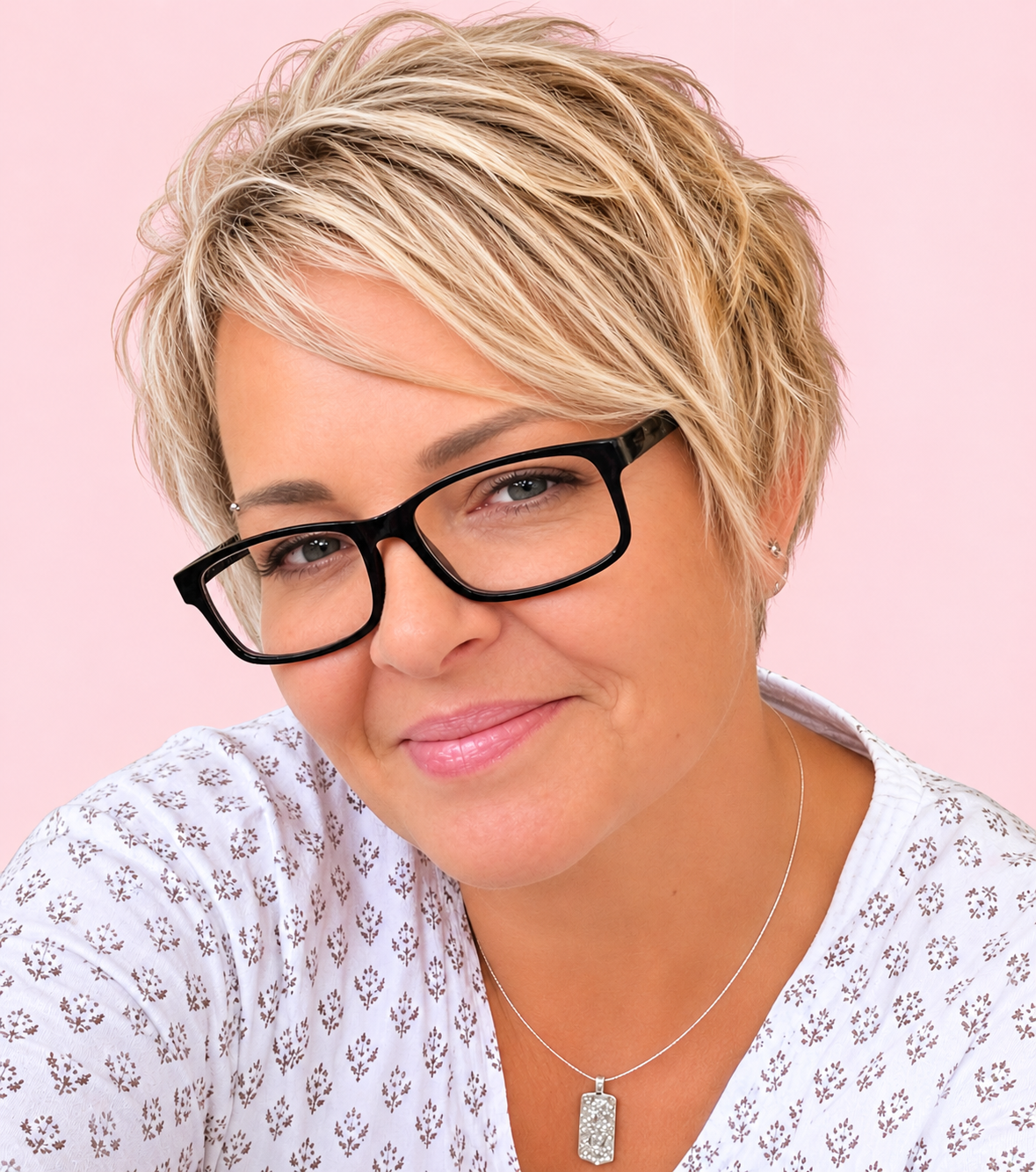
Catherine Ashton: I'm speaking with Keri East. Keri is the founder of Ashes to Art, an Australian memorial art service that transforms loved one's cremation ashes into a bespoke piece of art. works directly with families to create personalized keepsakes that honor someone who has passed, offering an alternative to traditional urns or scattering. [00:03:00] you so much for
Catherine Ashton: Thank you so much for being with us today, Keri
Keri: Thank you for having me, Catherine
Catherine Ashton: And tell me, how did you get involved with starting your own business and thinking about memorialization?
Uncle Brian Inspiration
Keri: My great uncle had passed away, and he and I were like peas and carrots. We just went together and, you know, I loved him dearly. He was a massive fan of the beach. He swam every single day. He lived at the beach. So of course, when he passed away, he wanted his ashes scattered, at his beach.
Keri: And we definitely honored that, but there was this little part of me that felt like I just needed to have a little bit of him. And it was a good 12 months before we actually scattered his ashes, and it was around the time that COVID came in and good old TikTok came on the scene. And of [00:04:00] course, during COVID, we all were locked in our houses and didn't have a whole lot to do.
Keri: I was just scrolling on TikTok one day and I came across this gentleman in Texas and his name was Art by Fred, and he was doing these beach memorials and I was like, "Oh my goodness, that is perfect." That's still honoring what he wanted, but allowing me to be selfish and having a little bit of his ashes to keep as well.
Keri: So I got in contact with him and he's like, "Yeah, no, send them over." And I was like, "No, I'm a very arty-farty person. I really wanna do it myself." And so we had conversations and I did lots of research, and I went and got like a little grow tent from Bunnings, and set it up on my deck and bought some equipment and just practiced for about six months.
Keri: I finally built up enough courage to do his memorial because the last [00:05:00] thing you wanna do is waste what you've got.
From Hobby to Business
Keri: And I did his memorial, and I have a very high traffic house anyway, 'cause I have a daughter with a disability and, we have a lot of carers come through the house and, one of the carers said to me, "Oh, could you do that for my mum?"
Keri: It's like, "Yeah, sure, no worries, I can do that." And so I did hers, and then she had people coming through her house going, "Oh my God, where did you get that? Who did that? W- who do I call?" And it just turned into something that was completely unexpected. Most of the beach resin that you would see in Australia is generally on a chopping board.
Keri: It certainly doesn't have ashes in it. And, I just kind of thought, "Well, i- it's a thing. It's something that I love doing. It definitely brings out my creative side and my reflective side." And, so yeah, I just decided, "Well, let's, let's have a go and see what happens with it." [00:06:00] And, so I was sitting in my little grow tent at about 1:00 in the morning thinking, "I've got to name this business.
Keri: What am I gonna name it?" And all of a sudden, Ashes to Art came into my head, and I was like, "Well, that's perfect. That was easy." And then I was thinking, "Oh, I'm gonna need a logo. What will my logo be?" And I'm kind of silently talking to Uncle Brian, going, "Come on, help me out with this." And next minute, at 1:00 in the morning, in a grow room that was completely sealed off, a dragonfly flew onto my hand, and I was just like, "Oh, okay, that's it.
Keri: That's where we are." And that's pretty much how Ashes to Art started. It was very simple. But I, I truly felt that everybody just needs a little bit of something when they lose somebody, whether it's their clothes, whether it's their ashes, whether it's the funeral flowers, [00:07:00] there has to be something that we can physically hold onto.
Keri: And so, yeah, we just kind of took off and, you know, I created a little tiny website for myself just through Canva, and I actually still operate through Canva. I haven't gone to any great legths- lengths to make this a, a huge, crazy, you know, look-at-me sort of situation. I don't advertise. I-- unless you search for me, you're not gonna find me.
Keri: And, and so yeah, it just, it kind of took off from there and, you know, I put a thing on Facebook and I just constantly have people reaching out, going, "Oh, we found you. We've heard all about you." You know, to the point where I've actually done memorials, beach memorials for people in the UK, for in Europe.
Keri: I've done them for America. So yeah, , it was very surprising, but it's very rewarding for me, so that's [00:08:00] how we began.
Meaning of the Dragonfly
Catherine Ashton: firstly I have to ask about the dragonfly
Keri: Yes.
Catherine Ashton: was there any significance or connection with your Uncle Brian about the dragonfly?
Keri: Funnily enough, he'd actually given me, um... 'cause he, he was a chef. He was a super host. He had an Airbnb that Nicole Kidman and Tom Cruise stayed at, and, you know, and lots of famous people. And but he was very, he was a florist as well. And he was very into jewelry, and he would collect jewelry just from, you know, op shops and things like that.
Keri: And there was one occasion where he actually gave me a dragonfly necklace. And so, you know, when that happened, I was just kinda like, "Yeah, he, he's definitely got the wheel on this," and, and all of this was meant to happen because he always said that, you know, life for me would [00:09:00] lead to bigger and better things.
Keri: And I truly believe that he definitely had a hand in, driving the car on this business. So yeah, the dragonfly was... it really shocked me because like I said, you know, the tent was zipped up. I was just sitting in there with a little fluoro light. It was 1:00 in the morning. Has anybody ever seen a dragonfly at 1:00 in the morning?
Keri: And I just thought, "Oh, okay, that's where we are. That's what we'll go with." So, and the fact that Ashes to Art, you know, I was playing around with words, and I was only sort of sitting there for less than five minutes, and I was throwing the words around, and then next minute was Ashes to Art, and I was like, "Okay, you, you directed me on that one as well."
Keri: And, and he's still steering the ship. He still steers the ship.
Finding Clients Naturally
Keri: So I'm not the kind of person who is very, I'm not really into social media. You know, I, I don't, I don't like being in front of a [00:10:00] camera, so I certainly don't like doing all of the videos and, you know, the Instagram posts and stuff like that.
Keri: I tend to just take pictures of what I've created, and I put them up on Facebook or on Instagram. And everybody sort of says to me, "Oh, you know, you don't push it enough, Keri. You don't push it." I don't need to push it because those that need me will find me. That's how I kind of look at it. So, yeah.
Keri: And then when I was, approached, by King's Funeral, I, I was like, "Oh, yeah, okay. No worries. I can do that." And, you know, we had a bit of a chat about, what the, the whole day was about, and it was simply just to show people that they could do other things with cremated remains other than just leaving them in an urn and sticking them in the cupboard, you know?
Keri: And so then I think it was only a couple of days beforehand, and I was talking to V, and I was like, "Oh, so how many other people are gonna be there?" And [00:11:00] she's like, "No one, just you." And that's when I was like, "Oh, Lord have mercy. Okay, we're, we're doing that." And, um, but, you know, I just take it as it comes.
Keri: I go where people ask me to go. I, will go to the markets down here on the Bellarine, once a month and just set up a display stand, and, you know, it's obviously not about selling anything because I'm not gonna sell somebody else's ashes to you. But just to sort of have the visual there for people to go, "Oh my goodness, I've never seen anything like that before."
Keri: And they may not have had anybody pass, but I guarantee you, you know, 12, two years down the track, they're searching for Ashes to Art because they saw me at a market, and they know that there's somebody that does that. And there are even people who have put it in wills to say, "When I pass away, I want a big memorial done, and I want it sit in the family lounge room, eating area, and I want to be part of everything," Yeah, it's [00:12:00] different. It's definitely different. I know when I first started it, there were a lot of, very strange reactions like, "Oh, I don't know about that." But then they see the product, and they go, "Oh, okay. Yeah, no, that just looks... That doesn't look like it's got ashes in it." And until you actually tell somebody, they don't know, and that's the beauty of it, is that, you have to be let on, in on the little secret, the little secret that that's their loved one that's there, you know, watching over them.
What the Art Looks Like
Catherine Ashton: And so when someone comes to a market, what is it that they see for someone who's unfamiliar with your work and the fact that, they may not have had someone who has died and maybe they're not aware of what, cremated ashes look like or cremated remains look like? So if you can talk us through what are the visual things that people will see when they look at your artwork?
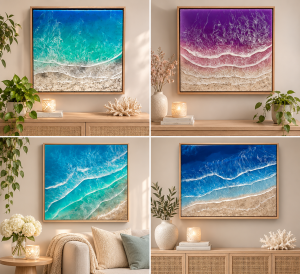
Keri: Okay. so for those that are actually going to visually see what [00:13:00] goes on, this is pretty much what you're going to get. So what I do is I lay the ashes in, some form work on a timber board, and then I use pigment to create all of the different colors. So obviously all around the world there is a huge variation of what your ocean colors look like, and they go from dark and deep and stormy to, you know, beautiful crystal clear oceans.
Keri: So, um, really it started out as that, uh, but it has grown into a lot more. We actually have We have bears just up here, and they're called our f- our Bearly Gone Bears, and they are actually, done with the clothing of your loved one. So they get sent off to my sewing lady, and she makes up beautiful little [00:14:00] outfits and ties and overalls and pantaloons and headbands and all kinds of stuff like that.
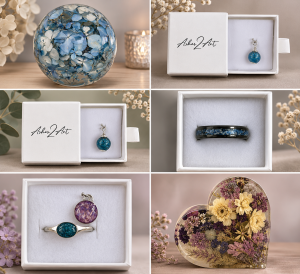
Keri: Um, it then transformed into flowers as well. So obviously for those who are not cremated, we now have our flower memorials that I put in resin, and they're labelled. So there's lots of different variations of that. We've got pet memorials. We have anything that you can think of. Only two days ago, I was contacted by a lady who had jumped on AI and wanted something that looked very high-end and was very different.
Keri: And she sent me a picture, and I was like, "Give me a week, and I'll see what I can do with that." And it's basically, it looks like crystals, glass crys- crystals. It's got backlighting through it. It goes on a [00:15:00] picture board, and it has the ashes and some gold layering with resin in it as well. So it actually just looks like a full art piece, and unless you're let in again on the secret, you would never know exactly what it is.
Keri: I'm in the throes of creating that at the moment. I love a challenge. I love it when people go, "Oh, I was looking for a lake, not an ocean." I'm like, "Okay." Or, "I was looking for a river." And I'm like, "Okay." So, we had a lady contact me, sister had sadly passed away from cancer. She was a competitive, snow skier, and she wanted a painting of a mountain with her sister's ashes in it.
Keri: And I am no painter by any means, but I actually managed to pull it off, and we did a beautiful painting, and her sister's ashes are all, scattered through the, snow cap on the mountain. So yeah, I just go with whatever it is [00:16:00] that people need. Whatever they feel that they need is what I do.
Keri: So it leaves me awake at 1 or 2 o'clock in the morning thinking about these things, but that's what creative people do anyway, so at least I'm being productive, I suppose.
Affordable Keepsakes Options
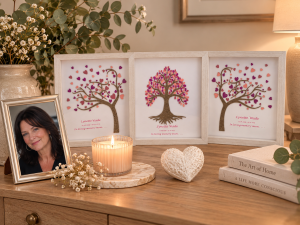
Catherine Ashton: And I love the fact that you've got little pocket hugs and the tree of life as well
Keri: So the tree of life is really significant, you know, to everybody. our trees of life are the, trunk of the tree that are done in the ashes, and then we've got these beautiful little love hearts everywhere that are scattered around the trees, and you get to choose what colors you want.
Keri: I don't actually have one with me today. Um, and our pocket hugs are simply there because I am not a person who believes that anybody should go without. So if your budget is $20 and you just wanna have a little something, something to hold of your person, everybody can afford that. So, you know, we do [00:17:00] jewelry, we do all kinds of stuff, but there's something for everybody's budget there regardless.
Keri: And if you catch me on a really soft moment, I'll just turn around and go, "Okay, I'll heavily discount that for you anyway" 'cause I'm a bit of a softie.
Grow Tent to Studios
Catherine Ashton: And tell me Keri, the grow tent. Talk me through the process of how you actually do it
Keri: So I don't have a grow tent anymore. I actually have a studio now. I'll just turn that around, and you can see that there's a whole studio in there.
Catherine Ashton: Yep
Keri: that's one... That's actually one of three studios. So there's another one down behind it, and then I've built a bungalow out the back that's another studio as well.
Keri: it just requires what it requires, and it requires space, and it requires dust-free areas, and it requires fans and ventilations and lighting and all of those wonderful things. And really, it was just, you know, [00:18:00] there was nobody to instruct me. I just had to create what it was that I needed to be able to get the artwork out looking at its very best with no dust, dust particles, which with resin is not an easy thing.
Keri: You can have a dust-free room, but trust me, there's still dust in it, and it will find its way to the resin even if it's 10 meters away from the resin at the time. So there's been a lot of trial and error, but we've finally managed to get ourselves a spot and, I've had people donate kitchen drawers and stuff, so now I actually pour in the drawers 'cause I can close the drawers over.
Keri: That's more for the flowers than it is for the, beach memorials. They get done on a massive table. It's all screened off, with plastic and ventilation and everything so that there's no particles on it. But yeah. Going from a grow tent into an actual studio was very lovely. I think the grow tent only lasted [00:19:00] maybe three months on the deck, and then, the orders started coming in, and there was no space to do anything.
Keri: So I was like, "Well, I've got three-quarters of a deck that's not doing anything. I'll just build a studio on there." So, and then it just got bigger, and so then it required another one. And then I've also got another business called Willow and Elk, and that's actually flower preservation for wedding flowers and birthdays and, you know, obviously funerals and stuff.
Keri: So that then needed its own room. So that's how we've ended up with three studios.
Catherine Ashton: I love that. You can't think of any more creative projects, otherwise you're just really gonna run out of different studio spaces
Keri: I know, but the joke is that, I've renovated seven houses, so everyone's like, "As soon as anything's finished, she'll find another wall to knock down anyway." So if I've got nothing to do, I do tend to attack my house and get productive there
Client Process Timeline
Catherine Ashton: Tell me, when a family reaches out to you, what is the [00:20:00] process that they, they go through?
Keri: Generally it starts out with a message. People do like to message first. I'll give them, a little bit of a brief on what the process is, and really it's just do you wanna drop your ashes off or would you like to post them? We ask all of those questions starting off, and then, they'll either send the ashes, or they'll drop them in.
Keri: Some people don't like to go through Australia Post, for fear that they would lose the ashes. But, when you've got registered mail, in the six years that I've been operating it, I have not lost a single soul, thankfully. So you either drop them off or you send them through, Australia Post, or you can put them through a courier,
Keri: what- whatever you feel comfortable with is really how I allow it to happen. And then we talk about what size memorial you want, what colors you're looking for, whether you want your ocean in a [00:21:00] U or an N or an island or, you know, however it is that you've, you've got it pictured in your mind is, is pretty much how I do it.
Keri: I get everybody to fill in a questionnaire. I'll send that out and just ask, you know, I give them a very broad, I've got 160, resin colors, so it, it all comes down to the pigment, whatever you want. Some people like to go, you know, from green to blue. Some like to go from blue to green. Some like to have them very, crystal clear with just really the white caps over the ashes.
Keri: Some people like to see more ocean than they do shore. Some people like to see more shore than they do ocean. So, you know, you've gotta ask all of the right questions because once it's in resin, it's in resin. There's no going back. And, I can safely [00:22:00] say that in six years' time I've never had anybody say, "Ooh, that's not really what I asked for."
Keri: So I try and cover the brief as best as I can. A beach memorial generally takes about five to six weeks. It's multiple, times in the studio. So first you- you're doing your base, then you're doing your ashes in the resin, then you're applying all your pigmentation, then you're doing all your ocean waves.
Keri: Then you've gotta let it set, for a period of time. You don't ever wanna put anybody's memorials back through the post or hand them over until everything is completely set. I also ask, you know, what was, the person who passed away, what was their favorite music, and I'll play the music while I'm laying them to rest in their beach memorial.
Keri: I'll video it so that they've got it on USB, and I package it all up with everything, and, they can put it in the TV and see how their loved one was laid and listen [00:23:00] to the music that was chosen. So I just try and make it very personal and calming
Rescue Background Compassion
Catherine Ashton: Where has that attention to detail and that, that level of understanding come from?
Keri: Okay. Yes, so I, I was in road accident rescue for 10 years. I volunteered for, the SES down in Tassie, and then when I moved back to the mainland, I joined the CFA. It was a volunteer's role, but it was very much a lifestyle for me. I was raised in a nursing family background. You know, whenever there was an accident, my parents pulled over, and so I was exposed to a lot of things from a very early age.
Keri: I was always, Just totally mesmerized by the human body and what it does and how it works and what's that for? And so, you know, I've, I've always been somebody [00:24:00] that would run to that rather than run away from it. Uh, people used to say, you know, "Your life is so hectic with your daughter and your other two children.
Keri: Why do you do that?" And my answer was just always, "Because I can." Because a lot of people can't do it, and I can. And there were, you know, grown men who would opt to hold the stop and go sign because they couldn't partake in the recovery or anything like that. But I've never had any kind of fear, of death or, you know, traumatic events.
Keri: I brought a lot of compassion and understanding to, to what I did at the time. You know, when anybody had passed away in motor vehicle accidents, I would be the one that would go, "Oh, let's just pull her top down. It doesn't need to..." You know. I, I was just always very self-conscious and very empathetic to, y- yes, they've passed away, but just because they've [00:25:00] passed away doesn't mean that they don't deserve all of the treatment that anybody else would expect.
Keri: So, death has just been a very easy thing for me. It's, I actually find it quite beautiful. I find it quite beautiful. I find it a lot of peace in it. And I definitely have my share of people visiting me in the studio when I'm working. So I definitely have encounters. I feel things. I'll start laughing from nowhere.
Keri: People will come and pick up their memorials, and I'll ask more questions about who I was working with, and they'll go, "Oh, yeah, he worked in comedy." Oh, okay, so that's where that crazy laughter came from that was just left of center. I think, you know, death can be so scary to a lot of people, but spirit just wants you to make light of it and know that they're there and, you know, they're watching over you and [00:26:00] floundering around doing things that, you know, you don't expect them to do.
Keri: But hey, it is what it is, and y- I didn't really have any sort of connections to spirit world. But there are some things that can't be explained that happened in the resin room that I kinda just go, "Okay, that's, that's what happened with that." So yeah.
Unexplained Studio Encounters
Catherine Ashton: Well, you know I'm gonna be asking about what happens in the resin room now, Keri
Keri: Okay, so I'll give you an example. I was actually working on one of my beautiful friend's mum's memorial. She'd passed away after having MS for years and years. And she gave me her playlist. It was a lot of Bette Midler and, you know, things like that. And I knew that the song was coming to an end, and I still had about half an hour in, in the studio to finish what I needed to finish.
Keri: And I quite often am one of those [00:27:00] strange people who talk to who they're working with, um, and I just sort of said, "Hey, how do you feel about Elton John? 'Cause our playlist is about to run out." And, you know, I don't obviously expect an answer. And less than 30 seconds later, the song had finished, and I hadn't had time to change anything or push play on anything, and next minute Elton John comes on, and I was like, "Oh, okay, Christine, we're gonna roll with that."
Keri: So they're the kind of things that happen in my studio that can't be explained. And you just gotta go with the flow. You gotta understand that, you know, sometimes when people pass away, they're, they're still here. They'll, they'll follow the whole path and see what's going on and, you know, I get all of the tingly feelings, and I know when, I know when there's spirit around.
Keri: I just go, "Oh, hi. How you going? What's going on today? This is what we're doing today. Today we're [00:28:00] gonna play this music, and we're gonna do this section of your memorial," and, you know, I... It just is what it is. You either have a sense of humor about it and you go with the flow, or you don't do it.
Keri: Because, you know, it can be scary to those that are a little ooh, you know? But I've just always been a very go-with-the-flow kinda girl, very open girl, very empathic kind of girl. Yeah, just always open to whatever comes. Never say never, I say
Catherine Ashton: And do you think that it was your background, and coming from a nursing family and your experience where you've seen death as part of life, has that framed your ability to go with the flow when most other people wouldn't in those circumstances?
Keri: you know, right down to, [00:29:00] two of my children, you know, one being like three, and I think the eldest one was six. And they were quite aware that when my pager went off, it was all about getting overalls, getting car keys, getting phones, and they would hear my pager go off, and they would come running with snacks.
Keri: "Here, Mom. Here you go." You know, "Take that." Always very open with them when I came home, even at an early age, you know, they wanted to know, oh, what happened and, and I would tell them. And you know, what that's done is that's shaped them as wonderful drivers on the road who have a lot of patience and respect and, you know, everybody's gotta get where they're going, and you don't need to be the cause of somebody else's trauma.
Keri: So that definitely shaped them as little humans as they've grown up and, you know, taken the [00:30:00] responsibility of driving motor vehicles because I was very open and honest about the things that I saw and what would happen and, you know, they would ask, "Oh, well, how did that happen?" "Oh, well, this person was doing this instead of concentrating on the road."
Keri: but definitely, definitely how I was raised, definitely being in, that situation of road accident rescue, has shaped how I kinda look at death.
Keri: So, you know, you, There's no point in being afraid of it because it's gonna happen to all of us. So I, I just tend to look at it all with a little bit of humor rather than fear. And that, and that's just how I roll it out.
Disability and Home Life
Catherine Ashton: You mentioned that, one of your children has disability. How has that shaped your role as someone who a carer, someone who is [00:31:00] reminded that, you know, there is other considerations in life that we need to be mindful of?
Keri: So my daughter, he, she has a very rare disability. She is one of only 1,500 worldwide with one syndrome, and then she has another syndrome that only has 150 children worldwide with that. We have 24/7 care in the house. She has two to one care out in the community. And that's half the reason why this business has worked for me, is because I'm home all of the time.
Keri: I am at the beck and need of her or the carers, yet I'm still able to do these memorials. It, it has been a real blessing because, you know, with any disability, regardless of whether it's rare or it's not rare, life can get pretty hard. I'd say that [00:32:00] that gets me down more than anything else, more than death.
Keri: I also had to shape how I was going to deal with her not being here. She's not gonna live forever. She's 27 at the moment, but, she might not be here tomorrow, and she definitely won't outlive me. And so I've had to really, from a very, very young age for her, recognize that I will have to deal with that at some stage.
Keri: I wouldn't say I'm au fait about it, but i'm okay with it. I, I understand that she was given to me, to keep me in check because I'm a bit of a, a, a flittery, I would fly around the world and just live out of vans if I could, kind of girl. So she's kept me grounded. She's the reason why I'm as grounded as I am.
Keri: She's another reason why I [00:33:00] am the way that I am about death, and with ashes. And you know, the thing about ashes is people just think that they're white or they're gray, and they're not. You can get beautiful pinks in your ashes. The bones will go a beautiful pink. They'll go, like, turquoisey colors, opal colors, olive colors.
Keri: Like, there are so many beautiful colors. If you just take enough time to look deep enough into the ashes on the memorials, you'd be amazed at the coloring that you, you do see on that. Um, but yeah, no, getting back to the other, um... What I do allows me to do it from home. It allows me to be here for her, and still provide something to those that have lost somebody, so she's a blessing regardless
Colors Hidden in Ashes
Catherine Ashton: It's interesting that you talk [00:34:00] about, the different colors in ashes because for anyone who may have been to a Buddhist temple where they actually display relics, where, they are actually, items that have actually been seen in the cremated remains of different, leaders within the Buddhist community, there is so much variety
Keri: Oh, you, I, I'm blown away every single time. Particularly more so when I do the beach memorials, obviously, because the ashes are laid out flat and they're sprinkled, so you can really hone in on the colors. And I, I didn't, to be honest, I didn't pay much attention to that for the, probably the first two or three years.
Keri: It's only been in the last couple of years that I, I'll get in there with the magnifying glass and go, "Oh my God, that is just beautiful. Like, that's just divine." And I'm, I love turquoise and I love baby [00:35:00] pink, and the amount of ashes that I've seen that literally just look like a shard of crystal, you know, pink crystal, and I'm like, "Oh, wow."
Keri: And you can't even, you can't even wrap your round of, your, your head around how, how that's happened. It just is what it is, and you get what you get, you know? It's got nothing to do with what you drink or what you eat or, what you passed away from, or it, it, you, you just get what you get, you know?
Keri: And so I've, I've really started to take the time to really hone in and look at the colors, in the last couple of years and it, it blows my mind every single time what I find. So it's very, very cool. Very cool
Catherine Ashton: And I love the fact that because y- w- as you were saying that you would think that they are just all monochrome
Keri: Mm. Yep. But they're absolutely not
Catherine Ashton: f- it really is in that form that that's the [00:36:00] only time that you see us the most similar
Keri: Yes. Yes, definitely. Y- you know, for the most part, everybody will have a little bit of color in their ashes. It won't be like rainbow colors or anything like that. You'll predominantly have turquoise or you'll, you'll have olives or something like that.
When Ashes Guide the Design
Keri: But I did work on a gentleman not too long ago, and that was another funny story.
Keri: His daughter gave me the ashes, and she's like, "I'd like a beach memorial." And I was like, "Okay, no worries. What colors?" We went through the colors, and she gave me the music, and I started laying his ashes, and all of a sudden I'd created this island, and I was like, "I d- I don't really do islands." So then I was trying to over-correct and, you know, and in the end we ended up with a bit, a shoreline, but it had its own little island up towards [00:37:00] the back.
Keri: And when she came to pick him up, I sort of said to her, "Now listen, before I show you this beach memorial, I need to know, was there anything about your dad where it was all about islands?" And she said, "Oh yeah, he was an islander." And I was like, "Okay, good chat." So sometimes they will be very directive about how their ashes are going to get laid, and y- I can't overthink it.
Keri: I literally just have to go with the flow. I, there's no point in fighting it, 'cause even when I tried to re-correct that, I still ended up with an island in the ocean. So I was like, "Okay, that seems to be a thing. Let's just address that when I see his daughter, and hope to God that I don't get into trouble for having some random island in a beach memorial."
Keri: But yeah, no, she was blown away by that. She couldn't believe that that had happened,
Story That Stands Out
Catherine Ashton: And it sounds like you have many stories of the experiences that you've had over the six years. [00:38:00] Is
Keri: Yeah
Catherine Ashton: that really stands out for you, Keri?
Keri: Yes, definitely. I was contacted by a family who had had a miscarriage. The baby was only 21 weeks, and they did decide to cremate the baby. Um, there was all of two teaspoons of this little baby. And these people actually knew people who knew me, so that, that's kind of how they found me. But funnily enough, they'd actually worked for a major surfing outlet, and so they were very, very much beach people.
Keri: Their son's name was going to be Byron, was listed as Byron when, when he passed, and they wanted me to create a beach memorial. Now, originally, I'm thinking two teaspoons. My Lord, how am I going to apply that? And look, we, we just talked it [00:39:00] through. They ended up going and getting a little bit of sand from their favorite beach that I incorporated his ashes into.
Keri: and they went next level. They, they did, 1.2 meters long by, 80... no, 1.2 meter long by 80 down. So it was massive. It was like, I'm talking, like, a whole wall memorial.
Keri: And so when they hit me with that, I was like, "Oh please, God, be on my side," you know, "when I'm doing this." And, I opened up the ashes like I do with anybody else, but just the feeling that I got, It was like a warm, tingly feeling that just went throughout my whole body and through my hands and, you know, up my back and the typical thing that we say when, "Oh, you know, somebody's just walked over my grave," but it was, it wasn't like just a shiver, it was a lot of warmth that came from it as well.
Keri: And I found that [00:40:00] every time, I worked on Byron's memorial, I would get the same feeling. So, that was definitely a memorial that I'll never forget doing. but he, he definitely stuck with me. And it was done, before his funeral.
Keri: So they had given me the ashes, and they'd planned the funeral for four weeks later. And I spent, even though it takes six weeks, I spent a heck of a lot of time in the studio working on that because they wanted it, front and center at his funeral. And we all became great friends, and I went to Byron's funeral, and they knew more people that I knew, so everything was very coincidental.
Keri: Um, and you know, just from that, uh, that was probably three, four years ago, just from that I've had probably 15 people reach out since then [00:41:00] that have, just recently lost their loved ones and they're like, "Oh, we were at that funeral, and we grabbed one of your cards," because, they displayed my cards where the sign-in book was, and I don't think people realized what the cards were about until the funeral was over.
Keri: But I know that there were no cards left by the time the funeral was finished. So, you know, it's all word of mouth and like I say, you know, people find me who need me. That's just how it happens. I don't need to run advertisements. I don't need to put myself out on social media. You just need to look up, what can I do with cremated remains, and somewhere on Google you'll find me, so-
Beliefs About Afterlife
Catherine Ashton: And Keri, do you think happens after we die, given all of the experience that you've had?
Keri: I definitely have my own beliefs now. I was, raised as Catholic. Um, [00:42:00] and I don't know, I kinda stepped outside of that when I was sort of, you know, 18. I was, like, doing the rebellious thing. Um, but my view on death now is that I firmly believe that Let's say, for instance, I passed away. I believe that you just sit in that heavenly place until the very last person that was on Earth that loved you passes away, and then I believe you come back.
Keri: I definitely believe you come back. I've done, some past life readings and, you know, I don't share very much about myself when I go off to do things like that, and I've had three of them done, and in all three they've told me that my daughter has been with me in every life cycle. So I just... [00:43:00] You, you have a lot of déjà vu throughout your life that you can't really explain.
Keri: there are definitely a lot of characteristics about myself that initially I couldn't explain, but now I have a really good understanding of, "Yep, I've been here before. I've done that before," you know? So I, I firmly believe that when you pass away, you're just gonna sit up there in heaven limbo until the very last person that dearly loved you passed away, and then it's time for you to come back down and start the cycle again.
Keri: And I feel comfortable with that, you know? And even when I've, spoken to clients about it, they're like, "Oh, that's a really beautiful way to look at it, Keri." And I'm like, "Well, you know, you gotta look at it somehow." And, and so that's just how I, how I view it
Catherine Ashton: I think that's a really beautiful [00:44:00] thought. And also I have a very strong image in my mind when you explain that
Keri: Yep
Catherine Ashton: people in you, you know, probably in my mind's eye is a little cloudy space somewhere.
Keri: Yep, that's exactly where mine goes.
Catherine Ashton: yeah, I, I really like that.
Keri: Just sitting up there on the clouds waiting for you to come
Art Helping People Grieve
Catherine Ashton: And how do you think your artworks are helping people grieve?
Keri: Oh, look, initially I didn't really know what to think or I only knew how I felt having my uncle, um, sitting there, you know, and something would come on the TV and I'd go, "Did you see that?" So I found it very comforting to actually have something to reference a conversation with. And I suppose that was my [00:45:00] hope, when I did start Ashes to Art.
Keri: But I have people contacting me all of the time, you know. They've got them up in the lounge room, dining area, kitchen area. And they have Christmas and they cheers them and, you know, you have little old ladies who have lost their husbands who have a coffee with him every morning 'cause he's on the wall, and we talk about the petunias have grown and blah, blah, blah.
Keri: And, and it's just beautiful. It's beautiful that they actually got something that they can focus on, something to say, "Good morning, my love. Good night, my love. Hello, how are you? This is where I'm going today." Or, "The whole family's coming, it's gonna be Christmas," or, "We're having a birthday party and you're gonna be a part of it."
Keri: And they tell me all about their conversations and I just think it's beautiful, you know? To be able to get up in the morning, turn the kettle on, and sit down and look at your loved one and go, "Good morning, how [00:46:00] are you?" You know? Because regardless of whether you have a piece of artwork or you don't, you still talk, you still talk to those that have passed.
Keri: You've actually just got a point of reference now. So it's a beautiful thing. And that is the reason that I'm driven, is that people still get to have that connection. They still feel close to their person, and I think that that's just beautiful
Catherine Ashton: And a, a very beautiful piece of artwork to actually have in their home as well
Keri: They're not too shabby, I'm gonna say. I don't wanna toot my own horn, but they are absolutely beautiful. Absolutely beautiful. Sometimes it's very hard to let, let them go, 'cause some of them just come out so incredibly beautiful that I'm like, "Oh, I wanna keep that one," but that's not what I was put here for.
Keri: I was put here to serve [00:47:00] and make sure that everybody got a piece of what they needed, so that's what I do
Keri: This is definitely, not something that's driven by advertising, but definitely a need for people to know they don't need to stay in the urn. They don't need to be in the wardrobe, you know?
Keri: And when my uncle was initially cremated, I'll just throw this in, he was gay, and, m- when my great-uncle passed away, my uncle had actually picked up his ashes, and I'm like, "Well, where's Uncle Brian?" And he said, "In the wardrobe." I'm like, "Don't you think he spent enough of his life in the wardrobe without being put back in the wardrobe in death?"
Keri: And he's like, "Oh, yeah, good point, Keri." So you don't need to put your people in boxes anymore. You can do something beautiful, and then you can let go of what's left, so
Catherine Ashton: And, and they can be in what? 160 something different pigment colors
Keri: Absolutely. Yeah. I, I've [00:48:00] done, I've actually done, I did one for a lady whose sister passed away, and she passed away from breast cancer. So her beach memorial was done in pinks and purples, as the breast cancer colors. So, and that, I've gotta say, that was one of the ones that I did that I was like, "I do not wanna let this go."
Keri: And people will see photos of it, and they're like, "Oh my God, Keri, that is amazing." I think there's a picture of it on Facebook. If not, I'll go through and I'll put, put a couple up. So, but yeah
Closing Thanks and Links
Catherine Ashton: And that'll be great. We'll, include all of the links to your website in the show notes so people can see the amazing work that you do
Keri: I'll have to send you those links 'cause I don't think I've done that yet.
Catherine Ashton: It's all good. We'll have them in there, Keri. Thank you so
Keri: Beautiful
Catherine Ashton: time with us today
Keri: Thanks for getting in contact, Catherine. I really appreciate it
We hope today's conversation gave you something to think about. If it brought something to mind that you haven't [00:49:00] organized yet, talked about, or decided on, don't try to do everything at once. Start with one simple step. We've created a free three-minute critical info check to help you see what you've already got covered and what your next step could be And if this episode has brought up feelings for you of grief, loss, or bereavement, please note that you don't have to navigate that alone.
We have an after-death guide to support you, and you can find grief and bereavement support organizations through the Critical Info Resource Hub. The links are in the show notes. And remember, you may not be ready to die, but at least you can be prepared
What if something happened tomorrow? A sudden hospital stay, an accident on an overseas trip, or something happening to someone you love. [00:50:00] Do you know where the important documents are kept? Can someone speak for you when you can't? Do you know your loved one's wishes? You don't need to organize everything today.
Take our free three-minute Critical Info Check. It helps you see what you've already got covered and what your next step could be. Three minutes, one next step. The link is in the show notes. Critical Info is your backup plan for life's unexpected moments. If someone came to mind while you were listening to this episode, why don't you send it to them?
Sometimes the easiest way to start a difficult conversation is to actually start with someone else's story.