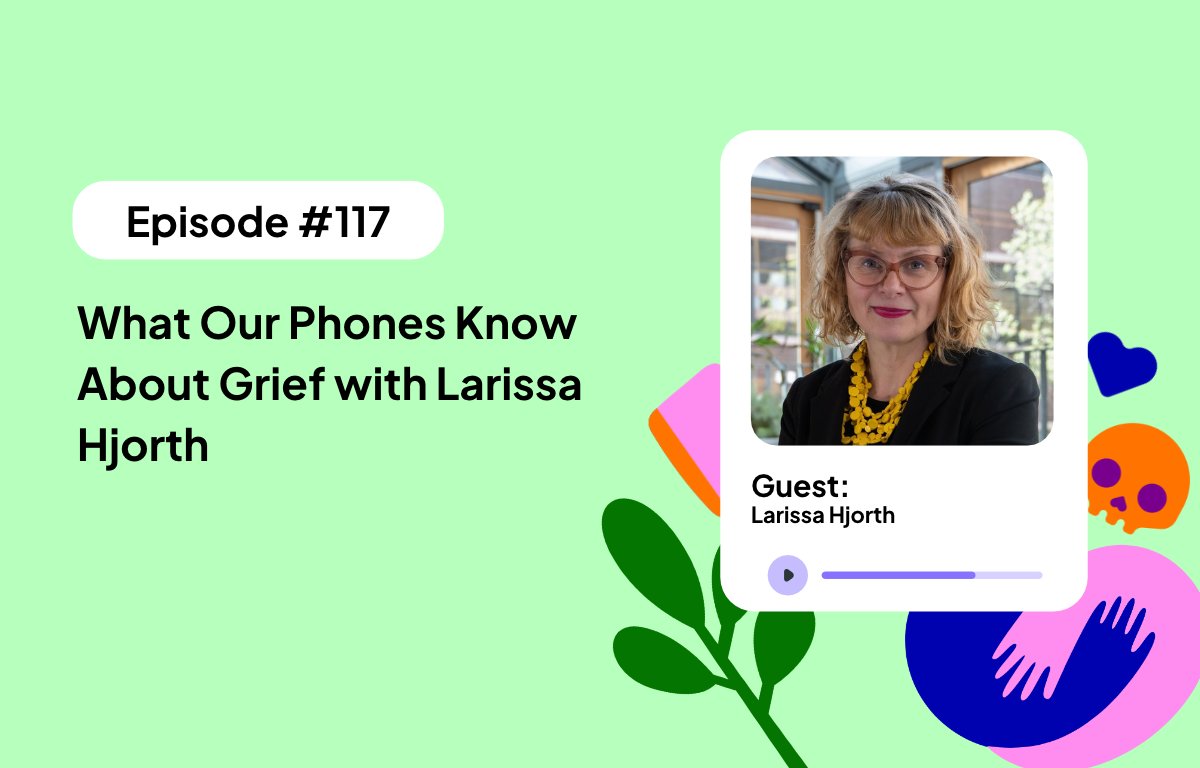




What Our Phones Know About Grief with Larissa Hjorth



Listen now
About this episode
What if the phone in your pocket is one of the most meaningful grief objects you own?
In this episode, I'm joined by Distinguished Professor Larissa Hjorth, a digital ethnographer and socially engaged artist at RMIT University here in Melbourne, where she holds an Australian Research Council Future Fellowship in the School of Media and Communication. For two decades, Larissa's work has explored the role mobile media plays in intergenerational connection, intimacy, ageing, loss and death across Japan, South Korea, China and Australia. Her current Fellowship, The Mourning After, examines mourning through mobile media, from the death of a loved one to ecological grief, framing grief as a cultural practice and building what she calls grief literacy. It builds on her earlier book, Haunting Hands (Oxford University Press, 2017), and her latest book, Mourning on Mobile Media: Everyday Affective Witnessing (MIT Press), is free to read online. In 2025 Larissa curated an exhibition of the same name at RMIT Design Hub Gallery, exploring grief as a social practice for hopeful futures.
I was lucky enough to visit The Mourning After, and in this conversation Larissa takes us behind the curtain. We talk about how she brought together 13 artists and 26 free public workshops to make grief visible, from Maree Clarke's kopi mourning caps, heavy with clay and worn until they fall away, to custodian guides that give our treasured objects a story to carry into the future. Larissa explains why ritual matters so much, why grief doesn't have to be dark, and why creative practice can say what words often can't.
We then move into the digital world. Larissa shares what she has learnt about posting as a form of eulogy, why choosing not to share can be just as meaningful as sharing, and how people hold onto old phones rather than risk losing a loved one's voice message. We explore the phone as a witness in moments of disaster and collective grief, what happens when social media accounts are left without a legacy contact, and the ethics of death bots and AI afterlives. As Larissa puts it, when you ask someone about their phone, you're really inviting them to talk about their life, their relationships and their losses.
Remember; You may not be ready to die, but at least you can be prepared.
Take care,
Catherine
Show notes
Guest Bio
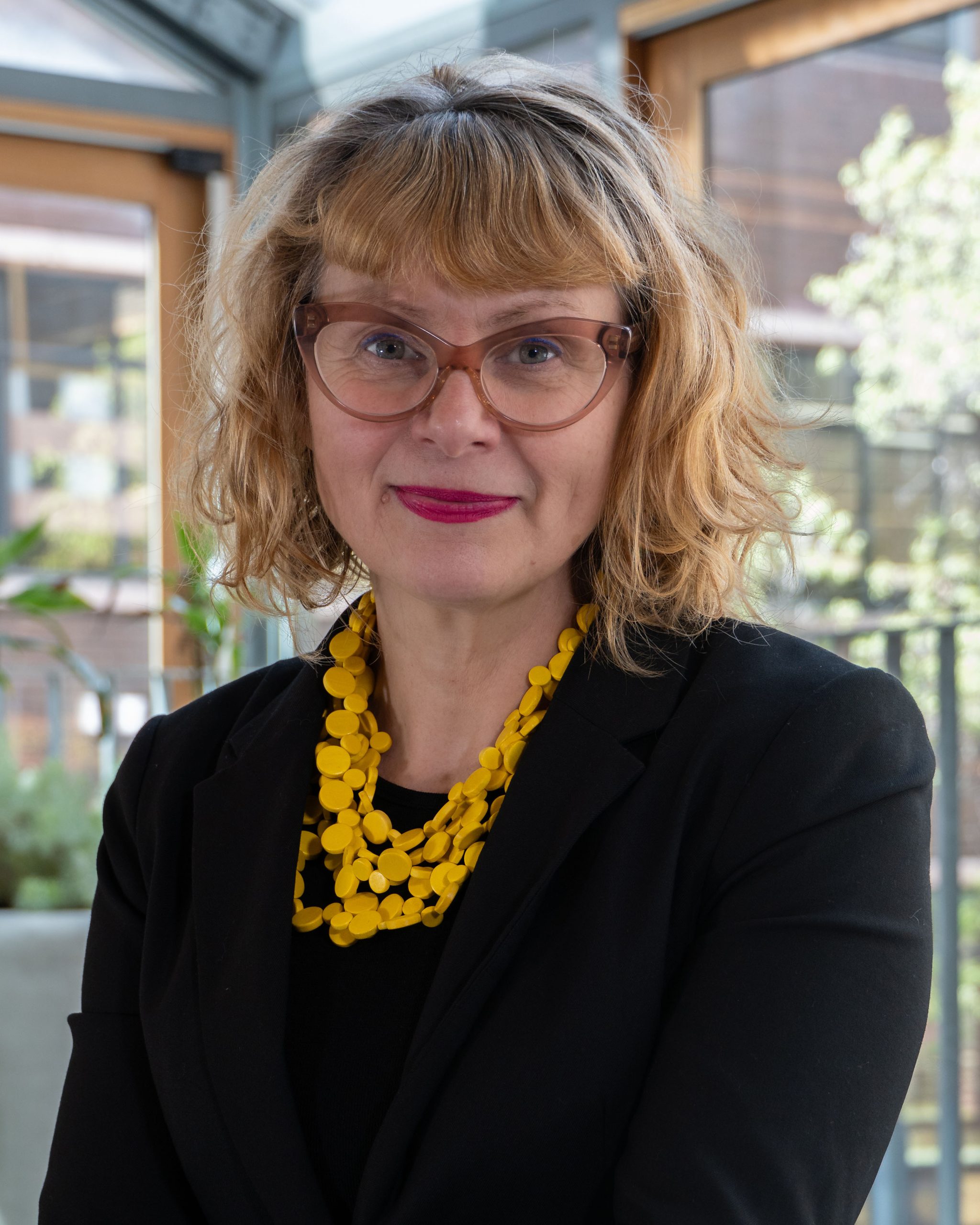
Distinguished Professor, Digital Ethnographer and Socially Engaged Artist at RMIT University
Larissa Hjorth is a Distinguished Professor, digital ethnographer and socially engaged artist at RMIT University, where she holds an Australian Research Council (ARC) Future Fellowship in the School of Media & Communication. For two decades, her work has explored mobile media's role in intergenerational connection, intimacy, ageing, loss and death across Japan, South Korea, China and Australia.
Her current Fellowship, "The Mourning After," examines mourning through mobile media, from the death of a loved one to ecological grief, framing grief as a cultural practice and building what she calls "grief literacy." It builds on her earlier book "Haunting Hands" (Oxford University Press, 2017). In 2025, Hjorth curated an exhibition of the same name at RMIT Design Hub Gallery, exploring grief through art and creative practice.
Summary
What you'll hear in this episode:
- How The Mourning After exhibition brought together First Nations, ecological and personal grief under one roof
- Maree Clarke's kopi healing ritual, and why making grief visible helps us connect
- The custodian guide workshop that asked people to imagine the future of a treasured object
- Why grief raves, hyacinth bulbs and bright colours push back against the idea that grief must be dark
- Posting as eulogy, and why the decision not to share is just as meaningful
- How phones become continuing bonds, companions and witnesses in times of loss and disaster
- Why every social media account needs a legacy contact, and what happens when there isn't one
- Death bots, consent and AI afterlives: who are they really for?
Transcript
[00:00:00] Grief In The Body Larissa: And so you make it your kopi mourning hat, and then you wear it. And I don't know if you've ever put seven kilos on your head before- But it's a lot of weight. It actually changes how your whole body sits. And this is what grief does. It changes our body. It sits in the body in different ways. Larissa: And so by making it visible, it is actually saying to everybody else, "Look, this is my grief." Larissa: And, they might have walked 15 kilometers home, holding the phone as if their loved ones were almost in there. Larissa: So that kind of idea that ... Read More
[00:00:00]
Grief In The Body
Larissa: And so you make it your kopi mourning hat, and then you wear it. And I don't know if you've ever put seven kilos on your head before- But it's a lot of weight. It actually changes how your whole body sits. And this is what grief does. It changes our body. It sits in the body in different ways.
Larissa: And so by making it visible, it is actually saying to everybody else, "Look, this is my grief."
Larissa: And, they might have walked 15 kilometers home, holding the phone as if their loved ones were almost in there.
Larissa: So that kind of idea that the material object, the phone, was embodying those relationships — this is what I really love about the mobile phone, It's an invitation to talk about their life and their connections and their relationships and their values and their intimacies and, and their losses and their grief. So it becomes a lovely portal for kind of talking through those things.
Larissa: asking people about the [00:01:00] kind of death bots that they were interested in, and whether any of them would like a death bot of themselves.
Larissa: And everybody went, "No. Absolutely not."
Catherine Ashton: Today I'm speaking with Larissa Hjorth. She is a distinguished professor, digital ethnographer, and a socially engaged artist at RMIT [00:02:00] University here in Melbourne, where she also holds an Australian Research Council Future Fellowship in the School of Media and Communication. two decades, her work has explored mobile media's role in intergenerational connection, intimacy, aging, loss, and death across Japan, South Korea, China, and Australia. Her current fellowship, The Mourning After, examines mourning through mobile media from the death of a loved one to ecological grief, framing grief as a cultural practice, and building what she calls grief literacy. It builds on her earlier book, Haunting Hands, published by Oxford University Press in 2017. in 2025, Larissa curated an exhibition of the same name at the RMIT Design Hub Gallery, exploring grief through art and creative practice. you so much for being with us today, Larissa
Larissa: [00:03:00] Thank you, Catherine.
Catherine Ashton: I
Origins Of The Exhibition
Catherine Ashton: absolutely loved the exhibition that you curated, that I attended last year. It was so amazing. Can you tell us about how that started, and how did you get all of those amazing artists in the one collaboration and, and, and collection?
Larissa: Well, firstly, I, I just wanna say that there's no I in team, so there's a lot of people involved that I collaborate with, and my work is always collaborative. So, um, I'll be mentioning names of all the people that... And there'll be people that I'll forget to mention, but I wanna give them jazz hands because, um, it really is there's no I in team.
Larissa: the exhibition was part of the, broader fellowship, in which we've been looking at mobile media and putting media in context of our social, emotional, cultural lives. And so we interviewed about 55 people, a range of different [00:04:00] experiences from experts like psychologists in the field to people that had had various different experiences.
Larissa: And by experiences, we looked at death and non-death loss. We looked at personal loss, and we looked at collective loss. So we looked at bereavement of a, family member, including animals in that equation. And I, I know that you've, um, interviewed, um, the wonderful Alicia Kennedy, on this podcast.
Larissa: and she has such, you know, insights into, you know, the deep, deep, deep connection between human and animals. And that in Australia we do have... animals are part of our kinship. So I think that's really kind of important to, point out.
Grief Literacy And Creative Practice
Larissa: But we also had, people talking about, ecological grief, which, you know, with climate disaster, we're, we're kind of seeing that become more and more part of our everyday lives and how we [00:05:00] try and navigate our everyday practices to make sense of it all, to kind of bring together that, personal and collective.
Larissa: And rather than grief being a process of something that is ostracized from cultural practice, actually putting it at the center and saying, "This is actually something that we all have in common." We all grieve, but we all grieve completely differently. And so if we could be more open about it, we could, and, you know, more open to understanding other people's experience and, and r- and having affinity with that, I think we could have a lot more, Meaningful, connections with people. So the creative practice dimension of the project is very much trying to do that. So it's kind of we're using creative practice 'cause what I love about creative practice, and I've been a socially engaged artist for, you know, a few decades, and what I enjoy about, for example, workshops, is that it's different every single time.
Larissa: You might use [00:06:00] the same template, but people come, and they bring their kind of, you know, kind of emotional histories, and it's all about that relationality. It's about the embodied experience, people physically being there. And creative practice really allows us to sit with, the tacit. So, you know, there are many things that don't go, get spoken about, and particularly around grief, and this is where the work of, Professor Lauren Breen's, and her colleagues developed that grief literacy.
Larissa: And we were really inspired by that work and thought, "Wouldn't it be wonderful if rather than grief being this thing that disenfranchise us or separates us, if it could... it was actually something that we use to come together and to sense-make together to actually find hope and also to think about perhaps social action?"
Larissa: You know, particularly around, say, things like eco-grief and thinking about, um, climate [00:07:00] justice and, and things like that. So the exhibition was really an attempt at trying to create that kind of space. And it was really, really hard to curate because, it had to be about the relationships between the different works.
Larissa: So while there are many fantastic artists working with the topic of grief and mourning, it was really about getting the right recipe between the different artists to take people on a journey. And in terms of the exhibition, you, you could actually enter the space in a few different ways. And so the wayfinding and wayfaring of the exhibition, had to be thought about in a few different ways.
First Nations Rituals Kopi Healing
Larissa: It was really important to have First Nations artist really represented there because their experience of, you know, of mourning and grief rituals is, I think all the strange could learn a lot from them. I mean, [00:08:00] they have had the experience of, you know, great, great loss- You know, thanks to colonialism.
Larissa: But they also have powerful, powerful rituals, that are really about taking that loss and using that to connect together, to come together, to really build hope together. And so there is a lot to be learned there. So, we featured, three, First Nations artists, and Australian First Nations artist, and one Canadian First Nations artist.
Larissa: Maree Clarke's the, Me and Mourning, which was that beautiful, beautiful mourning hut, which is part of the ritual that women do when they're dealing with sorry business. They will go off and create this, these, these mourning huts. And, um, we also had her do a workshop which was about the kopi healing, which is this process of you get seven kilos of clay [00:09:00] and you bring along, um, plants or anything that you wanna customize it to reflect the things you wanna mourn.
Larissa: And so you make it your kopi mourning hat, and then you wear it. And I don't know if you've ever put seven kilos on your head before- But it's a lot of weight. It actually changes how your whole body sits. And this is what grief does. It changes our body. It sits in the body in different ways.
Larissa: And so by making it visible, it is actually saying to everybody else, "Look, this is my grief." And then what they'll do is they'll wear the grief until it falls off, until it decides that it's had enough time, and that could be a couple of days or it could be three weeks. And so it's a really, really powerful ritual of making grief visible and using it as a way to connect.
Larissa: so we could learn a lot from, those rituals.
Designing A Journey Through Grief
Larissa: There were 13 artists, and it was really about trying to [00:10:00] also bring together that cacophony of the personal and the collective. So that, you know, from everything from eco-grief, which often people struggle to have language for because it's so existential.
Larissa: And so there was a work in there by, Shahee Ilyas, which is a visualization where he's actually mapped. He went into TikTok, Instagram, and X and looked at all the words that were re- relating to eco-grief from 2016 until now. And lo and behold, you get it building, buildings quite small initially, and then 2020 when we had the fires in Australia suddenly burst and the internet is full of people struggling to find the vernacular and the language to describe all the things that they are feeling with the bushfires of 2020.
Larissa: that's a really great example of h- how media can help us through that kind of [00:11:00] grief literacy and, and get us to kind of come and develop, vernacular. But it was really, yeah, about having those different, registers and scales of grief from the personal to the collective and, and trying to make space so that everything was, valued, equally even though some might be more disenfranchised or some might be more invisible than others.
Larissa: I worked with, a design group, UP, who also they c- they created curtains in the space and little, seating areas so that it was really about you come to an exhibition, and if there's a work that is a bit heavy for you or a bit difficult, you can just sit there and just hang out. And so it was really like an invitation, and I think that's the way that we saw ab- the exhibition was an invitation to try and explore our own emotions and our own experiences, but also being open to, to those of others', experiences.
Workshops Vulnerability And Ritual
Larissa: And then with Tamara [00:12:00] Borovica and, Katrin Gerber, we curated 26, workshops, which, were free to the public, and we had over 250 workshop participants. So we had the workshops capped 'cause obviously that kind of content, you really need to... And you know, doing that kind of content in the public, you need to be able to, control the environment so that you can make everyone feel comfortable and safe and, and, and really do that in r- really careful, deep work.
Larissa: But yeah, it was amazing, and the workshops just explored everything from like the kopi healing that I mentioned. There were a lot of eco-grief exhibitions that were about making visible, eco-grief. Chris Hall from-- the CEO from, Grief Australia gave an amazing workshop. I mean, they're all amazing,
Objects Legacy And Custodian Guides
Larissa: Another one I'd like to talk about was, a workshop by, Pia Interlandi and Peta Murray, and this was, an invitation [00:13:00] to explore, material, objects and their biographies and what we might do to create a legacy. So more and more people were starting to think about, digital legacy, and I know that the work that you're doing is really trying to help with getting people to take seriously that kind of planning so that it can support loved ones and family in that process.
Larissa: Digital legacy is a, you know, increasingly becoming a, a big part of, a, a big part of that. But, the objects, you know, like yeah, we think about wills and, you know, it might go here or whatever, but what if you could actually think about objects and as a kind of responsibility? And this is almost like a, a kind of Shinto or, or Buddhist idea of our objects, which is this idea that your ancestors could be living in objects.
Larissa: How would you treat a cup that could be, say, your mother or something like that? What kind of care would you give it? So they asked people to bring [00:14:00] along an object that was meaningful for them to create a custodian guide. And then They gave the object to a partner blindfolded, and then they described the object
Larissa: without actually saying it is, say, for example, a pair of false teeth, of which that was one of the things that somebody had to hold.
Catherine Ashton: Oh my goodness
Larissa: It was pretty, it was, it was pretty funny. Like, particularly as somebody observing as a kind of facilitator helper, it was quite interesting watching the person holding it with a blindfold and them kind of being like, "Hang on a minute.
Larissa: Is this what I think it is? Mm." Like, you know. Of course, it was all hygiened and things.
Catherine Ashton: But I
Catherine Ashton: 'cause so much vulnerability in that also when you actually allow yourself to be blindfolded and really putting your trust in someone else, which also taps into how vulnerable you feel when you are grieving too
Larissa: And that's the thing that really was such a... [00:15:00] I mean, every workshop I had, I shed a little tear of, kind of hope because it was people showed up willing to be vulnerable. I mean, of course, you're not gonna sign up for a public workshop, about grief or mourning unless you are willing to, to do that work.
Larissa: But it is such brave work, and you just... What that does in terms of the way that strangers will interact is just beautiful. It's like, "Oh my God, humans are beautiful." You know, they really are. And so there's a kind of, in that vulnerability, there's a kind of generosity and a care and a, a, a kind of deep listening that often doesn't happen in kind of public spaces.
Larissa: And so with that custodian guide, then they had to write a, a kind of l- like a kind of testimony of, like, what they would like to happen to that object. Then they drew the object, and then that guide was given over to somebody else. So everybody read out [00:16:00] their custodian guides, and then somebody would choose to give it to somebody else that they had affinity with.
Larissa: So there was a gift-giving process, which was really beautiful, the kind of gifting between strangers. And then Peter had them, um... So Peter's, like, background is theater and, and performance, and she had them sing choir to the, um, custodian guide, so everyone's singing. And, um, and then the objects were also shrouded, so there was such ritual.
Larissa: Like, the layers of ritual was extraordinary. And I think this is the thing that kind of was, you know, s- wove together all the 26 workshops was the, the power of ritual and how ritual, it cannot be, Yeah, ritual can do so much work and, and we really, really need it because it really does help us move through those emotions and, and move through grief in really powerful ways, particularly creative practice because it does tap into [00:17:00] sometimes ways of expressing it that we, that maybe words fail often.
Catherine Ashton: I'm just recalling the workshop that I attended, and we were all invited to, design our own, wake and, and what would that look like. and it was amazing. Like, the creativity of those conversations that were had around that table was absolutely fantastic. And, and people were, you know, hoping that they would be recognized as a unique person, and the role of ritual was very strong in a lot of, of those celebrations that, that people were mentioning.
Larissa: That workshop by the death tech team at Melbourne Uni, that was, yeah, extraordinary. It was really... And you felt like, I mean, that is part of their, a broader project that they're looking at in terms of rethinking commoral practice and the stuff. And yeah, I was like [00:18:00] blown away 'cause it's like you give people the do-it-yourself kits, they're off and they're like, you know, inventing everything.
Larissa:
Larissa: one of the works that explored eco-grief,
Larissa: Melbourne artist, Lauren Berkovitz, her work was a, a series of found plastics. So particularly found plastics from the beach. We know the kind of destruction of plastics. But when you're walking into the space, it doesn't look like plastics.
Larissa: Do you remember the work, which was, like, in the corner? And it's, like, these beautiful, amazing kind of kaleidoscopic colors. And it, they looked like these big totems, and they had, like, plants around them, and they looked fun and playful and, you know, like, really gorgeous. And then as you walk up closer and closer, you're realizing, oh, yep, this is all plastic, and this is all found plastic which is destroying the environment.
Larissa: So it was really kind [00:19:00] of playing with a, a kind of, dichotomy between, you know, almost like a terrible sublime. So you're looking at it, and it's beautiful. It's, it is kind of the colors and everything, and the playfulness was really sublime. But then as you actually start to think about the materials and what they're doing to the Earth, it really was, you know- Heartbreaking.
Larissa: You know, like when you think about like plastic bags and, you know, in the ocean and the kind of destruction that does. So that was a really, powerful work. I mean they were all really powerful works. another one that I might speak about was, so we had all pretty much Australian, artists except for one UK artist that I'd invited because she had got a lot of attention, in the UK for her grief raves.
Larissa: So, and as they sound, they are raves based on grief. So, you know the power of dancing, you know, like to just dance through those emotions, you know, 'cause grief is very embodied. So [00:20:00] getting them moving through, the body. And so I was really moved by... I'd read about that work and I'd also read about during COVID she, got an ice cream van and turned it into a grief ice cream van.
Larissa: So she would stop at places and then it was like you'd got an ice cream but you had to have a conversation about grief. And so it was a really, you know, flipping the whole idea that grief has to be this depressing thing, but actually it can be a really very connecting, you know, a way to connect to people, yeah, in really kind of poignant ways.
Larissa: So the work that she made for that was, a kind of curtain space where people could just kind of sit in there and it had kind of poetry written around the fabrics. And it was very, it had this just a very kind of, ambient soundtrack. And it was just about kind of, and it was very, it like she loves colors so, um, it was very kind of pink and red.
Larissa: And so it was kind of really bright and that was the other thing was to really [00:21:00] push against the cliches of, you know, grief being dark and, you know, that actually grief can sit and have many different forms of expression.
Catherine Ashton: And it was beautifully where you had her artwork as well, because i- it was something that was a feature that you, you walk past just not far from the entry, and it was really impressive. The one that I really loved, was the one where it was in the beautiful glass bowl or dome, and then you could actually lie underneath on the cushions and look up. Like, it--
Larissa: Yes
Catherine Ashton: I love the fact that it really challenged you with how you interacted with the pieces as you move through experience and the exhibition as well
Larissa: Absolutely. So that's Heather Hesterman, and that work, I mean, 'cause to actually... That, that glass bowl, which is full of... And it, um, part of the work is, how it evolves. So she also did the hyacinths in the other room, which was really beautiful. You know, like, it started off as [00:22:00] bulbs, and then over the nine weeks of the exhibition, they bloomed into hyacinths.
Larissa: And so you get the space filling up with the smell of hyacinths, which are very, very particular smells. But, it was... And then they die, and the whole point was that, you know, these bulbs are about that kind of, you know, life and death as a kind of continuous kind of continuum, rather than a, like a, an idea that it's kind of life and then straight line, and then death.
Larissa: You know? So it was very, um, yeah, I thought it was a really beautiful metaphoric way of using nature to, to really feel, some of the kind of textures of grief. And that one, that big, glass dome that you s- you sat under, I mean, that was really a heavy work. And so there was a kind of vulnerability in terms of a trust.
Larissa: Like, I hope those people that have installed it really know how to install properly. And they do. They... And, hats off to Design Hub, by the way. The, staff there [00:23:00] were amazing. They just went way beyond, their, their job description to, to make sure that the exhibition was a success, so yeah.
Catherine Ashton: And I do love, I think any gardener, can resonate with the potential that a bulb has because it's something that though when it dies back down, after it's had its, its spring, you still either leave them in the ground or you dig them back up and replant them, you know, the following year.
Catherine Ashton: So it's never really something that, uh, you know, dies per se, is
Larissa: Mm, mm, mm. Yeah, I would say that bulbs are like almost like Buddhism, you know? Like it's this kind of thing that they become something else, you know. I don't know if they change color or anything or become objects. I don't know. But yeah, they, yeah. and that's a really, magical way of thinking about life and death than perhaps a kind of Victorian Anglo-Saxon way of, you know, it's, it's over.
Larissa: It's yeah.
Catherine Ashton: It was [00:24:00] interesting when you were talking about, Pia and Peta's, workshop and the power of the possession that they would bring. The stories that I hear from people is knowing the items of jewelry that have belonged to family members and you can always get that valued, but it's understanding the story of why it's important is always fascinating to capture
Larissa: And that's, I think that's the thing that, I mean, I know personally, when my mother passed, I, I was the person that, you know, had to organize all the objects that were left behind. And, and I felt this great sense of, regret because I hadn't said to her, "Can you tell me those stories?" Because I know that they all had very, very, you know
Larissa: Each of them, she was an artist. They, you know, she collected things that other people would throw away, and so I knew that they were really significant, but I'd missed that opportunity. And I think [00:25:00] this is what that work was really stepping in to kinda do. Like, what if we were that thoughtful that we actually use this, you know, as a kinda sense-making storytelling so that when
Larissa: And this is very much about that continuing bonds, that, you know, when someone does pass, it, that it lives on their stories, and their experiences live on through the objects that remain. And so there is this really kind of fascinating thing about, you know, objects and their biographies. And if we could perhaps
Larissa: You know, wouldn't it be great if every object came along with, "This was owned by blah blah, and the, this is how they used it, and this is what they th- felt about it"? And it w- it would be so interesting. Like, you know? Like, wow. I don't know where you'd store all that information, but, but yeah. Amazing.
Catherine Ashton: it is a fascinating thought, especially I collect a lot of vintage items, and yeah, the fact that if it came with the entire provenance and the story of that particular item, it would be amazing to hear what its story tells, you [00:26:00] know?
Larissa: Very good. Excellent
Digital Memorials And Platform Power
Catherine Ashton: and so flipping that, the digital space, you, you've done a lot of work in that and how we're memorializing people.
Catherine Ashton: What are you seeing in your work?
Larissa: So, I mean my work around the digital, so as a digital ethnographer, ethnographers are very interested in practices. So, we do things like interviewing and following participants, and trying to make sense of, And often we do, we collaborate with our participants to make sense together, because the other thing is that it's really important to try and be true to their stories.
Larissa: I feel real honor when people share their experiences with me, so I feel that there is a need to try and get their story right when I communicate it to, to others. I've worked in the kind of digital space looking at, kind of intergenerational and cross-cultural, and initially I was looking at life, and then in my personal life and then also [00:27:00] in my field work, death started to become more and more, present.
Larissa: And as a digital ethnographer, I'm also very interested in that the digital is not separate from our world.
Larissa: It is actually embedded in the things we do. but there is a kind of unevenness in the way that it embeds and, you know, and I think there has been this kind of move, for example, around memorialization that people, you know, like when someone passes, one of the first things they'll think about is, "Okay, how do I tell this on Facebook to people?"
Larissa: I mean, I think my father is about the only person who buys the paper still for the obituary in the paper. you know, but in terms of, newer, you know, younger generations, it's very much the digital is a default. And this is, you know, very problematic that the platforms are proprietary platforms, where they could be taking that content.
Larissa: Facebook owns the copyright of your images and Meta has been quite careful in doing that kind of [00:28:00] work as a proprietary platform. And there is a concern that we're not thinking about the future-future. And I think the AI conversation is really accelerating the need to think about the implications because particularly with generative AI and all the discussions around animating the dead and whether they would want that, and then the environmental impact of that, and then the fact that it's done on proprietary platforms where their main interest is to make money.
Larissa: I think we're at a very, at a very interesting time where it's become the norm and the default, but it's being disrupted and, and so, I, I n- I think the other thing, and this is where I interviewed, Alicia Kennedy, one of your, previous guests, around, the way that things like Facebook eulogies and, and public, private groups on Facebook have really helped to make visible, what has been quite disenfranchised grief [00:29:00] around pet loss.
Larissa: because if somebody doesn't have a pet, they find it very hard to understand the kind of, relationship, the kind of deep connection that someone has had with their pet where they might actually be part of the family. So in that sense, those eulogies are helping perhaps take people on a journey, a kind of grief literacy journey or at least being aware of those different types of grief and the kind of emotions that can be involved.
Larissa: So really fascinating, and it is very culturally specific as well, which also fascinates me too. the digital is a mirror to our cultural practices and what are the kind of norms and taboos and things like that.
Catherine Ashton: And could you talk us through some of what you have discovered around what is the norm and what are the taboos because there seems to be, a duplicity in how someone responds in [00:30:00] person and how someone may respond online. So I'd love to know what you've discovered
Larissa: Absolutely.I mean, there's the online self. it's very kind of Erving Goffman, who talked about the backstage and front stage kind of thing. so you can get the introverts who are very, articulate and, verbose on social media when in person they may not be.
Larissa: And we all know about the keyboard warriors, you know?I try and see the positive things in social media, 'cause I think there is a lot for good connection in terms of bringing people together to connect and, and for social action. But, we have also seen the rise in, the extreme politics, the right, et cetera, that, have shown people less open to being, you know, to, to learning and understanding.
Larissa: So there's this kind of, you know, it empowers as it does also exploit at the same time.
Sharing Versus Not Sharing
Larissa: But I think o- one of the things that, a phenomena that [00:31:00] more recently... So a lot of my work was looking at posting as eulogy, so the way that we would use u- the post, on different platforms to reflect eulogy practices and, and the changing nature of eulogies, and how eulogies can be a way to, you know, kind of honor others' lives.
Larissa: what also came out of the work was people choosing not to share, and I think this is just important as sharing. Sometimes there are things that are too personal, too, too, triggering, too, raw for us to, to post about. And so sometimes, you know, you will get the person who perhaps was closest to that person that died not doing the eulogy, and then you'll get someone who was not so close to that person doing a big, big eulogy about this person, and people going, "But they were not that close," and things like that, you know.
Larissa: But maybe that distance has allowed them to take that [00:32:00] role in order to, you know, kind of create those, to start those conversations. So, like some of the work that I've done, particularly around floods and, and, you know, loss, the one person that I, talked about in the book was, he had documented the floods in Victoria where, a country town had been flooded to the point where pretty much every house was flooded.
Larissa: and their Facebook had. The Facebook administrator for the community page had actually been coordinating to get all their updates from people. So people were photographing on their phones and sending it in, to show that actually what the S-SES rec-recommended, kind of what was happening was different that was actually happening.
Larissa: And, um, and that was really important. So that was a really great example of people in a disaster actually using social media to [00:33:00] come together to connect, like saying, you know, "We're not being gaslit." Like, you know, "This is actually what we're experiencing." And then afterwards, in interviews, so one of the participants, you know, he had all these pictures, and he had never shared them.
Larissa: But he had carried them on his phone as a kind of thing that he would-- almost like a photo album, that he carries around, that every so often he just checks into. He checks in because he wants to see where he is in that journey from that recovery from that disaster. and just as a reminder of, you know, what, where, yeah, where he is emotionally.
Larissa: that was really kind of powerful to see the non-share as a way of being just as meaningful and just as poignant.
Disasters Phones And Witnessing
Larissa: But, one of the other examples that I had looked at, Japan, I was doing field work when, the three eleven Fukushima disaster happened, where you had the tsunami, and then you had the [00:34:00] nuclear reactor and, earthquake.
Larissa: what had happened there is that the, Government had told the, press, the media not to, 'cause they knew that the nuclear reactor had been affected, but they were like, "Can you give us, like, two hours, because we need to work out a plan for the public, before you broadcast this?" And so the media did this.
Larissa: I mean, you could not imagine this happening in Australia. saying that to Australian journalists would be like, throwing fuel on a fire. but, they did, and, then when the public found out that that information had been, withheld from them, the rise in mistrust for, broadcast media grew dramatically, and you had millions of people migrating to what was Twitter to use that as a way for truth-telling and to use that as a way for, finding out what was actually happening.
Larissa: So there is a, a great example of, um, you know, a [00:35:00] moment in time where social media actually kind of stepped up to fill a void where trust was being depleted at a very important moment where, um, a disaster and, you know, many, many lives were, um, you know, millions of lives were affected by it.
Larissa: So when, when it happened, a lot of the trains stopped, and power went off, and, and a lot of people got disconnected from the internet. I mean, this is the other thing about disasters they don't really talk about, is like, well, you actually, the internet no longer exists often because, you know, it's an infrastructure.
Larissa: It's actually quite a vulnerable infrastructure. And, so in interviewing some of our participants, they would talk about how they would walk home, and a lot of people live a long distance from their work and home. You know, they might have walked 15 kilometers home, holding their phone, as if, like, their, their phone-- And they couldn't contact their family, but, and their loved ones, but holding the phone as if their loved ones were almost in there.
Larissa: So that kind of idea that the [00:36:00] material object, the phone, was embodying those relationships and, you know, and, and this is what I really love about the mobile phone, not that I love mobile phones, but as a conversation, as an invitation, when you ask somebody to tell you about how y- you use your mobile phone,
Larissa: It's an invitation to talk about their life and their connections and their relationships and their values and their intimacies and, and their losses and their grief. So it becomes a lovely portal for kind of talking through those things. But, you know, if I went up to somebody and said, you know, "Just tell me about your grief," you know, they'll be like, "No."
Larissa: But if you say, "Oh, tell me about your mobile media practices," then there's a lot more comfort there to kind of... And then, you know, the participants feel that they can, they can take the conversation wherever they want to, wherever they feel comfortable, so that I'm not putting them in a position where they might be vulnerable
Catherine Ashton: Just on the, the mobile phone, I've heard stories of, of people [00:37:00] saving voice messages from a loved one who has died as a memento of that person. And, more commonly, we're familiar with, with photographs that we, we now have in our digital libraries, generally on our phones. What storytelling have you heard around that, Larissa, and, and the role that, that, that plays?
Larissa: I mean, that there is, you know, some people will not, upgrade their phone because They're worried that they, you know, they have a, somebody who passed, a loved one, on their phone, and they are uncertain that that will, those recordings will be able to be, particularly if it was a voice message.
Larissa: and so they will hang onto their phone and not be able to use any apps on their phone because, but they're still wanting, because the importance of that, voice message is so important that they're willing to sacrifice a, a functional phone really. th- there is some really interesting [00:38:00] phenomena, that- Kind of navigates around that, the phone as a continuing bond, nexus.
Larissa: I did some work in South Korea around a ferry disaster, where 250, high school, children died in a drowning of a ferry that was overloaded. they were filming themselves, so there was this kind of selfie filming. This was kind of very difficult work, but it was very...
Larissa: I mean, the, the, the backlash that happened after that where the public... Um, so what happened is that y- young people filmed themselves. Some were really, really acknowledging that they knew they were gonna die, and so they were just, you know, sending messages to their parents, which some of the parents didn't get that message because it was delayed and for the network and things like that.
Larissa: sending their love and, and things like that. Other people were-- thought they were gonna get out, and so it was kind of very [00:39:00] interesting seeing the, the way in which they used the mobile phone as a kind of witness, bearing witness. You know, so it was a companion, but it was also a witness. And it, and it became testimony when, the public took, the, CEO of the boat company.
Larissa: he went to court, and I think he ended up dying because the public were, after him. I think he ended up committing suicide because, the public outrage was just... And it was fueled by the fact that these mementos of these children who were, witnessing their life being taken and were filming it as it was happening, were such horrifying testimony that it just fueled, the Korean, public.
Larissa: and then they went after the president as well. So it became a kind of truth-telling moment. And we've seen that with, the George Floyd moment. There's a moment where a kind of witnessing... You know, we witness, we witness, we witness, and there's something... When we witness something, we hold it in the body, and if we hold too much witnessing without [00:40:00] actioning it, doing something to try and solve it or whatever, you know, the burden can become too great.
Larissa: But there is that moment where, with that George Floyd witnessing, where everyone was like, "No, this is enough. This racism, this is it." And, so I think there's something kind of really powerful about the, the phone as that kind of continuing bond, but also that, vehicle for a kind of witnessing testimony, social justice, vehicle.
Larissa: I think that that still, for me, gives me a lot of hope about it rather than just going, "Oh, you know, like Meta is just you know, evil," and things like that. I think the, the way that humans can, take, the platforms and use them in really kind of powerful ways is, a testament to that there are some good people around still I think.
Larissa: And this is the, the power of art, that it can kind of, it can speak many languages, and I think, and it can speak many cultures. And, and in a multicultural society [00:41:00] like Australia where, you know, in a multicultural society you need to, you know, be respectful of difference. And, and creative practice can allow that, space because it's not necessarily, It's not explicit representation. It's a, an expression of, and so it becomes an invitation for conversations and for meditations on, on what has happened. so I think there's a beautiful, memorial in, I live near, the Melbourne Cemetery, and there's a beautiful memorial of, the indigenous artist Destiny Deacon, who was an amazing photographer, and it's a ghetto blaster made in, in, in stone.
Larissa: It's like you're walking along, you see all these conventional gravestones, and then you see this ghetto blaster. And it's got a little crown just hanging off it as well. and it's just So powerful. Yeah, so I mean, creative practice really [00:42:00] can step into that space of ritual-making and alternative ritual-making in a, in a secular culture where, we may not necessarily have a, a toolkit of rituals on hand
Digital Rituals Eco Grief And Dementia
Catherine Ashton: What sort of rituals have you seen developing in the digital space? you've mentioned the use of the, eulogies on, Meta. what other practices have you seen?
Larissa: in terms of like memorialization, eh,
Catherine Ashton: Yeah
Larissa: Yeah. I mean, I think what also interests me... So there's the, the obvious eulogies of, um, you know, talking about a bereaved person. But what started to interest me when I was interviewing participants was also the, the eulogies that were yet to become eulogies.
Larissa: So it might be photographs of, an environment that somebody's grown up in where the birds, certain birds, [00:43:00] they don't hear the song there anymore. And so it can be those meditations on an, a changing environment, where we're losing things. so I know that like in kind of dementia work, they're doing a lot of, um, work around sound 'cause sound can be a really great way of placemaking.
Larissa: there's some great work in the UK where they take people, with dementia out into the environments that they've grown up in, and do recordings, with them, and take those recordings back into their rooms to play. So that even though they might be in the room, they're still having these soundtracks of a place that they remember and know, and that can help them retain a sense of, contentment, through the, dementia experience.
Larissa: So the examples that I've had from participants have been very much that kind of witnessing an environment changing. might be photographs, of something like a stick even, or, a flower or [00:44:00] something. Something that really is significant for them but needs them to kind of tell that story, And that's where they might, um, give that kind of story.one example of an overt kind of storytelling through eulogy making was, Peta Murray, who she had a, a dog who had, dementia and she was y- you know, every day she'd post about the dog. and it was very kind of performative, and it was about what the dog was doing and, and it started to get all these people following it because everybody really cared about the dog and wanted to know how it was feeling and, and things like that.
Larissa: And of course, the dog seemed to have a sense of humor, a little bit like Peta. So it was a little bit anthropomorphic, but, it really connected. People really responded, and it had, I, I think, like, hundreds of followers after a point. And, it was people coming to that [00:45:00] experience because, you know, like, things like dementia, we're still on a journey, in public awareness, and actually having an animal e- with dementia can actually sometimes help people on that journey a bit quicker than if it was a human.
Larissa: So that's very interesting in, in terms of how, humans might have more, empathy in understanding what a, a dog might be going through in that, and then that might help them think about dementia in a d- a different way when they think about humans and, and dementia. I interviewed a few people who kind of took on these kind of posts as storytelling to kind of tell an ongoing story about what would become a eulogy, but it's kind of putting that eulogy into a kind of rhythm of a broader storytelling technique.
Larissa: And, and that's where I think posting can be really powerful 'cause it's a kind of sense [00:46:00] making, and then we use it as a way to kind of go back and reflect on. And sometimes Facebook just forces these ones on us, like, "Remember a year ago?" You're like, "No, I don't want to remember. Thank you very much." I mean, they're trying to get better with that kind of stuff, but they're still not great.
Digital Legacy And Haunted Accounts
Catherine Ashton: Just on that point, Larissa, the-- have you seen that impact when, someone hasn't been able to turn off that, notification on someone's platform, and so you constantly get the reminders of their birthday, but they've been dead for, you know, the last 12 months? Have you had those stories in your interviews?
Larissa: not so much, but I have heard of those stories. So y- yeah, it's kind of one of those, things that somebody knows somebody else that, that, that kind of happened to rather than, a direct experience. I mean, Facebook is getting better at recognizing when the user is deceased. and in fact, one of my colleagues, Jed Brubaker, he [00:47:00] was working...
Larissa: So he's at, Colorado University. but he was, over a decade ago, he worked with Facebook on, a compassion lab, which was actually trying to get them to recognize when, users perhaps had passed away, so not to do those birthday reminders and things like that. So, but it's hard if, if somebody, if they didn't have their legacy, digital leg- legacy set up, and then if some family member or something has managed to get in to it and is still using it, then it does still kind of feel like it's still got a user, and so that's where that kind of situation can happen.
Larissa: there've been quite a few, public, stories about the need for digital legacy, and people's, digital legacy literacy to be increased because of this fact of the haunting. And, I think we've all seen those, graphs of, like, Facebook dead users over [00:48:00] passing live users.
Larissa: and so, you know, as a proprietary platform, I think they've gotta start thinking about what does it mean that their social media is actually probably full of more dead users than it is of living ones. And so what's their model for thinking about that? so I think that is probably the conversations that they're having in the background, definitely.
Larissa: there's been some stories in the UK where, and Elaine Kaskett, the, psychologist who's been very, a great advocate around the kind of, digital legacy association, and she talked about that incident of, that hairdresser, the young hairdresser, where,
Larissa: she broke up with her boyfriend, and then the boyfriend killed her. And then, because she didn't have any digital legacy, kind of signed off on her Facebook, her parents had to see this boyfriend, images of the boyfriend still on her Facebook, which was absolutely devastating for them, and they just wanted to get it off.
Larissa: And they wrote to [00:49:00] Facebook, and Facebook said, "Look, we'd like to help, but because, you know, like, because the person didn't sign off." So, and it, because it was in the papers, a, a web sheriff contacted them and said, "Check in 24 hours." And so they went in and basically hacked it all so that the, any picture of the boyfriend was gone.
Larissa: but you know, we can't rely on web sheriffs to come in all the time, although I do really like the idea of a web sheriff, you know, with the kind of like, you know, if you imagine the country and western music and, you know, the internet full of those what are those cotton things that, Tumbleweeds
Catherine Ashton: The tumbleweeds, yeah.
Larissa: flying. Tumbleweeds. With the tumbleweed flowing through. Absolutely. but yeah, there's been a few stories. Hmm. Sorry.
Catherine Ashton: does raise a really good point though, uh, just that people should actually look at all of their social media accounts and ensure that they do have a legacy contact set up, because [00:50:00] it, it is one of those things. and also on really any of your suppliers, whether it be any of the, the major phone, companies in the world, or anything, is just making sure that you do have someone who can speak for you if you can no longer speak for yourself on, on those platforms
Larissa: Absolutely. And it's like a, it's like a digital hygiene, just like you might, you know, like, I mean, yeah, it's ... And it's like the kind of work that you're doing, like with the kind of info- You know, thinking about we need to have these platforms, we need to have all this information in one spot so that w- w- when this does happen, loved ones aren't running around trying to work out what's going on and having to deal with the sad admin disorganization thing on top of all the grief and mourning.
Larissa: So absolutely. It's, it's, it should be, you know, I, I think we should have bumper stickers for it and things like that. Absolutely.
Catherine Ashton: let's see what we can do about that, Larissa.
Larissa: Yes
AI Afterlives Death Bots Ethics
Catherine Ashton: there is, [00:51:00] just that there, there's a few things that you've mentioned about the vulnerability of the infrastructure, in itself. You know, we've got generative AI playing out, and developing at a, a very quick rate of knots, and then the role of consent that it plays in this. What are your thoughts on, on how we moving forward protect ourselves? What should we be aware of in this quickly developing space?
Larissa: Yes, absolutely. Great question. I feel like we could have the whole podcast just about that.
Catherine Ashton: Yeah, I know. I know it's a big one, isn't it?
Larissa: I wanna kind of, signpost two things. Firstly, there's actually an article that, Jed Brubaker, Kate Gerber and my colleagues, that's just come out in, Thanatos, which is about speculative AI afterlives. So the [00:52:00] article is a writing up of, two workshops that we did, with participants who had a whole lot of different expertise.
Larissa: So these were experts in law or media or, creative practice designers, et cetera. And we used speculative design. So for those that don't know what speculative design does, it's, it's basically you, you kind of have a kind of problem that you are thinking about in the future, and you kind of work around that problem, and then you think, how might we...
Larissa: So how might we, thinking back to now,quash some of those challenges and stuff? So really thinking critically about the opportunities and, and challenges. And I mean, there is something, there is a real game changer when you've got the kind of ability to animate the dead. and this is a very, very- Deeply ethical, issue in terms of, you know, like if you've got a loved one who has passed, and then you [00:53:00] decide that you want to make a death bot about them, they haven't consented to that.
Larissa: And so can you really do that? And there is-- I mean, another thing to kinda think about that is also these proprietary platforms have all these images of people. And what happens when, say, Facebook starts to go, "Hang on a minute. Our, our model is not based on living users, it's based on dead users. How about we take all the data we have about those dead users and sell it back to their loved ones?"
Larissa: Which I-- you can totally imagine. I mean, it's like a Black Mirror episode that you can totally... You know, it's a bit like that Simpsons episode that predicted that Trump would be a president. And we all laughed so much. It's like, oh, we're not really laughing anymore, are we? So, yeah, it's a very kind of...
Larissa: It's Black Mirror, but it's actually documentary Black Mirror, really. so we really are having to think very quickly about, those kind of [00:54:00] ethical issues. My colleague, Katrin Gerber, she's, looking at AI, death bots. And she ran one of the workshops that she held at, The Mourning After looked at, asking people about the kind of death bots that they were interested in, and whether any of them would like a death bot of themselves.
Larissa: And everybody went, "No. Absolutely not."and so but there is this kind of push, you know? Like, so there is this tension between perhaps what the actual person would want, and then what the bereaved want. And this is the thing, this is the tension around, say, like eulogy as a genre, is that, you know, you-- we've all gone to those kind of funerals where somebody's used a eulogy as a way just to talk about themselves.
Larissa: And it's like, "It's not about you. It's about that person," you know? Like, or at least talk about that relationship with that person, not about you. and that's a bit with eulogy as well. Like some-- you know, like with, the kind of death bot kinda thing. Is that about the actual person that you're wanting to, be the [00:55:00] custodian of their legacy?
Larissa: Or is it about your inability for continuing bonds to, to, to, to kinda deal with th- things? And so, and so there, and there's also debates about that AI chatbots might, death bots might actually, prolong Unhealthy continuing bonds and things like that. But I mean, if somebody wants to have an unhealthy continuing bond, they're gonna find ways, AI or not.
Larissa: So, I, I don't think we can always blame the technology, but I think the animated part is the really crucial piece that is kind of where it goes a bit more disturbing because, then it can be about, like, what happens if those animated, simulations get mistaken for real or, you know. Like, so there's a lot of things around trust and that, and truth that really could become very rubbery, very quickly.
Larissa: So my [00:56:00] colleagues are-- we're all working in this space because it's a kind of fast-moving, accelerated, place. But I also want to do that 'cause, you know, we're all, getting that kind of like lean into AI So someone working in media, I know I'm supposed to, like, lean into it.
Larissa: But I think there's, there's a really lovely book by, Clarissa Velez, and she talks about AI in terms of prophecy, and she maps it back to the kind of prophecy makers in ancient Greece. And, and, and the prophets in ancient Greece, they, they didn't have any more understanding about the future than anyone else, right?
Larissa: But they would work their way close to power, and they knew how to do the stories, the most compelling stories that would keep them close to power. 'Cause of course, you know, if they tell a king, you know, "Hey, Odysseus, you're gonna be killed by so and so," you know, he might just kill the prophet, right?
Larissa: So of course, the prophet's not going to tell that story, right? So, but [00:57:00] then by weaving it through, you know, AI as just a kind of storytelling machine, a very, you know... I mean, it's maths. It's kind of, pattern recognition, you know, sycophantic pattern recognition. By weaving through that way, thinking about it, what she says is we've got to think about AI as a fortune cookie So it will, might say, in the future all of you will be you know animated as to...
Larissa: Maybe not. Maybe we won't. And chew on that fortune cookie. So I think that's the kind of way to kind of, put it into context because the other thing is we don't actually have the infrastructures to facilitate the kind of AI saturation that is being predicted. and nobody wants to have those, all those data centers because they pollute the environment, the noise pollution, water pollution, you know, et cetera, et cetera.
Larissa: So, there's a few different things that [00:58:00] need to be thought about a lot once we get over the kind of the hyperbole of like the badgers AI, you know? Gen AI kind of thing. So... And I think there's a lot of pushback happening, particularly with younger generations. They're kind of getting into, cassette tapes.
Larissa: Who would've thought? And things like that. So maybe don't throw your cassette tapes out yet.
Future Hype And Closing Thanks
Catherine Ashton: It's so funny, because I was being taken back to when I was a kid and watching Beyond 2000 on the television. And, and, you know, I still haven't found my hoverboard to, you know, ride on a daily basis.
Larissa: Yeah,
Catherine Ashton: I think that the way in which we predict the future, leaves a lot to be desired
Larissa: I was just thinking, Fritz Lang's Metropolis, that was set in 26 and like, okay, like the robots haven't taken over. I mean you know, like the ... Yeah, it was a pretty bleak 2026. I've gotta say. It's not turning out as bleak as he [00:59:00] predicted, but yeah. They get a lot of things wrong, don't they?
Catherine Ashton: They do. They do. And if anyone who hasn't seen Metropolis, the Fritz Lang film, it's a great art deco film. Please go and see it. It's so good.
Larissa: Okay. Yes
Catherine Ashton: Larissa, I, I can't think of a better way to finish our interview is to actually come full circle and talk about our creative practice but in a film, as we finish up our interview
Larissa: In a film. Yes. Metropolis was such a beautiful example. Yeah, absolutely. And I think we're finishing with the bulb
Catherine Ashton: Totally,
Larissa: Yeah
Catherine Ashton: oh, I should do a little jazz hands for, a
Catherine Ashton: do. It's not,
Larissa: yeah.
Catherine Ashton: without jazz hands
Larissa: Bring your jazz hands. So there's a new edited collection called The Digital Life of Grief that just came out yesterday, edited by my wonderful colleagues, Katrin Gerber, Crystal Abidin and myself, and it's got some [01:00:00] amazing, fantastic essays in there, exploring the digital life of grief.
Larissa: So, I, I thought I'd better just do a jazz hands to that.
Catherine Ashton: Oh, that is fantastic, and we'll put a link to that, and also the, Thanatos, article you mentioned as well. We'll include that in the show notes.
Larissa: Wonderful. And thank you so much, and yeah, thank you
Catherine Ashton: Oh, thank you, to give us a, a behind the curtain inside, look at, The Mourning After. Thank you so much for that exhibition
Speaker 2: We hope you enjoyed today's episode of Don't Be Caught Dead, brought to you by Critical Info. If you liked the episode, learnt something new, or were touched by a story you heard, we'd love for you to let us know. Send us an email, even tell your friends. Subscribe so you don't miss out on new episodes. If you can spare a few moments, please rate and review us as it helps other people to find the show.
Speaker 2: Are you dying to know more? Stay up to date with Don't Be Caught Dead by signing up to our newsletter and follow us on social [01:01:00] media. Head to dontbecaughtdead.com for more information and loads of resources.
Read Less
Resources
Connect With Larissa Hjorth
RMIT profile: https://www.rmit.edu.au/contact/staff-contacts/academic-staff/h/hjorth-distinguished-professor-larissa
The Mourning After project and exhibition: https://www.themourningafter.net/
Resources Mentioned
All three of Larissa's publications below are Open Access, so they are free to read online.
- Mourning on Mobile Media: Everyday Affective Witnessing by Larissa Hjorth (MIT Press): https://direct.mit.edu/books/oa-monograph/6050/Mourning-on-Mobile-MediaEveryday-Affective
- The Digital Life of Grief: Online Mourning in the Age of Hashtags, Algorithms, and Social Media, edited by Katrin Gerber, Larissa Hjorth and Crystal Abidin (Routledge): https://lnkd.in/g-wj_C9X
- Speculating the Afterlife, Thanatos journal article with Jed Brubaker and colleagues on speculative AI afterlives: https://journal.fi/thanatos/article/view/162347/127225
- Haunting Hands: Mobile Media Practices and Loss by Larissa Hjorth and Kathleen M. Cumiskey (Oxford University Press, 2017)
- Prophecy: Prediction, Power, and the Fight for the Future, from Ancient Oracles to AI by Carissa Véliz: https://www.penguinrandomhouse.com/books/759692/prophecy-by-carissa-veliz/
- The Mourning After explores grief through creative practice, RMIT News: https://www.rmit.edu.au/news/all-news/2025/jul/the-mourning-after
- - Article on grief literacy by Lauren Breen et al. (2020). Read the article .
Connect with Critical Info
- Make Death Admin Easy with The Critical Info Platform
A simple system to sort your personal paperwork for when your information becomes critical.
- My Loved One Has Died, What Do I Do Now?
Our guide, ‘My Loved One Has Died, What Do I Do Now?’ provides practical steps for the hours and days after a loved one's death. Purchase it here.
- Support Services
If you're feeling overwhelmed by grief, find support through our resources and bereavement services here.
- Support the 'Don’t Be Caught Dead' podcast with a one-off or regular donation to help Critical Info, a certified social enterprise, keep creating free, high-impact conversations about death, grief and planning—every contribution fuels our mission to reduce the burden on families and build a more death-literate, compassionate community. Donate now.


Share