


From Personal Tragedy to National Impact: Robyn O’Connell’s Story



Listen now
About this episode
When we talk about death, we often focus on what happens after someone dies. But what if we also talked about how we support the people left behind?
In this episode, I’m joined by Robyn O’Connell, an experienced funeral celebrant, grief educator, author, speaker, and founder of the Rebecca Jane Foundation. For more than two decades, Robyn has helped families navigate some of life’s most heartbreaking moments while advocating for more open, honest conversations about death, grief, and child loss.
Robyn shares the deeply personal story of losing her daughter, Rebecca Jane, to SIDS at just nine months old, and how that devastating loss shaped her life's work. We explore what makes a meaningful funeral, why Australia still struggles with grief literacy, how children can be included in conversations about death, and the importance of acknowledging loss rather than avoiding it. This is a compassionate and thought-provoking conversation about love, remembrance, and finding purpose after unimaginable heartbreak.
Remember; You may not be ready to die, but at least you can be prepared.
Take care,
Catherine
Show notes
Guest Bio
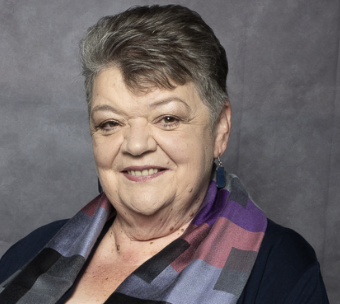
Founder - Rebecca Jane Foundation
For many people, funerals are something to fear or avoid. For Robyn O’Connell, they have become a calling — and in her words, “the best job in the world.”
Robyn is an experienced funeral celebrant, grief educator, author, mentor and speaker who has spent decades supporting families through some of life’s most devastating and sacred moments. With qualifications in grief education and funeral celebrancy, she has helped countless families create meaningful farewells that honour a life beyond its length and celebrate the stories left behind.
Her passion for grief support extends far beyond funeral ceremonies. Robyn has trained and mentored funeral celebrants across Australia and authored What Happens When You Die? A Child’s Questions Answered, a book helping families navigate conversations about death with children.
Behind her professional work is a deeply personal story. Robyn’s daughter, Rebecca Jane, died suddenly and unexpectedly at just under ten months old. In the midst of unimaginable grief, her parish priest gifted Rebecca’s funeral, removing a burden her family never anticipated carrying. Decades later, that act of kindness inspired the creation of the Rebecca Jane Foundation — a registered charity providing financial support for funerals of babies from 20 weeks gestation to approximately one year of age where families face hardship.
Today on Don’t Be Caught Dead, Robyn joins us to talk about grief, child loss, funerals, meaning-making after tragedy, and what supporting people through death has taught her about life.
Summary
What you’ll hear in this episode:
- How Robyn’s personal loss led her to become a funeral celebrant and grief educator
- Why authenticity matters more than perfection when creating meaningful funerals
- The unique grief parents experience after the loss of a child
- How to talk with children about death in healthy and age-appropriate ways
- Why acknowledging grief is more supportive than avoiding difficult conversations
Transcript
Robyn: I think in Australia we do death really badly. We don't know how to treat people. People go, "Oh no, that will upset them." Let me tell you, they're upset anyway. You know, people are very conscious they don't want to bring it up because they feel uncomfortable. The person hasn't forgotten. You know, by bringing it up, you're not gonna remind them, because they haven't forgotten. Catherine: Welcome to Don't Be Caught Dead, a podcast encouraging open conversations about dying and the death of a loved one. I'm your host, Catherine Ashton, founder of Critical Info, and I'm helping to ... Read More
Robyn: I think in Australia we do death really badly. We don't know how to treat people. People go, "Oh no, that will upset them." Let me tell you, they're upset anyway. You know, people are very conscious they don't want to bring it up because they feel uncomfortable. The person hasn't forgotten. You know, by bringing it up, you're not gonna remind them, because they haven't forgotten.
Catherine: Welcome to Don't Be Caught Dead, a podcast encouraging open conversations about dying and the death of a loved one. I'm your host, Catherine Ashton, founder of Critical Info, and I'm helping to bring your stories of death back to life because while you may not be ready to die, at least you can be prepared.
Don't be caught dead. Acknowledges the lands of the Kulin nations and recognizes their connection to land, sea, and community. We pay our respects to their elders [00:01:00] past, present, and emerging, and extend that respect to all Aboriginal and Torres Strait Islander and First Nation peoples around the globe.
Catherine: Today I'm speaking with Robyn O'Connell. For many people, funerals are something to fear or avoid, but for Robyn, they have become a calling, and in her words, "The best job in the world." Robyn is an experienced funeral celebrant, grief educator, author, mentor, and speaker who has spent decades supporting families through some of life's most devastating and sacred moments.
With - qualifications in grief education and funeral celebrancy, she has helped countless families create meaningful farewells that honor a life beyond its length and celebrate the stories left behind. Her passion for grief support extends far beyond funeral ceremonies. Robyn has trained [00:02:00] and mentored funeral celebrants across Australia and authored "What Happens When You Die: A Child's Questions Answered," a book helping families navigate conversations about death with children.
Beyond her professional work is a deeply personal story. Robyn's daughter, Rebecca Jane, died suddenly and unexpectedly just under 10 months old. In the midst of unimaginable grief, her parish priest gifted Rebecca's funeral, removing a burden her family never anticipated carrying. Decades later, that act of kindness inspired the creation of the Rebecca Jane Foundation, a registered charity providing financial support for funerals of babies from 20 weeks gestation to approximately one year of age, where families face financial hardship. Today on the "Don't Be - Caught Dead" podcast, Robyn joins us to talk about grief, child loss, [00:03:00] funerals, and meaning making after tragedy, and what supporting families through death has t- taught her about life.
Thank you so much for being n.
Robyn: Thank you for asking me. I'm privileged to be here
Catherine: Now, you actually have described your job as the best job in the world. How did you get started?
Robyn: when I was training funeral celebrants, I actually would say to them, "How did you start?" And it was either, it was always the same two things. Either they went to a funeral and it was so terrible they thought they could do it better, or they went and it was so good they thought, "I would really love to give that opportunity to families to have a really good experience."
Mine was the, the first one. I went to my sister-in-law's mum's funeral, and the celebrant, it was new at the time, celebrancy, and it was terrible. And it was [00:04:00] like I was watching this spider crawling up the wall because I was like, "Oh, no." And he had asked the children to write a letter. And so my sister-in-law, obviously because of my grief experience, she asked me to help them.
And so I helped them, and we wrote this letter to Nana. And then he got up there and he said, he read it, and it was like, "Dear Nana, if I could talk to you today." And I thought, " That's not how they said it. They didn't talk like that." They said, "Dear Nana," you know? Like, it wasn't a morbid thing. It wasn't... And so I, I just went, "I, I've got to do something about this.
I've got to do-- There's got to be a better way. And there's got to be a better way." I heard another celebrant speak, glowingly, I guess, from this person's point of view about this person. And so there was none of the hard stuff in it, and so therefore everybody's sitting there going, [00:05:00] "Yeah, but what about the fact that she was a really bombastic person who overtook every conversation and everything else?"
And to me, that did not reflect who this person was. And I thought, there's gotta be some way to be able to say things, not in a derogatory way, but acknowledge what they are. And that was probably, those two instances were probably my motivation to do it. And then I thought, I thought that you had to be a marriage celebrant as well.
Fortunately, you don't. And I didn't become a marriage celebrant for about five years afterwards, and that was purely because I had families asking me to do their wedding because I'd done Nan and Pop's funeral, and in a way I represented Nan and Pop there at the wedding. so yeah, very roundabout way of saying, but it was really because of those two bad experiences that I thought, there's gotta be a better way.
There's gotta be a way of acknowledging somebody's [00:06:00] faults in... And I normally do it in a very, very jovial way. So if that person was bombastic, I would say, "Well, you know, Joan wanted to share her opinions with you whether you wanted to hear them or not." And everybody would laugh, and that would be okay, but they, they acknowledge that that was what she was like.
It's, to me, funerals, it's all about being authentic.
Catherine: And you mentioned just then that it was new at the time, celebrancy. And, and you're- you have really been, you know, one of those formative sort of figures that , has really shaped celebrancy in Australia. Tell us a little bit about, you know, that time when you first started, when you said it was new, and to where it is now, and, and what you've seen evolve during that period
Robyn: Well, it was funny because when I first did, I looked up some associations and, I rang up, very keen. You know, you're always really keen when you start. And I rang this association and I said, "How do you belong to that association?" [00:07:00] Thinking that funerals actually came through them, but they don't. Anyway, this gentleman, and it happened to be the same person who did that first funeral that I, I saw.
This gentleman said to me, "Oh, you'll never make a living out of it." It, it's, you know, like you have a funeral arranger and then they move and they get someone else, and then, you know, you'll never make a living out of it. And I would so love to say that to that man now, "Hey, remember me? I'm the person that you said I'll never make a living out of it."
And you know, 24 years later with, you know, several, I, I have some books written specifically for funeral celebrancy. but all of those things later, I wanna go, "Hey, that was me. What are you doing at this conference? Oh, you're just attending? I'm presenting." So I think it has changed a lot. I think women have become much more predominantly visible in the funeral [00:08:00] industry because when I started, women were still quite unusual, so that shows how old I am.
Uh, 24 years ago, women weren't-- Now you would find probably most women. There, there are probably more women working in funeral directing now than men. That's a wild guess of mine, but just on my experience of working with companies, I would say that's probably about it. So I think it's changed dramatically.
I, I was telling somebody just a couple of weeks ago that when I started, we had music on cassettes, so you had to put the cassette in the right way, and sometimes the funeral director would put it in the wrong way and you'd get a song that was completely inappropriate for that funeral. So, and then we had, we, we progressed to CDs, and then you ma- had to make sure that you had the right track.
I remember one person it was track 31, and they thought, no, that wouldn't be 31, it must be 13, and [00:09:00] 13 was basically a song about, "I don't care about anyone else, I only look after me." So those sort of things, you know, rarely happen these days because technology is so good. But you do have the occasional thing that goes wrong, and you've just got to be able to deal with it at the time because you just don't know.
In a funeral, anything can happen.
Catherine: And tell me, what were people doing before celebrants were, were, you know, part of the, the process?
Robyn: Australia and New Zealand actually lead the world in funeral celebrancy. So if you go to somewhere like, the United States, possibly only about 5% of funerals are actually done by funeral celebrants. It's a very new thing over there. So when my husband was, been offered a job in, in the States, I could actually go in a- and get a green card because of my experience and training of funeral celebrants.
So England is probably still [00:10:00] only about 25%. In Australia, it's 70%.
Catherine: Wow
Robyn: of people now have a funeral celebrant, and most funeral celebrants will do things like include the Lord's Prayer if somebody was religious or something like that. And now I can't even remember what your question was.
Catherine: Oh, well, I think that you've alluded to it. So was it clergy people that were actually delivering the service prior to the rise of, of celebrancy?
Robyn: And so, you know, if I go back to the States again I said to them, "So what do you do if somebody's not religious?" And they said, "Oh, we've got some ministers and pastors who are less religious than others." And that's what happened here. You- whoever was able to do it, who wasn't going to be shoving religion down their throats, basically.
And, and look, there's room for everyone. You know, people tend to think that you've got to have a religious or a non-religious service, and that's [00:11:00] not the case. Most celebrants will, as I said, allow the Lord's Prayer, or not allow, but have the Lord's Prayer, but they might not feel comfortable in leading it, so they might ask a family member to come up and lead it.
So there are ways of getting around things, you know. In England, they have the humanist
Catherine: Yeah, Humanist Society?
Robyn: And they are very anti-religion, so they won't include anything religious in it. So a lot of people think that if you don't have something, that person's religion isn't honored when they haven't gone to church for a very long time, but they still have a faith
Catherine: And tell me, what are the sort of changes that you've seen? You've mentioned technology. I love the fact that you, have referenced to a tape deck and, and a B-side. Like, that could be-- That made me giggle, so thank you as a, a, you know, an, an '80s girl, I love it. But what have you seen [00:12:00] other than technology change or the trends in how ceremonies and rituals are sort of used over the time that you've been in the industry, Robyn?
Robyn: I think particularly with what we do now, I think there's a lot more where families want to be involved. But there are a lot of families who don't want to be involved, and it's something that I remember a family saying, "But someone from the fa- family has to stand up and talk, because that's what you have to do."
And I said to them, "No, you don't have to." Probably, in probably at least 50% of the funerals that I do, I'm the only one that's speaking, and that's because, because of my background, I did a lot of trauma-related funerals or babies, infants, children. And because of that, you know, people think that they have to get up and speak, a family member has to get up.
But that goes back to [00:13:00] when the priests used to do it, and ministers, and they didn't talk about the person. So a member of the family had to get up. Whereas now, the celebrant, it's focused on the person, there's not that need. So I think that's a very big change of people being comfortable enough to trust me to do the whole thing, and I might be reading letters from them or something like that.
But they just don't feel like they can get up and speak, because this has been a pretty horrendous time. And I think certainly when people take their own life, it's far more difficult for the family to get up. But if they can get up, it's great. I say to them, "I'm the, I'm the 12th man. I'm there standing there.
I'll... If I feel you wavering, just stop, take a breath. I'll put my hand on your back, draw your energy from me, and keep going. And if you can't, I'll take over from you. But I won't do that until you [00:14:00] actually look at me." So that way then-- And usually 95% of the cases they get through. They don't usually get through the last couple of lines, because the last couple of lines, there's a couple of reasons that they don't get through it.
The last couple of lines of, when they're saying their goodbye or thanking the person or whatever. The other big thing is, is that their body is saying to them, "You're nearly finished, you're nearly finished," and they let themselves relax a little bit, and the emotion then jumps top of them. So you'll often find that they'll get all the way through, and then they get to that last little thing about, "I'm gonna miss you, Pop.
I, you know, I promise to look after Nan," whatever that happens to be, that's when their body starts going, "You're nearly there, it's okay." And then suddenly they, they... And, and they're saying the most emotional thing they can
Catherine: And what was it that motivated you from being a celebrant to then actually [00:15:00] training celebrants?
Robyn: Because I saw a lot of celebrants who didn't do a good job, and I was like, the training that's available is very limited. And I was seeing people being trained not in a good way. Or like now, so the Certificate of Celebrancy, Certificate IV of Celebrancy now has one unit in it on funerals. And so people think if they've done that, they can do a funeral.
But that's all the theory, it's not the practical part, and I wanted people to experience what it was like to actually be in that environment. So I used to do a six-day live-in course, and which we would eat, breathe, and live funerals for six days. I'm talking about, talking about it at breakfast right through to talking about it over drinks at night or whatever.
And that made a huge difference to people, and I remember one in my [00:16:00] very first my very first course, a guy that I had met in Sydney called Kevin Clune, he did a course with me in Sydney where I spoke, and he said to me, "You should be training funerals." And so he did my very first course. He'd already done 1,000 funerals, and he walked out of that course and he said, "I will never do funerals the same way again." So I think having-- I have trained, I'm very proud to say I have trained probably the top celebrants in nearly every state. So that speaks for the way that if a person's got ability, then I can help them. But if a person doesn't have that initial ability, all the training in the world isn't gonna help them.
Catherine: And what do you think made Kevin say that when he, he finished the six days with you?
Robyn: He had always finished the [00:17:00] funerals that he had done on the committal, so that's when the curtains close or whatever, and that's their saddest moment. And then in most chapels, they have to walk out in front of everybody. So I, the method that I use is that we close the curtains and then I come back and talk about the positive things about that person, invite people to refreshments where they can talk about it, and, you know, often I, I will say something like, particularly if it's a person who's, who's very family and friends were very important to them, I'll say something like, "And while you're there, I'd ask you just to stop for a moment, look around you, and listen.
This is what Judy loved best, seeing her family and friends together, sharing stories, and hopefully having a laugh or two." So it, it brings people back into a better space, and [00:18:00] then I always suggest that we have a bright song to go out with, so s- one of their favorite songs, you know, "Dancing Queen" from ABBA or, you know, something that's really uplifting rather than people going out on that sadness of the goodbye. Now, you'll hear opposite told where, you know, I know somebody very well-known who sort of said, "You should leave them with that because that's their person and that's their grief." I happen to think that, I don't know about you, but I don't like the ugly cry. I'm, I'm not goofy like, I don't wanna s- I don't want people to see me doing the ugly cry.
So I give them the opportunity to change that so that they don't have to go out feeling upset, that they go out actually with a favorite song of theirs that's really upbeat, and then they go, "Oh, wasn't that great?" The amount of times that people have said to me as they're going out, "I know I shouldn't say this, but that was a really great funeral," then I know I've done my [00:19:00] job.
Catherine: And
You've mentioned that you have come to this place from your own personal experience and your own personal grief. Tell us a little bit about that and how-- and what happened, Robyn, and how that has informed the work that you do now.
Robyn: It's really interesting because I would never have got up and spoken in front of anyone let alone do what I'm doing now My daughter Rebecca died in 1979. She was nine months, three weeks, and five days old. She had spina bifida which had nothing to do with the fact that she died from a SIDS, which is what we called then cot death. So when you have a child die, the first thing you wanna do is you wanna fundraise because you wanna find out why. You, you want that question of why. We still don't know why, and there are still babies dying of SIDS. You [00:20:00] know, when she died, it was about five-- that year it was 538 children died. Now it's down to about 135.
So the safe sleeping, all of those things that they've introduced have certainly helped, but they haven't stopped it. So there's still 135 families or so a year that have a baby die from, from SIDS. So I first went into fundraising. I was gonna, you know, I was gonna find out. I was gonna find out what it was.
That didn't happen, and then after a period of time, you start to wanna understand grief. And so I studied grief counseling. I did whatever courses I could find on it, and I decided that I would become a grief counselor. Well, I was a lousy grief counselor. I am free to admit that I am a lousy grief counselor because I couldn't let go.
I couldn't-- I worried about them the whole time, and that's not [00:21:00] healthy for them or for me. So I found that I... that wasn't the go. So I wanted something where I was in short-term grief stuff, but not long term. And that was about the time that my sister-in-law's mom died. And then I saw, wow, this is somewhere where I could use my skills, but not, not have to have a long-term relationship with these people.
I have to say, some of these people that I still have relationships with for 24 years, but they're not-- it's a very short-term thing. So I meet them, by the next week, it's really sad for me to say in some ways, but by the next week, I couldn't have told you the names of the people that I did the week before, because one of the things you have to learn to do is to let them go.
Once you've done it, you need to let them go, and you need to deal with another family. And it's not because you don't [00:22:00] care any longer, it's just that you're not in that role. That's not your role as a, as a funeral celebrant. It's your role as a grief counselor, but I'm not doing that anymore. So this was a, a place where I could find that I could still use my skills, but I could also see how that could work for something else. Did that answer your question?
Catherine: it d- it did. It did. And what was the um, the motivation? 'Cause in 2022, you finished uh, celebrancy and the training. Um, Although, as you, you mentioned, you still get called back in once in a while with families. What was it to, for then to you just purely focus on the Rebecca Jane Foundation?
Robyn: I had a dream that one day her-- My big thing when Becky died was that I didn't want her death to be in vain. So I always had a dream that I [00:23:00] could do something, but I didn't know what. And it actually only came to me, it wasn't because Father Nick had paid for her funeral, it was more the fact that I went to see a family whose baby had died, and during our meeting, the dad got a phone call and he said, "I have to take this."
And I said, "That's fine. No worries at all." And he came back and he said to his wife, all right, sweetheart. They've agreed to increase the mortgage so we can pay for the funeral." And I thought, "No, this is wrong." Like, every house payment is then connected to that baby's funeral. And I thought I just wanted to do...
And that took me back to when we were helped, and I thought, I wanna be able to start something in her name you know, that helped other people. And so we started, we were very [00:24:00] small, and we started in 2018, and I remember saying to someone, "As soon as we've got $10,000 in the bank, I'll relax." And now I look and I go, "We've only got $10,000 in the bank.
We're in trouble." So, you know, now In the last financial year, we helped 128 families on $96,000. So we work with funeral directors who will help us, who won't charge us for their fee, they'll just charge us for the disbursements. We work with funeral directors who will be amazing at what they do, because that's a, a really big thing for me.
I, I don't want our babies to go to funeral directors who I don't think are as good as others. So we try and provide information for parents, and sometimes we're just purely an advocate. [00:25:00] So I remember one coming in from Sydney and they said can we get help? we've just seen our, our funeral bill and it's $3,000 and we don't have that."
And I said to them, "Okay." So I went back to the funeral director and explained the situation, explained that they'd applied to us for help, and I was able to get that cost down to $1,750. So I go back to the family and I said, "Okay, so we can contribute this much." I can't remember how much it was at the time.
"We can... Remember, we can give you this much. We will pay this much of it and then you'll only have to find the rest." And they said, " No, we can, we can do $1,750. We just couldn't do $3,000." So sometimes we're just purely an advocate To try and negotiate on their behalf. You know, with cemeteries, often they will waive their fees for babies if the family are in financial need.
And so that can make a big [00:26:00] difference in, you know, they've still gotta buy the grave, but at least they don't have to pay for the interment and pay, pay for the processes of that sort of stuff. So sometimes we're just purely an advocacy as well, so, but I think I just, I didn't intend to work nearly full-time, you know?
That was an unintended consequence. But I, I pretty much do. But we're now onboarding volunteers, so we're going to get people who can take the phones for me, 'cause I have the phones 24/7, and so take the phones for me and do some of the other work for us. So because we, we have doubled in size nil- size nearly every year.
So I just, we just had our major fundraiser at the start of May, and last year at the fundraiser I got up and said we'd helped 72 families, and everybody clapped and everything. This year I got up and I said, "We've helped 176 this year." So [00:27:00] nearly two and a half times the amount of families that we helped.
but unfortunately, our donations haven't kept up with that, so now we've gotta look at other ways to be able to fundraise. We raised nearly $20,000 that day, and once upon a time that would've lasted us six months, and now we'll be lucky if it lasts two or three.
Catherine: And what are the changes with the, the overheads that you have to deal with? Obviously it sounds like that the demand for your services is certainly increasing year on year, and I'm assuming your expenses are as well.
Robyn: Yes, they are. And that's, that's where we really-- We've, we've asked people now to become regular contributors. So just, you know, if 200 people gave $5 a week, we'd be able to pay for a funeral a week just from purely from that. So, so we're looking at, for people now who are willing to give that small donation, but every [00:28:00] week, so that we don't have to rely on the continual fundraisers.
We've had some amazing people help us. Lightning Hill Estate, which is a beautiful venue in Officer, and it's, it's just absolutely magnificent. And they put on a big night for us one night, and they raised like $33,000 for us. Now, that was amazing. We didn't have to do anything. But that was a one-off, but it was just such an amazing night.
We've had other people, another company Speaking Finance, who put on a golf night for us and, and that raised $10,000. So we've got to continually look at things that are gonna give us a consistent sort of income rather than these one-off big things. So, you know, we, we kind of figure if we could get companies to give us, say, $100 a month, then over the year that would pay for a funeral
Catherine: And given your personal experience, what is it that [00:29:00] people need that is different when they lose a child to when they lose perhaps a, an, an older loved one?
Robyn: One of the things I learned very early on is hard is hard But when you lose your parents, you lose your past. When you lose your child, you lose your future. And that's the biggest difference in it all, is that every parent from the moment of conception has dreams, aspirations. You know, I always-- I, I wrote an article once and sort of went, you know, I wanted her to be the Prime Minister of Australia, the first woman.
Well, Julia Gillard changed that. But, you know, you have dreams for your children, and those dreams are shattered, and people kind of like think, "Well, you know, you've got to get on with life." And you do, but the wisest [00:30:00] thing that was said to me wasn't actually said directly to me, it was said to my sister.
We both had the same doctor, and she went to him and he said, "How's Robyn going?" And she said, "Oh, Rod, I don't think she'll ever get over this." And he said, "She won't, but she will learn to live with it." And that's the big difference, you learn to live with it. Do I still feel sad that I don't have Becky?
Absolutely. Every Mother's Day, every Christmas, all of those things. I would love to have had a daughter. just little things like watching your girlfriend. I remember going to a lingerie party one night, and I was sitting there watching this woman with her daughter, who was about, would've been about Becky's age, so she would've been 25, something like that.
And they were laughing and giggling together, and I felt cheated. I felt like that could've been me. It's not, but it could've been me. So I think there's, [00:31:00] there's just that understanding that no matter how long ago it was or what the circumstances were, a baby is a baby. So from the time of conception through to, you know...
A friend of mine was 99 when her 75-year-old son died, and how dreadful that was for her to sit there at her child's funeral, even though at 75 most people would say, "Well, he had a decent sort of life." But you, you change your thinking about how old someone is. So I started celebrancy when I was 47, so if you do your maths, I'm 71 now.
And when I became a cele- I was one of the youngest celebrants around. Most people were in their 60s, so 47 was very young for a celebrant now. Now we have celebrants in their 30s, but not back in, in my day. And so I [00:32:00] think, you know, that changes then how you look at things. And obviously because of my background- I did a lot of sudden and unexpected deaths, so... And it's hard when you, when you meet a parent. And I think I never really understood what my mother went through until my stepson had their baby and I became a grandmother. And I'm going to become a grandmother again with my own son this year in a couple of, oh, maybe six weeks or so. And I've never been so excited or terrified in my whole life.
But they're having a girl and I'm so excited. It's just lovely. But of course, you know, not all pregnancies end well, and for some families that's really difficult
Catherine: And what motivated you? What were you seeing um, that you thought, "Okay, I have to write this in a book. [00:33:00] I have to let people know how they need to speak to their, their child when, when someone dies"?
Robyn: my motivation for-- there was a very good book by Jim Mackey that was written many, many years ago, and I thought it was amazing because I... It may even still be available, I don't know. But it had been in bookshops for, like, 10 years, and that's unheard of in bookshops. So, but the problem with all of the books about someone dying is that their body gets old and worn out.
And of course, I was dealing with people who were teenagers, you know, young parents. I'll just pass that for a second and go to the lecture that I gave one night of a, a woman who was there, this is a John's Ambulance one, and a, a woman was there and she came up to me and she said, "My mum died when I was 13, and everybody kept saying to me, [00:34:00] 'Oh, she was so young.' But in my mind I was going, 'No, she wasn't. She was old. She was my mother.'" And to a 13-year-old, she was old. So they say that your age plus 20 is when you consider somebody old. So when you're 30, you p- think people in their 50s. So when I started at 47, I thought somebody who was 65 had had a decent life.
Once I got to 65, I went, "Oh no, they died so young." So that, that sort of changed and now I can't remember where I was going from, that I sidetracked. Sorry.
Catherine: no, no, no. That's, that's totally fine. This is the beauty of, of this conversation, Robyn. We can go anywhere. So you were, you were referencing um, Jim Mackey and how the
reference to age, yeah
Robyn: So I had-- I felt like I had to write a book that didn't have somebody that was old. So in the book, The [00:35:00] boy's uncle dies at, I think he was 25. I should know, but I think he was 25 or 28, and he died of an asthma attack. Because that's what happens. A lot of people die of asthma attacks.
People don't realize how many people die of asthma attacks. And so I wrote it from the child's perspective of what happens when you die. So he's having a conversation with his dad, you know, because he was trying to work it all out. Unfortunately, we only teach children about death when somebody dies. So my idea of writing this book was that people could teach children before someone important to them dies, because if you think about it, you are not only trying to teach them something, but they're grieving as well.
Children do grieve very differently than adults, but they're grieving. So here they are, they've got all these questions, whereas if they knew the process that when you die, this happens, your body stops [00:36:00] working, and then you go to a funeral director, and the funeral director, then you go to a funeral. And years ago, like when I was a kid, no children went to funerals.
Now you know, I might have half a dozen little toddlers playing down the front, and a lot of the older people will go, "Oh, you know, I wish those parents would keep them in control." And when I can see that happening, because you watch body language, when I can see that happening, I go, "Wouldn't Joyce love this, seeing the kids down here playing happily while we're here gathered together?"
And then suddenly they go, "Oh yeah, she would've," you know. so I decided that I would write this book, but it was never gonna become a big seller because, I mean, it's still available and you can buy it in bookshops still, and you can order it online and do all that sort of stuff. But it's-- I'd now like to make an electronic version of it so that, you know, people can, can watch it in that way.
But it's, it's a really important topic to [00:37:00] talk about, and nobody talks about it, let alone with children. But children go in and out of grief. So you'll be having a child crying. I, I quite often would arrive, a child would open the door and they'd say, "My granddad's dead." And I'd go, "Oh really? That's a bit sad, isn't it?"
And they go, "Yeah, Mom cries a lot." And, and it's a natural conversation. So, you know, I try and get people to keep their children there, especially if it's a parent who's died and they're young. I say, "Let them have a coloring book in the corner or whatever, but let them listen to what we're talking about."
Because more often than not, apart from the difficult subject of reaching that- talking about how they died. We're talking about good memories. We're talking about their life. The children should be there to hear all that. So, and, and probably the most common question I get asked, what age can people go to funerals?
And you just go, [00:38:00] as long as they're old enough to sit and listen to a story, they'll be fine. And usually they are fine because it's all mysterious for them So the book is still available. I look at it now and I think... I, I had this dilemma. I had this beautiful artist called Amber Biagini, and she was the daughter of a friend of mine, and she drew these they're not caricatures.
Well, they kind of are. But unfortunately, parents don't look at books like that and go, "Oh, I don't like the pictures." They want kind of real pictures. But children need... The psychologist that I checked it through, she said, "This is beautiful," because children can project their own image onto it, rather than having like more like a photo thing.
So, so it's, yeah, it's still around. It's, you know, I published in 2004. It's really quite scary when you start looking at things like that.
Catherine: [00:39:00] And since that time, and, and certainly it sounds like you've done a lot of work around how to have those conversations in the right way. I'm sure in your experience you've heard a lot of things that are done the wrong way. What are the some, what are some of the things that we should avoid when, especially around uh, early, early pregnancy loss uh, early child loss?
What are sort of things that you recommend that people are more sensitive with their language or how they behave?
Robyn: Okay. So I'll go back to the children first. Children are not afraid of the word dead, dying, death, nothing. It doesn't mean... It's a word to them. We associate it with pain and loss, but children don't. So you'll have the child one minute crying, and then the next minute they'll say, "Can we go to McDonald's for an ice cream?" And that's, they'll go in and out of- grief all the time. But when it comes to a [00:40:00] pregnancy loss, I think one of the, the good things about that's happened is I know with Red Nose is now Say Their Name Day. So it gives people the opportunity of doing that. It, October 15th is International Pregnancy and Loss, Infant Loss Day, and so they ask people to put a candle in their window. So it's, when you start talking to families, it's always somebody that you do. In the very f- early stages, the big thing is to, to allow them to talk if they want to talk. But what happens is that everybody avoids the subject. So when it comes to something like Christmas or something like that, light a candle or write to the parents and say, " Hey, I remember you being pregnant.
I remember how happy you were, and I'm just thinking of you this time." People go, "Oh no, that will upset them." Let me [00:41:00] tell you, they're upset anyway. You know, people are very conscious about they don't want to bring it up so, you know, because they, they feel uncomfortable. The person hasn't forgotten. They haven't...
You know, by bringing it up, you're not gonna remind them, because they haven't forgotten. And so I think in Australia we do death really badly. We don't know how to, to treat people. We avoid the subject and someone will bring something up and then someone will quickly change the subject.
And look, I'll be honest, I've done it myself. When my, my mum's partner died, every time she brought him up, I'd change the subject because I'd get really upset. Now, you know, I had done grief counseling by that stage, right? But that's very different when it's your own. So I get it. I get why people can't do it.
But just being able to say... Most people wouldn't realize, but the Sunday [00:42:00] before Mother's Day is Bereaved Mother's Day. The Sunday before Father's Day is Bereaved Father's Day. Just to acknowledge that day to them and say, "Hey, I learnt that the Sunday before..." And that's why we always have our big fundraiser on that day, because it's a chance for bereaved mothers to come.
And this year we actually had a heart. We got a big heart and allowed people to put their baby's name up on it. And we thought, "Will anyone do it?" We had seven from the people that we were immediately involved, and another 13 people did it. And for those 13 people, their person was up there. So I think we need to be more open about talking about it, but we have to be comfortable with that as well.
It's unfair to think that somebody... We- we're afraid of tears. If someone starts crying, what's the first thing that people do? They run and get them a tissue. And what [00:43:00] that is actually saying to that person is, "I don't wanna see your tears." Whereas if you wait until the person starts like, you know, snotty nose and starts wiping their nose on their thing, then get a tissue.
But don't just shove a tissue in front of them, because that is saying, " Cover up." People don't realize that subliminal sort of message of, you know, let them cry. If they wanna cry, let them cry, and cry with them. Crying with them is perfectly acceptable. One of the things that-- The hardest things that I had to learn as a bereaved parent was that more often than not, when you told someone, you became the supporting person. So give you an example. I was in a young wives group at our, our church, and I was in the newsagent, and a girl came in with her baby. She didn't know that Becky had died, and I said to her-- She said, "Where's Becky?" And I had to tell [00:44:00] her in the shop. She then sobbed uncontrollably, and I was standing there holding her saying, "It's okay," all the while inside screaming, " Isn't this meant to be the other way around? Isn't it meant to be her, you know, looking after me?" But you become the supporting person, and you tell people that it's okay when it's not. But we're not that far progressed yet. Maybe one day we will be, but not yet
Catherine: And what, what are your, your hopes for the future, for the foundation, for the progress that you've seen, you know, over the last 20 or so years since being a celebrant? What are the things that you hope to see, Robyn?
Robyn: I would love to see more death education. That's my big thing. I go and do a lot of talks in places and stuff like that. Just to learn, just to teach people that people crying is [00:45:00] okay, not knowing is okay. I would love to see the foundation absolutely thrive. 3,000 babies a year from pregnancy loss, which is registered birth through to one year of age.
3,000 babies y- die every year in Australia. So there are Stillbirth Foundation and things like that who raise money for research, but I think that I would like to know that we, we could help every family not, you know, not in a, a huge way, but to just be that little bit that, that would just make a difference to know that somebody cares.
we probably would like to see us being able to help about 25% of those 3,000 to do that, we'd have to raise half a million dollars a year, and, you know, at the moment we're at about 100,000 a year. [00:46:00] So we have to l- for the foundation, I would love to see corporates come in. Unfortunately, dying babies isn't something that's particularly appealing to companies to want to promote. It's much nicer to be able to say, "Oh, you know, we're, we're helping the breast cancer..." The Jay McGrath where they're providing nurses for ongoing care for people. Wonderful cause. But we don't have the happily ever afters. We don't have those things to be able to say, "Well, we can say that we've helped this many families," but we don't have any direct contact with our families, and a big part of that is so that they don't have a sense of obligation to us.
We don't want them to feel like they have to pay it back or pay it forward or whatever. If they do, that's great. And I think in probably 20 years' time, we won't have any financial issues because all of those [00:47:00] families that we helped in the last seven years are all gonna have adult children. They're gonna have more disposable income, and they're gonna support us in other ways.
So I think in the long term we'll be fine. It's just very scary at the moment. But if I had, if I had my wish, I would love to have 50 grand sitting in the bank just in a term deposit that we knew that we could call on at any particular time. So that's my pipe dream, and when I win TattsLotto, that's what'll happen.
But I'd, I'd like to see... We, we're all over Australia. We're in all the major maternity hospitals in Australia, but there are also private hospitals who need us as well. Because a lot of people, my niece has said this to me, "We go without so we can have private insurance so that we can have our baby in a private hospital.
That doesn't mean that we've got money to pay for a funeral." So, you know, you've gotta look at it, the whole thing. And we know from seven years ago now, [00:48:00] this is seven years ago, one in five people in Australia cannot put their hands on $1,000 in an emergency. Now, that absolutely blew my mind. But that's the reality of it.
So I would imagine now that it would be much higher than that in this economic climate. So I'm thinking probably 7.5 out of 10 would struggle. It, it's just sometimes it's a temporary thing as well. You know, like they might be in their new home, up to their neck in, in debt, and then this happens and they, they just don't have it.
They will later on, and those people will then give to be able to help somebody else. Because like me, they'll remember that meant I felt like I had been given a million dollars when Becky's funeral was paid for. Because you know what? This sounds really strange, but I didn't even realize we'd have to pay for a funeral
Catherine: I think it's something that [00:49:00] as a parent you never really put in the equation
Robyn: No. You know, you know that your parents are gonna die one day, they've usually got something that's gonna be able to pay for the funeral. But child, no. And a lot of the time, you know, our speakers at, at this year's e- event were Catherine and Gary Hall, and their little girl, Brooklyn she died at seven and a half months, and she was 23.5 weeks gestation.
And so she lived in the NICU and, like for seven and a half months. So those families were there, that family was there every day, and it was really, really, really tough for them. So, you know, just even things like, you know, what I'd love to get changed is parking at hospitals for families. They, you know, get me started, I'll do a whole lot of stuff for families, but [00:50:00] we're sticking to our lane and we're just helping people in that situation.
We'd like to help more. We know there are more out there who are doing it. I just-- And I know that, like, for a funeral director to write off a bad debt is nothing, but I can't imagine what it would be like if I had a baby die and then I couldn't afford to pay for it. Like, I just think that that would be just the worst feeling to have to live with long term, that, you know, because you wanna look after your child.
And our, our family wasn't in a position to help us, and I, I don't know what we would've done. I, th- I, you know, beggars belief what could've happened, but, you know, we were fortunate. Our, our parish priest said, "We will look after..." And she's buried at Templestowe Cemetery, so that's an expensive cemetery in itself.
So who knows where we would be
Catherine: And Robyn, how do you take care of [00:51:00] yourself? You know, it's, it's a story that you have to tell time and time again. You've built a foundation in her honor. How do you take care of yourself as, as Robyn, you know?
Robyn: So, when, when I did gro-grief counseling, one of the things that you have to have is supervision, and that's another counselor. And you see them monthly, and they debrief you basically. I have continued that on through my celebrancy, and I have encouraged nearly every celebrant that I've ever trained to do it.
I don't know that many of them have. But that allowed me to do funerals every week and not carry that forward with me. For a long time, I could name everyone that I had done, and I had to learn to let that go. But a little bit of them all live inside me.
But I had to let them go [00:52:00] because that was becoming onerous for me to-- Because I didn't feel like I could... I felt I was dishonoring them by forgetting their name or something like that, so I had to learn to let that go. So, but I do things like I've, I've got a great group of friends. We go away for a girls' weekend four times a year, and so that's great.
And they are completely supportive of what I do. I belong to a business group who are just absolutely amazing in supporting us. They've, they've raised, you know, over the eight years we've been going, they've raised about $70,000. So I know that there are people in there that I can talk to. Any-anyone that I can talk to, because sometimes, sometimes the things that we get are really hard.
They're really hard. today I'm collecting some ashes of, of a baby who died some time ago and no family has come to claim that [00:53:00] baby. So it's taken a fairly long time to work through the court processes and everything else, and now I've been given the honor of taking her, and I will take her to somewhere to scatter her ashes
And you know, one of my fellow directors just said to me, "I'll come with you. We'll go and do it together so you don't do it on your own." You know? So, I think it's about having a good network around you, but that supervision is, is certainly huge.
Catherine: Is there anything else that you would like to add, Robyn, to let people know how they can either support you or support someone around them?
Robyn: Well, we'd always love support. So, the Rebecca Jane Foundation's website is rjfrebeccajanefoundation.org.au. And we'll happily take anybody's money. I tell people that all the time. I would love to see more people have conversations [00:54:00] about death with bereaved parents when ask them how they're going. I have someone at the moment who, whose, baby died last year and are now expecting their next baby. We don't get to hear a lot about the good stories afterwards, and so we're always delighted when, like Catherine and Gary uh, announced that they now have a very healthy one-year-old. I had another s- child, my son is um, 45, and that's the one that's having his first baby.
And so I think, you know, we, we need to live in life and death rather than just living in life. Because if, if death became as natural as life, we'd talk about it, and we wouldn't have to do things like put up trigger warnings or things like that. You know, we should be able to talk about [00:55:00] it without fear of worrying that somebody over there is crying.
It doesn't matter whether they're crying or not, just leave them be, unless they're on their own and then you go over to them. But I think we can, we can all do a little bit better in the death space, and that would be what I would want to see happen. You know, and particularly for people not to need the foundation really, but that would be an ideal world.
Catherine: Thank you so much for sharing your story and that of Rebecca's and being with us today, Robyn. Thank you so much
Robyn: You're very welcome. Thanks for having me
Catherine: We hope you enjoyed today's episode of Don't Be Caught Dead, brought to you by Critical Info. If you liked the episode, learn something new, or were touched by a story you heard, we'd love for you to let us know. Send us an email, even tell your friends, subscribe so you don't miss out on new episodes. If you can spare a few moments.
[00:56:00] Please rate and review us as it helps other people to find the show. Are you dying to know more? Stay up to date with. Don't be caught dead by signing up to our newsletter and follow us on social media Head to Don't Be Caught dead.com for more information and loads of resources.
Read Less
Resources
Connect With Robyn O'Connell
LinkedIn: https://www.linkedin.com/in/robyn-o-connell/?originalSubdomain=au
Rebecca Jane Foundation: https://rjf.org.au/
Connect with Critical Info
- Make Death Admin Easy with The Critical Info Platform
A simple system to sort your personal paperwork for when your information becomes critical.
- My Loved One Has Died, What Do I Do Now?
Our guide, ‘My Loved One Has Died, What Do I Do Now?’ provides practical steps for the hours and days after a loved one's death. Purchase it here.
- Support Services
If you're feeling overwhelmed by grief, find support through our resources and bereavement services here.
- Support the 'Don’t Be Caught Dead' podcast with a one-off or regular donation to help Critical Info, a certified social enterprise, keep creating free, high-impact conversations about death, grief and planning—every contribution fuels our mission to reduce the burden on families and build a more death-literate, compassionate community. Donate now.


Share