


What Near-Death Experiences Taught Me About Living with Travis Hamilton



Listen now
About this episode
In this episode, I’m joined by Travis Hamilton, a visionary entrepreneur, ‘recovering banker’, and co-founder of Candour Funerals. After decades working in international finance and navigating addiction, trauma, and two near-death experiences, Travis found himself pulled toward purpose-led work centered around mortality, consciousness, and meaningful living.
We talk about the moments that transformed his life, including a terrifying white-water rafting accident where he became trapped underwater and fully believed he was dying. Travis shares how those experiences shifted his relationship with fear, death, and what it means to truly live. We also explore his journey through sobriety, trauma healing, and psychedelic-assisted therapy, and how those experiences deepened his understanding of connection, grief, and human consciousness.
Our conversation moves into the funeral industry itself, why death remains such a taboo topic in Western culture, and why Travis believes open conversations about mortality can actually help us live more consciously. He also shares the extraordinary story of honouring his father’s final wish for a full-body burial at sea, including the emotional and logistical realities behind making that happen in Australia.
This episode is deeply reflective, vulnerable, and expansive. It’s about transformation, healing, legacy, and the importance of having conversations we so often avoid.
Remember; You may not be ready to die, but at least you can be prepared.
Take care,
Catherine
Show notes
Guest Bio
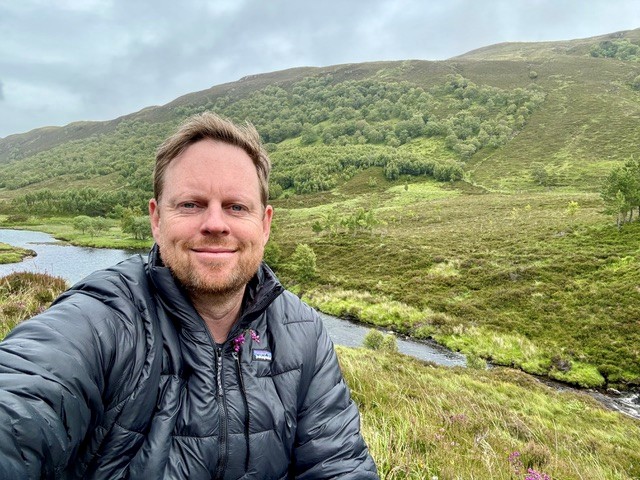
Co-founder of Candour Funerals
Travis is a visionary entrepreneur, investment strategist, and corporate advisor with over 20 years’ experience across global financial markets. A self-described “recovering banker,” he has founded and led firms including Khan Investment Management and Helvetica Wealth Management, advising ultra-high-net-worth individuals and opening new investment pathways across Asia and Australia, including emerging markets like Mongolia.
His global career spans fast-paced financial hubs and more nuanced diplomatic environments, shaping his strategic thinking and culturally aware approach to leadership.
Today, Travis focuses on purpose-driven work and values-led leadership. Since embracing sobriety in 2018, he has shifted toward ventures that prioritise social impact, ethical practice, and legacy creation — bringing a deeply personal perspective to conversations around business, life, and mortality.
Summary
What you’ll hear in this episode:
- How two near-death experiences completely changed Travis’ perspective on life and death
- Why sobriety became a turning point toward purpose-driven living
- The connection between trauma, the body, and psychedelic-assisted healing
- Why avoiding conversations about death may stop us from fully living
- The profound experience of honouring his father’s wish for a burial at sea
Transcript
[00:00:00] Travis: The boat that I was in capsized, it flipped over. I got stuck under the water, and then my legs got stuck in some rocks. And then I got stuck under the water. That particular experience was really seeing my whole life flashing in front of my eyes, and then experiencing really a deep, deep letting go, kind of acceptance, and, well, this is it, and I'm okay with it. Catherine: Welcome to Don't Be Caught Dead, a podcast encouraging open conversations about dying and the death of a loved one. I'm your host, Catherine Ashton, founder of Critical Info, and I' ... Read More
[00:00:00]
Travis: The boat that I was in capsized,
it flipped over. I got stuck under the water,
and then my legs got stuck in some rocks.
And then I got stuck under the water. That particular experience was really seeing my whole life flashing in front of my eyes,
and then experiencing really a deep, deep letting go,
kind of acceptance, and, well, this is it,
and I'm okay with it.
Catherine: Welcome to Don't Be Caught Dead, a podcast encouraging open conversations about dying and the death of a loved one. I'm your host, Catherine Ashton, founder of Critical Info, and I'm helping to bring your stories of death back to life because while you may not be ready to die, at least you can be prepared.
Don't be caught dead. Acknowledges the lands of the Kulin nations and recognizes their connection to land, sea, and [00:01:00] community. We pay our respects to their elders past, present, and emerging, and extend that respect to all Aboriginal and Torres Strait Islander and First Nation peoples around the globe.
Catherine: Today, I'm speaking with Travis Hamilton. Travis is a visionary entrepreneur, investment strategist, and corporate advisor with over 20 years experience in global financial markets.
A self-described recovering banker, he has founded and led firms across Han Investment Management and Halvetica Wealth Management, advising ultra-high net worth individuals and opening new investment pathways across Asia and Australia, including emerging markets in Mongolia. His global career spans fast-paced financial hubs and more nuanced diplomatic environments, shaping his strategic thinking and culturally aware approach to [00:02:00] leadership.
Today, Travis focused on purpose-driven work and values-led leadership. Since embracing sobriety in 2018, he has shifted towards ventures that prioritize social impact, ethical practice, and legacy creation, bringing a deeply personal perspective to conversations around business, life, and mortality. Thank you so much for being with us today, Travis.
Travis: Thanks, Catherine. It's great to join you.
Catherine: Now, Travis, I have to congratulate you because I recently attended an anniversary of something, and, and I will let you perhaps explain a little bit about what that anniversary was about.
Travis: Thanks, Catherine. Um, Candour Funerals a business that I co-founded uh, a bit over, well, coming up to two years ago, we decided that we were going to celebrate our first 12 months of business operations.
We ended up actually having the event when we'd been operating [00:03:00] for, I think it was 16 months. But yes, last month, we had a gathering of a number of people that we've worked with, other people that have supported the business to, I guess, showcase what we've achieved over, over the first year and a bit of, of being in business.
Catherine: So how does someone who is describing themselves as a recovering banker get involved in funerals?
Travis: Um, It wasn't a straight line, that's for sure. Um- I, I
Catherine: can imagine it wasn't.
Travis: Yeah. Look, it's um, it's certainly been an interesting journey. And you mentioned in the introductory bio that I embraced sobriety in, in 2018 you know, that was really a turning point in my life in terms of where I wanted to focus my energies and what I wanted to do with my life.
So up until that point, I had, you know, worked in international finance, I'd lived overseas for almost 20 years and I'd [00:04:00] spent a lot of time focusing on business as really just as an avenue for profit, you know, to, to make money. And I found, you know, ultimately I found that really unfulfilling lacking in meaning , and really lacking in purpose.
I came back to Australia at the end of 2019 to work with my family for 12 months, and I thought that I'd only be back in Australia for a year, and then COVID hit, and I got stuck here, and I wasn't really sure, you know, what I was doing. I figured out I, I didn't really wanna go back into finance.
I, I did for a little while. And then really it was quite fortuitous. I started a Masters of Business and Empathy with a private academy called Small Giants, and that was another real kind of critical point in me shifting focus and starting to, to look more at, at purpose and, and purpose-driven [00:05:00] ventures.
Catherine: A master's in business with empathy.
Travis: Yeah. Yeah, not, um not, not, not so common perhaps. No. Um, Yeah, it's a wonderful program. It was a 12-month program uh, run out of Melbourne and that was really helpful for me to, ... One, it helps me with a lot of the unlearning that I had to go through in terms of finance and economics.
So after I left high school along with about a third of my year level, we went off to Melbourne University and studied commerce and neoclassical economics and, you know, I had a lot of unlearning to do around that.
Catherine: So, this unlearning that you, you went through, for someone who is not that familiar with the financial industry, what were the things that you had to unlearn?
Travis: you know, one of the things I learned in, you know, neoclassical economics and, and commerce was the importance of gross domestic product [00:06:00] or, or GDP and that being a, a measure of the growth of an economy and the, the amount of productivity that an economy generated.
And I used that really as the basis to guide a lot of the investment decisions that I'd made up to that point in my career, indeed choosing to start a emerging market fund focusing on Mongolia, which at that point in time was experiencing some of the highest double-digit GDP growth in the world.
But you know, what I wasn't aware of at that point in time and, and hadn't really looked at, it's not really uh, necessarily a relevant measure. So, you know, the measure of GDP, for example, would measure car accidents, for example, would be considered positive because that generates economic activity, there's insurance claims, there's repairs, et cetera.
So an economy or a community with more car crashes will have more GDP, but GDP doesn't [00:07:00] cover, you know, any of the productivity that's unpaid work, work at home, domestic work, volunteer work. That doesn't count as GDP. So what is GDP really measuring and how relevant is it? You know, at that, up until that point in time, I'd also really focused on, you know, investing just for a financial gain and for a financial return.
And I was, you know, didn't have the same awareness really around impact that I have now. And now that is much more of a focus, you know, for me you know, beyond, you know, profit for, for profit's sake. I certainly don't think profit is bad. You know, our business is preparing to file our submission for B Corp and B Corp is effectively their byline is business is a force for good.
So I don't think that profit is bad, but I think that profit is only one of the considerations, you know, when looking, where do I wanna invest? How do I wanna direct my energies?
Catherine: And when you say [00:08:00] impact, what, what do you mean by that as someone who's unfamiliar with uh, perhaps a social impact model?
Travis: Yeah, so that could be social, environmental you know, there's, there's many different measures of impact you know, depending upon what it is that you, you wanna support or you're, you're particularly interested in. I'm gonna take a, a little bit of a diversion here, but I guess to go back to your earlier question of how did I come to founding a funeral business, part of the journey that I went on in that mastery of business and empathy course that I did, we had to undertake what was called a theory of change.
And in that personal theory of change, I had to determine how do I wanna spend my energies moving forward? Like, what do I wanna do? How best is my time and energy and potentially capital? What's the best way to spend that in whatever time I've got remaining? And after having at that point in my life, I'd been sober for a number of years.
[00:09:00] Prior to starting my recovery journey, I had had two near death experiences of my own. Part of my recovery also involved work with psychedelics. So I've had a number of experiences with psychedelics that I would say broadened my perspective or understanding of mortality. And so during this personal theory of change, I determined that I wanted to really focus on doing whatever I could do to lift or heighten individual and collective consciousness.
That's where I wanted to spend my energies, because I figured that would have the greatest impact in, you know, my small community, but also larger communities as well. And that's like a, you know, a rising tide will lift all boats. You know, the more people that, you know, raise their level of consciousness the better it is for everybody else.
So I started wrestling with, how am I going to do that? I'd had some wonderful experiences in the therapeutic context with psychedelics, and [00:10:00] my initial thoughts were, "Well, you know, what can I do in that space?" and I realized in Australia, there is still, you know, a lot of regulatory issues and legislation and kind of legalities that that made that more of a challenging pursuit.
And then I kind of landed on the topic of death and I thought for, for whatever reason, and I think this may align a little with, with your own experience, I was trying to understand why in our kind of Western capitalist consumerist culture, is death kind of a taboo? Like, we don't really talk about it.
And I started thinking, well, if people were more aware of their mortality or they acknowledged that more, perhaps they would live a little more consciously. And so I started doing some exploration around the death care industry. At that point in time, I also had some, some close friends lost loved ones, [00:11:00] and I was able to observe their experience and, and they shared with me some experiences that they had with planning funerals, with planning memorials, and then working with service providers in the industry.
And I really thought, "There's a lot here that we can do differently and that we can do better." One of the first projects that I actually started working on in that space, and this was really around early 2023, so, I think a similar time to yourself was Renee, who's also a, a founder, investor, and director in, Candour Funerals, he and I started working on an end-of-life planning tool, very similar to critical info because what I'd seen is that when people's loved ones died, you know, they were dealing with shock, with, with grief, you know, with overwhelming emotions, and then suddenly they were being called on to plan a funeral, plan a memorial, and it's, you know, what would, what would they have wanted?[00:12:00]
And then not in a great position to do that. And so the more I kind of thought about that, I thought, you know, really living consciously and doing the best thing you can do for your loved one is write that all down, have it prepared. So for example, when I die, my partner has a plan that's written there, and I'm not talking about what's in a will, right?
Because we, we all know a will will take care of the balance sheet, they'll take care of the legalities, but it's all of the other things. It's, you know, who do I wanna speak? Who do I wanna be there? You know, do we wanna serve champagne on arrival? You know, I've had friends tell me like, "Oh, everyone must have, you know, free flow French fries," or, you know, "There's no way , Auntie Pam can get up and talk.
She's, she's not to talk." Or, you know, all of these kind of, you know, special little wishes. And when I started kind of surveying friends and family and asking them, "Well, what does your partner want? Have you ever thought about it? " One of the funniest was my brother-in-law. And I said, I asked him, you know, "So [00:13:00] when my sister dies, you know, what, what do you think will, you know, will happen?"
And he said, "Well, I'm presuming, you know, she wants to be buried." And she said instantly, "No, of course I don't. That's not what I want. " And it just became more and more apparent to me that no one's having these conversations.
Catherine: Yeah.
Travis: So, so we started working on an app, actually, which is very similar to your product.
Then through just kind of serendipity I ended up meeting Simon, our funeral director, who's also a co-founder in the business, and we kind of pivoted to, start a funeral business and get involved in that space. And there's, I can give you much more background around that and how that kind of came about, but we put the end of life planning tool on hold, which, you know, part of me really regrets that because I was super passionate about it and I can see such a need for it, but then we learned about your product and it's
I, I haven't looked at your product closely, but it's, it's [00:14:00] quite similar. And that reminded me of something that I read a couple of years ago. Are you familiar with Rick Rubin at all, the American music producer?
Catherine: No.
Travis: you know, a, a number of people would say he's a creative genius and he wrote a book called The Creative Act a, a couple of years ago.
And in that book, he talks about new ideas and where they come from and, and when they come up and someone is having this new idea, what he says is there's a time for new ideas to evolve and come about. And if I or somebody else receives that inspiration and is, you know, ex- thinking to, to move forward and do that, if I choose not to, it will come somewhere else because there's always the right time for these ideas to emerge and, and, and come out.
So I pivoted and, and saw an opportunity to actually get involved in the funeral business, which based on the research I'd done of the industry, it seemed like it was quite difficult to break [00:15:00] into, into that industry. I mean, my, my background was living overseas and banking and finance, and I did, I couldn't see how to get into the industry without an experienced funeral director, and that opportunity presented itself.
And, and so we, we then took the opportunity to to found Candour Funerals and started working in that space. What I would say about that is, you know, why I got interested in that is when I was working on the end of life planning tool and I started to learn more and more about the death care industry in Australia, I found out very quickly that American private equity owned the most number of funeral businesses in the country.
And given my background in finance, I thought, well, that's a bit fishy. Why does American private equity own, you know, a significant, you know, up to almost two-thirds of Australia's funeral industry? [00:16:00] And given my experience in the industry, I can tell you, those guys aren't driven by purpose. So you know, I thought there's something going on here.
And that's when I really started investigating the industry a lot more to see what's happening and how does it work.
Catherine: Well, there's very few markets where every person in the world will become a client at some stage.
Travis: True. You know, the challenge that I have now with a, funeral business that's you know, in its infancy, not a lot of repeat business.
Catherine: No, no. And, and no one, no one ever, no one ever tells you whether it's been good or bad either, but the relatives do. They're the ones that remember. They do. So they do. So can I just circle back because you've got me very intrigued, Travis, with , your mentioning of your two near death experiences and then the psychedelics.
I, I have to ask questions.
Travis: Sure. I knew we were gonna get there.
Catherine: Yeah. Yeah, yeah. I'd like [00:17:00] to get there now, if that's okay.
Travis: Sure.
Catherine: So tell us a little bit a- and, and, and does this link into your conscious decision to become sober?
Travis: Uh, It's absolutely, it's related, yes. so my first near death experience was in mid 2018.
It was before I went to a rehab facility and before I got sober and it was associated with active addiction and, and also with trauma that I experienced at, at that point in time. That particular near death experience for me was was the whole out of body you know, looking down on myself, seeing people in the room, seeing my body being resuscitated.
Catherine: Wow.
Travis: Um, And it was an extraordinarily powerful experience in the sense that if I had been viewing that scenario [00:18:00] from any other perspective, the feelings or the emotions that would've naturally come up would've been, you know, anger, resentment, fear you know, wanting revenge and, you know, how could this happen?
And that was not the experience. What I remember of the experience was really a deep, deep sense of unconditional love, noticing that, you know, I was lifeless on the floor, and there were people that were the cause of that. And the thing that went through my mind was actually feeling compassion for those people and thinking, "Oh, this is not a good situation.
You know, this is, this is really, really terrible." So it was very ... The feelings that I had were completely selfless, full of compassion and, and love for [00:19:00] others, and a realization that if I did actually die in that instance, you know, that would have been really terrible consequences for other people who were present.
Catherine: But you had two of these experiences.
Travis: Yeah, the s- the second one was very different. It was the same year. Uh um, it was actually while I was in a rehab facility in, in Thailand uh, very different. It wasn't so much the out- of-body experience, but on that instance, I was white water rafting that was part of an ex- an excursion that, that we were on.
We were heading down some fairly treacherous rapids. the boat that I was in capsized, it, flipped over. I got stuck under the water, and then my legs got stuck in some, some rocks. My boat disappeared, and then as I bobbed up on, from out of the water, the next boat that came down hit me in the head and submerged me, and I came up, and then that, that happened [00:20:00] two more boats, and then I got stuck under the water and I started taking on water, and the, that particular experience was really seeing my whole life flashing in front of my eyes, and then experiencing really a deep, deep letting go of kind of acceptance, and, well, this is it.
and I'm, I'm okay with it. The next moment I know I'm on a rock, I'm throwing up water, people around me are screaming, you know, there was a huge amount of commotion. Someone had come through and hit me with an awe to kind of - dislodge me. I ended up on a rock in the, in the middle of the river, so I still wasn't on a boat.
They hadn't got me at that point. Other boats that came down managed to, to come in and get me off the rock and then, and then take me to shore. I was really, really, really shaken up. I had really bad injuries on my, my knees and my legs. I c- I had to do loads of physio. I couldn't walk properly for, for quite a while.[00:21:00]
But when I got back onto um, the shore of the river um, really kind of, you know, deeply profound shift occurred in me. And the way I would describe that is you know, up until that point in my life, I'd been suicidal twice but apart from those two times I'd been suicidal, I felt more often than not, a general apathy towards living that if that proverbial bus had kind of come along and, and taken me out, that that would've provided some level of, of relief.
up until that point in my life, it felt like a real grind, like getting up in the morning, putting the armor on, kind of going, you know, going into battle, so to speak. And after that experience in that river, on that occasion when I, when I got back and I was a bit shaken on land, something in me shifted and I said at that point, you know, I wanna live from this point.
This is meaningful. You know, this is a gift and, you know, I really wanna [00:22:00] make the most of it. And that was a huge perspective shift for me because I'd never really kind of embraced life with I'd say that level of enthusiasm, you know, up until that point.
Catherine: And then how did your motivation to become or experiment with, with psychedelics, how did that help with the process? Was it the fact that you had seen that there was even another level of consciousness within your own self that you wanted to explore? I'd, I'd love to know your thoughts on that pathway and, and what you found out.
Travis: Sure. Um, So it was early in my recovery journey that, time in, in Thailand when I went into rehab was in October of 2018. I then moved to New York and did a lot of my early recovery in New York. And around that [00:23:00] time, at the end of 2018, early 2019, Michael Poland released or published a book called How to Change Your Mind.
And in that book, you know, he explored many different psychedelics and started talking about them in a therapeutic context. This was quite new to me. And as I just joined 12 Step Recovery, I'd been told, and sorry for other listeners who are not aware, 12 Step Recovery is like Alcoholics Anonymous or Narcotics Anonymous.
I was told that I needed to find and believe in a higher power in my life, that in order for me to have a, a, a successful recovery and, you know, be more selfless, I, I needed to believe that there was a power greater than me. You know, up until that point or pre-recovery, I kind of really considered that I was the center of my own universe, which, which I was, that's how I acted and behaved.
And so reading about this experience or experiences that other people were having with psychedelics, I thought to myself, well, here's a way for me to fast track a spiritual [00:24:00] experience. And if I just go and do some psychedelics, then, you know, I'll instantly connect to a power growth ... Greater than me.
And that'll, you know, set me off on, on my, on my journey. So I ran this idea by my rehab counselor and by my sponsor, and they both said, "Travis, this is not a good idea. You need to have 12 months in recovery without, you know, any other substances at all. And, you know, we can talk about this in the future."
So I was a bit disappointed, you know, put the book away and kind of carried on with my life. A number of years later, after doing quite intensive trauma therapy work and a number of different modalities, a primary therapist that I was working with actually suggested that I consider doing some work with psychedelics because they believed that I had really exhausted all of the opportunities afforded by talk therapy and, and other modalities.
And I'm so thankful and, and grateful for that suggestion and, and for the experiences that followed. [00:25:00] It turns out and that, you know, I would say you know, beyond deciding to go to rehab and, and the choices that I made to turn my life around the work that I've done with psychedelics has been the, the best thing I've ever done in my life.
Catherine: what have you found that they've allowed you to do that talk therapy didn't allow or, you know, is different to that?
Travis: You know, there's this idea and there's been a lot written by Bessel Vanderkolk has a book called The Body Keeps the Score, and a lot of people talk about, you know, our body's whole trauma that we've experienced, you know, the disconnect between our nervous system and our, and our brain or our, our, you know, cognition.
And a number of traumatic events that, that I had experienced you know, I wasn't conscious for. And so, you know, the body knew what had happened and what had gone on, but you know, my head kind of didn't, or at least not [00:26:00] consciously, it didn't. So, you know, working with psychedelics you know, it's very important to, for me at least, I was always working within a therapeutic context and to have very, you know, clear intentions about what it is that I'm, that I'm working on or what I'm going to do.
And f- for me, s- you know, the most basic intentions is to release trauma that's stored in my body and move closer towards peace. And so, you know, I've had incredibly healing experiences with, you know, reflecting on things that have happened, why they have happened you know, something that a lot of people will talk about that, that have had similar experiences and worked with, you know, similar plant medicines is a deep sense of oneness, you know, a real knowing that all cells are interconnected and that we are all connected somehow , at a much deeper, deeper level.
And what I also got from those experiences was a deep understanding that [00:27:00] everything that had happened in my life up until that point had to happen to bring me to where I was now. And, you know, in a nutshell, that concept really is if I'm grateful for my life today and where I am, which, which I most certainly am, then it stands that I have to be grateful for every step along the journey that brought me here, because I don't have the luxury to pick and choose and, you know, take one bit out.
And because if I did, I wouldn't be where I am. And, you know, without you know, those painful experiences, I, I think, you know, they really have the potential to shape me or others more than, you know, the great experiences or the joyful experiences. It's all you know, part of the rich tapestry of, of life.
And there's a difference for me between knowing those things intellectually and then feeling those things. So I could, you know, articulate that, [00:28:00] those r- rationale easily to myself and tell myself that's the way it was, but only once I was working with, you know, psychedelics was I really able to feel that, you know, the truth behind that and it was like a sinking of my nervous system and brain and the deeper, deeper understanding of, of that truth as opposed to it simply being, you know, something I could intellectualize.
Catherine: How do you think that those experiences have shaped the work that you're doing now?
Travis: you know, one of the, the great knowings for me that came out of both the near death experiences and the work that I've done with psychedelics was a knowing for me, and I don't wish to, to project and tell anybody that this is what happens to them in death, but, but I have a, a deep knowing of what happens for, for me, [00:29:00] is that it doesn't actually end.
So knowing that I have no fear of death, not in an unhealthy way. So prior to recovery when I was in, you know, active alcoholism and active addiction, and, you know, I was really addicted to risk in many facets of my life I didn't fear death, but that was completely reckless. Now, I have no fear of death because I know that it's not, it's not an end.
It's simply a transition. And know, that's incredibly powerful. And when I don't have a fear of, of something like that know, perhaps it's easier for me to talk about and maybe I wanna talk about it more. I think I did wanna talk about it more. You know, I wanted to know why aren't people
Why do we not talk about death? Why, why don't we talk about these things? And then I landed on, well, maybe that's because someone who's really thinking about their mortality won't be [00:30:00] such a consumer. Maybe they'll stop buying. Maybe we don't want that in our, you know, kind of capitalist, consumerist, Western, you know, culture.
It's not good for business. Don't talk about that. You know, maybe that's, that's the reason in our culture, or partly the reason why we don't. I think there's also a lot of history there, you know, Anglo-Saxon background that, you know, that culture outsourced a lot of its death care to professionals, you know, with plagues, et cetera, and, but we never reclaimed back.
So I think, you know, there's an opportunity for that to change now.
Catherine: But you managed to reclaim it back in a way that you probably didn't expect, Travis.
Travis: I have to be frank with you, Catherine. I didn't expect I'd be alive. So, um, yeah, you know, and I kind of wanna jump to, to one of the [00:31:00] questions that I think you, you ask a lot of people, and but, you know, what, what can we do now about, you know, what's the thing that I wanted to see change most in Australia about the industry, I think?
Catherine: go, go, go for it. Yeah. Answer that. Yeah.
Travis: Yeah. Um, Conversations. Let's talk about it. What's the best place or the best time?
Kitchen table now, you know, why not? I started to have that conversation with my parents, you know, a number of years ago. It was after I got sober because I really wanted to know what their wishes were. My family, we had never spoken about it. I knew my parents' wishes regarding, you know, burial or cremation, but I didn't know their wishes around how they wanted to have a service or a memorial or you know, what any of their, their preferences were.
It was funny, you know, it, was not an [00:32:00] easy conversation because frankly, neither of my parents wanted to talk about it. I think that the act of talking about it is an acknowledgement of mortality. Maybe some people don't wanna experience that. I was chatting with one of my neighbors recently who is Italian, and she was reflecting that in her grandparents, you couldn't even say the word, "You're not allowed to talk about it because, you know, it might invite, you know, something terrible to happen, you know, the kind of superstition, you know, surrounding it.
So, yeah, I think it's obviously a nuance in every culture, but my experience is that, you know, the more often I'm vulnerable and step into authenticity and talk about uncomfortable things, the more often the universe rewards that. And I think that, you know, acknowledging death, talking about death really has the opportunity to set someone up [00:33:00] for a better life, for better living.
You know, I love what Alan Watts says. You know, death is beautiful because death implies life, and there's no life without death. There's no death without life. So, yeah, more conversations. That's what we need.
Catherine: Tell me the conversation that you had with your parents, did that inform then how you honored your father?
Travis: Absolutely. so my father requested a burial at sea and for those listeners who aren't aware, that's not taking his ashes out into or for the bay and sprinkling them. He wanted a full-body burial at sea, which was quite confusing for me because my father was not in the Navy he's not really a [00:34:00] fisherman.
He doesn't go on the sea very often or didn't go on the sea very often at all. He preferred cars over boats but he had a request for burial at sea. And he first mentioned this to me back in 2020 , when I first started to have these conversations with my parents, and I looked up the process and legalities, et cetera, around it, and, you know, it proved to be quite difficult.
And I explained to him, "Look, you've gotta have permits about this. I think it's gotta be signed off by the minister for the environment. It's really complicated. It seems that it's really reserved for high-ranking Navy officials, so if I can't fulfill that, you know, what's the next best option, you know?
Cremation, burial, you know, - where do you sit?" And he very flatly told me, "I've told you what I want there's no other options." So, you know, I, I just put that in my pocket and thought, "Right, okay, well, we'll, we'll see what happens." That was in 2020. [00:35:00] In 2025, my, my dad got really sick. Uh, He was in hospital for an extended period of time.
It was clear that he would move to, to palliative care, and I was very grateful for the six weeks that he was in hospital. I got to spend a lot of time with him you know, five or six days a week, and I had the conversation with him again and said, "Look, I recall you telling me that you wanted a sea burial.
Now, , is this, are you serious about this or, or are you just, you know, kind of having me on? " And he told me he was deadly serious. And then he told me "And you've just started a funeral business, so you have to do it now." Gee,
Catherine: the pressure's on.
Travis: The pressure was really on. and I asked him why, and he said, "Look, it's, I've always wanted it.
You know, one of his oldest friends, they'd been friends since they were teenagers. He said, "Look, your dad's spoken about it since he was a teenager." He said, you know, "I wanna go, I wanna go back to the sea. I wanna go back to the, you know, , make me fish [00:36:00] food, take me back to the ocean." And I kept thinking, "What do you mean take you back?
Like, you, you, what do you mean you came from the ocean?" Or anyway so it's what he wanted. And um, you know, we started working on that before he died which if anyone does want a sea burial, it's really important that there's a lot of work you gotta do before they die. You have to write, you know, specific letters saying, "This is my absolute wish, and it has to be clearly recorded that that's what you want, and that it's, you know, it's not just in your will and it's not just something that your loved ones or, or executives of, or next of kin claim."
Um, So we started working on it and um, you know, Simon, who runs the funeral side of the business, miraculously he secured all of the permits. And so my father's burial at sea in March of last year was the first buriallet scene in Victoria in, in over a decade. it's not a common thing.
It was challenging to to secure that but, you know, now, you know, Candour has [00:37:00] done it once. we know how to do it again. But it was a, it was a long, it was a long journey. It was not easy.
Catherine: And if possible, and, and only what you feel comfortable with sharing, Travis, what are the logistics in relation to just organizing something like that?
I'm assuming finding a boat that's capable of doing it, the fact that it'd have to be probably one large enough? Like, can you talk us through some of that, whatever detail you feel comfortable in, in sharing would be great?
Travis: Yeah, sure. Look, it's first of all, you require federal permits, you require state permits.
The regulations around what is technical term is sea dumping. So, first of all, it's, it- They could really
Catherine: work on that terminology, couldn't they?
Travis: I know, I know. It's, it's not surprising for me now, having been back in Australia for a number of [00:38:00] years. I, I think back to COVID and, and think, well, Melbourne was surrounded in the, the ring of steel.
It wasn't, it wasn't the circle of love or-
Catherine: Yeah. ...
Travis: nice was it. It had to be the ring of steel. But you know, so the Sea Dumping Act refers to any dumping at sea and specifically bodies. So first of all, it's not possible well, you have to go to a depth greater than 3,000 meters. So depth of three kilometers, that means for us in Victoria or anyone in South Australia, we have to go off the edge of the continental shelf.
So the easiest way to get that far out to sea is from Portland. So we transported my, my dad to to Portland. He stayed there overnight. you have to nominate a pre-designated GPS coordinates, which that's how you, how you achieve the approval. You have to get a boat. You know, we got a boat, we had an amazing skipper.
They have to get permits to go out that far away from shore because that's out of the permitted [00:39:00] zone for charter vehicles. Um, The Coast Guard is informed. There are other boats in shipping lanes that are informed to know that if anything happens, we're out at a, at a certain distance away from, from shore.
The body's gotta be weighted. My father was weighted with 130 kilos of lead that was, had to be strapped evenly around his body. The body is shrouded in natural linen so that can decompose. There was not allowed to be you know, there was, there was no chemicals on the body or anything like that.
Everything had to be completely clean so that there was no kind of environmental pollution. that was the main kind of regulations around it. I mean, in terms of executing that plan, you know, we transported my father to Portland the night before. We stayed overnight. We met on the pier in the morning.
The journey out to those GPS coordinates was, it was [00:40:00] about four and a half hours. We had to wait for the right weather conditions as well, because sometimes Like the captain will just say, "No, we're not going. " So we had what was determined very good conditions, and we still experienced over three meter swell.
Now I'm not a, I'm not a a sailing guy or a boating guy at all. I didn't really know what three meter swell was. it was extraordinary. It was a, it was amazing. So it was four and a half hours out. We were there for a couple of minutes, and then we turned around and, and drove, and, you know, motored back another four and a half hours.
The experience was frankly, it was profound. It was extremely emotional. You know, the, the motivation for me was really to do what was ever was in my power to honor my, my father's last wishes. You know, I had relatives call me beforehand and say, " I hope you do the smart thing and just have him cremated."
[00:41:00] And I said, "No, I'm not gonna do that. You know, if we don't get the permits or if for whatever reason it's not possible, that's what we'll do, but we'll put you know, our best foot forward and do what we can to try to fulfill his wishes and what he wanted." And I'm super happy and proud even, you know, that that I did that and that we were able to, to achieve it.
What was really kind of a, quite an intense experience, which I, I wasn't ... I, I couldn't have even anticipated, but once we got out to where he was going to be dropped off and he was on a shroud bearer and we had to lift the shroud bearer up so that he could slide off and, and go into, in, into the ocean.
And, you know, the weight of the shroud bearer with my dad with the, the weights was about 240 kilograms, so it took a few of us to, to lift it up, and then he just shot off. [00:42:00] And it was this really deep sense of, "Well, that's it. He's gone. Like, he's, he's gone." So in that act, there was this real, a real letting go, which I don't think
Well, I know. I would not have had that experience if my father's wishes were any other method of body disposal. Like, you know, even if we're putting him in the, in a grave or, you know, sending him into the cremator, like, it just, it wouldn't be the same. It was a real palpable, he's not coming back. I mean, that, he's gone.
And that was amazing. know, what was also an amazing experience for me, which I'm, I'm very happy to share because, you know, I, I tell a number of friends whose parents are unwell or moving towards palliative care. You know, a number of years ago when I was starting to explore the industry and opportunities in the industry, I did [00:43:00] a an intensive death walker course over, over a number of days.
And one of the things we learned there was you know, spending time with the, the body afterwards and bathing the body, et cetera. And when my dad died in hospital, I said to my mother and my sisters, I said, "Look, I'm, I'm going to, to bathe him and, you know, if you wanna join in, you know, please do.
And, and if you don't, that's all right too." And I did that and they chose to, to join me in that. And that was an incredible experience that really was because without going into a lot of detail about my relationship with my father, you know, he was a big personality. And for a lot of my life, he was someone whom I feared.
And, you know, here he was, he'd been in hospital for a really long period of time. He had been really, really sick, and I was able to then, you know, in that moment, see a, a real vulnerability in him that I'd never seen [00:44:00] before. Um, it was really quite, extraordinary. So, the lady who took that Death Walker course who's an incredible personality herself, I remember one of the, the things that she repeated again and again was, you know, when somebody dies and you happen to be there, the first thing to do is go and put the candle on.
Don't pick up the phone, don't need to call the ambulance, you don't need to, you know, like, you, go put the candle on and then spend time with that - particularly if it's a loved one, because you're never gonna get that time back again. Like, that time is really precious. I feel myself getting emotional talking about this.
It's really, really precious because as soon as somebody comes, you know, I think it's a natural kind of reaction or, or, or tendency for, for humans if we're, if we, you know, if we're emotionally really uncomfortable with something, you know, the easiest way to avoid feelings is just keep doing things, right?
So it's like, let's step into [00:45:00] action. What am I gonna do? Okay, gotta call the doctor, right? We're gonna call the, you know, we're gonna, you know ... No, you're not gonna get this time back again because once the body's gone, yes, it is possible , for the deceased and, you know, to come back or to come home, whatever you know, funeral directors or funeral homes will tell you, it is possible but it's difficult.
So that's a really precious time. So I was grateful that I'd had that instruction, that I'd had that education you know, and I really, I took that opportunity when, when dad died. And that was also really, really, really powerful experience.
Catherine: It's interesting that you've mentioned that how the body keeps a score and you reference Bessel van der Kolk's book. Mm. And then in the story that you're telling, you've made sure that your body has a memory and has experienced touching your father and also, you know, actually, as you say, letting him go into the [00:46:00] sea.
How much has it been for you to have that transition from when you were a period where you weren't conscious and there were things that ha- were happening to your body that you weren't aware of- Yeah. ... and then now you actively choose to partake and care for someone else's body and your father and to be that, that intimately involved.
It's, it's quite the, quite the process and change that you've kind of been through, Travis.
Travis: it's quite the transformation. It really is.
Catherine: Yeah.
Travis: Um, You know, I kind of weird, I don't wanna talk about myself in a third person, but, you know, I reflect on, you know, my earlier life and you know, I love that guy.
he brought me to where I am, but we're really very different people. And, you know, I think, I think that's the result of living consciously and having [00:47:00] self-awareness and, you know, putting time and effort in to change. I have experienced a huge amount of change, and it's not by chance. You know, change is the hardest thing that I've ever done.
And for me, you know, I had you know, what I would describe as 28 years in, in active addiction. So whether it's workaholism, other maladaptive behaviors, alcohol, drugs it was live or die. And, you know, thanks to that kind of experience on the river, when I had that second year death experience, it was like, is it
I wanna live. I don't wanna half ass this. And, you know, I was told in that rehab facility, you know, one and, one, in the, in the room of 10 people here, one of you is gonna get it, one of you. Within 12 months, three of you are gonna be dead. There's a couple of you will be missing. Some of you will be back here, and one of you, if you're lucky, will get it.
And I was like, right, that's gonna be me. You know, I'm gonna do everything I can to, to be that one because I wanna make the [00:48:00] most of this now. So change is hard. Change for me has taken, you know, daily intentional effort. You know, it doesn't just happen because I say it wants to happen. You really
I've really gotta, gotta put in the effort, and I'm so grateful for that. You know, my life is materially different and I would say better than what it was previously, and I know that that change is, is, is gonna keep happening. I think once you're on a path of you know, greater self-awareness, deeper inner work there's no stopping and there's no going back because for me at least, that will just bring, you know, frustration, not necessarily pain, but I know there's more and I know it gets better.
So why, why do you wanna stop?
Catherine: So where do you think you, you are in your own theory of change cycle? What, what's next now? ... , for you, Travis?
Travis: You know, the [00:49:00] last 12 months has really, for me, my, my father died in March of 2025.
So, so the last 12 months, the focus has really been supporting my mom, supporting my family working through my father's estate, which is, was, and is, you know, unfortunately rather complicated. So this has been a what I would describe as a more challenging season and a time for me to step into, you know, more of a service role for, for others.
I know that that's a season and that season is, you know, slowly changing. And so moving forward, you know, I'm looking forward to spending more time focusing on Candour and, you know, some of my other interests. But I'm really keen to support that business more. I am so proud of everything that we've achieved in the first 12 months and first 12 months in a bit since we launched the business.
You know, the, that particular industry, the funeral business industry is right for [00:50:00] disruption and change. We see that with, you know, the work that, that we're getting and the reviews that we receive from people. And you know, I, I look forward to doing a l- a lot more in, in that space.
Catherine: Well, I really look forward to, to seeing how that evolves.
And I can't thank you enough for, you know, just your own self-awareness and, and how that's developed so then you can actually improve the, the consciousness of those around you and improve, you know, our opportunity. So thank you so much for sharing your story with us, Travis.
Travis: It's a pleasure, Catherine.
Thank you so much for having me. Yeah, thank you very much. It's been really lovely chatting with you.
Read Less
Resources
Connect With Travis Hamilton
Candour Funerals - https://www.candourfunerals.com.au/
- Make Death Admin Easy with The Critical Info Platform
A simple system to sort your personal paperwork for when your information becomes critical.
- My Loved One Has Died, What Do I Do Now?
Our guide, ‘My Loved One Has Died, What Do I Do Now?’ provides practical steps for the hours and days after a loved one's death. Purchase it here.
- Support Services
If you're feeling overwhelmed by grief, find support through our resources and bereavement services here.
- Support the 'Don’t Be Caught Dead' podcast with a one-off or regular donation to help Critical Info, a certified social enterprise, keep creating free, high-impact conversations about death, grief and planning—every contribution fuels our mission to reduce the burden on families and build a more death-literate, compassionate community. Donate now.


Share