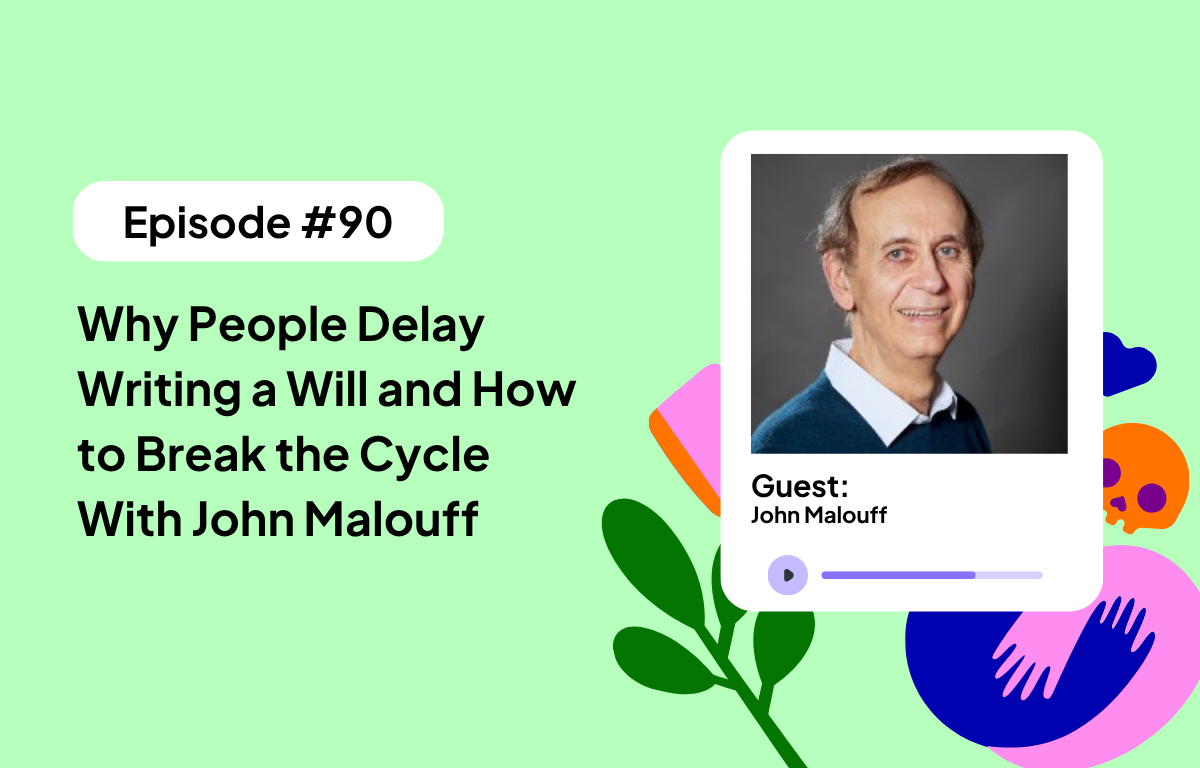



Why People Delay Writing a Will and How to Break the Cycle With John Malouff



Listen now
About this episode
In this episode, I’m speaking with John Malouff, psychologist and Associate Professor at the University of New England. John has spent much of his career researching procrastination, self-regulation, and the science of why people avoid the very tasks that could make their lives easier.
And that includes one of the most important tasks many of us put off for far too long: end-of-life planning.
We talk about why so many people delay writing a will, completing an advance care directive, or having conversations about their wishes. Often it isn’t about laziness or indifference. It’s fear, uncertainty, and the simple fact that we don’t see other people openly doing it.
John shares practical psychological insights into why procrastination happens, what motivates people to take action, and how even small prompts can help us move from avoidance to preparation.
Because while death itself may be confronting, the real impact often comes from what happens before and after it.
Remember; You may not be ready to die, but at least you can be prepared.
Take care,
Catherine
Show notes
Guest Bio
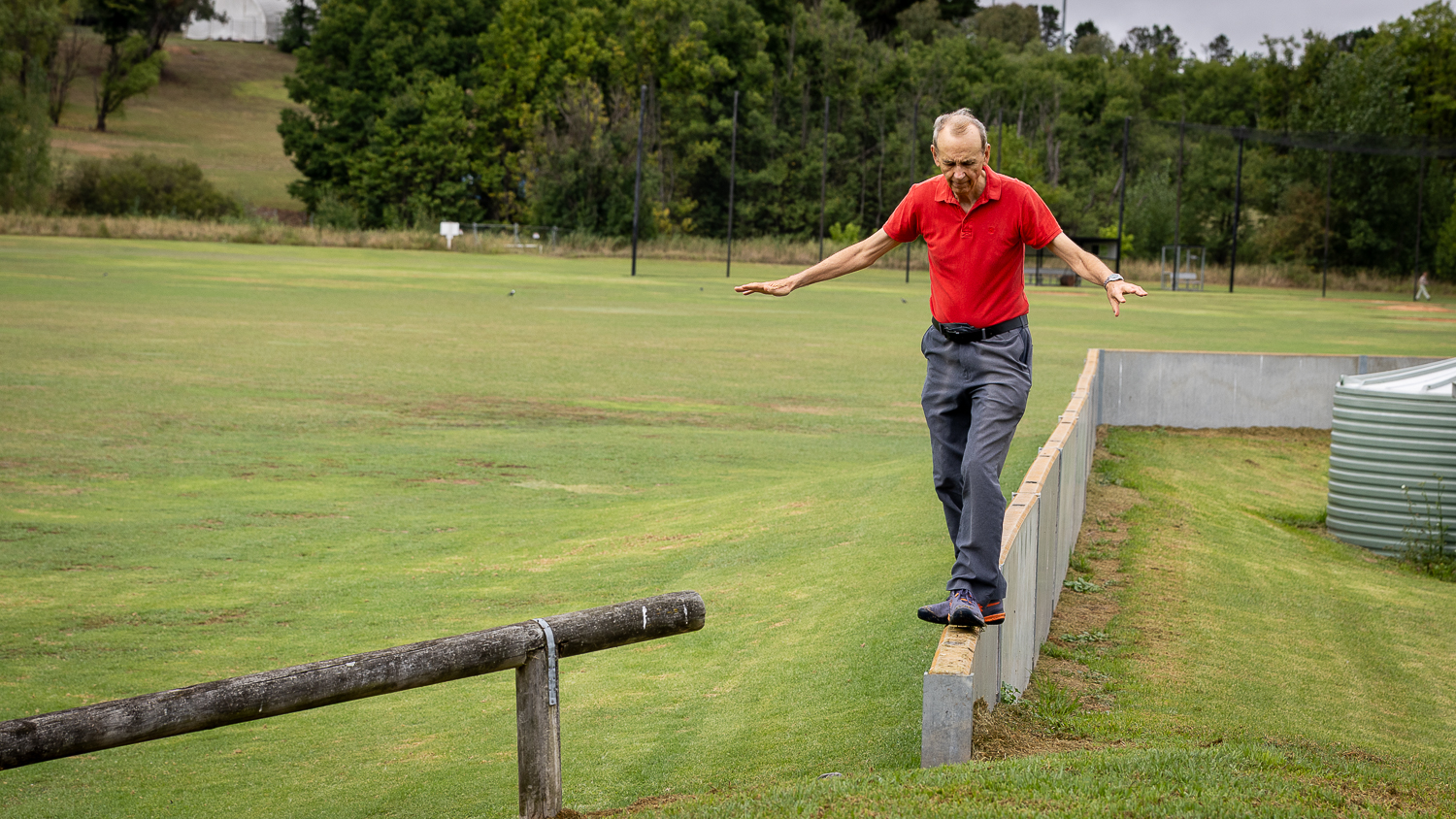
Psychologist and Associate Professor at the University of New England
John Malouff is a psychologist and Associate Professor at the University of New England whose work focuses on practical strategies for improving behaviour, wellbeing, and performance. His research spans topics such as procrastination, self-regulation, goal achievement, and evidence-based techniques for behaviour change, with a strong emphasis on translating psychological science into everyday action.
John has published extensively in peer-reviewed journals and is widely recognised for his work on overcoming procrastination and helping people follow through on important but often avoided tasks. His approach combines cognitive, behavioural, and motivational strategies that support individuals to move from intention to implementation.
In addition to his academic role, John is committed to community education, sharing practical tools that help people manage avoidance, reduce stress, and complete meaningful life planning. His insights are particularly relevant to areas such as end-of-life preparation, where emotional resistance and task overwhelm can prevent people from taking necessary steps.
Summary
What you’ll hear in this episode:
- Why fear, uncertainty, and emotional discomfort make end-of-life planning one of the most commonly procrastinated tasks
- How not knowing how to start often stops people from planning at all
- The powerful influence of social modelling and why seeing others prepare encourages action
- Practical psychological strategies to overcome avoidance and follow through on important life planning
- How even small conversations about wishes can reduce stress and confusion for loved ones later
Transcript
John: This end of life planning is valuable even when they're young. People don't know. The end could be near, becomes more likely as we get older and older because more things can go wrong and it can go wrong suddenly too, where there is no time. For instance, having a stroke or a massive heart attack, there's no time then to do the planning, so you're outta luck, and it may not matter, depending on what's going on in your life, your will may not be necessary because everything may flow to certain people anyway. But there will be a delay if you don't have a will. Catherine: Welcome to Do ... Read More
John: This end of life planning is valuable even when they're young. People don't know. The end could be near, becomes more likely as we get older and older because more things can go wrong and it can go wrong suddenly too, where there is no time. For instance, having a stroke or a massive heart attack, there's no time then to do the planning, so you're outta luck, and it may not matter, depending on what's going on in your life, your will may not be necessary because everything may flow to certain people anyway.
But there will be a delay if you don't have a will.
Catherine: Welcome to Don't Be Caught Dead, a podcast encouraging open conversations about dying and the death of a loved one. I'm your host, Catherine Ashton, founder of Critical Info, and I'm helping to bring your stories of death back to life because while you may not be ready to die, [00:01:00] at least you can be prepared.
Don't be caught dead acknowledges the lands of the Kulin nations and recognizes their connection to land, sea, and community. We pay our respects to their elders past, present, and emerging, and extend that respect to all Aboriginal and Torres Strait Islander and First Nation peoples around the globe. Today I'm speaking with John Malouff. John is a psychologist and associate professor at the University of New England, whose work focuses on practical strategies for improving behavior, wellbeing, and performance.
His research spans topics such as procrastination, self-regulation, goal achievement, and evidence-based techniques for behavior change, with a strong emphasis on translating psychological science into everyday action. [00:02:00] I am excited about this one, John. Okay. John has published extensively in peer reviewed journals and is widely recognized for his work on overcoming procrastination and helping people follow through on important but often avoided tasks.
His approach combines cognitive, behavioral and motivational strategies that support individuals to move from intention to implementation. In addition to his academic role, John is committed to community education, sharing practical tools that help people manage avoidance, reduce stress, and complete meaningful life planning.
His tool, his insights are particularly relevant to areas such as end of life preparation. Where emotional resistance and task overwhelm can prevent people from taking the necessary steps. Don't I know it? John, [00:03:00] thank you so much for joining us today.
John: It's my pleasure.
Catherine: Now, John, from a psychological perspective, why do we procrastinate when it comes to end of life planning, even though we know it's important?
John: People pro procrastinate a lot of different things. This is just one of the activities and there are a few different reasons that people procrastinate. One is that there uh, something about the process or the possible outcome that's unpleasant. And you can see how that applies to end of life planning.
The outcome is you're dead. You're dying, which is one thing, and then being dead, which is slightly different. People have a great fear of that. , They detest it, they don't want it. They're scared of it, so they don't want to do anything regarding dying. If they can avoid it. So that's one big reason.
Another reason is they don't know what to do. Maybe that's where you come in. They don't know what to do for end of [00:04:00] life planning. And then a third reason is they may have low motivation regarding whatever it is. And in this case they may not think that it matters whether they do any end of life planning.
Catherine: And tell me a little bit about your work and how you got started in this field, John.
John: Well, I, I teach, so I see procrastination all the time and
uh,
Catherine: I'm sure you do
John: students put off uh, and for those very reasons, they don't know what to do. Or how to do it, or they're afraid they will do it wrong, or they just don't have much motivation to do it.
They don't see any purpose in it for them, so they, procrastinate and lots of people procrastinate for many reasons. It's mostly studied with regard to students. Because well, various reasons. It's easy to get students as participants, and it's very common for them to procrastinate. They're forced to take certain classes that they don't want to.
They're forced to do [00:05:00] certain assignments that they don't want to, and they're forced to take tests. Which I really don't, most of us don't wanna take tests. We don't see that as fun. We see it as something unpleasant or we might have a bad outcome. So they procrastinate. Preparing for the test. And what you're talking about in end of life is another sort of test but it still has some of the same features.
Catherine: And what motivated for you to start looking into this particular field of, procrastination?
John: Well, it's so damaging to students. The those who procrastinate and if it's schoolwork, they tend to do poor work and they tend to be get highly stressed then, 'cause they're doing it at the last minute.
And for some projects, some assignments that just isn't feasible. So they really foul up other things. They can pull off at the last minute, write an essay about something. I don't teach classes like that, but other instructors do. And so I've seen it and I've seen it with pals too. And I [00:06:00] have my own tendencies to procrastinate for some of the same reasons.
, I don't wanna do certain things, so I put them off whether it's tax. Reports filling in my tax forms or other, I think that's a
Catherine: common one.
John: Yeah, that's a, and I have to do something else. Personal, professional plan or something like that. I have to say what my goals are for the year and that I don't have motivation for that I'm forced into it, or I wouldn't do it at all.
And so I understand the, the problems of procrastination. I understand why people do it, and I'd like to help people get past it if it's something they actually want to do or that's important for them. And this end of life planning is valuable. People just, even when they're young, people don't know, the end could be near, could be dying becomes more likely as we get older and older because more things can go wrong and they can go wrong suddenly too, where there is no time. For instance, having a [00:07:00] stroke or a massive heart attack, there's no time then to do the planning, so you're outta luck and it may not matter, depending on what's going on in your life, your will may not be necessary because everything may flow to certain people anyway, but there will be a delay.
If you don't have a will. That can delay things, I don't know by how long? Probably depends on what state you're in. So , there's a punishment element for this procrastination and it's best avoided by not procrastinating. Doing what needs to be done in a reasonable time , at a reasonable time.
Catherine: and why is it like even when we hear stories about when it's been left too late and there wasn't the appropriate documents in place, why is it that it still doesn't act as a good enough motivator for us to go out and do it ourselves then?
John: Well, one reason for end of life planning is we don't think about dying.
[00:08:00] It's too scary, it's too disturbing. So if you ask people, have you thought about dying lately? They'll say, no. Why do you know something? They, they don't wanna think about it, even if they know it's a hundred percent likely they will die at some point. They don't wanna think about it. They don't want to face that.
They don't want to be told that probably because it's disturbing to them. It's one of the most disturbing elements of a person's life. This idea of dying, of being no more. And so , there's that association of all this planning with. It means I'm gonna die, and people don't want to face that fact and they have a negative feeling about dying and everything associated with it, including the end of life planning.
They tend to put that off or just never do it on the thought that I won't die or I won't die soon, I'll have time to do it, or it doesn't matter. Or even if I try to, I don't know how to do it. I don't know [00:09:00] what to do. And also, I don't know anybody else who's doing it. People do it, but they don't tell others that they're doing it.
It's a personal matter and they keep it to themselves. So they don't promote it, they don't share their experiences with others. It's all sort of, I don't know if it's intentionally secret, but it's confidential in a way. So we don't know that anybody else is doing it. We don't have any models. If our parents did it, we don't know.
They probably didn't do it 'cause they probably procrastinated doing it. Or just never even thought about it
Catherine: And tell me. In your own personal life, , what have you procrastinated about? You've mentioned your goals with your, your planning for your teaching, that's something that you try and avoid or, or, you know, that you have to do on your to-do list.
What are the other common things that you know, we avoid in everyday life? That's just not about end of life [00:10:00] planning.
John: Taxes are certainly in there 'cause those are unpleasant. All you're gonna do is pay, typically. Maybe some people will get a refund, but even those people will put it off because the process, it isn't the outcome that they fear.
They think they're gonna get a refund, but they don't like the process if they're doing it themselves. Even if they're getting assistance, they've gotta collect the documents, they've gotta answer questions, they've gotta hire somebody to do it for them. So it may not be the outcome. In certain cases, it may be the process, and that can happen with end of life.
And what gets a person past that? Well, my knowing I'm gonna have this meeting with you, this interview led me to create a, Medical directive, I forget exactly what it's called, but I've done that. An advanced care
Catherine: directive? Yep.
John: Assigned it. Yeah, I signed it, my wife assigned it and now I need to upload it to my, what's it called?
My health record. That's fantastic. So it's your [00:11:00] prompt it, you didn't actually encourage me, , but it made sense to me to do this, and I knew I'd be talking about it. And also I knew it would be good for people to have some sort of model. We're more likely to do things if we never see anybody doing something sort of inclined not to do it either.
And we think they haven't done it, although they have, we just don't know about it. And one of the things I detected was I couldn't find a model in New South Wales you can write your own directive. Well, I had an idea of how to do it. Most people have no idea. They're not used to writing something that's important, so having various models would be good.
The government, as far as I can tell, doesn't do that. I don't know why. Maybe you'll do it. Maybe other people will do it and have a collection of 'em. Here are some things you could put in there. There is such a thing online, but it seems to be commercial and paid and so on. Which [00:12:00] is another disincentive in a way for many people they don't wanna pay, especially every month or every year for something like that
Catherine: that's interesting that it actually encouraged you to, to take action , and role model what we were talking about today.
That's that's amazing.
John: Yes, I, I'd done a will before I knew the values. I've worked as a lawyer before. I knew the value of avoiding probate and avoiding that delay. And also , if you're not gonna give the money to the usual people that the government expects, will, is very valuable for that. If you want it to all go to a.
Upkeep of a dog or to a certain charity.
Catherine: Yeah,
John: you, you've gotta name that or it's not likely to happen. It will go to certain relatives that the government has decided that if you had enough sense to have a will, this is probably who you would've given it to. Well, the government's guessing there. And I'd rather take control of that even though the government was [00:13:00] right in one case.
So I have a will. I also have a list of assets. I don't know how anybody's gonna find that in my mess in my office, so
Catherine: I'm gonna
John: put
Catherine: that. Ah, there you go, John. Yeah,
John: you
Catherine: gotta put it in an important spot and tell two people about it.
John: Yes. And medical directive too. Same thing to it's one. It's probably good to put it up in my health, but also to send it to relatives.
So there I'm not a good boy altogether, but I'm going in that direction. Thanks to you.
Catherine: I, I love the fact that we are talking about procrastination, but you are not your own star pupil. Like you're still human. I like that. So you mentioned that you were a lawyer at some stage in your previous life.
Tell us about, how you ended up in this space and, and a little bit about what your journey has been to get you to this point, John.
John: Well, I went through law school in the United States and I worked as a lawyer for a year or two, and then just as a trial lawyer, I decided I didn't like that very much, but also I [00:14:00] just wanted to go on in psychology, and so I did, and I earned a PhD and ended up working as an academic, which I find much superior to trial law.
There's no, , not much struggle. Working as a psychologist, I'm trying to help students learn how to help others. That's typically what it is. Or to help themselves and I like that and I like being in the educational role where I have a chance to teach students and I have a chance to do lots of other things such as research and do various projects for the community like this, but also training people in the community and positive psychology principles or helping them overcome some psychological problem, which could be procrastination.
I haven't done that with a group and it's not easy to help people overcome. Procrastination because you need to make some serious changes and keep them going for a long time.
Catherine: and I want to talk to about, about, about that in a moment. But when you were a lawyer and you [00:15:00] were a, a trial lawyer, was there any one particular incident that you found that you went, I don't think this is for me.
I think I'm going to focus on the people and the psychology.
John: I don't know if there was one. There were a few incidents. I, I didn't like the DEF lawyers on the other side because it was a battle with them. They were trying to win and I was trying to win and I didn't particularly like a judge I dealt with, 'cause I found the judge scary.
Catherine: Yeah.
John: Too much power. And they have a black robe in their way up high. And when they say something, it, it has an impact. But they can order things. So I didn't want to be under the thumb. Of anyone and I didn't want to be in that conflict situation. And working as an academic, I'm not in that at all.
Catherine: And tell me you haven't always focused on procrastination, so let's talk about your, your role and your career in a more broader sense.
John: Well, I've studied all sorts of things and I [00:16:00] specialize now in doing meta-analysis where I combine the results of many different studies on a specific topic and determine , how does it come out overall if we combine all those studies so they combine statistically, and that's more meaning, much more meaningful than just the results of one study.
So that's one of my areas of expertise, including meta-analysis a while ago on procrastination interventions. It is useful to have intervention or some sort of treatment for procrastination. It doesn't always work but it's better than nothing. It will help people reduce their procrastination.
It's not the only way to reduce it, but it's one way.
Catherine: And tell me, how do you go about that, John? Like how do you reduce the procrastination about certain tasks? What sort of skills can people develop?
John: Well, you can try to add to their motivation. In your case it would be what can go wrong if you [00:17:00] don't do it?
That's sort of a scare factor, a fear factor, but it's realistic. It's not that you're making anything up. You can also try to add to their motivation by having people disclose that they've done it. Or you disclose it? I'm disclosing that I don't, yeah. Yeah. It's good. And that it's good to do. And some people will say, and it wasn't that hard do, we don't know whether it'll work or how it will work until we're in a bad situation.
But as far as actually doing it and doing the best we can people can set a model for that. It would've helped me to have written models things to, to choose from that, that were free. So that, that would reduce my doubt about being able to do it. Oh, I didn't have that much doubt. Thanks to the internet, I really know a lot.
Catherine: But it is, it is quite challenging, especially the form that you were completing, which is the advanced care directive, which focuses on your [00:18:00] medical choices when you can no longer speak for yourself, and you are directing , medical physicians to actually. Act and follow your wishes. And, and it, it is challenging because there's questions there about, or things that you need to consider about what communication is to you what level of communication, whether it's verbal, whether it's actually touch, whether it's through blinking , and also about resuscitation, whether you, you do wanna be resuscitated.
So these can be really challenging conversations and thoughts to have. So I always suggest people chat to their gp. Because that's the first point of of contact to, to start having these really, very medical focused conversations, especially when it comes to the advanced care directive.
John: Yes, that makes sense.
To get expert suggest ions about or comments and the, the GP may be involved in making these decisions later on. Yeah. It's more likely to be hospital physicians, but the GP may be involved in that. So there are a few [00:19:00] things that people can do or. can be done by societies. Increase the motivation by showing the possible benefits of doing it and the detriments of not doing it.
showing people how to do it, making it easier. I teach my students this in psychology. If you give an assignment to a client, you wanna make it as easy as possible, so you wanna provide a form. For this person to say to self-monitor some behavior, how many drinks do I have today?
Well, you provide the form. You don't want 'em to create a form themselves. They won't give you what you want. There's one risk, but they also just may never do it 'cause they think, I don't know how to do this. What does he mean? Self-monitor, Alma, I'll just sort of give him a total towards the end of the week.
That's not what we want. We want each one, each drink recorded, , that's what gives us good information and indeed lowers the number of drinks that self-monitoring. Now as far as the process and the [00:20:00] outcome being. Unpleasant that that's a bigger deal to change the unpleasantness of the likely related outcome, which is death.
That's a harder thing to do. And the dying, changing your view about dying, that's harder to do. So I would focus on making it easier. For the person to do that and raising the motivation that here are the reasons to do it, and here are the other people. We're really influenced by others.
We copy other people, but I've never seen anybody doing any end of life activity. I, I bet they have, but I never see it. , They keep it to themselves. So if it were more public, the details may not be necessary who's getting what or who's gonna be making decisions for me, but the actual words might be useful for a person, might make it much easier.
All you have to do is copy and paste these words in, and you got most of your [00:21:00] medical directive.
Catherine: Also what we've found is that one person, just through listening to the podcast has told me they have gone from a quite serious fear of death to now also becoming, to be trained to be a, a death doula, just purely through learning from other people's experience and becoming.
More familiar with the storytelling and experts and pathways associated with it. So that sounds like a bit of a rare occurrence though, doesn't it, John? Yes.
John: that's rare. Yes. To be around dying people and death quite a bit will tend to desensitize a person. Probably but not many people will be influenced by that.
Catherine: And so what can we do from a practical sense everyday sense? Because we know that we see that most people will be impacted you know, probably by their mid thirties they will have known someone [00:22:00] who has, died, who was a loved one. They may have been directly involved with settling some of the estate and doing some of the administration, or at least some aspect of , the funeral or the caring if someone has had a terminal illness.
So how can we turn that experience from something that's a, a, a, perhaps an awareness into an action for ourselves?
John: Well, the awareness is good if they see the problems, but also if they see the end of life planning, that sets a positive model for them. Otherwise, they see the negative results of not doing it.
So there may be a, educational element for sure about this. 'cause most people. This is a class they don't want to take. A dying class is terrible. But isn't it
Catherine: interesting because it's the one guarantee that we all have, that we will all experience this John, you know,
John: a hundred percent likely.
Catherine: Yeah.
John: Yes. And that people [00:23:00] don't want to think about it no matter what their religious beliefs are. They fear dying and they fear what will happen after they die to themselves. They don't think that much about what will happen with their assets and people left behind. They may not think about that much because that's not traditional.
Other than perhaps laying some financial foundation for the others, for the kids or the grandkids or something like that. So much more discussion, which is what you're leading about this topic and the pros and cons of doing it, and also in instruction about how to do it, and then some discussion about who's doing it because I, I hear nothing.
About that. I'm not listening to your podcast. That's my loss. But other people are, and so there some are. It's hard to reach the masses about any topic. It's very hard,
Catherine: especially when it's a universal [00:24:00] topic.
John: Mm-hmm.
you'd like to reach everyone?
Catherine: Yeah. Yeah. And, and that is the challenge about it, because from what we know in research, when people are involved in and make informed decisions when it comes to really any part of their life, whether it be, you know, end of life planning or not, you can generally get a better outcome , when there's a informed decision being made.
So. Why do we still procrastinate about it?
John: Yeah. There's more fear of, another big decision is whether to have a child or whether to get married.
Catherine: Yeah.
John: People talk about that and you read about it a lot. not the end of life planning because it's scary and it's kept low when people do it. So, just more exposure.
I think will help people more information about it and the reasons for doing it [00:25:00] and information about how to do it. The, that will put people going in the right direction, if anything will.
Catherine: We, um, when we did a, a focus group through the Carers Australia network with the platform before we launched in April of 2024, we found that the people were experiencing anticipatory grief around their own death and what that would impact with their loved ones.
So what we did to sort of combat that is. Increase the amount of meaningful storytelling at the end of each day. So we've sort of broken it up into bite-sized chunks that each day you focus on a different area of your life, whether it be your pets, whether it be your social interactions, whether it be medical legal as you've just touched on both of those, John.
And then at the end of each day, we ask questions about whether their you know, what was their first job that they did for pocket money or. What was the first pet [00:26:00] that they had when they were a child to try and combat those sort of feelings of anticipatory grief? , Is that a technique that we know that it's been working with dementia and the depression associated with that can be felt with, with the, the loss of memory is by meaningful storytelling helps improving that, but.
Does that also help with procrastination? , That storytelling and bringing up that positive aspect of, focusing on your life.
John: Uh,
It might, I'm not very familiar with that approach to helping people, but stories can be very important and the idea that you're still creating your story can be important.
And yeah, how do you want your story to go from here? All that can be quite positive for people, but also just for lifting their mood. People are more likely to do end of life. Planning if they're in a good mood like me. Yeah. Uh, I don't think I'm gonna die anytime soon, but I [00:27:00] realize this is a valuable thing to do, and why would I put it off now that I'm reaching the age where it's more likely.
That a person might die, but it's like, it's possible at any age though, so it's really never too early to do it. You don't wanna wait until it's too late. That's the procrastinator's, wo
Catherine: yeah,
John: it's waiting too late so you can boost, you can help boost the person's mood. That'll probably propel the person in the right direction with other things.
Going on and the, the storytelling, it's good for people to look back at the story of their life and to understand what they did and what they experienced. And then that might loosen them up a little bit to go create their story in the future.
Catherine: Because we very rarely give our, ourselves the opportunity to self-reflect.
and so I think that it is a good thing that we spend time doing, that we acknowledge where , we have [00:28:00] come from and how that can shape. Where we move in the future. But there was something you just touched on there , and that's, you know, accountability you know, what role does that play when we you know, as a partner or as a a loved one how does that improve people's follow through?
John: Well, the accountability is good, and so the potential for doing this end of life planning is greater if you do it in a group they may all be approaching about the same risk, about the same age, for instance. And so they might all do it together. And the accountability involves what If you don't do it.
what mess might there be as far as the assets? What mess might there be? As far as my continuing on in a hopeless situation with no quality of life, when I really don't wanna do that, I don't wanna live like that half dead. So the accountability as being accountable to your future self but also being [00:29:00] accountable to the other people is they'll be in that role of the Dr.
May. Discuss with them, and they don't know. You've never had that discussion with these other people. You have no written document. So you're not really accountable for your future. Then you've left it in the hands of others and they don't know. They have emotions, they have hopes and so they don't know what you would've wanted because you've never explored it.
Catherine: That's what we found with our friend when he died unexpectedly. In his early sixties, his two adult children didn't know whether he wanted to be buried, whether he wanted to be cremated and the responsibility that was left on their shoulders at a time when they were grieving was. Very, very challenging to witness as a, family friend and to try and you know, coach them through that process.
Because there, there wasn't a lot of resources around to, to help navigate that space [00:30:00] when you haven't had those conversations early on before. You know, crisis hits.
John: Yes. Because your life isn't just your own. If you care about other people, you are accountable to other people. And so you wanna help them deal with your situation if you're half dead.
But also, if you're dead, you wanna help them. You don't wanna leave a mess. Behind because you care about these people. So you wanna lead them some guidance, make it easier for them. That's what you wanna do. 'cause that's what you've done perhaps for decades. Make it easier for these people who are your children.
So make it easier in this. Sense too , towards the end of life or what might be the end of life by guiding them what you're saying about what to do with the body that makes me think of my will. And I said, do whatever's cheapest because I don't care. I'm dead
Catherine: there, but at least, at least you've given guidance, John.
So there. Sort of directive that, you know, your [00:31:00] family or your loved ones can, can kind of go, okay, well he's, he's given us permission to actually take the cheapest option. So, you know, that in itself is, I'm sure, will be huge comfort to your loved ones.
John: Yes, some guidance can be very valuable so they don't have to agonize over what to do.
And it makes me think of my mother who said she never wanted to be cremated. That idea of being burned was very disturbing to her. Oh, well she didn't put that in a will. She didn't put it anywhere in writing, but she told us that.
Catherine: Yeah,
John: that's okay. Yeah. That's your preference. You get you, that's your last wish in a way.
Okay. What, whatever you want. But if you don't express it, people don't know. which wouldn't be a problem except they tend to agonize. Some people will tend to agonize over it and be disturbed by it. And that's not the way to go out, it seems to me.
Catherine: And so for those people that perhaps are, are at the other extreme is that they think too [00:32:00] much about it.
John: They think too much about dying.
Catherine: Yeah.
John: Well, some people really fear dying and they'll do anything to avoid dying, although they're not gonna be successful in the long run. But you can put it off. And to some extent, that fear of dying is very adaptive, makes us look both ways before we cross the street.
It makes us take care of our health and eat properly and so on. So a little fear. It's very adaptive, very helpful. A lot of fear, and I see this with some individuals, you miss part of your life. You spend your whole life being so afraid of dying. You don't live your life, you don't enjoy it because you're always trying to avoid.
Dying. And so that's the other extreme, you know, probably the happiest place and the most adaptive places in the middle somewhere where you're conscious, you have some anxieties that make sense but you're not driven down into the ground by your anxieties every day worrying [00:33:00] about what will become of you.
Catherine: And tell me what are the some of the sort of cognitive or emotional barriers that stop people from starting these plans?
John: Uh,
The emotional barrier is usually fear of the whole thing. Both. The procrastination can be a fear of the process that I won't like the process. They may not but more likely they don't know what to do.
They don't know how to do it, they don't think they can do it. That will stop a person lead to procrastination. And then the fear of the outcome, if you think about the outcome is death. People don't want to think about that. If they could adapt. a healthier view of dying, then it's part of nature, it's part of life then their fear may go down and they may be able to function with regard to a planning.
Catherine: It's interesting that people do ask me questions around how can you always talk about death? And what's interesting for me is that it's [00:34:00] very rarely ever about death itself. It's everything that leads up to that point or the impact of everything that's after that point. It's never really about death itself.
So what's your thoughts on that, John?
John: Well that, that makes sense to me. And that's probably the same for death doulas who are very valuable individuals. , You're trying to help people and you're trying to help them do something before they die, and then the consequences flow afterwards whether they've done it or not.
And so you can see those consequences, but that person can't do anything. Then death is death. It's final.
It is unfortunate for the individual who dies and has left things unsaid, undone. There are lots of other things to do before dying besides these documents. I mean , to deal with people who are close to you to say what you need to say to them. There are lots of things to do before dying and some people do them and [00:35:00] some people don't.
Catherine: But I like the fact that you use the example of your mother and she just said she did not wanna be cremated. And, and it can be as simple as starting the conversation around what you do like and what you don't like.
John: Yes, that's right. And the conversation can get rough because sometimes the close family members will say, oh no, we don't want you to die.
You can't die. they're living a, a fantasy. But it's good for them to discuss it too, to have some preparation that this person is likely to die. At some point because the person's maybe much older um, is likely to predecease, whoever is concerned about all this. And so these discussions are good.
They lay groundwork in a way for your dying, but going out the way you want to go out with people not getting so upset, yes, they'll miss you, but not being knocked down by it for month after month and year after year.
Catherine: It's interesting uh, [00:36:00] just thinking about, when we are talking about times and when you should do it, like our, our son traveled from his early teens overseas, and we made sure from the age of 18 he had a will, a power of attorney, but they were very practical documents to have in place.
So if he was overseas and we needed to access his bank account or any of those sort of things, we had the ability to do that on his behalf. But. People don't think about these documents in relation to a practical sense. They just go from, from my experience, they seem to go straight to the death side of things.
But these documents and these sort of plans are, can be for when you go to hospital. They can be for when you're traveling. So it, do we need to reframe it. John, do you think that that it's not just about death, it's also for a backup plan for those other times?
John: That might be useful. 'cause the death is scary.
Boy does that frighten people that do all [00:37:00] sorts of things to avoid death, thinking about death moving in the direction of death. And some of that's adaptive, but a lot of it isn't. So yes, in any way you can reframe the matter to something that's more positive than death, which almost everything is the better.
Catherine: And tell me when we are thinking about this, what is the evidence-based techniques that people can use to overcome this avoidance?
John: Well, the, the evidence-based techniques are basically cognitive and behavioral. It's important to do things that you have some motivation for, so you wanna think about why you're doing it, and if there's a good reason, then you're more likely.
To actually do it. And the good reason will be it'll benefit you. It'll benefit from someone else. That's how you build up the motivation. Also, motivation can be built up by just knowing that other people are doing it. And there are all sorts of models that influences the celebrities. The one people we look up to, we don't [00:38:00] know whether they've done any of this stuff.
They never say they write autobiography famous people. I like reading autobiographies. They never talk about this. Although it's pretty likely they've done it particularly with regard to the will. 'cause they have lots of money. Yeah. And they wanted to go to certain places, but they never talk about this in their books.
maybe it's. Personal and they don't wanna disclose it.
Catherine: I can guarantee that there's a lawyer behind them that's made sure that they've got a trust structure to avoid tax. Yeah, that's, that is for sure, you know, and, and good succession planning. But it is, you're right.
It isn't something that is, is openly talked about. Mm-hmm. Because it's a private matter.
John: It's a private matter and some of it, I understand why it's private, but actually doing of it that there's no reason for that to be private. you're going to die at some point, but that's not much to ask from people since it's been a hundred percent so [00:39:00] far.
Although some, there are people who think they'll live forever and that's very popular now to want to live forever or live to 120 or live forever. Just live perpetually. So it's not realistic, but it's popular.
Catherine: And tell me Given the fact that people, you know exactly think that they're going to live forever, think that they've got plenty of time. What role does that play in this procrastination , that there is the unknown factor. So they just think, oh, well I've got plenty of time for that. I don't have gray hair yet.
John: That, that's deadly for procrastination and I've got plenty of time. That's a classic thought, and that's one of the things we would do with a client as a psychologist. Try to change that thinking, try to change the perspective that this is a benefit for you starting early. Is wise. And some people just do that naturally, probably.
'cause they've seen models of that from their parents. And other people don't. [00:40:00] They, they put off things, but they can change it. They can change. That even are unpleasant for them, that they're not sure how to do it. They can drive forward if they have enough motivation, if they see the potential benefit for themselves and for others.
And that's what we wanna do typically, is show people. Let them examine the benefits and the costs of not doing it. But look at it realistically, the costs of actually doing it now. Which aren't that great for, for some things like schoolwork, you're gonna do it sometime, most students. So why, why not do it now?
And you're not gonna know any better how to do it a month from now? Why not struggle with it now? end of life planning though, people can put it off forever. And then what they do say without a will is they leave it up to the government to decide where the money goes. And I'm not trusting to the government and I wanna have [00:41:00] my own control over things.
And also people who think, oh, I'm so young, I won't die. They're living partly in a dream world because you just don't know. It, it could be tomorrow. Tomorrow is more likely if you're 102 years old, that even at,
Catherine: but yeah, I 22, I was on my way to work and like any a day and, and just stuck in traffic and was hit from behind and it changed my life completely.
So you just never know when your life's gonna be impacted and it doesn't necessarily even have to be, be death. But you know, if we didn't have our paperwork in place, it, it could have been really different outcomes.
John: Yes, you wanna do what's sensible, what a sensible adult does, and this end of life planning is what a, is part of what a sensible adult does.
And that's what I'm doing. It didn't rush into it, but I'm doing it now.
Catherine: I, I love it, John. And so we know that, so [00:42:00] that, just to, to recap, so fear is, one of our, our barriers. Yes. Not knowing how to actually begin the, the planning is another. Then also, you know, that whole cost benefit analysis of, of what's the motivation, you know?
Mm-hmm. What's gonna motivate me what is the benefit of me doing this?
John: Yes, that's good. Also, the not knowing that other people are doing it. We are followers. We do what people do, whether they're celebrities or our siblings or our parents. If we've seen it and we've seen it consistently of people around us, we're much more likely to do it.
Also, if we see people we look up to, such as celebrities or high government officials, something like that, if we know they're doing it, but we usually don't. And that would be useful to find that information.
Catherine: Well now you've just added something to my to-do list, John. , I'm now going to see who I can get to publicly [00:43:00] declare that they're actually have succession planning and their end of life plans in place.
Because I think it, it does need to be a more open conversation and what's interesting in a time where we curate what our life appears like on social media, and we are very concerned about those appearances. The one way we can actually dictate about how we appear in death is by making these decisions now and making sure they're documented.
John: That's well put. I like that.
Catherine: Oh, thank you. And tell me , what are the basic things , when people have overcome procrastination, what have you seen them? What techniques have they used?
John: I don't know that I've seen people overcome it other than myself. As people get older, I'm dealing with many young people.
They tend to just become more sensible and they do a lot of things that make more sense, that are better [00:44:00] for them. Even though it's difficult. They might become more assertive. So that's part of maturing and having life experience. Sometimes we need to have experiences the hard way, learn the easy way, or by observing people doing it, or we learn it the hard way.
We didn't do it and look at the bad consequence from it. So one way or another, people as they get older tend to act more sensibly but not necessarily with regard to this end of life planning because they get older. They're also getting closer to what they fear the most, and that is one of the, that probably is the top fear.
Most people that I'll die. And they take actions to prevent that, but they don't take actions to prevent harm from them dying without making all these decisions and talking with loved ones and so on. So there are a lot of things for them to do, and some people get it, like me at some point.
We get it before it's too late and people [00:45:00] put off things. Like this until it's too late, and then they wanna do it, but they can't, they're not competent or whatever. And so yeah, it's, it's, it's hard to know you not many, well, some people die gradually and they do see it coming. They have a fatal disease and then they may do these acts, but some people just have the big one.
That's it. It's too late for them. , They cannot, and you cannot, for most of us, we can't tell what it'll be. It could be that next car coming down the street and we're walking and we're in the way. And so that's it for us. And , that's unfortunate.
Catherine: And tell me, John. What do you think that, for you has been , the motivator to overcome your procrastination about end of life planning?
John: Well, my last procrastination element has been the Final Medical Directive. Just [00:46:00] the title of it. It's final. It's, yeah. And I think what stopped me is what to say, what to put in there.
I mean, it is very hard to phrase it. You could go on for a thousand words about it's very, this situation and that situation. I'm not sure that's necessary. You can give the big picture. That I don't wanna live like this. And so I don't want that that sends a message. All that's what I think anyway. So what's helped prompt me is you are doing this interview coming up and you, you're having impact.
It's probably not just on me, but it's on other people. Just it's a little prompt as we'd say in psychology to think about these things. And that's what I needed. 'cause I try to be a sensible person, so I thought this would be sensible to do. And why not now? What would be the point of delaying that or my risk of dying in the next five or 10 years is not great?
At some [00:47:00] point it's a hundred percent.
Catherine: Yeah.
John: So why, why put it off? And I think it helps me that I do not have a great fear of dying the way some people do. They have a tremendous fear of dying. And I don't look at death that way. I figure I've had a good run. I've been very fortunate compared to so many other people.
That's one of the reasons I read biographies, is to see golly,, what you had to go through that I never had to experience. So, it, it's good to enjoy life. To recognize your life, that it's been good and you've been fortunate, if that's true. And how do you want it to end? You gotta think about just for playing any game.
If you think of the game of life, how do I want my life to end? And here you're thinking about other people. You may think about yourself too, but [00:48:00] you want to think about other people. And if you're thinking about other people, then you want to do these documents to make it easier for them.
Catherine: and you're right, it is, it is just part of the natural life cycle.
As we are born, we will also die and it is just part of that natural, normal life cycle. But how we. Respond to that and how we frame our preparation in relation to viewing our death is, is very, very different. And the impact can be significant on , those loved ones when we haven't done anything. I love that you have been so honest and, and open with your own end of life planning, John, I really appreciate it.
Is there any parting words that you would like to share with us? As the final part of this podcast,
John: I would say, as you probably would say to people, do it. , Take care of it. Set up a, a good ending and then you can relax. You'll feel happy about it when you're done.
Catherine: Yeah, you can [00:49:00] just get on with living 'cause you know it's done.
John: Yeah, that's right. You've taken care of it.
Catherine: Thank you so much for your time today, John.
John: It's my pleasure, Catherine. Good luck to you.
Catherine: Lovely to talk to you. Take care, John. We hope you enjoyed today's episode of Don't Be Caught Dead, brought to you by Critical Info. If you liked the episode, learn something new, or were touched by a story you heard, we'd love for you to let us know. Send us an email, even tell your friends, subscribe so you don't miss out on new episodes. If you can spare a few moments.
Please rate and review us as it helps other people to find the show. Are you dying to know more? Stay up to date with. Don't be caught dead by signing up to our newsletter and follow us on social media Head to Don't Be Caught dead.com for more information and loads of resources.
Read Less
Resources
Read more on John Malouff
John Malouff – Psychologist and Associate Professor
Advance Care Planning Australia Plan your future health care while you’re well and able to make your own decisions.
- Make Death Admin Easy with The Critical Info Platform
A simple system to sort your personal paperwork for when your information becomes critical.
- My Loved One Has Died, What Do I Do Now?
Our guide, ‘My Loved One Has Died, What Do I Do Now?’ provides practical steps for the hours and days after a loved one's death. Purchase it here.
- Support Services
If you're feeling overwhelmed by grief, find support through our resources and bereavement services here.
- Support the 'Don’t Be Caught Dead' podcast with a one-off or regular donation to help Critical Info, a certified social enterprise, keep creating free, high-impact conversations about death, grief and planning—every contribution fuels our mission to reduce the burden on families and build a more death-literate, compassionate community. Donate now.


Share