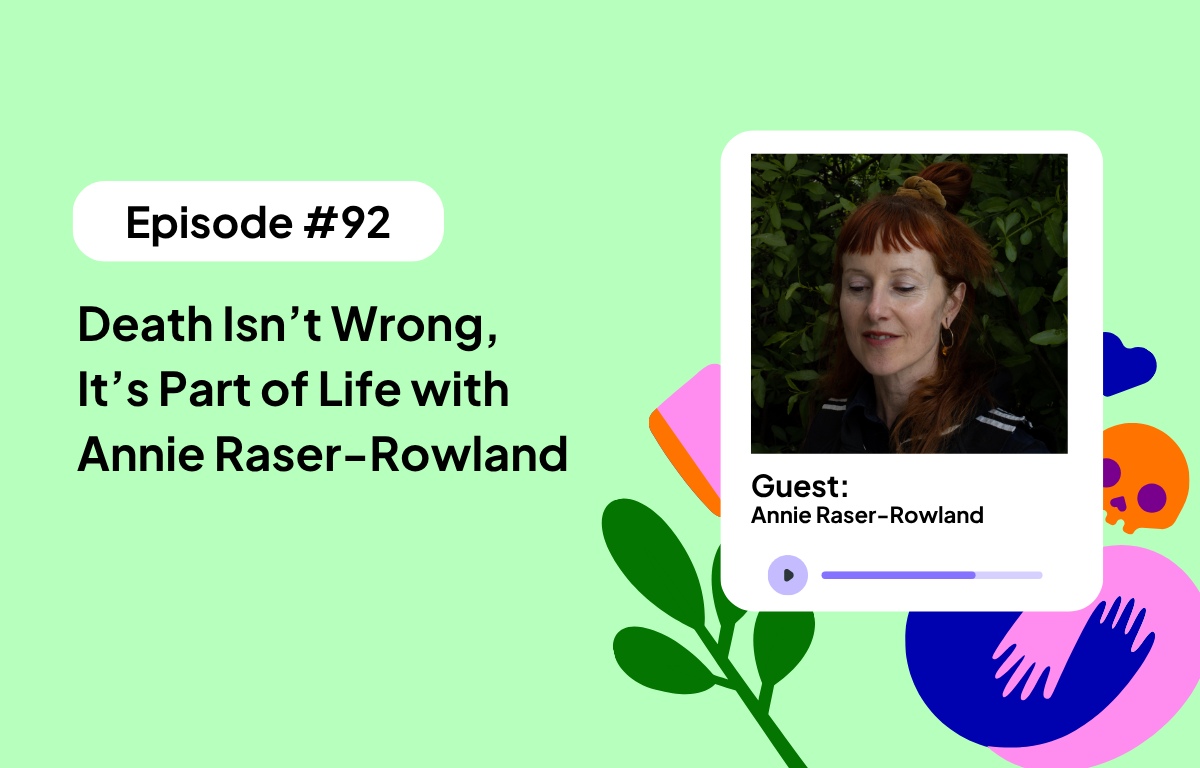



Death Isn’t Wrong, It’s Part of Life with Annie Raser-Rowland



Listen now
About this episode
Have you ever thought about what it really means to live well… and how often we’re told that “more” is the answer?
More things. More experiences. More consumption.
But what if that’s not it at all?
In this episode, I’m joined by Annie Raser-Rowland, writer, horticulturalist, and co-author of The Art of Frugal Hedonism. Together, we explore a different way of living… one that isn’t built around constant consumption, but around presence, connection, and truly experiencing life as it is.
What struck me most is how this way of living naturally shifts how we see death. When you understand yourself as part of a wider system… where everything cycles, returns, and continues… death starts to feel less like something “wrong” and more like something that simply belongs.
This is a conversation about life, death, grief, and the quiet ways we can feel more alive… without needing more.
Remember; You may not be ready to die, but at least you can be prepared.
Take care,
Catherine
Show notes
Guest Bio
Writer
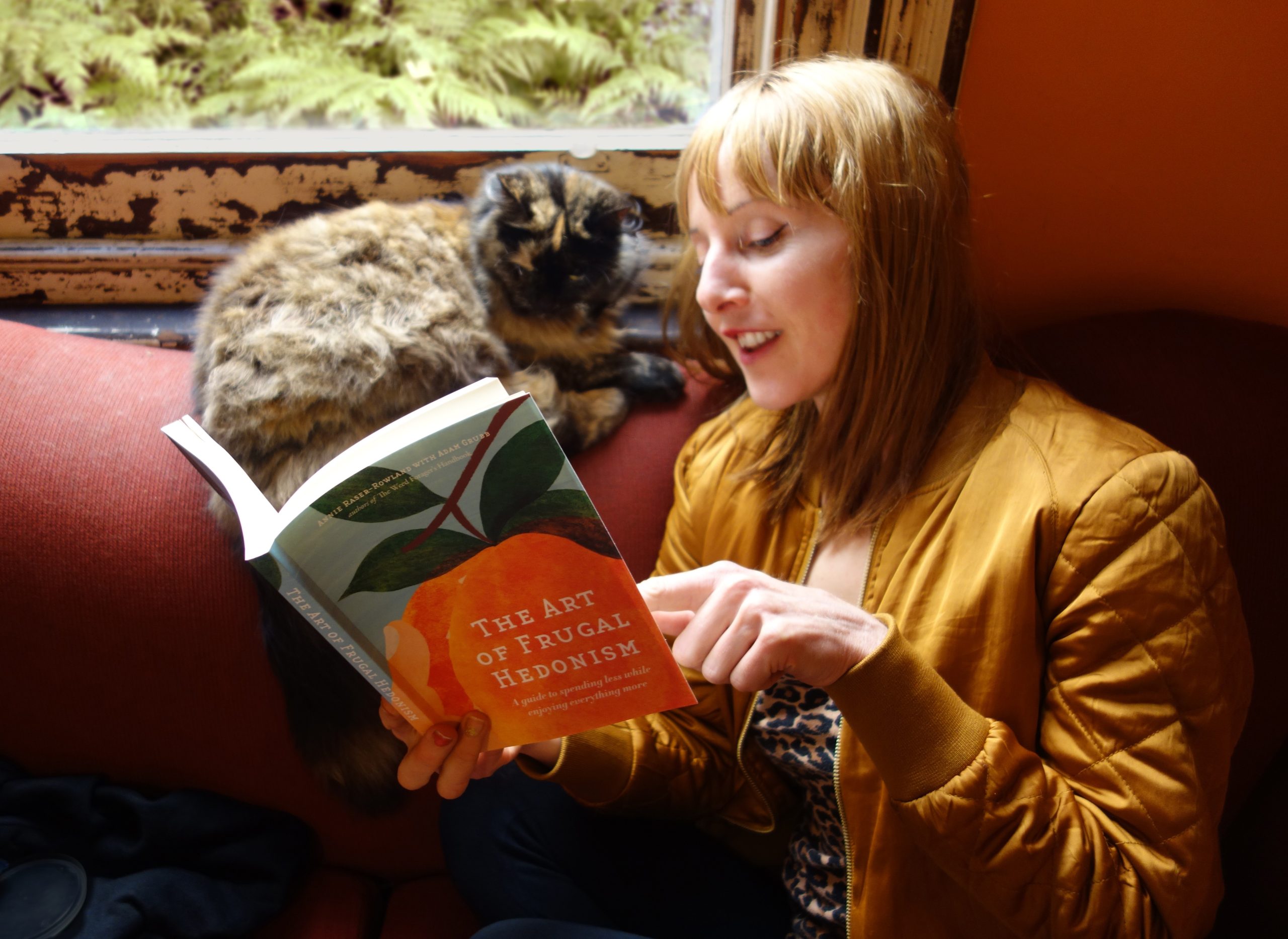
Annie Raser-Rowland is a Perth-based writer, horticulturalist, and artist, best known as the co-author of The Art of Frugal Hedonism: A Guide to Spending Less While Enjoying Everything More.
Her work explores how we can step off the cycle of constant consumption and instead build lives rich in time, connection, and everyday pleasure. Drawing on ideas from permaculture, simplicity, and creativity, Annie’s philosophy reframes frugality not as restriction, but as a pathway to greater freedom and joy.
Through her writing and lived experience, she offers a quietly radical perspective on what it means to live well — one that invites us to question what is truly enough, and how that shapes the way we move through life, loss, and ultimately, death.
Summary
What you’ll hear in this episode:
- What “frugal hedonism” actually looks like in everyday life
- Why consumption has become our default way of coping
- How reconnecting with nature changes how we see ourselves
- A different way to understand grief, death, and loss
- How thinking about death can actually help you live more fully
Transcript
Annie: That was something that I experienced after my dad's death is I felt euphoric for a while afterwards because I felt like my own sense of wanting to live such a good life that I could be okay with death had been strengthened, that I felt a renewed vigor. To live life to its fullest. 'cause it's like, look how close death can be. I really, really wanna live. And so I felt this kind of refreshed determination to live a really great life Catherine: Welcome to Don't Be Caught Dead, a podcast encouraging open conversations about dying and the death of a loved one. I'm your host, Catherin ... Read More
Annie: That was something that I experienced after my dad's death is I felt euphoric for a while afterwards because I felt like my own sense of wanting to live such a good life that I could be okay with death had been strengthened, that I felt a renewed vigor. To live life to its fullest. 'cause it's like, look how close death can be.
I really, really wanna live. And so I felt this kind of refreshed determination to live a really great life
Catherine: Welcome to Don't Be Caught Dead, a podcast encouraging open conversations about dying and the death of a loved one. I'm your host, Catherine Ashton, founder of Critical Info, and I'm helping to bring your stories of death back to life because while you may not be ready to die, at least you can be prepared.
Don't be caught dead. Acknowledges the lands of the Kulin nations and [00:01:00] recognizes their connection to land, sea, and community. We pay our respects to their elders past, present, and emerging, and extend that respect to all Aboriginal and Torres Strait Islander and First Nation peoples around the globe.
Catherine: Today I'm speaking with Annie Raser-Rowland. She is a Perth-based writer, horticulturalist, and artist, best known as the co-author of The Art of Frugal Hedonism, A Guide to Spending Less while Enjoying Everything More.
Her work explores how we can step off the cycle of constant consumption and instead build lives rich in time, connection, and everyday pleasure. Drawing on ideas from permaculture, simplicity and creativity. Annie's philosophy, reframes, frugality, not as restriction, but as a pathway to greater freedom and joy.
[00:02:00] Through her writing and lived experience, she offers a quietly radical perspective on what it means to live well. One that invites us to question what is truly enough and how that shapes the way we move through life loss and ultimately death. Thank you so much for being with us Annie.
Annie: It's the pleasure, Catherine.
Catherine: Now you know that I'm very excited to have you on because we have , the love of gardening in common. But for some of us who may not be aware of the term frugal hedonism, what does that look like in everyday life? I.
Annie: I mean, it's intentionally a little bit of a oxymoron. That was a, a clever hook in writing the book as people would be confused and go, that doesn't seem to make sense. But it is in fact entirely possible, and it essentially means living life to its fullest, but in a way that isn't based around material consumption.
So yes, you might be [00:03:00] physically stingy. But you do not scrimp on truly investing yourself in everything the world has to offer that isn't consumption based. So in real life, one of the first things that means is to not use consuming as your go-to, to fill emotional holes or even just to meet basic needs. There's chapters in the book on meeting needs via borrowing things from friends uh, having things like clothes swaps just realizing that maybe you don't even need that need, that thing you thought you needed. And on the more psychological level, it's about saying, I feel an urge to treat myself or to experience something novel or to. Um, Fulfill that very human need for curiosity and discovery. And the world of advertising campaigns is telling me that I [00:04:00] do that by trying a new restaurant or going to a new movie, or buying a fabulous new pair of pants, but I'm going to be clever enough to not be sucked in and realize that that urge for discovery and novelty and a treat can be fulfilled in other ways that have to do with. Maybe getting up before sunrise and walking through the night to your local park and listening to the night bird sounds, or just calling in sick and spending the whole day with your partner, snuggling in bed, reading to each other. That there's all sorts of forms of both restorative action and need fulfillment that don't have a consumption corridor behind them. And that's something that's actually just really hard to remember. Sometimes when we've got incredibly experienced psychologists designing the world of media that we are drenched in that says, [00:05:00] if you have a need or an urge or a sense of deficit, then buy something. And here's that thing. So it's partly about the fun just. Not feeling like a sucker, and the fun of being creative and finding other ways to scratch all those itches and feel needs. And it's about relying on other human beings more than we've often become comfortable with doing in modern life. We're really encouraged to have a mindset of the rugged individual, and I'm the king of my castle, and I fill all my needs myself. Whereas you kind of miss out on a lot of really great human interaction when you don't need to rely on other people for things and you don't need to borrow things and you don't need to share resources because you're trying to just buy everything that you need. In terms of actually buying stuff, it means sourcing most things secondhand when you do need them, which again often
leads to wonderful human interactions of the number of interesting people I've met. [00:06:00] Even if only for 10 minutes, picking something up from Facebook marketplace and the glimpses into other lives of, oh, look at these people who collect garden gnomes in their shed is full of all the ones that they're busy rotating through their garden as they sell me that beanbag or whatever it is that I've come to buy secondhand or chats with the old lady who's buying the counter in the country op shop that you pop into.
'cause you realize that the shirt that you've brought to go on that. Hiking trip is actually worn through enough that it's gonna burst under the arms and see happens the option, option to buy another one and get a whole history lesson on that town from that lady behind the counter. So it's about recognizing that even though it often seems like the shortest route to an end to buy something when you need it, that you actually circumvent a whole lot of other rich life experience by using that as the. Neatest easiest way to, to meet needs.
Catherine: And it sounds like it's based on a, a very much , [00:07:00] an old. Sort of principle of that community of knocking on your next door neighbor to actually borrow a cup of sugar.
Annie: Yeah, absolutely. And I mean, I don't have heaps in common with lots of my neighbors now that I live in quite a suburban part of town. I've always lived in a city and now I'm living in. It's definitely the burbs. But I have great relationships with all of them just in terms of they get bags of lemons and garden greens all through the year.
And so because I'm always offering them that stuff, then I feel really comfortable asking them if I do need to borrow anything because there's just that working relationship that I think. so impoverishing and so inconvenient not to have uh, I mean, you, you need someone to water your plants when you go away
and You need those relationships for just all of that really quotidian life stuff that we often forget is such a wonderful, [00:08:00] fundamental layer of human life and that we help each other fulfill in ways that no paid for service can do.
Catherine: And tell me, how did you come into be involved with this work, Annie? Like, it sounds like your work with permaculture and, and horticulture, was that the, the stepping stone that led you into this?
Annie: No um, probably the other way round. I was always
very materially conservative in that I hated waste. I was brought up with a single mom who really hated wastefulness and couldn't afford it, and had a real reverence for the value of material things and respecting them and looking after them and saying, isn't it wonderful that we've got this, these gorgeous soft armchairs that. We just got recovered at the Upholsters and all. They're so comfortable now and, and didn't buy things. Just we [00:09:00] never, it was never one of those households where there was just junk everywhere and constant stuff coming in and out the door from shops. It was sort of anything that was bought was considered and then looked after, and so I think I inherited that and it also gave me. The freedom to be able to save money from a pretty young age. 'cause I carried those habits through and I realized really quickly the advantages of that. Because while I had my terrible paychecks coming from all of my early jobs and so did all my friends, I seemed to be able to manage to save money from those paychecks to then take a trip overseas. If friends wanted to do that, they had to try and scrounge money from their parents or something, whereas I didn't need to do that. and so I kind of realized the power of being a low consumer quite early, and then as I became passionately, whereas a teenager of the ecological impacts of our consumption, [00:10:00] it just seemed like a no brainer to me. buy what you really needed and to really appreciate it. And it was that that then led me into becoming a gardener. 'cause I was like, well, the food systems that we rely on are pretty screwy. And to have really detrimental effects on the world. And also don't make us enjoy our food as much because we have no relationship with it. And so I wanted to learn how to grow my own food, and that then led me to training as a horticulturalist and led me naturally into permaculture. 'cause that was clearly something that made the most sense. I've never been a full blown permaculturist. I would call myself more a forager and a horticulturist. And I just feel like all of the arenas share the mindset of thinking about how goods get cycled and about their value, and [00:11:00] about not just thinking of ourselves as a dot point through which. Consumables funnel and then go to an invisible place. Coming from an invisible place, but have us thinking about ourselves as part of a big network, both socially and ecologically. And for me, that brings so much richness and joy. Like I'm in, I've chosen to live where I live 'cause I can live next to a huge reserve and a lake that's got thousands of migratory birds. I think as much about those birds and their lives and where they go, as I do about most human beings I know. That's just how I'm wired, is I don't have as stronger a preference for thinking dominantly about humans as compared to other life forms as a lot of people do. And I think that maybe just comes from being a kid who was very fascinated in the natural world and always had that encouraged. As for me, I'm. I'm a dot amongst many dots. I'm not a, [00:12:00] a single dot, as I said.
Catherine: And can you explain for people that may not be familiar with the difference between what horticulture is and what permaculture is?
Annie: Ah, sure. Permaculture is. Basically what lots of what lots of old blokes I've explained it to. It's just common sense really isn't it? Is what they'll say when you describe it. And funnily enough, they're usually saying that not to to kind of. Acknowledge it's worth but to sort of write it off. 'cause they're like, well what's the point?
That just sounds like common sense. But people need to reinvent systems that describe what common sense looks like again and again. 'cause we're really good at forgetting about it. 'cause we get swept away in the tides of cultural trends and so on. So Permaculture was a movement developed in the seventies by David Holmgren and Bill Mo was about tying together lots of design principles that affected both. The layout of a home and the layout of a garden. And in bigger picture [00:13:00] thinking the layout of entire systems within culture and society in terms of that sort of circulation of goods and energy. Um, So on the garden level, that looks like things like not sending all your green waste off the property, but composting it and feeding those nutrients back into the garden or orienting your house towards. , The right direction of the sun so that you're getting passive solar effects that keep the house cooler and summer and warmer in winter. And on the more social level, it involves things like looking at things you might not need in your household and sending them in the direction of that neighbor or organization that needs them rather than just chucking them out and sharing the labor. people within the community who might need help with that and forging relationships based around that stuff. So it's, it's essentially about looking at circularity of energy within [00:14:00] systems, whereas horticulture is. Growing things. Growing doesn't necessarily acknowledge that need for circularity to create a society.
Catherine: that's great. Thank you very much for making the, the differentiation between the two because not everyone's aware of, of the fact that it really is so much bigger. When you look at permaculture as an entire lifestyle, really, that impacts so many different aspects, not just the growing.
Annie: Yes. Yeah, Now you've commonly said that you feel at ease with your own death.
Catherine: Where do you think that comes from?
Annie: I don't know. I can speculate. It could just be partially hereditary and I think both my parents felt pretty easy about death. I think thinking about. Exactly what I just talked about. Cycling of energy within systems makes you feel more comfortable with death because [00:15:00] I, you know, to, to get biblical, I'm not religious, but from dust to dust, dust is not accurate.
Very, actually a very accurate word for it, because it's more from dirt to dirt. Because death contains living micro as dust doesn't, and my mother and her mother, Voya, was built out of foods that were grown in the earth and that's where all of the energy that formed her cells came from.
And I, when I die, will degrade and become worm food and food for micro astro pods and those microorganisms in the soil once again. And it just feels quite comfortable to me, that concept. I also think that reading quite a lot of history and historical novels in my formative years probably contributed because it's very clear as soon as you're reading books written or set in the. Medieval times, for example, that people had really different attitudes towards [00:16:00] death. I remember being very struck reading, I think it was um, Towers in the Mist by Elizabeth Goudge. I'm pretty sure that was the one where they're talking about at, in early centuries of Cambridge University, perhaps people putting on the annual Christmas play. And it was a huge event and it was just accepted that during the building of this massive stage and all of the contraptions used to create fake weather effects of storm and clouds that had like wheels underneath the stage that would cycle props through and let down big banners , to mimic water and rain, that several people would die during the production every year. I remember that really striking me as like a 9-year-old or whatever, reading that book that people used to just consider dying as a hazard. That was part of being a human going [00:17:00] about their daily business. Whereas I feel like we've set it into this really taboo category now of a sort of distance. Segregated unmentionable. Um, That only happens when things go wrong and the sense of death as being a wrongness is not something I've ever really felt. Death is a thing that can happen at any point in your life and that yes, most of us, would like to avoid under the latest possible point, but it is not wrong.
It's. Simply part and parcel. And you can pop off this model coil at any point in life, whether it's through falling down a trap door because you're building a really elaborate stage in Elizabeth sometimes, and there's no health and safety. Or because you're paleolithic and you are the person that gets pulled under the bison who says you're on a hunt. I don't [00:18:00] think any culture leading up to the one we currently exist in that has had such a potent sense of death as a wrongness, and I'm not sure it's served us well to develop that feeling. 'cause it makes it feel like this horrendous thing that we bridle at and go, oh no, death instead of, ah, death. Well, I missed that person, or I didn't want to die, but. That's what's happening to me now, and I think it it makes it less offensive to consider it very much part of life and part of that big energy cycling to sound a bit wary about it.
Catherine: No. Um, well, I like how you, you may refer to it as wie, but I'm, I'm right on your train right now because there's something must be about it, about when you talk about growing your own food and that connection and understanding about the fact that you are a dot that connects to other dots within a larger system.
And because it's a natural system and you have [00:19:00] that. connection to where your, you know, what plants you grow, what conscious decisions you make. Do you think that makes the concept of death less fearful because you view it as a natural part of, that cycle?
Annie: Bingo. Yeah,
Catherine: And so what has in your life, you have talked about the fact that you've experienced grief, but not in the same way others perhaps have. Would you feel comfortable sort of talking about that
Annie?
Annie: sure. Yeah. I'd say I've, I've got two different. of answers to that question. One is that I have noticed that when I've experienced grief on the level of a loved one dying my dad died when I was 23, which is quite young. He died from lung cancer. That I noticed that I didn't experience that grief in the same way that. many other people I'd witnessed experiencing grief did. And [00:20:00] I think it helps that he was really comfortable with the concept of death, death himself, and that that he chose to not spend his last months in hospital once he realized he was fully at a palliative stay as he moved back home and he died, you know. Lying on a bed covered in sheeps skins underneath beautiful Batiks with the, I actually did a painting about it after, after he died. The ENTs of so much life, thrumming around him. I could hear the ocean coming through the window on one side of the house, on the back side of the house. I could hear all these birds and insects humming in the garden and singing in the garden and. It just felt so not horrible that his body was slipping away to become part of all of that other life. yes, it was, you know, it was hard to see him there and the oxygen tanks and that his wheezing got closer and [00:21:00] closer together, and that he was waxy and yellow and I could. Sense that the life had really been leaving his body, and at the point where the breast started to get less and less frequent and more and more sort of strangled, it was time to just do nothing but hold his hand for as many hours a day as it took.
But it didn't feel horrible or terrible. It felt like. This is an animal body that's gotten a disease and it's lived a really full life. And now that life is ending and I'm really gonna miss him. Um, and I think if anything, I didn't feel apart from, you know, the wish initial ways of just natural release of emotion and sobbing and so on, I didn't feel grief. Any more strongly at that point than I have felt it in dribs and drabs over the years where it's just, I wish that person was still here to, have a conversation with or to [00:22:00] see who I am as a 33-year-old and then as a 43-year-old and soon as a 53-year-old. So it wasn't like death itself was the greatest source of grief.
It was only. The absence of that person. That's just been this ongoing little thread of, of grief. And he had lived a wonderful life and he may, if he hadn't lived the life he lived, he may not have died when he did. So that death was part of him having made whatever life decisions he had made, which were wonderful decisions 'cause they led to a wonderful life and. It just didn't feel like a terrible thing in any way. And I guess I've had the same response to my dog who I had for 17 years dying. I felt a lot of equanimity about that as well and continue to miss her, but in a similar way. And. I've had social acquaintances who aren't as close to [00:23:00] me, who've died often through suicide in the last several decades. And that's the greatest status there has been for their sadness and their sense of hopelessness, not, for the fact of death itself. And I've had a stepmother. Who half brought me up die in the last couple of months. And for me, the greatest status there was that she was in care for four years before she died.
And she was really unhappy in care and, but she, her condition wasn't such that she could offer voluntary assisted dying. That was the thing to grieve more than her death, I felt. So I don't, I, I don't know why I've emerged quite so immune to the, the really wracking sadness at actual death that so many people feel. Sometimes I feel like it is a cultural training and I see some people's grief. Where it feels quite clearly almost [00:24:00] performative to me, is that they feel like you are expected to feel dramatic about this, and so. That's what they do. And because lots of people I feel, don't feel like there's enough intensity of a passionate kind in their life, and so it is an opportunity to really feel intense.
'cause I think that can make us feel quite potent. And that was something that I experienced after my dad's death is if anything I felt. I mean, I almost feel like I should hesitate saying this 'cause it's so culturally unacceptable. But I felt euphoric for a while afterwards because I felt like my own sense of wanting to live such a good life that I could be okay with death had been strengthened, that I felt a renewed. Vigor to live life to its fullest. 'cause it's like, look how close death can be. I really, really wanna live. And so I felt this kind of enhanced determination, refreshed [00:25:00] determination to live a really great life that was quite a euphoric experience for me. And that started from the moment of like dancing at his funeral, like for five hours straight until I fell down with exhaustion.
'cause it was, it was a really joyous funeral. so the other thread of my answer to that question would be not about other people dying, but about grief for the, the other kinds of death that we experience in our own lives and. speaking to you and listening to a couple of your previous interviews um, I know you've had people talk about this on the podcast before, is the death of losing parts of yourself to limitation and chronic pain. And in my mid twenties I developed the beginnings of a connective tissue disorder that has continued to give me. Chronic pain and really limit my life quite, extremely in a lot of ways. [00:26:00] And it's an ongoing grieving process that I find really challenging to see the death of my capable and unlimited self. And because it's sort of degenerative, then I tend to just acquire. Fresh limitations every couple of years. And that then requires a lot of creativity to figure out how to feel like you're still living life to its fullest. And there's just a lot of things I will never be able to do again and simply can't do.
And I've had to accept that. And that's a, that's a really potent form of grief for someone who really does love life so much. I may never go overnight hiking again. I used to consider that be one of the things that, that define me 'cause I've got the ligaments in my feet are really shot. Carrying the weight of a backpack is, is just almost impossible.
And some weeks I can't even go for a walk for weeks on end because I've got so much
[00:27:00] problems with these, these floppy, connective tissues in my, my foot ligaments. Um, It causes me all sorts of other problems. Migraines that last a month on end are some of breathing issues.
Lots of digestive issues. So I can never eat out.
It's very hard for me to eat with other people if they haven't been briefed on my dietary requirements. There's lots of environments I can't go into because I get migraines from offgassing of. Various chemicals and paints and carpets and upholstery, all of that kind of thing. So it means that it's very hard for me to travel, and travel used to be one of the things that I love the most.
yeah. And in those increasing life limitations. I've actually found using the thought of death to be a very useful tool, which I don't know if I'd be able to do, if I wasn't quite at ease with it as a concept. [00:28:00] For example, when things are sometimes being really tough, I will ask myself. Well, you could be dead instead. I know this is a taboo sort of area to get into, but For me, it's a really useful tool as I say, well, would you prefer to be dead instead? And the answer is almost always no. Sometimes if I've had a migraine for three months, I'm like, I'm not sure. Because what you're always comparing your current restricted life to is a life of complete possibility. When you flip that and you compare it to nothing, then it allows you to see all the things that you can still do as being. Incredibly rich. And so I might be thinking, well, I hate that I can't go for long hikes anymore and overnight hiking trips, but I can still go to the ocean and swim every morning if I want to. And that's [00:29:00] so pleasurable and magical and. Even if I've had just horrible pain for three weeks, how would not that I believe in ghosts, but how would a ghost looking down on me, having this corporeal body that gets to experience things like pain, this ghost that doesn't exist in a corporeal way and has no sense of. The textural richness of being alive. How might that ghost view that pain? How would, how would a creature for whom absence is their whole world view, the presence of that pain? It's it's experiential. It's still part of the texture of being a living creature and thinking about how little I can do in the context of that pain in comparison to the idea of being dead. Suddenly frees up this permission to say, well, I don't have to keep trying to do my [00:30:00] regular life while having all this pain and pushing myself to do this and still achieve this and still have these relationships and still knock off this todo list if the, if the alternative is not that previous life that was available to me and a pain-free life, but if the alternative I'm comparing it to is death, then. Maybe I can lie here with this pain and just think about everything I've experienced in life so far. Or think about the insects that are on my ceiling, crawling around near the lampshade, or just go sit in the garden and go, okay, I am incredible pain and it's overwhelming. But this is a valid form of human existence.
This is, This is not a non-life compared to what I had. This is just a different strand of life that ties me into the experience of every other living organism that experiences pain at some [00:31:00] point. the presence of death as a concept to use as the foil rather than the perfect. Undisabled life to use as the foil sets you up for a very different set of interpretations of what the limited set of circumstances that I find myself in are. And there's been times when I've been so extreme with it that I've gone, well, if you haven't figured out how to be okay with having issues with walking intermittently within five years, You're allowed to kill yourself. And something about giving that permission says, well, that means I could kind of, compared to that, I could do anything in the intervening time. I could take up dressing in nothing but gold lame every day. See how that affects things? Will that make it so hilarious to be this person that has to hobble around sometimes and, can't do? all the things that they wanna do? Because I mean, if I'm gonna [00:32:00] die, I might as well do that, or the novel that I'm currently working on.
I actually kind of use this device for him where when he hits a really low point because I have given this novel a chronic illness, because it's, for me, it's been a really formative life experience and it's such an ingrained part of my life experience at this point. That's actually hard for me to intimately write a character that doesn't have that as a presence. Is that he reads about a character in a novel he's reading who just sits in a deck chair, a folding chair on a corner city block every day with a cheap bottle of lemonade and a packet of biscuits, and just sits there every day and talks to people all day long. if I can't do any of those other things I used to be able to do, and I'm thinking I might as well be dead because of that. That actually sounds like a pretty fun option. I could just go sit in a deck chair and talk to anyone that stops, who's passing by, who's willing to talk to this weirdo, sitting in a folding chair on the street corner with a home brand bowl of [00:33:00] lemonade and a packet of biscuits and keep them going all day. And what an interesting life that would be. And so I was sort of giving this character that same, Toolbox tool to respond to having limitations as I've found so useful. And that does include thinking about death as an option. And once you've got death there as an option, you work backwards from that and say, well, what does that mean for my options?
It really changes things. So I guess that's a slightly off track answer to,
Catherine: Oh, no, no, that's, that's not off track. That's great. what's interesting is
is how you've
reframed it. So if death is the worst case scenario. Anything back from that is a Yeah, absolutely.
think I think that that's a really interesting way to reframe it. And especially when you are dealing with a condition that's chronic that you have to manage.
Every day on an ongoing basis. [00:34:00] Like I think that that's a really good way to get through it and, cope with what you have to deal with. And, how much do you think that the fact that death isn't just a concept to you, the fact that you, earlier you very clearly described what it looked like when your dad was dying and how his, his
skin changed color, how his breathing changed.
Because that is what active dying looks like. And you have seen that in your
dad. Do you think that it means that when you talk
about death and you, you, you,
put that as the the end, end point,
you know what to picture? Does it make
it easier?
Annie: Yes, and I think that really helps. I mean. So the novel I just described, I have actually managed to finish, but the only book I've ever not managed to finish is a book that I started writing about, , human relationships to other animals. and unfortunately, this was [00:35:00] one of the chronic health limitations, is it took an enormous amount of research, and I really have to limit my computer time because of headache issues.
And I just had to acknowledge that book was never gonna happen. But I wrote a whole chapter in that book on how living side by side with other animals, which humans did more historically. Now basically we've got birds, or if you're in the countryside, you might be some have some livestock and some ruse around.
And you've got pets.
But lots of people don't even have exposure to any of those creatures. But all those animals have shorter life cycles than we do. So you get to experience them dying often, and giving birth in some cases, um,
Catherine: Hmm.
Annie: and having sex in some cases. And those are three things that
- Modern Western society, lots of us actually never see with our own eyes until we are doing them [00:36:00] ourselves. And that makes them inherently scary. And I remember watching my, half stepsister give a home birth twice as a little kid, and I think every child. Should ideally get to see a woman giving birth at some point because it takes the fear out of it.
I mean, famously, the whole reason that people have inherent racist tendencies is simply fear of the unknown there is no sure way to make something scary to us than to have us have no familiarity with it. Yes, I had that advantage of seeing a dead person at quite a young age, and I remember also being very struck by picking up dead birds on the street and having chickens that died and having several cats that died when I was young, and seeing that they lived life and then they became [00:37:00] this shape of cells that was no longer animate. Then we dig a hole in the garden and that would rot down and help feed the garden. And that was fine, even though you missed them. And I do think that there's, there's something really to be said for that visceral with The process and the visual component and the sensory component of death.
Um, the exposure makes it less scary.
Catherine: Because there is something to say about , that moment when, as you were saying it transforms from an animate object to a, a group of cells.
Annie: Yeah,
Catherine: there is something that happens in that space that you can clearly feel
Annie: there really is.
Yeah,
there's a moment. Yeah.
Catherine: And, I think that perhaps if you haven't experienced that, whether it be a person, whether it be an animal or a pet, [00:38:00] there is that
fear because
you, have all of these other connotations about what you think that it could be.
Annie: Yeah. And when you do get to witness, it feels really quite ordinary. it's just a thing that happens to everyone, to every living being, and I mean, I use. I guess other animals in a similar way to help with that grieving around the limitations of illness is that I never fail to, especially since foot problems have become part of my issues.
I never fail to see a three-legged dog having a great time galloping along and go. Oh, hello you. That that probably is giving you all sorts of horrible ache in your other hip and your lower back and so on. But it's not stopping you liking doing what you're still able to do. and in the same way when I see that, that magpie, that's obviously got a wing problem or something, I tap into that and I go, because you don't have all those [00:39:00] cultural connotations with this being a disaster. or maybe magpies do, I don't know, maybe there's a culture within magpies that does got very strong cultural aspects to them. But through my, my simplistic human viewing of it, I, I'm assuming that that magpie just goes, I had a wing that worked. Now I don't, that makes things harder, but I'm still gonna keep trying to eat.
Socialize with my friends and do these other things that being alive impels me to do. and I suppose this is actually just thinking back a bit, that what I was talking about was just thinking backwards from death is a little bit similar to what informed writing the art of frugal hedonism. In so far as it's placing the focus on what you have available to you rather than focusing on what you don't have. And it's that focusing on what you don't have that offering compels us to spend and consume [00:40:00] is because we have that deficit or insufficiency, scarcity mindset. Where we're always looking at what we could have but don't, and I feel like there's a lot of clear overlap with that conceptually with, with thinking about, well look at all these limitations I have and all these things I can't do, but thinking about, but there's so many things I still can do and look how wonderful so many of them are.
And that's what the three-legged dog is doing as far as.
Catherine: And I think also that what you were mentioning earlier, just when you were talking about the disconnect that we have , from death, it also reminds us about the work that you've done in our disconnect from.
our food and, and that life cycle and where the dots in the, world that we connect to because that disconnect happens when also you know, people don't know where their food comes from.
They're not aware of the life cycle. They're not aware of what, how milk is produced and what the process is around milk. [00:41:00] And, and so there is this disconnect and I think that, When I was hearing you speak, really highlighted that disconnect that we also have with death is that it is something that we are at arm's length from, or we don't have that personal experience from or limited
experience with.
So therefore it is that disconnect of trying to understand
what
this fear is about.
Annie: Yeah, absolutely. I mean, to think of yourself as the participant in Systems of Food in particular is, Is, a really obvious one. 'cause it's just a bit more tangible for most people I think. Is, such an enriching experience in terms of just being an eater apart from anything else. my co-author for The Art of Frugal Hedonism sort of talked about it in terms of a really nice analogy, which is. So imagine a specific guitar that someone's buying on eBay, for [00:42:00] example. I think eBay doesn't really exist as much anymore, but this was the example he gave at the time. And that make and model of guitar might be worth $450. But if you know that that guitar that you're buying was owned for three years by Jimi Hendrix. In the early years of his career and that he wrote this song and this song and this song on it and used it to perform his first series of gigs, that guitar is suddenly worth $35,000, probably more, $350,000.
It is Jimmy Hendrix, after all And the same thing applies to food to a lesser degree, is I'm sure we've all had the experience of, You put all this effort in to grow some potatoes in your garden and. Someone comes round to eat those potatoes with you, that you've, that are homegrown potatoes where, you know, you kept them [00:43:00] watered and you made sure that the eye was pointing up when you planted them and you felt the soil in your hands as you were bearing them.
And you looked at the different critters running around in the soil when you're doing that. And you saw them sprout, and then you felt your hand under the soil like, oh, they're ready. I can, I'm not digging them up, but I'm just having a little fondle down there in the soil. And he dug them off and he scrubbed them off And then he poured that scrubbing water off onto another plant that looked like it needed It And that for you sitting down to eat those potatoes is the Jimi Hendrix guitar experience. It is worth so much more. And the friend that's come round is just going, yeah. So anyway, it work today and eating the potatoes is just having the $350 guitar experience. And that's what we sort of deprive ourselves of when we don't have any of that connection to where our food has come from. And I think to view your own organism [00:44:00] as well as part of that big chain of actions and nutrients, gives you a different sense of your own organism as this thing that is. Kind of value added from all these backstory directions of like, well, I drank some milk today, as you say, and, that came from a cow that had been grazing on this kind of paddock.
And I can envisage that paddock and, and that cow's been sniffing the wind and it had a cough last year and, and it had these feelings about it. And I'm built out of. Something that contains all of those stories is helping to fuel my cells today. And that connection and having an awareness of that somehow makes it just less horrific to sort of then collapse back into all those systems. it's something that I think about in a looser way when. I think about not having [00:45:00] had kids. 'cause I know, I know for a lot of people that one of the ways they console themselves about dying is they say, but I've got my legacy in my children. And I partially didn't have kids because I started to have health problems about the point.
I would've been thinking about that and it felt like, I don't know if I'm actually gonna be able to. Do this well, 'cause what's hitting me is so overwhelming, but also because of ecological concerns is I was like, wow, we really, there's too many humans. that seems really clear. Um, maybe I shouldn't make another one just ' cause I kind of think it would be nice and I love kids.
Um, so that was quite a big decision for me. Like, I adore kids, but I don't feel any in. Elevated apprehension around leaving the world because I'm not leaving children there to continue on my lineage because to me, my lineage is both ideas and friendships and so on that I've [00:46:00] seeded through life. But is it also my return to the earth is that is my energetic. Like in sheer physics terms, that is my lineage, is the returning of all of the energy that has gone into me back into the earth to feed those microorganisms as I've talked about. But it's also not having a children for me, actually, I frame it as a, A gift of life to other non-human organisms is that if I'd had a kid or two kids, those kids would've drawn down phenomenal amounts of resources from the world.
'cause every human being does, and those resources would inevitably have had detrimental effects on the capacity for. Other life forms to continue making their own babies and breeding, because humans are just taking up more and more of the world. And [00:47:00] I know that this is stuff that makes a lot of people really uncomfortable, but I think it's, for me, it's been a really potent way to reframe not having kids is that it's not a, an anti-life stance.
It's a pro-life stance, just not human life. Is that I wanna give that opportunity for that little bit more of habitat to continue to exist an orangutan or a penguin or a brush tailed vasca gale or whatever it is. , By me not being a human who makes some more humans, that then take up that bit more of the world and bit more of the world's resources and destroy the habitats that all of that has the knock on effects of doing.
I allow for in those other arenas, and that feels like a nice legacy to lose.
Catherine: I think it's a beautiful legacy
to leave, Annie and I, I think it's a, a great way because to, to sort of talk about it because we all leave a footprint. Regardless of, of [00:48:00] how well , we try and be mindful of how , we live, we all leave a footprint so that I, that footprint does leave, have an impact and on all resources.
And so that is a very valid way to actually
talk about legacy. Uh, and I really appreciate you bringing that into the conversation.
Annie: Yeah, it's, it's something that. I know really does make lots of people uncomfortable, but I think it's simplistic and human centric the way that. Not having children has been framed as a sort of, an anti-life stance. Um, when I think you can really look at it in a different way.
Catherine: Yeah. And, and that is a, a really different perspective that people may not be aware of. So I, I think it's really fantastic that you've, you've added that to the conversation today. And do you think. How do you think if we were more present in life, and were more aware of that footprint that we do [00:49:00] lead , and where our dot connects with all of the other dots in systems,
do you think that we would actually feel a little bit different about how
we view death if we are more
aware of those dots?
Annie: I think it's almost inevitable. I mean. it's a cliche, but we're here for a, a good time, not a long time line. I think also really applies in the, the, the sense of you, feel present and you actively savoring each moment that comes your way, then. You don't feel like there's as much to be stolen from you by death, which I think is often what people feel is that I didn't do enough yet. And that the answer to that is, is, do enough. And that doesn't necessarily mean climbing Mount Everest and having a mind blowing career and eating beluga caviar and knocking off [00:50:00] your whole bucket list. it means. Feeling like you really are where you are and that you're noticing it and that you're participating, and you're not letting the moments just whisk by you.
It's a cliche, but it's a cliche because it's true.
Catherine: Yeah, and I think that it comes back to what you were saying earlier about those behaviors around like when we are grieving, you know, we have these expectations about what we should be feeling or how we should be behaving or, and it really is, it sounds to me that we are stripping away those shoulds Those boundaries that we put upon ourselves by, because I, I
like the idea of the
image of you, you, know,
running through
life, in your remaining years in a gold lame dress. You know, because you
can, if you
Annie: Me too. Yeah, absolutely. yeah. I think shoulds are one of the greatest evils to besmirch human culture. And the more of them you can chuck over your shoulder, the better. That's actually, [00:51:00] that's probably overseeing the case. 'cause I think there's a lot of ways in which shoulds can inform etiquette, which is something that develops to keep us kind and mindful and good to each other.
But there's a whole lot of shoulds that are, are very worth questioning and our attitudes to was death are definitely one of those. I mean, I have nothing against traumatic grieving if that's what people feel like they need to do, but if it gets people really stuck in a place of almost just unquestioned knee jerk horror and anguish, then I think it's, it's a really.
Useful thing to step back and go, is this a cultural performance to a degree, or is this and how I feel like I should be expected to be behaving right now? Or is this my genuine response to this moment? I thought when I sort of was witnessing all of the intense ritual that occurs around [00:52:00] funerals when the stepmother that I mentioned who died just a couple of months ago, is that the way we make funerals so complex and requires so much planning and organization is probably partly culturally evolved to give us. A framework of busyness that we need to perform that stops us just falling into a pit of grief because it's like, well, I need to be in contact with other people to do all this organizing. and every time you have contact with another human being, it helps you put a hard event, like a death into perspective and reminds you that there's other people with other lives.
And so you don't get. Too self-absorbed in your, your grief and that it gives you a reason to get out of bed in the morning. 'cause you've gotta make those phone calls to organize the funeral venue and whether there's going to be snacks or not. And that there can be aspects of our cultural response to death that are really adaptive like [00:53:00] that.
but I think the, the aspect that is the sort of fear and horror. It's not necessarily an adaptive one, and I think it's probably been born very much from how distance we've become from death as a comfortable concept that we, we don't witness, , the bodily form of or don't witness in animal form as we talked about.
Catherine: Annie, is there any sort of final thoughts you'd like to share with our audience
today?
Annie: I think we've pretty much covered it. Yeah. Good
chat.
Catherine: Well, I have had an absolute ball,
so thank you so much I've always wanted to have horticulture and permaculture and death all come
in, under the one
banner. And, and you've, you've been the first guests that I think we've successfully made it happen. Uh, so thank you.
Annie: Pleasure. Look, we managed to do it without even talking about mushroom uh, shrouds to compost you after you're gone, which would be the automatic sort of permaculture go to. [00:54:00] You can save that for when you, when you get the mushroom shroud person on.
Catherine: That's so true, Annie. Well, I can't thank you enough for your time today
Annie: It's been great. Thanks a lot Catherine.
We hope you enjoyed today's episode of Don't Be Caught Dead, brought to you by Critical Info. If you liked the episode, learn something new, or were touched by a story you heard, we'd love for you to let us know. Send us an email, even tell your friends, subscribe so you don't miss out on new episodes. If you can spare a few moments.
Please rate and review us as it helps other people to find the show. Are you dying to know more? Stay up to date with. Don't be caught dead by signing up to our newsletter and follow us on social media Head to Don't Be Caught dead.com for more information and loads of resources.
Read Less
Resources
Connect with Annie Raser-Rowland
Check out her book: The Art of Frugal Hedonism - https://frugalhedonism.com/
- Make Death Admin Easy with The Critical Info Platform
A simple system to sort your personal paperwork for when your information becomes critical.
- My Loved One Has Died, What Do I Do Now?
Our guide, ‘My Loved One Has Died, What Do I Do Now?’ provides practical steps for the hours and days after a loved one's death. Purchase it here.
- Support Services
If you're feeling overwhelmed by grief, find support through our resources and bereavement services here.
- Support the 'Don’t Be Caught Dead' podcast with a one-off or regular donation to help Critical Info, a certified social enterprise, keep creating free, high-impact conversations about death, grief and planning—every contribution fuels our mission to reduce the burden on families and build a more death-literate, compassionate community. Donate now.


Share