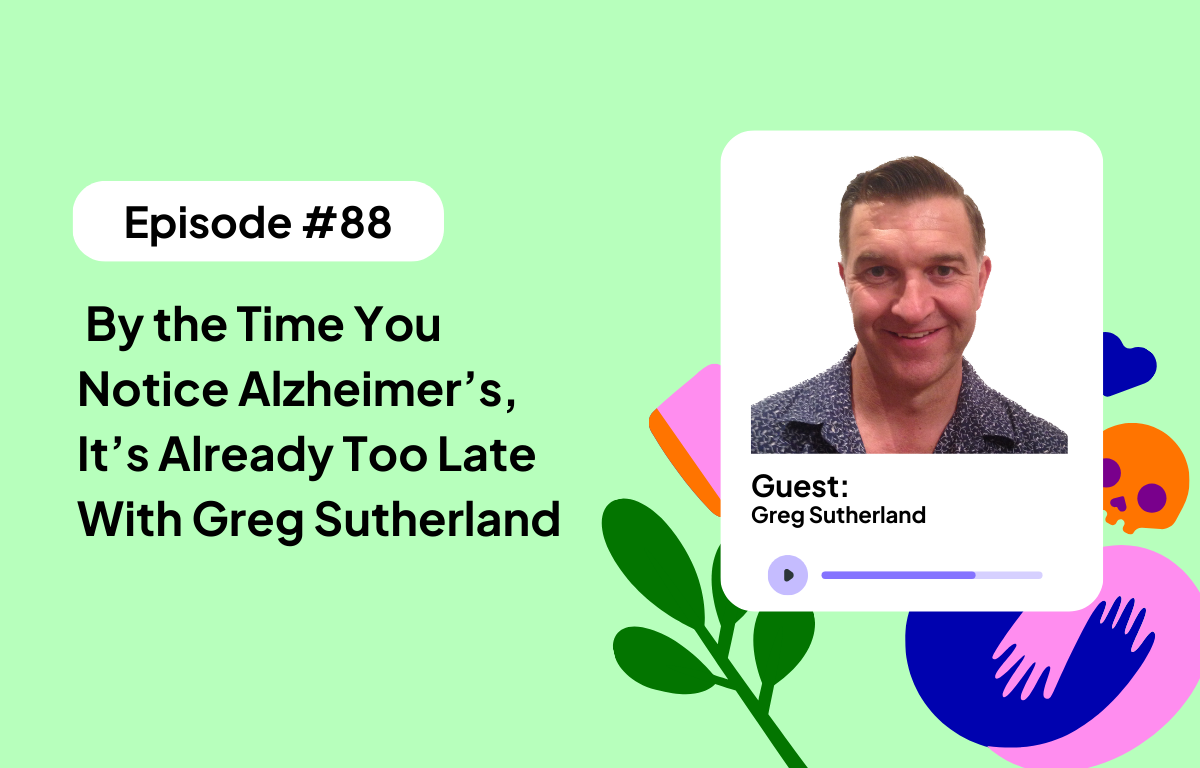




By the Time You Notice Alzheimer’s, It’s Already Too Late With Greg Sutherland



Listen now
About this episode
What happens to your brain after you die?
In this episode, I speak with Professor Greg Sutherland, Director of the New South Wales Brain Tissue Resource Centre. Greg leads one of Australia’s postmortem brain banks and works at the forefront of research into Alzheimer’s Disease and Alcohol Use Disorder.
We talk about what a Brain Bank really is and why human brain tissue is still essential in understanding diseases that have no cure. Greg explains why Alzheimer’s is so complex, why symptoms mean irreversible damage has already occurred, and why prevention may be our most powerful tool.
We also explore Alcohol Use Disorder — the stigma, the genetics, and why addiction cannot be reduced to willpower alone.
This conversation is about research, reality, and the role brain donation plays in shaping what the future of prevention might look like.
Remember; You may not be ready to die, but at least you can be prepared.
Take care,
Catherine
Show notes
Guest Bio
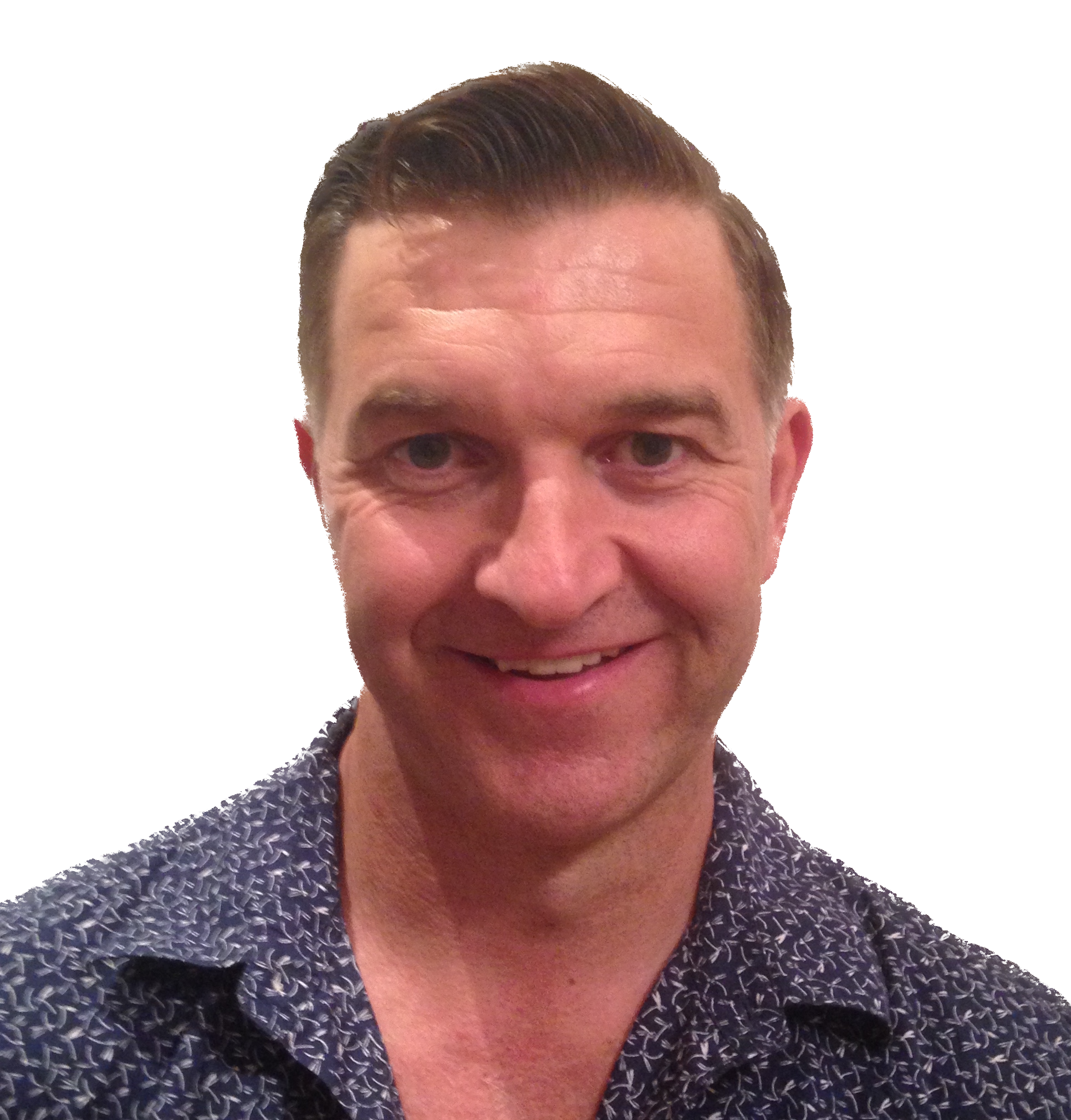
Professor of Molecular Neuropathology
Greg Sutherland is a Professor of Molecular Neuropathology within the Neuroscience theme at The University of Sydney’s School of Medical Sciences, based at the Charles Perkins Centre. He leads the Sydney Brainomics research group and is Director of the New South Wales Brain Tissue Resource Centre, one of four Australian human post-mortem brain banks.
Greg is also leading Brain Bank Connect, a new international initiative advancing collaboration in brain banking for rare brain diseases. His career spans postdoctoral appointments in Brisbane and Sydney, including roles at the Eskitis Institute (Griffith University), the Prince of Wales Medical Research Institute (now NeuRA), and the University of Sydney. He completed a PhD in Molecular Medicine at the University of Auckland in 2004, following 13 years in veterinary clinical practice and commercial genomics research.
Summary
What you’ll hear in this episode:
- Why Alzheimer’s symptoms appear only after significant and irreversible neuron loss
- How plaques, tangles and brain inflammation drive disease progression
- The biological complexity of alcohol use disorder beyond stigma and willpower
- The emerging role of genetics, epigenetics and precision prevention
- How postmortem brain donation directly advances future treatment and prevention strategies
Transcript
Greg: We are looking for these sort of early disease markets is because the symptoms of the disease, like the loss of short-term memory, which is associated largely with the loss of neurons in hippocampus, that's irreversible. So once you see symptoms with someone with Alzheimer's, even if it's the very mild form referred to as mild cognitive impairment, that's already lost a lot of the neurons. And in general, they cannot be replaced Catherine: Welcome to Don't Be Caught Dead, a podcast encouraging open conversations about dying and the death of a loved one. I'm your host, Catherine Ashto ... Read More
Greg: We are looking for these sort of early disease markets is because the symptoms of the disease, like the loss of short-term memory, which is associated largely with the loss of neurons in hippocampus, that's irreversible. So once you see symptoms with someone with Alzheimer's, even if it's the very mild form referred to as mild cognitive impairment, that's already lost a lot of the neurons.
And in general, they cannot be replaced
Catherine: Welcome to Don't Be Caught Dead, a podcast encouraging open conversations about dying and the death of a loved one. I'm your host, Catherine Ashton, founder of Critical Info, and I'm helping to bring your stories of death back to life because while you may not be ready to die, at least you can be prepared.
Don't be caught dead. Acknowledges the lands of the Kulin nations and recognizes their [00:01:00] connection to land, sea, and community. We pay our respects to their elders past, present, and emerging, and extend that respect to all Aboriginal and Torres Strait Islander and First Nation peoples around the globe.
Catherine: This morning I'm speaking with Greg Sutherland. Greg is a professor of molecular neuropathology within the neuroscience theme at the University of Sydney's School of Medical Sciences that is actually based at Charles Perkins Center. He leads Sydney Brainomics research Group and is director of the New South Wales Brain Tissue Resource Center, one of four Australian human postmortem brain banks.
Greg is also leading . Brain Bank Connect a new international initiative advancing collaboration in brain banking for rare brain [00:02:00] diseases. His career spans postdoctoral appointments in Brisbane and Sydney, including roles at the ESUs Institute at Griffith University, the Prince of Wales Medical Research Institute now NeuRA, and the University of Sydney.
He completed a PhD in molecular medicine at the University of Auckland in 2004, following 13 years in veterinary clinical practice and commercial genomics research. Thank you so much for being with us, Greg.
Greg: Thank you very much for the invitation, Catherine. it's very nice to speak to you.
Catherine: tell us, you head up the Brain bank, the postmortem brain bank. So with the New South Wales Brain Tissue Resource Center, what is a brain bank?
Greg: a brain bank is a facility that allows medical research to be carried out. We [00:03:00] use the term post-mortem because there's two types of brain banking, one of them that is mainly associated with research and cancer and relies on surgical biopsies.
And then the other type of brain banking is relying on people's brain after their death. So IE post-mortem. And that's for looking at diseases most commonly like Alzheimer's disease and Parkinson's disease where we are not in a position to. Understand the disease, also confirm the disease until the person has died. And so a postmortem brain bank signs up people with a disease, or in our case also people without diseases. And then we collect those brains and provide tissue from both people with a disease and controls to researchers around the world so they can do comparative studies to try to understand what is happening with that particular particular disease.
Catherine: And so when you, you're saying that [00:04:00] something that I think of is a lot in the media, the coverage about footballers with brain injury is, is that
Greg: yes. That is certainly within the realms of, of brain banking. And in fact, there is a there's two brain banks that have collections of chronic traumatic encephalopathy. And the major one being the Australian Sports Brain Bank. It's run by a neuropathologist Dr. Michael Bucklin, and, and that's got an association with the University of Sydney as we do ourselves. It's not a focus of, of, my bank, but it's certainly of interest to a country like Australia so many sort of sports that could potentially result in. Chronic traumatic and phalopathy. Just quickly talking about that disease, it's thought that repetitive mild trauma over a period of time can create in the brain a situation, not unlike what we see in Alzheimer's disease. And the commonality is that one of the hallmark [00:05:00] pathologies of Alzheimer's called tangles also develops in chronic traumatic and phalopathy. And so there's a lot of work that goes on trying to, you know, both understand that and whether there's common mechanisms with Alzheimer's disease. But my Dr.
Buckland's group over with the Royal Prince Alfred Hospital, which is next to the University of Sydney, they're doing a lot of world class work in that area.
Catherine: And so can you explain so that that's one brain bank and there there's four different in Australia. Is it because the different areas of specialty? If you can just talk through to someone who doesn't understand the the differences,
that'd be great.
Greg: yeah. Well, brain banks often, you know, there's a number of ways that , they develop , and probably the most common one is where a pathologist, as I was speaking about, talked to Bucklin, develops an interest in a particular area or sees an issue. And wants to set up their own research program in the case of the, brain Tissue Resource Center, which is a bit of a [00:06:00] mouthful.
So I'll
Catherine: That it is.
Greg: abbreviate. Abbreviated to BTRC that was set up by another neuropathologist called Clive Harper around about or in the late nineties his interest was actually in a disease called Benicky and Phalopathy. This is a disease of thiamine deficiency or Vitamin B one deficiency.
But at the time people who had they used a term alcoholism, or today we call it alcohol use disorder, they were very prone to getting thiamine deficiency. and with that thiamine deficiency, they would develop this, disease called Wernicke's encephalopathy which had these unique sort of features including changes in that people's visual, awareness amongst other things, but also in a chronic form it could develop in something called Korsakoff's psychosis. Korsakoff's psychosis was one of those psychology textbook diseases. 'cause the people not only lost their ingrade memory or, or developing new memories as, as we see in, [00:07:00] in Alzheimer's disease, but also their retrograde memories. and that was a permanent state.
So it was a very rare disease, but it was , of interest to people because it happened in alcohol, related alcoholics in Australia in the eighties. Clive started working with people who had histories of alcohol but never suffered with Wernicke Now in 1991, thiamine and, and a number of other, nutrients or, or vitamins like folate were actually added to baking flour in Australia and. Clive was involved in advocating for that edition, and so Wernicke's encephalopathy , stopped being a major problem amongst alcoholics. Having said that, Clive continued to work on, the direct effects of alcohol on the brain, and so his work sort of transitioned to alcohol use disorder. There is an organization in America part of the, national Institutes of Health called the National Institute of Alcohol Abuse and Alcoholism, [00:08:00] and they got word of client's work and, and started funding it. And 30 years later we are still supported by the NI AAA to supply to a research community of about 3000 researchers around the world and largely in America. Tissue from alcohol use disorder persons, and also controls. And that's. Really, essentially what we do, that's our major focus as a bank. So there's a lot of kind of, I suppose, serendipity about how banks start. The two other banks have similar, stories. They, they've both started where neuro either a neuropathologist or a scientist has had an interest in a particular area. And in the case of the one at Neuro that you talked about in your introduction, they have very close associations with various clinicians who run referral clinics. One of their diseases that they concentrate on is [00:09:00] called frontotemporal dementia. And their role or one of their roles is to diagnose after the death of some patients, to confirm that what the clinicians felt was the, the problem was actually the problem.
And often it is, but occasionally they actually find that someone who may be presented with this different form of dementia actually may have had ad pathology. So occasionally we do find that postmortem confirmation is, giving us a lot of information that otherwise, if the person hadn't have come to autopsy, they would've been declared and the, clinicians would've considered that they had this particular disease and might've treated them in a, in a totally different way. on that point, and just quickly to make it with treatment that's still, in many cases, frontotemporal, dementia, Alzheimer's disease, to, to some extent, we do not have great treatment. So the motivation largely for working with these brain tissues is to find what is going wrong with a view to then being [00:10:00] able to design treatments that actually can stop slow or even cure these diseases.
Catherine: this is going to be quite, quite the conversation, Greg. I can feel, but I, I, I'm just wanting to go back for a moment to 1991 when you were talking about how additives were added into baking powder. Just
Greg: flour. Yeah. Making, making flour. So just, just how, I suppose, you know, widespread it is in, different food stuffs and that type of thing, That along with things like folate we're able to, you know be increased. And I wish I, it would actually be good if you were talking to Clive, but I, and I shouldn't speak too too much, as an expert on this area, but that's my understanding. As soon as that was added, we did see a relatively rare disease become incredibly uncommon. Wernicke's encephalopathy still occasionally happens. It is still seen in, people who may be on [00:11:00] extreme forms of chemotherapy where they are a metic or wanting to vomit most of the time. And so actually develop malnutrition that way and occasionally and and unfortunately with anorexia and nervosa, so it's not. A condition that has been completely lost, but at least in the realm of, of alcohol use disorder we don't see so much of it anymore.
Catherine: and that's through that simple additive into flour that people use every day. Like
Greg: yeah.
Catherine: the sort of things 'cause, 'cause sometimes for someone to understand who's outside this world it's really good to sort of, when you are thinking about the work that you do, Greg, what are the sort of things that you are hoping to understand better?
Greg: Well, I think, ultimately what most people get drawn into research and, and some of us have started life as doctors and some of us have started life as non-human doctors. I think there's, there's two [00:12:00] aspects scientist. One is a, an inherent curiosity. And the other thing is really wanting to help people.
And in some ways, having the training that you have with medical training is you kind of have an understanding of, well, you think you have an understanding of physiology and then pathology or the normal and abnormal, and you feel, well, in my case, drawn to, well, I've probably got the training, can I make a contribution to diseases that you know, affect mankind and and can help people. And so you get into it for those reasons. And then it's, in some ways it might be rose tinted glasses because it almost invariably any, any disease we haven't solved yet is quite complex, particularly the non-communicable, diseases, which are the major problems in Australia. It's, you know, I'm thinking of things like obesity and the associated things like diabetes and Alzheimer's disease is a very good case with something that I'm interested in. with Alzheimer's, most people who [00:13:00] developed their disease are in their eighth or ninth decade, so it's a very slow developing disease. And what that means is that it is highly possible that something extremely subtle is going wrong over a long period of time. And that is quite hard to try and work out, but also , to model. And so looking into some of these diseases becomes a very much like a detectives story. And that kind of, I draw a comparison with, with a recent infectious disease like COVID, where we very much knew what the problem was and. We were able to no way including myself, but the biomedical community, including big companies like Pfizer, Moderna, et cetera, were able to fast track their research and develop a solution for that particular problem. That's when you know what the problem is when it comes to Alzheimer's disease. We don't know what the problem is. A lot of my work is, is trying to, trying to work that [00:14:00] out. Alcohol and the effects of alcohol in the brain is something quite different because we know exactly what the problem is. But the biggest question in alcohol use disorder is if two people start drinking socially, perhaps in their late, teens or early twenties, one person remains a social drinker their whole life and the other person goes on to suffer from addiction to alcohol, and they really want to try and understand what is it about that particular person. And I suppose the contribution that we make is to concentrate on areas that we refer to generally as the reward pathway and look at them in, greater detail to say, okay, is there clues to why this person is developing alcohol addiction? But of course, our, um, relationship, and I mean that from a societal point of view with alcohol is a very complex one. yes, there are the downsides of it, but there's also the, you know, what many people would consider positive sides, the idea of of being a social lubricant. So in that way [00:15:00] it, it's not only just a medical issue or whatever, it's actually quite a social and societal issue and, and becomes quite difficult for someone with my skillset, which is very much in the medical to just, you know, to work on that problem.
It's, is not something that I can solve by myself. I can only really contribute to it.
Catherine: And what made you do the shift? So you, you started off in, in veterinary science and now you've, you know, switched over to a very different field. Was there one particular incident that, that made you think? I, I think I need to talk about people more and focus
on that.
Greg: so probably not one particular thing I, grew up on a farming community and,, the type, if you did have, if you were scholastically inclined, kind of the, epitome of, of what you could do was probably be a veterinarian.
And we, we were a horse farming family and the veterinarian had come along and that was kind of what you would aspire to. And I [00:16:00] think that's what got me into veterinary science at the moment. I think two issues. You have your professional challenges and you have your intellectual challenges in veterinary science.
But back in the day, your business challenges , were much more kind of for a private practitioner like me, those were the major problems. And trying to get a a business off the ground , was pretty tough, particularly in the, in the horse industry. I think the other thing too that I remember is that more laterally, I was a small animal practitioner and I had a lady come, come in with a, a little puppy it was a, a sharp, sharp hay. So the old Rollie, the toilet paper
dog, it was a lovely little animal. And she put it down there and then we started talking and what a, she was motivated and then she broke into tears and it turned out that she had just had a stillborn child and this was a present from her husband as a, as a way of trying to make up for the, for the situation. it should have occurred to me a lot before that. But I saw in her just the absolute devastation. And it [00:17:00] started, made me feel, well, I really had a more of a, an interest in the people , than the animals. Not that I wasn't interested in the animals. and then a friend of mine was listening in on who came to visit me and was listening in on a consultation and an ex, and he said that was like, I was at a, a psychologist's office rather than a, a veterinary office we got.
And, and I said, so those of things really made me make a change. I mean, people said to me, oh, you are always asking questions. You might, why don't you go into research? And I started in veterinary research, but as it turned out, I was back in New Zealand at the time and in Auckland, and we didn't have a veterinary school there.
So I went along to do, master's training at the University of Auckland. And on my first lecture that I went to when I started a master's, I had a gentleman called Russell Snell. And Russell had just returned as a welcome scholar, kind of the highest uh, type of research honor you can get at least in, in the uk. And he'd come back to [00:18:00] New Zealand and he gave me my, this first lecture. And I can honestly say, apart from when he said what his name was, that I understood absolutely nothing that he talked about for the whole 60 minutes. So I thought, well, if I don't understand this, I better, I'm not going to get through this course.
So I went and knocked on his door and I said, could I do a project with him admitting I knew nothing about what he was talking about? And as things turned out, I actually ended up doing a PhD with him. was one of the people who were on the initial consortium who found the Huntington's disease gene back in 1993. And. Having solved one of those, problems. He decided he wanted to turn his attention to Alzheimer's disease. So I was kind of his Guinea pig for that. And that started my lifelong interest in Alzheimer's disease. And we've actually started working together again after, you know, 25 years down the track.
So if there is enough time, I can tell you a little bit about that project. So that was a very long answer [00:19:00] to your question, you know, how did I
transition?
Catherine: I, I, I love it Now, and tell me what is it that you've been trying to find out about Alzheimer's disease? What makes it so tricky?
Greg: well, so for a long time now, the, the, well, the disease was originally what was described in the, in the early 19 hundreds. By, Alzheimer and. Named after, him. At that stage, the, the disease was thought to be distinct from what was the more common form of senile dementia. That a lot of people just got old. And that's what happened when you, when you got old. And then in the 1980s they kind of put Alzheimer's disease and senile dementia together and said, no, hang on. This is not just a result of aging. This is actually a disease. Alzheimer himself, although not the first to describe plaques, was the first to describe a, a different form of pathology called tangles and bring those two things together. And then in the eighties and the nineties, [00:20:00] people started looking at, well, what makes up these tangles? What makes up these plaques? And what they realized was the plaques was made up of a substance called beta amyloid. Once they discovered that, and one of the, the key people involved in that was an Australian called Colin Masters, who's, who's still uh, a professor down in the Flory Institute and or the University of Melbourne. And once we had that little bit of information, then we started looking for genes that may have, you know, there might have been genetic forms of the disease, which they started , to find. And that led a gentleman called now Sir John Hardy, who's at the moment based in London, to say that the buildup of amyloid was the start of these particular diseases.
And it set various researchers on the track of trying to use antibodies and to stop the buildup of amyloid and what you might have seen in the last two or three years with the TGA Allowing these drugs to be used is, is antibodies [00:21:00] against the amyloid and Alzheimer's disease and that this is the latest kind of treatment that's being used.
The problem is that it's ability to slow down dementia is, minimal to moderate. And so everyone, including myself, are looking around and going, well, here's our most obvious thing. We've treated it. It's not as effective as what we thought. What else is there? And so other things that we're looking at as the, as the tangles and how the tangles form and maybe how amyloid forms it tangles, but also the inflammation that happens in the brain in a particular cell type called microglia. Because the genetics tell us that a lot of the smaller effects that we, that we see from genetics are associated with proteins that are produced by microglia. So my lab looks a lot at the microglia, and our hope would be that down the track, someone with the disease would have these amyloid treatments plus a treatment to [00:22:00] dampen the inflammation and maybe a treatment to slow the tau aspect.
And so almost have three treatments in one, the sort of idea of polypharmacy for for the disease to slow it from what the amyloid treatments do at the moment, which is around about 27% to slowing it to 60 or 70%. That would be the idea.
Catherine: And so when you refer to plaques and tangles, just for someone who's perhaps unfamiliar with, what is the impact of that on the brain structure?
Greg: yes. So if you were looking down the microscope and you decided that you looked at the main part of , our brain, or we call the four brain or the cerebra, and you looked at it down the microscope, you would see in, in the, in the gray matter, there's six, layers. And if you've turned up your microscope a little bit more, you'll see all different site new cells in there.
And, and the ones that really catch your eye are the neurons. If I was to look down that microscope in someone with Alzheimer's [00:23:00] disease, a lot of those neurons. Would be space and where that space was, there would be these large sort of clumps, almost like Bird Nest, and those are made up of, or primarily made up of these beta amyloid and beta amyloid are these peptides or proteins that stick to themselves and become very sticky. And as they grow and grow and grow, they stick to just about everything around them. The tangles are what happens in the residual neurons or the surviving neurons. We don't quite know why it happens, but we think because they're adjacent to where this amyloid is building up or they're affected by the amyloid, they start undergoing a process where a protein in them called tau decides to stop doing its normal function and also very similar to the amyloid. outside the neurons, it starts sticking to itself and sticks to itself more. And then over the period [00:24:00] of time, it actually creates a bird's nest within the neuron, which stops being able to function and then dies itself to leave the tangles left in the, in the brain. So when someone looks down the brain, they see plaques and they see tangles, the tangles themselves reflecting that the, the neurons , are no longer there, but the plaques are the most obvious thing that , we see, and therefore we refer to them in combination because their combination is quite unique to Alzheimer's disease.
We do see tangles in different diseases, and one of them a variation on tangles with what, where we opened the conversation when we talked about chronic traumatic encephalopathy or CCTE, but the, that combination is what we would refer to as mnemonic or hallmark of Alzheimer's. So to diagnose someone after their death with Alzheimer's disease, we go in and we count the number of plaques and the number of tangles. The reason we do that is because even people who are not demented, if [00:25:00] they live to a ripe old age, they're almost certainly in in some areas of their brain, have tangles and often will have plaques. So it's you, and that's where it makes it very difficult because you're not talking of absolute differences.
You're actually talking about sort of probability. So we go in and we say, oh, this person's got this much more tangles and more plaques than we'd expect for their age. Therefore, they're very likely to have died from Alzheimer's disease if they were demented before they died. So it's the combination of having dementia and then looking at the pathology that sort of confirms that they've got Alzheimer's disease rather than a different type of
dementia.
Marker
Catherine: And when you are referring to sort of like the three-pronged approach, that would be the ideal. This being able to look at, I'm assuming more brains and gather more data would give you a better case for actually treating it in a more comprehensive manner [00:26:00] and, and you know, sort of shifting it from a 27% of just a pharmaceutical kind of option right now.
Greg: yeah, one thing to say is, that adult autopsies anywhere in the world, but particularly in Australia, are becoming quite uncommon. Also, we, usually use the term postmortem man examination. So, so we don't see the vast majority of people who are demented, but of the people we do see that those plaques and tangles. And the patterns are actually quite varied. And the idea there is that there's probably a, a number we use when we talk about a disease. We use this term phenotype and there's probably a number of sub phenotypes or different types of, Alzheimer's and they might not all be treated by that three-prong attack, or they may need variations in the doses.
One might need something that's gonna knock down the towel. One needs more of what's gonna knock down the amyloid. So that's one of the motivations. I suppose the other motivation is that to [00:27:00] study the brain, this is the Alzheimer's disease is really unique to humans. We do have other animal species, including dogs, if they live to a ripe old age that can develop a form that's reasonably similar, but in general, there's no other animal that develops this disease spontaneously.
So there is. A very good reason to look at the brain. To understand the disease. The other thing is that our brain is quite unique in, in how it is processing our world. We are the only animal that I know of that has got such a, you know, we've got a, our own sense, the idea of, of our self-esteem or our awareness of time and space.
And we, we spend a lot of our brain power working on our social interactions and how we are the idea of are we trucking, right? and to do that we use very old, evolutionary old parts of the brain that other animals are not using. So why things [00:28:00] happen in the human brain and, and these unique diseases may never be able to be a, you know developed animal models. Even though we try very hard. So those are the couple of the motivations for getting the actual tissue. Now, some of your viewers and, and some of my colleagues would argue, well, if you are a postmortem brain bank, you're only seeing the disease after it's happened. How can that be useful to you?
Aren't you better to use an animal model where you might have put in a mutation that you know happens to cause Alzheimer's disease? So you recreated in an animal model and then you can terminate those animals at different times and sort of work out how the disease progresses over time, or that is, that's entirely true.
And so one of the ways that we try to handle brain tissue, particularly with a disease like Alzheimer's, is because there is a predictable spread of the disease through the brain. What we do is we tie it put to one side the most severely affected areas of [00:29:00] the brain, like the hippocampus, and we say, well look. We would love to be able to study the hippocampus, but the neurons that we are really interested in the most susceptible to the disease have already gone. So we can't study what's not there. but because the disease spreads through the brain at postmortem, there's still areas that have most of their neurons still intact.
So what my theory or my group's theory is, is that if we look at those areas and we see the plaques and the tangles, but the neurons are still there, and we go and have a look at the neurons and we say, how are you reacting to these plaques and, and entangles? And we find what they're doing and we say, okay, now do we have to ameliorate or do we have to attenuate that process?
I do. We have to improve it because it's, it's resisting. Those processes happening around it? Or is it part of those processes? And that can be a little bit tricky, but by finding that what's happening in those cells, what we're trying to do is to say, [00:30:00] is this process still reversible? And we hope it is because we know the neurons are there. And then if we can, for example, increase that process, we can make those neurons more resistant. The reason I mention the fact that we are looking for these sort of early disease markers is because the symptoms of the disease, like the loss of short-term memory, which is associated largely with the loss of neurons in the hippocampus, that's irreversible. So once you see symptoms with someone with Alzheimer's, even if it's the very mild form, which is referred to as mild cognitive impairment, that's already lost a lot of the neurons and in general, they cannot be replaced. So a lot of the efforts we make and how we use the tissue is to try to. Find a way of modeling the very earliest types of the disease we can, there's other diseases which we do not have that predictable spread, so it makes it a little bit more difficult.
You are looking back in time and trying to [00:31:00] think, you know, has, is this an important process? But AD is a, is a little bit unique in that there is this very predictable spread. So it allows us to do this type of pseudo chronological modeling.
Catherine: And tell me, you were talking about alcohol use disorder. How is it different in that case? What do you look for when you, you are looking for that or how do we improve that?
Greg: that's a great question. So now this is where for someone like me who's a neuropathologist, it's a lot more difficult because now we don't have. Kind of positive entities like plaques and tangles. What we have is actually a loss of cells or much more subtle changes of cells.
So when you look down the microscope, or even before looking down the microscope, if you took out a brain from someone who has suffered from alcohol use disorder during their life, it would be unlikely that you could tell the difference with someone who has had no neurological disorder.
So there's no gross changes in the brains to a large effect. And if [00:32:00] they have not suffered from a condition like benicky and phalopathy, there's no real obvious things when you start looking by opening the brain up and doing a postmortem examination. Once you look down on the microscope, there are subtle changes, but even most recently where we've done counts across the brain, there's no obvious changes in. Neurons, for example, which may come as a surprise to people. What we do see, and I'll talk about one type of cell because I mentioned it before, the microglia, they for want of a better word, quite, quite angry. And it's likely that microglia are responding to either the stress of other cells around them or by responding, they're actually causing stress to other cells around 'em.
So we think they're a key problem in what happens to, to people's brain, but it is a much more subtle process than going on. even though some of these people drink an enormous amount of, of alcohol on a daily basis it remains a [00:33:00] very subtle process. And so we are now developing the tools where we can actually using microscopes, get down to a level where we're starting to understand. What's happening a little bit better. And that's one of the real interesting things of being in this field at the moment because our tools are, are really exciting to use.
Catherine: And tell me how important is it in this sort of study to actually have that sort of history of the patient? You know that that coincides with what you're also getting. So is it when you're looking for someone or someone's brain is it someone who is just your everyday person? Is it someone who has a rich long medical file?
What is it that you in particular look for?
Greg: I think it, it's quite useful here in answering your question to talk about the two models of brain banks. I mentioned the one that's at, also in Sydney over at Nura. They're [00:34:00] associated with these tertiary referral clinics. So typically someone might be worried about if we look at dementia or might be worried about changes in personality or changes in their memory, they'll go in, there may be a, predictive diagnosis of frontotemporal dementia, for example.
And that person might be followed for three or four or five years remembering that the duration of disease is quite long in these conditions. And so you have this before their death. There is very for that period of time. Concentrated and very specific information on that particular person and also on other individuals who may be there.
And they're all sort of standardized and they would've had MRIs and that, so when they come through to postmortem will come through to the brain bank. There's a lot of clinical data
on them. Our model is almost the opposite of that. Someone who has had alcohol use disorder, let's use the term stigmatized disease, but they may have not wanted to admit to themselves and definitely maybe not admit to their [00:35:00] families that they have this particular, problem.
It is a, a disease that can be controlled over a long period of time. And then there might be stress or trauma in the family. And then , this idea of on and off the wagon and that type of stuff. So, so it's not a disease that you get and then you carry on with it. This addiction, it's, it's one that you fight your whole life. And, one of the. Ways that we, in the past where we used to get individuals with alcohol use disorder were, were unfortunate members who, who were maybe isolated at home and been found dead at home. And then when they went through into the coronial system, it became obvious, or it might've been obvious at the scene of their death that there was alcohol involved.
And then what we did at that stage is that we were able to because there, the coroner would have their social workers and the social workers associated with forensic medicine department in New South Wales would have a conversation with people and say, look if it [00:36:00] suits you at all or have a think about this as a family, would you consider, that organs could be made available for two things, disease modifying organ donation, Or research. And there were other people also interested in research and I can mention the, the, the for eyes and
corneas and that type of stuff. But when it came to us, we, you know, it was very, it was a critical way that we used to get these people with a history of alcohol use disorder and some of them had, you know, used to drink a huge amount now going forward for a number of reasons.
And one of them being the ideas around consent changes in the, in forensics and, and systems and changes in the way coroners view arriving at causes of death. Lots of things that this ability to do what we would call a retrospective consent is, is not that common anymore. And so we've had to be motivated to go out to the community and say to people, Hey, if you've [00:37:00] got had any. History with, drinking or difficulties with drinking in that, would you be interested in being a brain donor? And it, it's proving to be one of the greatest challenges I've ever had in, you know, in my, in my career because it's not something that people wanna own up to. I mean, just as another example we talked about perhaps many people might keep it on the low down. One of the requirements that we have when signing someone up as a, as a donor is that their family is supportive of that. It's not a game changer, but it generally is the way we play things. And so, but people might want think, well, I don't want anyone else to know about this particular situation. And then with alcohol use disorder, is it a disease? Is it not a disease? and the general stigmatization of it, you know, as opposed to someone with say MND, which is in the news quite, that's motor neuron disease. the thinking behind the decision to donate one's brain is, well, if I can't be saved myself in [00:38:00] my lifetime, I'm going to contribute to the next generation able to be saved.
So it's a whereas with, with alcohol, it's, it's kind of slightly different. I'm a bit embarrassed about this situation that, , you know, I've become addicted to this , and I'd rather keep it on, you know, on the lowdown, slightly off topic, but you wanted to be, come back to the clinical information.
So then what we had to do, if it was a retrospective consenting for a case that had been through the coronial system, we would then ask the next of kin, do you mind or give us permission to go back through the records. And what we generally found that if we went back to their GP or their hospital records, they might be over their lifetime, three or four periods where they have talked to the GP about their alcohol use. And from those, we make up the history of how much alcohol is this person likely to have consumed during their lifetime. So it's a much more difficult assignment [00:39:00] than being associated with a tertiary kind of referral clinic with a disease where you know a lot about the person. The one other thing though, when we did work more with the coronial cases is that the coroner in those old days when they used to do very extensive autopsies, you would have information on every other organ in the body potentially too.
Catherine: Yeah.
Greg: And so. What we lost with our lack of clinical information, we used to gain more on the pathological information and for our people with alcohol and the effects on the brain, what happens to their liver and particularly if they've developed cirrhosis, is actually critical to the effects on their brain too.
So that was an advantage to us. But in general, yeah, we have to piece together their clinical history.
Catherine: And it is interesting though that the irony is that, you know, we almost celebrate the role of alcohol in becoming a social lubricant to make us, you know, better when we're around social [00:40:00] engagements and, and more lively and everything like that. Yet at the same time, when it's no longer our friend, it becomes something that isolates us from everyone.
Um, And that is such an extra layer that you have to deal with. I'm, I'm sure you know, is that secrecy.
Greg: yeah. And you know, the other thing, just, just also thinking about colleagues that are working in the drug and alcohol clinics or addiction clinics, I mean, on the front line when they see the patients, there are actually patients often who are at breaking point and come in to be de detoxified, and they do that and then they tend to be lost for follow up because they're, you know, again, , off the wagon or on the wagon, getting that right the right way round. And then three or four months, or even a year later, they might then have trauma in their life and revert back to the, you know, this predisposition to using alcohol. So it's not as if we can also go out to clinicians and say, Hey [00:41:00] guys. Can you sign, people up? It's an extremely difficult sort of situation. The one other thing to understand about alcohol use disorder is those, it's believed that of those, the people that have it, about 10% seek treatment. And of the 10% that seek treatment, only 10% uh, stay in treatment. So you're talking about 1% of, those people with alcohol use disorder will have a comprehensive clinical notes having been followed. And then when you talk to an addiction specialist, they'll, and you say, look, would you be able to have the first conversation with someone for them to become a brain donor? Because ethically, and this is quite correct, we can't have a conversation with someone direct. About their own personal circumstances, because we can't be seen to be you know telling someone to, to make a, a decision to become a, a brain donor.
What we can do though, is [00:42:00] if a clinician has that original conversation and says, look, you, you're interested. You might be in a clinical trial or you've come in to see me, you are interested in getting, would you be, if at the end of your life, would you be interested in being, becoming a brain donor? But they don't want to have that conversation because they're wanting to hang onto that person. And any conversation they think that might be deleterious to that person remaining in treatment, they're kind of very, very much not wanting to have. So this has been the kind of the situation we've had with the you know, the medical fraternity because they realize that so few of the people that they try and treat actually stay in, treat.
Catherine: And so what is the current process? If someone does wanna donate Greg, what do they have to do?
Greg: Well if they are someone who is of, just in the community and said, oh, this sounds like a really good idea. Then we run a volunteer, community volunteer program called Using Our Brains. And I can give you the details or we can make them available and they can just [00:43:00] contact , us directly.
They haven't at, at this point in time and they're at, you know, they won't have a neurological condition, but , we wanna sign them up because all brains are important to us, both people with a disease and people without. If someone does have a, disease, then they are also able to contact us. but not the opposite. So whatever diseases, we tend to be a general brain bank, although we do concentrate on alcohol use disorder, but we do take other types of diseases and among the three banks in, Sydney and the one bank in Victoria, we do cover a lot of different diseases.
So if they have a disease that we don't work with directly, we can push them to towards one of the other banks. So you may have a, you know, your clinician or specialist may, mention it or, but more, more likely you might hear it on programs like what we are doing at the moment and just say, oh, that might be something that I wouldn't mind.
Considering, I'd love to be able to contribute to medical research and particularly brain diseases because [00:44:00] these are the most sort of recalcitrant. Diseases to, medical research. A lot of the other diseases we have solved or well away along the way to solving them, but a lot of brain diseases really we are struggling to solve.
So there's always going to be a need to supply human tissue.
Catherine: And tell me, so if someone was registered as a, as an organ donor does that mean that you also have access to their brain when they die? How does that work?
Greg: So a couple of points there, and one I'd like to raise. So in New South Wales if you want to be an organ donor, you have to sign up to something called Donate Life There's a quite a few people who think that they have, signed up to organ donation and it's on their driver's license. But that system run by the RTA, and I'm talking just within New South Wales at the moment, actually ceased in 2012.
So the, the next thing is, is that. As an organ donor that program, donate Life is set [00:45:00] up for two roles, life saving, organ donation, and life modifying organ donation. So the one thing about donating your brain is it's not going to be useful to be saving or modifying a life. It's only really useful for research. So in some ways it kind of falls out of the, the system that people are really familiar with, which was organ, donation for transplant. Now the organ donation for transplant service that is associated with the Donate Life or the O-O-T-D-S, they are partners with us, but the majority of people who, become organ donors. There's two ways that you would be come under their attention. You're in hospital, you either have a new irreversible neurological condition, or you have a cardiovascular or circular artery, condition, which is irreversible [00:46:00] and terminal. Now, if you have a neurological condition, which is by far the most common, then almost certainly, and you can think things like severe traumatic brain injury is the most, is one of the more common ones, is they're not gonna be suitable for giving, you know, for donating their brain. So unfortunately, although we have a really great service that's keen to help us, a lot of tissue is actually not useful for us. So the point from there is that brain banks have to. Developed Denovo, their own kind of program, their own marketing. We've done a recent paper where we explored in about 350 people, volunteers in the community about the Australians, thoughts around about brain banking. The firstly, they thought that they as a, as an organ donor, and again, I come back to the, people thinking that they were an organ donor, it was on their license, but they thought, well, well, I'm also a brain donor. Or [00:47:00] alternatively, they had no idea that brain donation was, was possible. And then the conversation would often go, well, you know, I didn't use it that much myself, so sure you can have it in that type type of stuff.
So, we have a, a, a big marketing job to do to try to convince people, Hey, this is a real option for you. As you, you know, thinking about your sort of advanced care planning and that type of thing to say, yes, look, I would like to donate my brain. Of course you can donate other organs and there are other people who are very interested in postmortem donation, but the brain is really quite special because , we really can only get that through postmortem donation, whereas a lot of people working on, for example, the Heart Bank, we have a great heart bank here at the University of Sydney.
Almost all of their uh, specimens come from surgery or biopsy. And while people are alive, we, we are the unique outlier to makes it a little bit difficult what we do. We actually [00:48:00] have to rely on people dying. And then also we have to rely on a, although not overly invasive, and you might wanna, you probably wanna ask me about this, an invasive procedure to remove the brain. And so those two things. Mean that, we are kind of a unique species and don't fit into, a lot of what other biobanks do that is that they, they remove samples during, during surgery, and those are put aside for, for banking. Unfortunately we can't do that with the brain.
Catherine: Well, that was a good segue. You created yourself then, Greg. So tell us how about, how do you go about uh, you know acquiring your donations?
Greg: well, almost all of the time now we rely on first person consenting. So someone will hear about this maybe on the podcast, and they'll approach us and they'll say, look, I'm interested. And we will say, okay, well first step is we're gonna send you in some information. Then if they still remain interested and no duress from us, we [00:49:00] send them consent forms, which they, they sign and hopefully also can get a senior next of kin to sign also when people were coming up towards their end of life. And I suppose I should also mention that some of our volunteers signed up from 30 years of age, so we've got a long time to wait for them. And also they've
Catherine: I love that. I love the fact that they're thinking ahead how selfless is
like, firstly, I just love the planning, but how selfless to actually from the age of 30, to think that they will, will have that ability to, to give their brain for research. I think that's amazing.
Greg: no, I know. It is amazing. And, and, but the one. Caveat there is that often by the time they do come through to their death, they may have one of these diseases. So they start as a, a normal. And then once we, they come through and we do a examination on them, they, they may have Alzheimer's disease for, for example, so many of our donors advise us that they've more moved into aged care. Or there may be a member of [00:50:00] their family that contacts us to say, look, you know, , they're in aged care. And then often there's a nurse or someone in aged care who is aware, and this can be difficult, but most of the time patients will make it known to their carers that they are a brain donor and they will give us a couple of days notice to say this person is, In their last probable days. So we've sort of prepared occasionally in that we are not, but once there is a phone call to say someone, someone has died the people have usually already have a relationship with a, funeral director. But we work with the funeral director and transport services to get the, the person moved from the funeral director generally, or potentially from that aged care facility or potentially from their own house to a forensic facility to have the brain removed. That process [00:51:00] usually will happen all within, around about 24 hours. And then the, the, body. Is delivered back to the funeral director. So it's not going to slow down funeral arrangements at any point in general. The other thing is that that is all taken care of in terms of cost by, by us, the, the brain donor program. I'll make also the point just in case people were wondering, we don't pay for funeral costs at all. That would be considered probably un sort of un unethical. It could be construed that we were, you know operating a, a sort of a, I don't know, a Sweeney Todd type type operation. But I won't, I won't go there. Nevertheless, there's probably a delay of around about 24 hours. But, but in general, in the way the, the funeral period would work after someone's death, it would probably be almost seem seamless.
Catherine: just On that, I'm just thinking regional areas interstate. [00:52:00] What are the, is there any barriers there?
Greg: if we have people who have signed up and have been part of our program for now 20 or 30 years, then we will go out of our way, whether they're interstate, that interstate can be a little bit more difficult from jurisdictional legislative points of view. But we have transported people from the northern rivers, for example, down to the forensic facility in Newcastle. And then subsequently Relo uh, had their, tissue taken down to us in, in Sydney. So it is easier for us if the people , are in Sydney. We have three forensic facilities in the, area of New South Wales, one in Newcastle, one in comb in Sydney itself, and then one in Wollongong. We occasionally will use the Canberra hospital in the a CT but is there is in many of our large metropolitan areas in the country, including Perth and, and Adelaide. And unfortunately Brisbane, there's no, brain banks and it does [00:53:00] make it more difficult and it makes it difficult because ideally we want the brain to arrive as quickly after the death of the person as possible. And we also want it to arrive fresh or chilled so that we are in a position to freeze part of the brain. And typically we freeze half of the brain and we fix. Now if a brain can't be transported in within a few days and, and it should be a few hours, but unfortunately that's almost impossible, but let's say within two or three days, then generally the best thing to do is then fix the whole brain. But that then limits what can be done with that brain down the track. In New Zealand, they fly brains to their single brain bank up in Auckland and they achieve postmortem intervals or postmortem delays , in the vicinity of 24 hours. And that same thing can be done in Holland, but of course they do not have the tyranny [00:54:00] of distance that we have Australia. I mean, my idea would be to have a Australian wide brain bank where any of the large metropolitan cities would have their forensic facilities in a position to take brains out for us. And. That those brains could be flown to us, and it is possible, but it just hasn't been done , up to this point.
Funding's an issue, but it's also getting the different jurisdictions, the different states, coronials departments or forensic medicine departments to, to be on, you know, the kind of page to us, same page, they're under pressure to do their day job. So sort of pesky brain bangers, wanting them to take out brains or getting their mortician uh, technical people to take out brains is sort of something that they'll do if they can.
yeah.
Catherine: tell me, Greg, about the aesthetics for the loved ones who may be concerned about what their loved one might look like if they do have their brain removed. I.
Greg: [00:55:00] Yeah. I'll talk a bit about the procedure, but I can say that aesthetics. is not an issue. And the reason is, is because the incision, which has to be made through the skin, is made under the, in, in the hairline and, and the incision actually follows within the hairline. And without going into too much detail, once the skin's pulled back, we just need enough of a space to get to the bony cranium, which protects the brain. We use a saw, like a bone saw, or if anyone's had a cast taken off their arm or something, that type of vibrating saw. And we, open up the top of the, the skull remove the, the dura, which are these hard which is a hard meningial layer that surrounds the brain. We get the , the brain out. Occasionally we'll also take the spinal cord. I'll, I'll leave that to one side at the moment because it is a slightly more difficult procedure. But as you'd understand with diseases like motor neuron disease,
which [00:56:00] affects the spinal cord, we sometimes need it. But then once the brain's removed, we replace the skull and the skin is then put over the top and we suture, under the hairline.
So it, really is unrecognizable that the brain would've been been removed. And so there's no, almost, I can categorically say there's no cosmetic changes for people who, are thinking of, for example, an open casket at a, at a funeral. I think culturally there are still. probably resistance in some, cultures about the separation of organs and, and the body.
And we, we understand that, but there's certainly a great effort made on our side and the people that help us to make sure that there's no changes in the, person that, that would be seen by family members.
Catherine: And Greg, when you've been speaking certainly about the alcohol um, use disorder, something that keeps coming to my mind is I'm interested in, as we are discovering more and [00:57:00] more about epigenetics and how our family history plays a role in, you know, our behaviors today and our predisposition to, whether it's alcohol you know, consumption, et cetera.
How much more is that awareness, you know, going to perhaps be increase the likelihood of people wanting to know what , their brain, you know. Contained, you know, like for me, like I come from a, a, a family history of, of alcoholics. , And that's something that I'm aware of.
And I, I personally haven't drunk for four years after my car accident. And so I am very much aware of what my genetics are. And therefore I'm more aware of the choices that I make. And therefore, I would feel comfortable to know that if my brain was going to be part of a research project, that that would help other people's understanding of what [00:58:00] that plays a role in, in my future of generations.
Greg: Yep, yep. And I think, you know, with, with the advances of. Which came out of the Human Genome Project. You know, the, first of all, the first complete sequencing of the human, genome. And then what's happened since then? I mean, we, we know so much more about genetics. I mean, addiction is what we call a polygenic trait.
It is the opposite of monogenic. We are one mutation causes the disease. Here we're talking about small contributions of many, many genes. But it's more complex than that too, because genes interact with environmental, environmental factors. So you can have the predisposition, but you never and interestingly outside of Australia, but there's many countries in the world that, that don't drink at all. So you may never. Have the possibility that interaction happens and then other people do. And then, and then even more confused, well, not more confusing, but more complexity is in the, the nature versus nurture argument about, you know, [00:59:00] how much of it is about the, you know, the home and andwhatever and, you know, , yes, we do know there's a genetic component to alcohol use disorder, but relative to other diseases, multiple sclerosis and Alzheimer's disease, it is, it definitely is, is less.
And there's also a, a bigger environment. But those in themselves, if you're talking about genetics and your parents who are also in that home environment, it becomes very difficult to tease apart. But certainly the fact that there is a genetic component for some, an in addiction for some people is, you know, that may be a, an increased. Incentive for them to donate their brains thinking, well, there could be people in my future generations and my direct family that can really benefit from, from getting a greater understanding of this condition. And the two ways that you think about using, you know, medical advice, and you may have heard of this idea of personalized medicine, the more modern term is precision medicine, but [01:00:00] one that's not mentioned so much as , precision prevention, which prevention being better than cure in most circumstances is probably something we should concentrate more on.
So if we did have the mark is, or for example, we could say, oh, your genetics tells us that you have this much percent chance of, if you were exposed to alcohol developing, and you could tell that from someone when they were very young, I'm not sure it would influence their decision, but it might, it may influence the decision.
But if you told the parents about that, then. They may say, you know what, we're not gonna have alcohol in the house, or we're not going to expose our children to, hey, just have a glass of sip of beer or something as a 12-year-old or something. 'cause there's no doubt that, the earlier that you expose people to, to alcohol, even if it's done with the best of intentions, that they are more likely to develop the develop alcohol use, use disorder.
So, as I say, given [01:01:00] the way people think and, and the idea of being told what to do and free will and nanny states, whether and particularly young people would take that advice. And if you said to them, you look, you're at a high likelihood of developing addiction. But I think that's where we probably , need to go. The other thing is, and not to separate prevention from sort of cure completely is, is look. You might be a person who develops , a addiction, we should be monitoring you or your GP should be aware of that in the background and just maybe asking those questions occasionally when you're coming through, which is in a, a friend of mine, he's a neurologist. He'll, he, he often says as he starts and, and just getting an idea, you know, how many drinks do you have? Oh, you know, a couple. And then he will, he'll ask the question a little bit later in the end, well, you might probably right doc. , It's a couple more than
that. So yeah, it's, it's one of those things that you know, people probably don't want to talk too much about, but I think that's maybe the way [01:02:00] genetics will go into the future.
So, so we kind of prepared or advanced and, and someone may know, gee, I'm actually really susceptible to this condition. It does remind me also of the, and it, and I only mention it because Chris Hemsworth did this documentary and Some of your listeners may be aware that , he found out that his dad had had Alzheimer's disease, but he found out that he had this, two copies of, of a risk factor called APOE4, which means over his lifetime he's probably got a 50% chance of developing dementia himself.
And I think it sort of stopped him in his, at the moment. I couldn't tell if I met him. And he said to me, what can I do as this differently? I couldn't tell him exactly what he could do to avoid it. but I could tell him he's only 50% likely to get it. So keep living his life. But I think that's where we will go. We'll start thinking of Alzheimer's disease, if you've got the, the genes, or if you haven't, but if you have got it, this is the way we think we'd treat you. And we can monitor you a lot [01:03:00] more closely. So that's that idea of precision. Prevention. But to get to that point, we've gotta be able to get the brain
tissue and go, okay, this person had this, set of genes. What did their brain look like compared with someone else?
Catherine: And I think that's something that's become very well known now with, you know, when we think of breast cancer and the BRCA gene and, and now it allows women and men to make a conscious decision about an informed decision about what their choices are, given their increased risk. and I think that the more that we can become aware of what our options are and make informed choices is, you know, , is obviously we need the research to help us do that.
but it certainly sounds like that. You know, this, is very important about having conversations with loved ones about options , and what sits right with them. And certainly when you look at our statistics of, you know dementia now being one of the number one causes of death in Australia and, the, you know, [01:04:00] statistically the aging population is due to double in the next few years.
So it is something that we will be probably having more and more conversations about Greg.
Greg: Yes, no, and and no doubt. And yeah, if, if someone had said 20 years ago when I started researching Alzheimer's that it would be the number one cause of death in, in Australia, I wouldn't have, have believed them. But you're quite right. it's just youer or supplanted a heart cardiovascular disease and heart disease is the number one killer of, Australians, which, yes, it is all about our aging, population, but it, it, it does also , the pragmatically, it puts a lot of pressure on us as researchers that to find cures to make.
Otherwise this is gonna be an extremely costly disease. The average duration is around about 10 years, but it can be up to 14 years. The last three or four years of that is, 24 hour seven care requiring quite as you would've [01:05:00] imagined professional care, nursing, care. These people have to be moved. that, that they're a, so they have to have help moving, help toileting help just about with everything. The other thing that happens is that it can be left with a lot of people with dementia if they choose to stay in their own home. It's often one member of the family, very often a spouse or perhaps a daughter or son that's left to do a lot of the caring. And one of the big problems with dementia is that those caregivers actually are removed from society also. And so. Isolation. We would, you know, depression, we were talking about social anxiety and alcohol a little bit earlier, but that isolation is, a big problem in caregivers. The point being, and it's not just the direct costs on the patient. for Australia, it's the indirect costs in aged care and the people that have to look after these individuals. It's a very confronting disease. I've got a grandfather at the moment who up till we, I visited him in New Zealand on a yearly basis last year, recognized me [01:06:00] name this year, got a little bit of a twinkle in his eye, but couldn't come up, with my name.
And, And, so, you know, that's very, very frustrating to see someone like that and not so much for the person. It's actually more frustrating for the, for those around them thinking, well here is someone that I used to know and have all of these shared memories with. Now they don't remember me. And when it's your spouse or when it's your dad or something like that, then that's, you know, it's an incredibly confronting thing.
So hopefully people who make the choice of brain donation, even though we can't help them in their own lifetime, they'll definitely help those people coming up next and we can really stop these, these types of diseases.
Catherine: I think that's a really beautiful thing to finish on because I think sometimes when we think about something like brain donation, it can become a little confronting, but when you talk about the every day you know, people every day [01:07:00] around Australia and certainly New Zealand, by the sounds of it, having to care for people with dementia.
And when you bring it down to that, that when you donate a brain, you can actually be contributing to making that a lot easier for people you know, in the years to come. I think that that's a great, great position to remind people of.
Greg: Yeah. Thank you. Thank you very, thank you very much. And you know, thanks for taking an interest in what we, in what we do. It's a rather unusual occupation. I do tell people in, in social intercourse that I'm in banking uh, which then they're quite interested in my, in what I do until they find out the type of banking I do.
But yeah, it's, it's really important. So thanks for your interest.
Catherine: No problems, Greg, I would much prefer to talk to you about your uh,, brain bank rather than the finances, that's for sure.
Greg: Yeah. Yes. Well, maybe for another
podcast we can, we can, can talk about my investment strategies.
Catherine: Thanks [01:08:00] so much, Greg.
Greg: Right. Thank you so much.
We hope you enjoyed today's episode of Don't Be Caught Dead, brought to you by Critical Info. If you liked the episode, learn something new, or were touched by a story you heard, we'd love for you to let us know. Send us an email, even tell your friends, subscribe so you don't miss out on new episodes. If you can spare a few moments.
Please rate and review us as it helps other people to find the show. Are you dying to know more? Stay up to date with. Don't be caught dead by signing up to our newsletter and follow us on social media Head to Don't Be Caught dead.com for more information and loads of resources.
Read Less
Resources
Connect with Greg Sutherland
Read more about Greg here
New South Wales Brain Tissue Resource Centre
Sydney Brainomics Research Group
- Make Death Admin Easy with The Critical Info Platform
A simple system to sort your personal paperwork for when your information becomes critical.
- My Loved One Has Died, What Do I Do Now?
Our guide, ‘My Loved One Has Died, What Do I Do Now?’ provides practical steps for the hours and days after a loved one's death. Purchase it here.
- Support Services
If you're feeling overwhelmed by grief, find support through our resources and bereavement services here.
- Support the 'Don’t Be Caught Dead' podcast with a one-off or regular donation to help Critical Info, a certified social enterprise, keep creating free, high-impact conversations about death, grief and planning—every contribution fuels our mission to reduce the burden on families and build a more death-literate, compassionate community. Donate now.


Share