Linda: [00:00:00] if you think of a parent of a child with a disability, for instance, or someone who's living with a condition, whether it's a neurological condition or other illness or injury.
That loss is ongoing. There's no clear ending to that, you know, and so it can be really hard to grieve for what's lost and also be grateful for what you still have, right?
Catherine: Welcome to Don't Be Caught Dead, a podcast encouraging open conversations about dying and the death of a loved one. I'm your host, Catherine Ashton, founder of Critical Info, and I'm helping to bring your stories of death back to life because while you may not be ready to die, at least you can be prepared.
Don't be caught dead. Acknowledges the lands of the Kulin nations and recognizes their connection to land, sea, and [00:01:00] community. We pay our respects to their elders past, present, and emerging, and extend that respect to all Aboriginal and Torres Strait Islander and First Nation peoples around the globe.
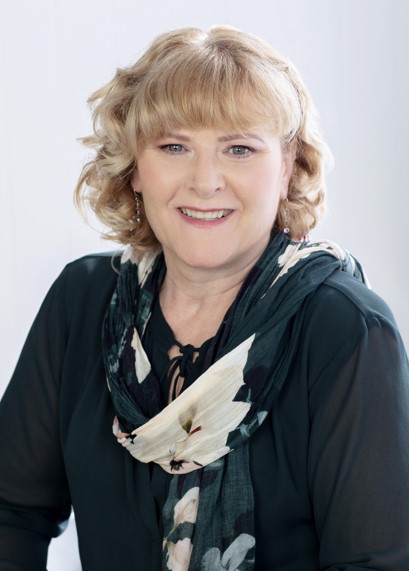
Catherine: Today I'm speaking with Linda Rowley. Linda is a wellbeing consultant, coach and facilitator with over 20 years experience supporting people and organizations through change, loss, and life's uncertain in between spaces. Based in regional Victoria, linda's work is shaped not only by her professional background, but by her own life altering health experiences, experiences that deepened her compassion and grounded her practice in what truly helps when life no longer looks the way we expected. Linda has a particular passion for ambiguous loss, the often unseen and unnamed grief that arises from uncertainty, [00:02:00] unresolved endings, caregiving roles, and major life transitions, drawing on positive psychology, wellbeing, science, and neuroscience.
She supports individuals and organizations to make sense of loss, rebuild trust in themselves, and find meaning alongside complexity rather than just rushing to fix what cannot be fixed. Known for her warm, steady presence. Linda creates safe, practical spaces where difficult conversations can be held with honesty, dignity, and hope.
Her work invites people to feel less alone, better equipped, and more able to support themselves and others through life's hardest moments. Thank you so much for being with us, Linda.
Linda: Thanks so much, Catherine. I'm delighted to be here. I've been looking forward to this conversation
Catherine: now, Linda, in your work, what do people most underestimate when it comes to [00:03:00] the emotional impact about talking about death loss, transition?
Linda: I think they underestimate the benefit of having those conversations whilst people feel resourced and have capacity to do so. And so therefore, the flip side of that is underestimating the cost of leaving those conversations too late, right? So when there's a sense of urgency or emotional intensity that impacts people's ability to have those conversations in a way that's open and curious and creative and beneficial for everybody involved.
I think that, you know, silence doesn't protect us from the emotional impact of death or loss or change. And if we are not talking about it, it can leave us carrying it alone. And that can feel isolating for people. So there's a missed opportunity for [00:04:00] emotional closeness and. As I mentioned, if we leave the conversation too late, it might mean we are not as well resourced.
So if we're feeling threatened by the current situation or we are in a state of emergency or a state of crisis, it means that we are not as able to think as well in terms of thinking and planning and being open to options that might present themselves in the moment. It means we also lose the ability to prepare in a way that's thoughtful and maintains the dignity and the hopes and wishes of the person experiencing that, you know, loss or, or change and ourselves in the process as well.
So I think one of the things we forget is that, you know, talking about death is also talking about life. s provides us the opportunity to [00:05:00] talk about our values, you know, what matters to us, what's important to us love as well as our priorities. And those are great conversations that we can have at any stage that help to deepen that emotional connection between us.
Catherine: And how do we start these conversations early when you know, before, like how early should we be having them and, how's the best way to initiate them?
Linda: great question, Catherine. And I think that's different for everyone, isn't it? I think it's never too early to have the conversation.
You know, having been diagnosed with stage three cancer a couple of months after my 39th birth day, for me, it's never too early. But it's really interesting, isn't it? Because I have a friend who said to me recently, she said, why are you always talking about, you know, your death and dying? And, and I'm thinking, well, why are you not like, right, it's gonna happen.
There's that, that Latin phrase, [00:06:00] memento mori which, you know, translated means remember you have to die. Yet I think many of us forget that, and it can be quite a confronting conversation for people to have. So, some of the ways that I've found have generated a bit of success is. Looking at kind of what's currently happening in the person's world or environment.
So if they've recently attended a funeral and make comments oh, wasn't that lovely, you know, the service was lovely, or, you know, the flowers, or, or maybe the sandwiches were too dry, right? So,
Catherine: isn't that amazing? It's the only place that you really get sandwiches is at, at wakes. It's weird, isn't it?
Linda: Yeah, absolutely. So, so that's an invitation. That's a, a little kind of the door being left a jar there that you can kind of sneak through, right? In terms of saying, ah, great, you know, what about that was important to you? What did you like about that? Is that [00:07:00] something that's important that you might like to have?
So some of those naturally occurring conversations can be invitations and, and ways in. It could also be, I'm a real card person, so there are a couple of card sets that have been developed, which I'm sure you and some of your listeners would be aware of as well. There's a beautiful. Card deck, which was created for indigenous Australians around starting the conversation in relation to death and dying.
And there's also another card set. Oh, well, one other that I'm aware of. I'm sure there's probably more. So using little prompt cards to initiate that conversation can be helpful as well. And I think also bringing some liberties, a bit of humor to the conversation, not in a way that's, you know, belittling or dismissive or minimizing.
We certainly don't wanna do that. So it in a way that's still respectful and [00:08:00] dignified, but even though it's a really important conversation to have, it doesn't have to be a really serious conversation. Does that kind of make sense?
Catherine: Yeah. Yeah. I think that whenever you. Bring a bit of humor into it because, you know, death is just a reflection of the life that you've lived.
And so I always bring humor into it, you know? But that's just part of who I am and my, my personality. So I think that that fits with me, definitely.
Linda: And I think just holding it lightly, you know, and, and also approaching it with compassion and understanding that, you know, each of us will bring a different history and experience and interpretation of death and what it might mean for us.
So I think being able to honor and not judge where the person's at at any [00:09:00] point in time is really important as well.
Catherine: I think another good thing that I find when I first started talking well, I've always been pretty open within my family, but when someone famous dies, you know, that that happens on a pretty regular occurrence.
And I find that that's another way in to initiate those conversations as well. Whether it was a cause of death and challenging, difficult conversations such as suicide or you know, when it's a long-term illness and we see a, a decline over that time when you think of you know, people who are famous actors who have actually been diagnosed with life limiting illnesses.
And that's always given a good opportunity, I think, to, you know, certainly in my family to have those conversations as an easy, curious way in.
Linda: Oh, fantastic. I think that's great. Yeah. Wonderful.
Catherine: And so how did you get involved in this work, Linda?
Linda: Well, I have a, a history of working in the aged care [00:10:00] disability and community services field, so that's where I started.
I managed a regional aged care assessment service a long time ago now. And so have always been interested in how we help people to, you know, navigate those times where they can't perhaps look after themselves in a way that um, they've been able to previously and, and require some extra support.
And I remember during my days there, there would be situations where, and this just doesn't relate to my acas days, but also other experience where perhaps people. Older people had a medical emergency at some point they'd been rushed to hospital. It might be, you know, the middle of the night.
And loved ones have been uncontactable. And so then the treating physician or GP emergency doctor has been left with this decision around, you [00:11:00] know, what treatment is required, what the person might like for themselves. And if they're unable to communicate that, then it means that the doctors sometimes in a bit of a tricky position, right?
Not knowing what the wishes of the patient is or are. And so I think. That sparked my interest in advanced care planning and death and dying. But I've always been curious about death ever since I was a child, or mortality I've been interested in. And then of course, when I was diagnosed with cancer, myself and my mum and I were diagnosed three months apart.
So my mom was diagnosed with cancer three months before me. And then my mom, had stage one cancer. I had stage three. And unfortunately my mom didn't make the five year kind of survival marks. So for me having a, a disease like cancer, and [00:12:00] also supporting my mom as she was going through her own experience of cancer.
And then, you know, being by her bedside as she died. That really kind of underscored and boosted my interest in the, in the topic. So then I, you know, I did some training around death doula training. I became a funeral celebrant for a while there as well, and have dedicated, you know, like my, when I did my masters of Applied Positive Psychology, my capstone project was on advanced care planning and how the role that positive psychology could play in assisting people. So both those who are dying and also their loved ones to manage that kind of death and dying and bereavement process.
Catherine: there are so many questions that have just popped into my mind in relation to what you've just said. Do you mind if we um, just revisit [00:13:00] that, that experience that you were talking about how your mum was diagnosed with stage one cancer.
You were diagnosed with stage three and yet your mum was the one that didn't actually reach the five year milestone.
Linda: Yeah, so Mum was diagnosed in I think the June or July and she had some treatment and then she kind of, had recovered well enough to then assist me when I was going through, you know, my treatment.
I remember one day she drove me to the neighboring town. I live in rural, kind of regional Victoria, as you know. And she stood up in line at Centrelink while I kind of sat slouched in a chair, you know waiting for my appointment time for sickness benefits, right. 'cause I couldn't work at that stage.
And then mom had a second cancer, which appeared, so not a secondary, but a new [00:14:00] cancer a couple of years later. And yeah. And that was, was a really tough time.
Catherine: And that's interesting just what you are, you're referring to there, you've gone from obviously working to now being receiving treatment.
You're slumped and you're in Centrelink. Wow. Yeah.
Linda: And so this is where ambiguous loss comes in. If I can just do a bit of a segue into that, please
Catherine: do
Linda: so. I think, you know, different diagnoses or even a similar diagnosis means different things for different people, right? Like, I'd just turned 39. I was a single parent.
My daughter was just about to turn nine. I had a career. And when I was diagnosed with cancer it meant that life as I lived it. Was very different. So I had a car that went with the job. I could no longer work. So Centrelink benefits and the car was [00:15:00] taken away of course, right? Because I couldn't walk work anymore.
So there were days when I would roll a blade, my daughter to school, right in between chemotherapy appointments or we'd ride our bikes because I didn't, you know, have a car. And that's. Hard in a rural area. As I became a, a progressively unwell, I had neighbors and, you know, I had lots of support, which I'm very thankful for.
But yeah, there were days when I was rollerblading, no hair head scarf blowing in the wind, you know. So I think another thing not to underestimate is people's resourcefulness and people's resilience. So my experience with Cancer wa was that, you know my career was no longer my I no longer had an income.
It impacted my ability to parent my daughter, you know, a whole range of things. Whereas for my mom. It was different. My mom was in a marriage of 30 plus years, she had retired. You [00:16:00] know, so there was a whole lot of kind of stability. So when it comes to, I guess out why out wood ways of being and doing it didn't have such a significant impact on her.
But of course it impacted her in other ways. So I think for many people who experience illness or injury. It can have a sense of what we would call intrapersonal loss. So that's like a sense of loss within yourself, like your own capacity or your trust in yourself or what you thought you might like to do, or like you cherish hopes and dreams.
Right? So one of those could be career roles, perhaps that you've covered it. So certainly for me I was fairly career oriented and I was told. When I finished my chemotherapy and was looking at going back to work, I wanted to go back to work [00:17:00] part-time. And I was told in no uncertain terms by my manager that I either had to go back to work full-time or not at all.
And I was still having ongoing treatment because of the type of cancer I had for another kind of 15 months. And I couldn't work full time. So that meant that the career aspirations I had were no longer, feasible, right. Realistic for me. And that was actually what catalyzed the birth of my business.
So I set myself up as a sole trader and went into, you know, small business land because that gave me the flexibility to heal and look after myself and care for my daughter as well as, you know, try and generate some income to live.
Catherine: And what was the, the feeling for you? 'cause I, I recall when I had a similar with my car accident [00:18:00] that one day you thought you were going to go down one path and then you do end up at Centrelink and sometimes these larger. Organizations and institutions, you completely are devoid of your identity. You do just become a number.
And how, how did you navigate that?
Linda: Yeah. Not easy by any stretch of the imagination, so I think. When it comes to ambiguous loss, and I might just backtrack a little bit, if that's okay. Sure. And then move forward to, to answer your question as well. So just by briefly defining ambiguous loss.
Ambiguous loss the term was coined by Dr. Pauline Boss. It was back in the 1970s. So it's been around a long time. And she sees it as a loss of an element of a relationship. So perhaps we're in a relationship with someone and they experience [00:19:00] an illness or injury, and that changes the nature of our relationship in some way.
Or, and so that might be psychologically so they're not able to emotionally or be with us psychologically in the same way. So give us support, those sorts of things. Or it could be . As a physical presence. So if we have somebody, for instance, that goes into residential aged care, they're no longer there physically or perhaps they move away, those sorts of things.
And with ambiguous loss. So I've, I guess broadened that to encompass that intrum personal loss, which is what I was just talking about as well. And so there's a couple of things with ambiguous loss and one is that the loss is not clear. It's not clear. It doesn't have a definite ending. , There's a lot of uncertainty around it, right?
so if you think about someone who's going through cancer, we don't know how it's gonna end, right? , And often, or even how it will unfold, the experience for us. So with [00:20:00] ambiguous loss, we might experience loss of, you know, career aspiration. So for instance, that's one example from my own experience.
Or it might be that we lose income because of a caring role. We can now no longer, you know, work in the same way that we used to. We could have a loss of our hopes and dreams. So maybe we are waiting for retirement, we are gonna hitch up our caravan and join, you know, the gray or not so gray nomads.
So there are lots of ways that it can impact us and it's often not acknowledged or not recognized because as a society we don't have rituals around. Ambiguous loss. So when someone dies, and of course depending on the communities that you belong to and your religious and spiritual beliefs, there's usually some rituals that go with that.
You know, people gather, they bring food, you know, you get lots of lasagnas for the freezer or whatever it [00:21:00] happens to be with ambiguous loss. There's not that. So if it's a car accident as in your case things life changes, right. And those aspirations that you have or what's. You see as possible now could be very different, but there's nobody that's marking that, right?
There's no ritual, society as a whole doesn't generally have a, a process for that, you know, in terms of what we do. So that can be really hard for people because it feels like that loss goes unacknowledged or or it's dismissed in some way. So I guess that's the first thing that can be really difficult, just that lack of people not acknowledging what has been so impactful for you.
I think at a personal level, I'm not sure whether you wanna say anything about that or respond in any way.
Catherine: The thing that I'm thinking about when you are talking through [00:22:00] this, Linda, is when you, you, you're talking about ritual associated with marking that loss, whether it be a, a, a diagnosis that you are uncertain about what the outcome's going to be or a car accident.
And for me it was spinal surgery, so, you know, long-term not quite sure what the, the outcome's going to be. It's normally if someone has an operation, you get a get well card and there's some sort of ritual around it. But when the diagnosis or the outcome is unknown, there is no marking because there is, it's inappropriate to feel like you wish someone well when that's, you just don't know what the outcome's going to be.
So you are right. It isn't marked by anything, is it? And it's only really if you have the right supports in place that you can actually get to a stage. And for me it was, you know, 16 weeks in rehab with a psychologist working through that to acknowledge what I had lost before I could actually move on.
But not everyone has [00:23:00] that, that luxury of having that opportunity.
Linda: No. That's right. Absolutely. And another element of ambiguous loss is that it's often ongoing. So whereas we commonly hear grief talked about as having waves of grief, Pauline Boss talks about ambiguous loss in terms of oscillations, so not waves.
But if we think about a fan that oscillates, that kind of that moves backwards and forwards, that's the way ambiguous loss is usually spoken about. Because if you think of a parent of a child with a disability, for instance, or you know, someone who's living with a condition, whether it's a neurological condition or you know, other illness or injury.
That loss is ongoing. There's no clear ending to that, you know, and so it can be really hard to grieve for what's lost and also be grateful for what you still have, [00:24:00] right? , And you know, often people who are very well-meaning will say, well, aren't you lucky it wasn't worse? Right? Mm-hmm. Or, isn't it good that you've come through it?
Which can just feel really dismissive and really minimizing for the person that's living through it. And so there's a general sense that. The counseling that we have for grief is not always appropriate for ambiguous loss because it's a different kind of loss, and ambiguous loss is seen as a kind of stress and resilience model, so it's not seen as a pathology.
So it's not that there's anything wrong with you. It's just that the situation you're in is really complex. It's difficult, it might be feel untenable, right? So it's about how do we then develop strategies to promote our resilience, to be able to live alongside [00:25:00] that. And so Pauline Boss talks about six guidelines for living with ambiguous loss.
And so one is normalizing ambivalence. So the fact that you might have conflicting emotions, right? You might feel grateful and also be grieving. You don't wanna be disloyal. So if you're caring for someone who's now changed in some way, you don't wanna be disloyal to them. So you still wanna honor.
You know who they were and all, everything they still bring to the relationship and still hold space for frustrations that that might bring as well. So it's really having that kind of both and thinking not it's not one way or the other, but it's about how do we kind of reframe our thinking into being able to, to live with both both lots of, you know, perspectives that are true at the same time.
One of the other [00:26:00] guidelines is meaning making. So it, that's not about the meaning of life, it's about, that's like a way, way big subject, but it's about meaning in life. So what matters to us today, even though things have changed, what values still hold true for me and how can I enact those values? And that might be through little things in our lives as well.
Another one is around adjusting mastery. So it might be having a sense that, you know, perhaps. We have new boundaries in place. Now what's possible for me now might be different to what it once was. Maybe I don't have the same energy, or maybe it's difficult for me to commit to things that are, you know, still quite distant a month or two away.
Because maybe I don't trust myself as much anymore. So how we navigate those, it could be around reconstructing identities. So if you've had [00:27:00] identity as I did as a, a manager, you know, a parent, all of those sorts of things, and then that's no longer, then it's renegotiating that, who am I now, kind of thing.
And again, that's where I think our values, it's really important to be led by what's important to us as well. We look at revising attachment. So maybe the relationships that we had have now changed, so we might need to rethink our expectations of that relationship and both what we contributed and also what we got from the relationship.
So it might be about looking at different ways to get our needs, our relationship needs met. For instance. And the last guideline is discovering new hope. So as human beings, we don't just have one hope, we have a multitude of hopes, right? So that might be [00:28:00] about thinking about given the situation now, what can I hope for?
What's realistic for me? And sometimes that hope might be on a daily basis, you know, I hope, I hope I have a good day, right? And sometimes it can be longer term hope as well.
Catherine: And it sounds like that these are, these guidelines are not static things. They're things that are a constant evolution that you obviously as whether, whether you decline or whether you improve with your health or, we we're predominantly talking about health at the moment.
But wherever you're at, there's something that you need to constantly work on by the sounds of it.
Linda: Absolutely. And you know, some of those guidelines will be more relevant or resonate with you more deeply than others. And at different stages, you know, like you might go through a, a long period of time where the loss isn't, you know, top of mind for you.
So, and then maybe something will happen and that [00:29:00] might be like a marker of an event or, so for instance, when I had my, you know, five year I passed my five year survival, you know, benchmark that was actually, you know, that was great that I did that. And also I was thinking about the fact that my mom didn't, you know, and later this year, in September, it will be 20 years since I was diagnosed.
And so already I've started thinking, wow, so. That's kind of prompted me to reflect on, on a range of things around, you know, am I living my best life? Is, is this the life that I fought so hard for? And if not, what would I like to change to make it that, you know, kind of fulfilling life that that I aspire to?
Catherine: I think that that's a good thing that we should be asking. You [00:30:00] know, , every so often, you know, is this what we, we really wanna be doing? And if it's not, you know, having a, a moment to reflect, because I think that we don't do that often enough, is actually reflect on who we are, what means most to us and then making sure that our life, you know, prioritize the things that we value.
Now I just would like to have a chat to you about the, your master's. Was it in relation to the impact of positive psychology when it comes to advanced care planning. So Linda, if you wouldn't mind explaining to the list admins what advanced care planning means, and then what you, you found out through, through the, your PhD or your master's.
Linda: Yeah. Thank you. So advanced care planning is the ability to document your wishes and preferences for medical and other care and treatment if you are unable to advocate for yourself. [00:31:00] So for some people that might be, for instance, if they have an accident and they're not conscious, or it could be towards end of life and you are unable to communicate how you would prefer to be treated.
So, advance Care Planning Australia has a website, and on the website they have different web pages for each state in Australia because each state has a slightly different form that's required to be completed for advance care planning. So the advance care plan asks you a range of things around your values, what matters to you, what's important.
In relation to medical care, you then discuss that with your general practitioner. They sign it and then it's a matter of making sure people know about it. So friends family members giving you local GP a copy, maybe the local hospital. You could [00:32:00] upload it to my health record if that's, you know, a place where you keep health records as well so that in the event that you have a medical emergency and you're unable to communicate your wishes that document is available and it can guide those who are treating you at the time.
And it can also assist your medical treatment decision maker or family, you know, whoever that is for you to make decisions. and to feel more comfortable and confident in the decision perhaps they're making on your behalf because you're unable to do so.
Catherine: And just on that point, Linda I had a family member needing to go into hospital over the Christmas period and they were staying with us and we needed to provide a copy of their advance care directive to the hospital.
The problem was, is that I had only taken photographic copies of old photos of the document. And so when I [00:33:00] provided it, it didn't print out correctly, so I needed to actually obtain a copy. 'cause obviously it was in a safe location in their home. And so I needed to provide a copy, which involved me getting in contact with the gp, which actually came and arrived two weeks after they were actually out of hospital.
So listeners out there, when you do have these important documents, can you please. Even though I thought I was doing pretty well, having photographs of those, make sure you have access in PDF format so you can easily find them electronically and email 'em to the organization. Just a little hint, just to let you know.
Linda: That is great advice, Catherine. Yeah. And because the thing is that you hope you never need it, and it's always better to be prepared.
Catherine: It is, it is. So please continue on to what you discovered when you started your master's.
Linda: Yeah, so I discovered [00:34:00] that there are a number of barriers to people completing advanced care plans.
So we often think that we don't need it yet, right? There's time, so, mm-hmm. We've always got more time but sometimes we don't. Maybe we are not sure what we want or how we wanna be treated, and we don't wanna be locked in. So we think that, you know, once we put it in an advanced care plan or an advanced care directive, then, you know, once it's in black and white, we are locked into it.
But the reality is, of course, we can change it if we change our mind or if our values change as long as then of course we need to make sure we redistribute it right to everybody as well. Sometimes we, you know, those conversations, they ask us to be vulnerable and there's a risk in that. So we don't wanna upset people or we think that caring for people means not exposing them to uncomfortable [00:35:00] conversations or, you know, emotions that can accompany those conversations.
or we just think that they, whoever they are, right? So they could be family members friends, but they will just know what to do at the time. But the reality is they often don't know what to do at the time. Or, you know, what the person would like. And, and sometimes that can fracture relationships.
It can, you know be really, detrimental to the person's mental health. And in fact when I was doing my research, which is a few years ago now for my master's we found there in the research it was indicated that people who don't have an advanced care plan one, we dunno what their wishes are.
It's more difficult for the people who are making decisions because they're ruminating on, is this what the person would want? You know, sometimes if there's more than one family [00:36:00] member, there can be conflict or tensions between them if they have a different sense of that. It could mean that the treatment the person receives is more based on the treating medical practitioners appetite for risk and also their spiritual or religious beliefs.
And so for me, I don't want decisions about, you know, my treatment or end of life to be on. I won't say to be left to the the treating practitioner on the basis of their values, which could be very different to mine. Right. The research also indicated that it meant that people who were bereaved, so if a person died, then bereavement was more complicated for people when there was no advance care plan.
Because again, they would be asking themselves, did I do the right thing? Is this what they would've wanted? And it also means that, you know, [00:37:00] sometimes it's not an effective or efficient use of healthcare resources either. If people are receiving treatment that they really don't want or that perhaps isn't as in line you know, with , their values.
Catherine: I think a lot of the stories that I hear, Linda, it's around that resuscitation , and whether people are, are comfortable to be resuscitated also about prolong, you know, processes that are actually, or procedures that actually prolong life when someone , feels that they have actually lived a very fulfilling life.
And so they're the things that are the really difficult conversations to have, but, you know, they're necessary ones, aren't they? When you think of what your research was talking about with, you know complicated grief and, and those people that have had to make those decisions without that guidance from the person they're trying to represent.
Linda: Absolutely. And there's a couple of things in that as well. Our values differ as to [00:38:00] what we think is a good life. Yeah. So for instance, since the ancient Greek philosophers, so Aristotle, Plato, you know, there's been these two kind of concepts about a good life , and one was Hedonia. So leading a hedonic life, and that was about maximizing pleasure and satisfaction and avoiding or minimizing pain, right?
And so then the other one was eudaimonia. So eudaimonia is about living a meaningful life, a life that matters, a life of personal development and growth and contribution. and then recently in the last kind of 10 years or so, there's been a new concept called a Psychological Rich Life. So because both Hedonia and eudaimonia can be a bit boring after a while, and so these researchers developed this concept of.
Psychological richness. And that is, you know, just being [00:39:00] exposed to a diverse array of experiences in life. You know, some of them we would consider helpful, beneficial, good, you know, and others that were really difficult and tougher times. But together they weave that really rich tapestry of life, you know, and we can have, these are people that perhaps travel widely or read different biographies le you know, live kind of vicariously through those different experiences.
And, you know, there's some research that suggests that in the short term, if we think about things that we regret in the short term, we tend to regret the things that we do. But in the longer term, and especially when we're, you know, in the process of dying or, you know, aging more broadly, we look back on life and the things that we tend to regret most are acts of what we would call acts of omission, not commission.
So the things that we [00:40:00] didn't do right, maybe we didn't ask that girl to the dance, you know? Mm-hmm. Maybe we didn't take that risk in terms of starting a new business or partnering with someone, whatever it happens to be. So, so I think that when you were talking Catherine about, you know, the person themselves thinking , that they've lived a good life, right?
And so again, our perceptions of what's a good life is very different from person to persons, which is why these conversations are just so important so that we are not, yeah. Making assumptions or judgements about, you know, , other people's lives and values and those sorts of things.
Catherine: I remember when I was completing the, the form or my mom was completing her form and, and we had to have conversations about, you know, just communication.
What did that look like to her? , Was communication, was it speaking and communicating verbally [00:41:00] or was she comfortable to speak through touch? Was she happy for people to touch her? you know, all of these really rich in depth. Ways of thinking about what that meant to her. Not my, my perception of what I think she'd like, but actually what she was comfortable with at the point in time that, we completed , this advanced care directive.
And, and I think that you're right, advanced care planning has some, great tools on their, websites and their respective state websites. 'cause you know, the joy people laws are different in every state. And, and so they're really good at helping us develop the skills to have those conversations.
Linda: Absolutely. I think it's so important and one of the services that I offer as well, that is complimentary to advance care planning is an end of life wishes kind of plan as well that incorporates, you know, some of those broader elements that [00:42:00] the advance care plan doesn't incorporate. Yeah. Which again, is so important.
I think that from a positive uh, psychology perspective, also, , one of the other things I found in my project was that many of us tend to approach death in, with a kind of a theory that's called terror management theory. And that is that at the end of the day, most of us are terrified of dying, right?
So we have these fears and, this contributes to why we tend to avoid the conversations and those sorts of things, whereas Dr. Paul Wong was offering an alternate theory, and that was what he called, meaning management theory. And that was that when we were able to, I guess, you know, find meaning in life and in death and become more accepting of death, it then influences also how we live.
And we can [00:43:00] live in a much kind of, you know, freer, accepting way and embrace the fullness of life once we've embraced and accepted death. Yeah. So that's kind of really interesting as well.
Catherine: It is. And, I'm sure you've seen the research that came out earlier this year in relation to end of life planning and the impact it has on those who care for people with life limiting illnesses to show that it actually improves their wellbeing when they refer to it as end of life planning and, and it goes into detail of what that's involved, but it shows the, the wellbeing of the carer is improved.
So tell me a little bit about, we've talked about the person themselves when it comes to ambiguous loss. , What is the impact when it comes to someone who's caring for someone?
Linda: Yeah. So I think when it comes to someone who's caring for someone who's experienced an illness or [00:44:00] injury that's impacted their capacity and the way they are uh, in relationship for carers, it can mean kind of chronic and ongoing stress because of that uncertainty.
So when we feel that sense of uncertainty , our amygdala, which, identifies kind of a threat response, right? So it releases cortisol into our system. And when that
Catherine: you on fight or flight, isn't it?
Linda: It is. And I actually have my little brain here, so, oh,
Catherine: I love that.
Linda: Yeah. Show you my little brain.
Catherine: Oh, this is amazing. This is one of those sort of like school displays that you'd see where you've got a brain in Linda's hands. That's plastic. All different colors showing all different areas of the brain.
Linda: It is. And it, I even have a, a slice here so we can see in the middle. Sorry, this let, you've
Catherine: gotta go online, people on YouTube and see this.
Linda: So our amygdala is in the middle here. Right. And that's our threat response as, as you mentioned, it [00:45:00] releases cortisol, flight or flight. Flight fright, fa or freeze.
Catherine: Yeah,
Linda: as you mentioned, Catherine. And so when that happens to us on an ongoing basis, it means that we have what's called allostatic load.
So that's the wear and tear on our body over a period of time, our body and our brain. And when we are driven by our amygdala, it means that our prefrontal cortex, which is this part of the brain that does our thinking and planning and rationalizing and emotional, that's behind our
Catherine: forehead, isn't
Linda: it? Yes, that's right.
Yep. Um, Our emotional regulation, it goes offline. So so what that means is then it's more difficult for us day to day to do our thinking, our planning. To regulate our emotions both in the context of, you know, our relationships and what we are doing day to day. So that has a significant impact on carer wellbeing.
For carers the research indicates that carers more often [00:46:00] experience loneliness as well more often experience financial disadvantage. Have higher rates of negative mental wellbeing, so depression and anxiety, and also higher rates of suicide as well. Um, When compared to the general population, So we can often hold that stress in our bodies as well. And that might be, you know, the pit of our stomach. It could be that our shoulders start creeping up to our ears. That's what happens for me. And so it is important for carers to, you know, seek support around that. And I think again so one of the things I offer is workshops for carers.
And I also do ambiguous loss coaching as well, because the research tells us that, again, it is about developing resilience. And resilience can mean different things for different people in different contexts. In the context [00:47:00] of ambiguous loss and carers, it means developing the skills and the capacity to live with that ambiguity.
And to. Figure out how to live a good life alongside that ambiguity.
Catherine: And do you mind sharing just one or two things about how if someone's listening to, to this program and they are a , carer, how can they find their center?
Linda: Yeah, I think social support is really important. So if you are connected with informal supports that you have, so friends and family, other carers, sometimes it, even though friends and family can be well-meaning, it can be difficult for them to truly appreciate the role of being a carer if they haven't experienced ITEL themselves. And of course, all caring roles are different, right. So, as a carer, one thing that's helpful to recognize [00:48:00] is that you are not at fault. You are not to blame, and what you're experiencing is normal. It's a normal experience and response to a situation that's abnormal. So there's nothing wrong with you.
So it's really about validating and having being around people who are able to validate your experience and to recognize and acknowledge the loss. So I think as a starting point, just having that sense of understanding, what does this actually really mean for me? So what is it that I'm grieving?
What is it that I feel that I'm lost? Because I think when it comes to having a kind of vague or sense of loss, and this is true of fear as well, it can be kind of amorphous, right? When it's, when it's living inside our head and when we're able to verbalize it or to [00:49:00] express it through writing or images or music, then we are able to really kind of hone in on what it is specifically that I'm feeling that sense of loss about.
So I think once you do that, and then once it's verbalized or I. Expressed in some way, it then kind of moves from your amygdala to the prefrontal cortex where you can then do some planning around that. So now that I've recognized what it is and identified what it is, what's actually going to be helpful for me in this situation, so then you can start exploring options around that.
You can start developing resources. You can do some preparation for perhaps when it happens again, because that's the thing with ambiguous loss. It's not it's not, as I mentioned before, it's something that can come and go at different points in time.
Catherine: And I think that [00:50:00] there's some great organizations out there that people can reach in their state based organizations. So we've got carers Gateway, which is a a national initiative and that can connect you with local organizations in your area. And there's also carers Australia or Carers Victoria and the respective states as well. So definitely have a look at those. And I think that, you know, what you were saying before about being with carers who are also in like-minded situations, so connecting with those organizations or foundations that support the illness that you are actually, you know, having involved in your life, whether that be stroke foundation, whether that be a cancer organization, because then you're also connecting with those supports that are specific to the illness that you are managing.
Linda: Absolutely, that's so important. And if you live in Victoria, depending on where you live in Victoria, you can also [00:51:00] access the carer connect centers. So the carer connect centers are for carers of people who have neurodivergence or who have mental health challenges, or who have alcohol and substance use problematic relationships as well.
So that's another great resource for carers too.
Catherine: That's, that's wonderful, Linda. And tell me, just taking you back a bit, bit of a full circle really, of what we are doing. So going back to your time where you were diagnosed, how challenging was it for you to actually ask for help at that time?
Linda: It was incredibly challenging, and that's a bit of a lifelong journey for me.
Having cancer taught me a lot about humility being humble and being able to accept help from others. I've subsequently had other brushes [00:52:00] with
serious illness, and it's something that I need to relearn every time, every time it happens. So I think it is, and I would advocate for everybody to reach out to those around them and to get supports. I think that is so, so important. And I also appreciate how difficult it can be for some people.
So I think the flip side of that too is that if you see people who perhaps are struggling offer help, you know, , from a compassionate perspective, like don't go over the top right and, and force it on them, but certainly offer it and invite them to in ways that are gentle to accept those offerings.
I remember, so when I was recovering from cancer, there was a, a woman that I worked with for a period of time [00:53:00] and she would turn up every couple of weeks with just a couple of shopping bags full of whatever, shopping, you know, groceries and and that was just a lifesaver for me. You know, again, being on.
You know, sickness, benefits having my daughter, you know, all of that sort of thing. It was just like
Catherine: not having a car to even do the shopping.
Linda: Yeah, right. Exactly. You can't carry groceries on roller blades, right. So,
Catherine: yeah,
Linda: yeah, yeah. So that was just amazing. And she would lend me her son's car, weekends, you know, sometimes, and just things like that that made such a huge difference to my life at the time.
Yeah,
Catherine: that's so lovely for that insight both from a professional side of the, the coin, but also your personal story as well. Linda, thank you so much for sharing and, and I will encourage people. We will have your website on the show notes [00:54:00] to check that out, and also sign up to your newsletter. I assume that you have one because you've got two books coming out later this year, don't you?
Linda: I do, I do have two books , which will be available later this year. So they are both on ambiguous loss. One is for people who have experienced loss themselves, so that intrapersonal loss. And the other one is for carers who experience that sense of interpersonal loss. Yeah.
Catherine: Thank you so much for sharing your wisdom with us today and your personal story, Linda.
I really appreciate it.
Linda: Thanks so much, Catherine. It's been an honor to chat with you today.
Catherine: We hope you enjoyed today's episode of Don't Be Caught Dead, brought to you by Critical Info. If you liked the episode, learn something new, or were touched by a story you heard, we'd love for you to let us know. Send us an email, even tell your friends, subscribe so you don't miss out on new episodes. If you [00:55:00] can spare a few moments.
Please rate and review us as it helps other people to find the show. Are you dying to know more? Stay up to date with. Don't be caught dead by signing up to our newsletter and follow us on social media Head to Don't Be Caught dead.com for more information and loads of resources.