



Suicide, Success and the Trauma We Carry With Penny Locaso



Listen now
About this episode
What happens when the person you thought embodied “success” dies in a way that completely unravels your definition of it?
That’s where this conversation with Penny Locaso begins.
Penny is a behavioural scientist and leadership coach, but this episode is not corporate theory. We talk about suicide, unanswered questions, grief that doesn’t follow a tidy process, and trauma that lodges itself in the body long after the event is over. Penny shares the story of her uncle’s death — officially classified as suicide, yet filled with ambiguity — and how that moment forced her to confront what success truly meant in her own life.
We also explore intergenerational trauma, divorce, compassion, and the idea that trauma is not what happens to you, but what happens inside you. This is not about erasing pain. It’s about understanding it, acknowledging it, and choosing how you move forward.
If you’ve ever wondered why certain triggers still sit in your chest or your gut, this conversation might resonate with you.
Remember; You may not be ready to die, but at least you can be prepared.
Take care,
Catherine
Show notes
Guest Bio
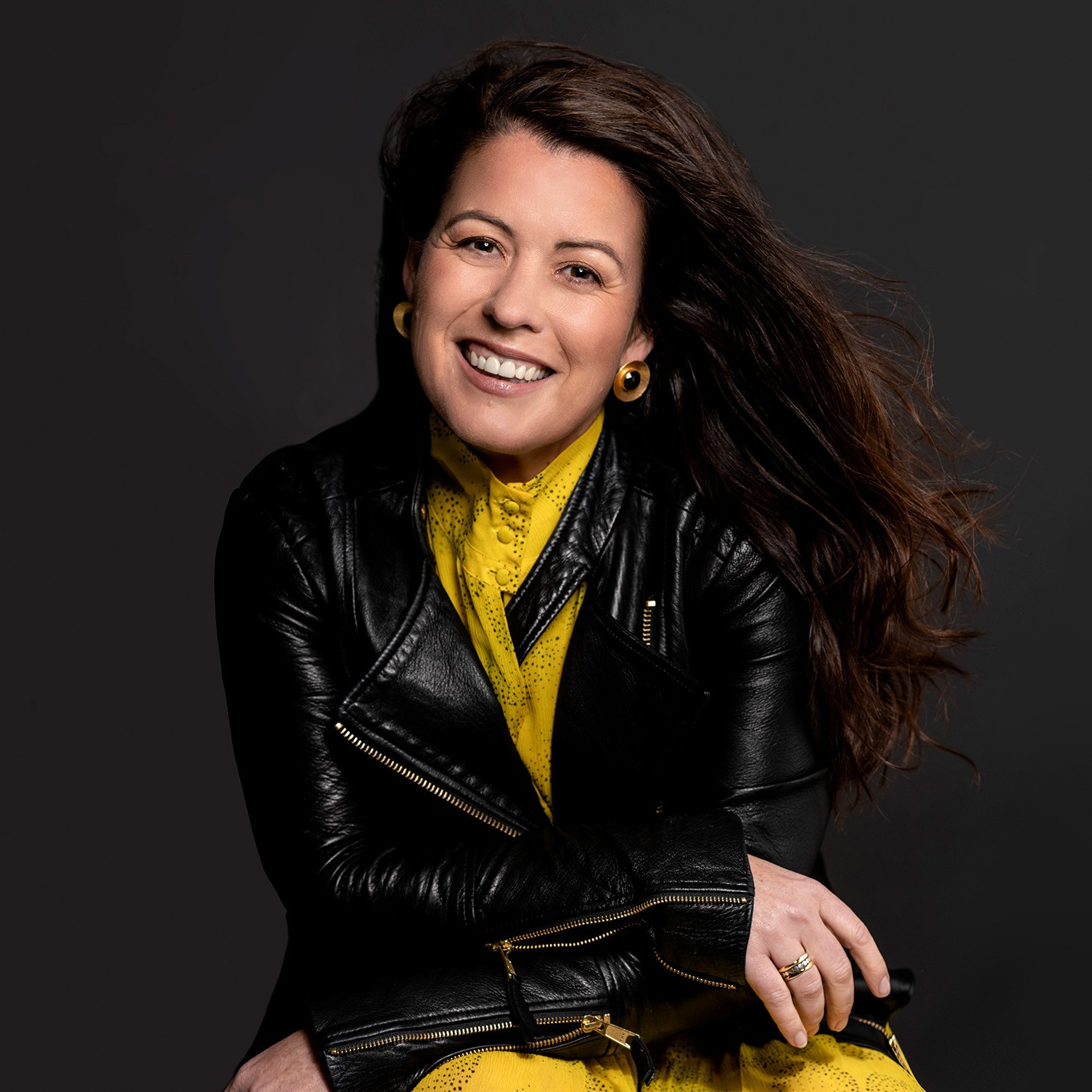
Behavioural Scientist - International Speaker - Leadership Coach
Penny Locaso is a behavioural scientist and leadership coach helping leaders do
hard things humanly. A current Master of Psychology studen, her thesis examined
how relational context shapes compassionate decision-making, expanding on a
year-long study in Compassionate Inquiry with Dr Gabor Maté.
Combining two decades of commercial leadership with behavioural science and
trauma-informed practice, Penny helps organisations and leaders cultivate clarity,
trust, and wise action to enable greater impact. Her evidence-based approach has
been featured in the Harvard Business Review, the Australian Financial Review
and on the TEDx Melbourne stage, and she’s worked with leaders across Google,
Microsoft, Lululemon, Deloitte and Bookings.com to name but a few.
Penny’s work reframes compassion as the missing infrastructure of modern
leadership, a skillset that anchors humanity in systems built for speed, enabling
people and performance to flourish together.
Summary
What you'll hear in this episode:
- Why trauma embeds in the body, not just the mind
- Suicide, ambiguity and living without clear answers
- Intergenerational trauma and inherited patterns
- Grief beyond death — divorce, identity and lost versions of self
- “Micro bravery” and rebuilding your life after loss
Transcript
PENNY: [00:00:00] My uncle's situation triggered me to start questioning things. And when I say questioning things, again, these were things I reckon that had always been sort of gradually being questioned, but I kept squashing them and pretending they weren't there. And so what happened was that it was almost like there were things in my life that were not aligned with my values that I had ignored. And suppressed, and it got to the point where my body wouldn't, lemme ignore them anymore. Like it was like my body was screaming at me. This is not right. Welcome to Don't Be Caught Dead, ... Read More
PENNY: [00:00:00]
My uncle's situation triggered me to start questioning things. And when I say questioning things, again, these were things I reckon that had always been sort of gradually being questioned, but I kept squashing them and pretending they weren't there. And so what happened was that it was almost like there were things in my life that were not aligned with my values that I had ignored.
And suppressed, and it got to the point where my body wouldn't, lemme ignore them anymore. Like it was like my body was screaming at me. This is not right.
Welcome to Don't Be Caught Dead, a podcast encouraging open conversations about dying and the death of a loved one. I'm your host, Catherine Ashton, founder of Critical Info, and I'm helping to bring your stories of death back to life because while you may not be ready to die, at least you can be prepared.[00:01:00]
Don't be caught dead. Acknowledges the lands of the Kulin nations and recognizes their connection to land, sea, and community. We pay our respects to their elders past, present, and emerging, and extend that respect to all Aboriginal and Torres Strait Islander and First Nation peoples around the globe.
CATHERINE: Today I'm speaking with Penny Locaso. She's a behavioral scientist and leadership coach helping leaders do the hard things humanly a current master of psychology student. Her thesis examined how relational context shapes compassionate decision making.
Expanding on her year long study in compassionate inquiry with Dr. Gabor Mate. Combining two decades of commercial leadership with behavioral science and trauma informed practice.
Penny helps organizations and leaders cultivate clarity, trust, and wise action to enable greater impact. Her evidence- based approach has been featured in the Harvard Business Review, the Australian Financial Review, and on the TEDx Melbourne stage. She has worked with leaders across Google, Microsoft, Lululemon, Deloitte and bookings.com to name just a few.
Penny's work reframes Compassion as the missing infrastructure of modern leadership, a skillset that anchors humanity in systems built for speed, enabling people [00:02:00] and performance to flourish together. Thank you so much for being with me today, penny.
PENNY: So I'm really excited for this conversation. What an interesting podcast you have, Catherine.
CATHERINE: Well, I think it was more interesting when I met you at a one roof networking event and we had a bit of a connection 'cause you were talking about the work that you were doing with Dr. Gabor and I had. Really loved for that. You were leading one of the workshops and you were talking about how our emotions can be felt in our body.
And for me, I'm a huge convert because I read the work of and here you go. Yeah, there you go. Perimenopause brain coming in here. Um, But the body keeps the score with
PENNY: Bessel Van Der Kolk.
CATHERINE: Right.
PENNY: You know, my intuition was think as soon as before you spoke, my intuition was going. I bet ya it was, what a brilliant
CATHERINE: Oh, it changed my life literally because it, I read it just after my car accident and I was in recovery and it [00:03:00] just made so much sense to me with, and it makes you feel so much more I think ready to kind of, work through what you need to work through because you realize it changes your brain when trauma happens.
PENNY: Yeah. Well,
I mean, I always love what Gabor says because he says that trauma is not what happens to you, it's what happens inside of you. So, I think people define trauma incorrectly, and what he, what he means by that is when we have a traumatic experience, it creates a physiological imprint. And so that physiological imprint is what our brain goes to when the feeling that we felt in that trauma is cultivated down the track. Which then triggers the autonomic nervous system to respond in a way that perhaps may not serve you.
CATHERINE: And what was the first thing that led you to start studying his, thinking and his model.
PENNY: The flawed psychology studies that I'm doing at the moment, but don't [00:04:00] tell the Australian Psychological Society, I said that
um, Secret. Safe with, with, with us and, and the listeners. That's okay.
Yeah, so what happened was I, in COVID had this beautiful gift where my travel around the world as an international speaker came to a grinding halt, and I lost a whole lot of work overnight, which I know many people did. And I had all this space that I hadn't had before and I was like, you know, I'm gonna go back and study psychology.
It's been a lifelong dream, and who knows how long this is gonna last. We were in the most lockdown city in the world. And so that was like a gift. And then I got through the first sort of level of that, which was kind of the equivalent of an undergraduate, 10 subjects. And I was sitting there going, I'm applying this work in my every day.
I'm working with a lot of amazing leaders. And what I'm seeing is trauma keeps coming up as a, unconscious block that's holding back these leaders from realizing their true potential. And yet, psychology in 10 subjects hasn't even really touched on trauma, not one subject. Psychology [00:05:00] not one. And I was like, there is something wrong here.
So I was like, you know what I'm gonna do whilst I'm getting through this, I'm gonna close my own gap. And so I'm gonna go and find who is the expert global in this space. And that was when I stumbled across Gabor Mate, which most people know of his work 'cause it's so profound and found his compassionate inquiry course. That was the beginning. And I have to say it was probably the most powerful training I've ever done in my life. And I've done a lot of training from a corporate background and had a lot of money spent on me and spent a lot of money on myself. It was powerful. 12 months of doing basically therapy every single week with your peers and applying the approach that he teaches every single week. You have no idea what comes up when you explore your trauma on a weekly basis.
CATHERINE: Well, well now you've said that we, we, we have to ask firstly, what is so unique about his way of looking at trauma and what was the impact of, of doing [00:06:00] that on a daily basis? Because not many people of us actually do that.
PENNY: Mm. So first of the impact of doing this work and doing it like every week, you know, for a year is that you'll start to have conversations. That you've wanted to have for a very long time, uncomfortable conversations. You start to deal with your shit basically, and the weight that gets lifted if you are brave enough to do it.
Because I mean, he says pain is the pathway and so most people don't deal with their trauma 'cause it's too painful. , And it is painful, but the relief that you have on the other side and the way that it changes how you move through the world because you understand yourself. And what's going on physiologically so much better is like nothing I can, you know, it's just profound.
what is different about his work is that it's embodied. So psychology spends a lot of time in the head, you know, it's kind of focused on how you think. And what his work [00:07:00] does is it takes you into the body and so it takes you out of the story of what happened in your head and into how you feel in the body, where you feel it. And then we basically create space for those feelings. To be explored, to be given voice and in giving our feelings, voice the feelings that are uncomfortable, the feelings that are painful, the feelings we have suppressed for years, that is how the feelings start to, I think what's the best word I was gonna say, dissipate.
You know, and it's not that they go away, but in the processing and the holding space for these feelings to rise to the surface, there is a freedom. There is a release that comes from that. And so I'd say it's that his work is embodied and central to his work, which has permeated pretty much everything that I do now in my work is the word compassion.
And it's why his course is not called trauma therapy. It's called Compassionate Inquiry. And so what he teaches is that you can't do this work with [00:08:00] others unless you truly understand compassion and can practice compassion on yourself. Because until you do that, you can't provide the compassion. And compassion in terms of a psychological term, a definition of what we're talking about when I say this word.
'cause I think meaning is important. Compassion is one step further than empathy, which a lot of people talk about. So empathy is, I can try and put myself in your shoes and try and feel what you are feeling so that we can sort of not have the experience, but I can connect with the fact that you are not feeling great or you're going through something hard. Compassion is saying, I see you are suffering. I'm trying to put myself in your shoes, and I want to take steps to help alleviate that suffering. So compassion puts action on the back end of empathy. That's how I like to explain it, and that is kind of how, how, he teaches why is it, you know, it's, it's really in this compassionate. Space, but [00:09:00] compassion to self first, which I think for many of us is a real struggle, particularly women.
CATHERINE: I totally agree with that. And just speaking and thinking about and reflecting on my own work that I did after I did had my car accident, I remember that when I was talking about certain things that I had experienced in my past that were traumatic, I remember my psychologist making sure that we were aware of where it was affecting our body, whether it was in the back of my throat, whether it was actually in my chest, and that was something that was really interesting and I connect.
When I first met you and you ran that little workshop, penny is,, that was exactly what you invited us to do. And so can you talk a little bit about just that simple little exercise that you had us do that day and the difference that it makes when you do connect with where you are actually working out, where in the body you're actually feeling it.
PENNY: I can't remember exactly what I did, but I know I, I have a, a sense of [00:10:00] what I did because I applied in so many different
ways. So,
CATHERINE: I can give you a bit of a, a heads up. So how I remember it, and, and this is just my recollection was you asked us to think about something that was troubling us at the moment. And then you asked us and you gave us a little breathing exercise to settle ourselves in and get ourselves grounded.
And then we had to focus on this one particular thing that was. Troubling us. And then we had to let you know if we were comfortable to do so, where it was in our body, and whether there was a question that we had to ask ourselves. And then answering that question from our head, our heart, and our gut. And I thought that was spectacular.
PENNY: So, so the whole, the whole, I suppose the way these little exercises where say I do it differently every time, it's kind of nuanced, right? But the whole premise of it is most of us spend all of our time in our head because that is a safe space in a busy world because it keeps us distracted. From what we are [00:11:00] really feeling, okay, but also that means that we suppress our feelings, particularly the stuff that doesn't feel great and we don't process it. And what happens then is over time those feelings just get bigger and bigger and you'll end up at some stage exploding in some way, shape or form, in a way that perhaps doesn't serve you. I mean, I'm generalizing, but that's
kind of how it generally plays out. And so the exercise that we did was about taking you out of your head and out of thinking about this thing that you were struggling with at the moment, whatever that was, and dropping you into your body so you could start to process in some small way and alleviate some of that feeling. And so. When we do this, generally, like you say Gabor says, where there's tension, pay attention. Whereas most of us are sitting there saying, avoid, avoid
abort. Yeah.
So that's why we pick something, , pick something that you know you're struggling with at the moment that. That is a tension in your life, no matter how big or small, likely something you've been overthinking, overthinking and not acting on. And then when you've [00:12:00] got that thing, close your eyes down. Just take a moment that, take that deep breath. Like we said, I always say three breaths is great just to ground yourself and feel your feet connected to the earth, and then take that tension and drop into your body. So take your attention from your head into your body and notice. Where that tension sits in your body. Okay? And so when you notice where it sits and there is no wrong place, right? Some people it's a shoulder, some people it's a solar plexus. It could be in your leg. I don't care where it is. Just notice where that feeling lives. 'cause there will be a part of your body where you feel it. You might like to give that feeling a color. It's very helpful to label that feeling. So is it fear, is it sadness? Is it guilt? Is it shame? Whatever it is. and again, don't rush the process. This is about creating space for the feeling. So if you don't feel anything within a second. Just sit there, I guarantee you it will come up.
Create the space. And then when you've got [00:13:00] that feeling, like you say just label it, notice what's coming up, that's kind of with it and it doesn't matter. Don't judge it or filter it. And then the other thing that we did, like you say, you come back to that tension. You can, that you are holding, you can say, okay, where that feeling sits. You know, what is the question that I have around this tension? Is there a question that might help me process it? And then you ask that question to your head, write it down. Write down what your head's response is. Then you ask that question to your heart, write down your response from your heart, and then you ask that question to your gut. And the reason for that is we have three brains, three centers of intelligence, but most of us only use one most of the time, which is the head. And so by asking those three brains the same question, I guarantee you'll get a different answer. And it means that you tap into the collective intelligence of your whole body, right?
And so you're not just thinking with your rational brain, you're thinking with your rational, you're thinking with your [00:14:00] intuitive, and you're thinking, with your heart space, which is the space where compassion would live.
CATHERINE: That is exactly how I remember it. Thank you so much for going through and giving us an insight about what I experienced that day. 'cause it really was quite profound for me. How have you seen when someone moves into this sort of practice, what is the sort of shift that you've seen in, in your practice , with working with people?
PENNY: So the first thing I
would say, And I know this 'cause I experience this myself as someone who considers herself very stoic, you know, I get things done. I'm very independent. I don't need to rely on anyone. Like that's, that's my story, that's my trauma. It can be very hard for people to drop into the body. Right. Because it's like anything, it's a muscle, it's a practice. So the first thing I would just say is it doesn't happen in five minutes. Like often with clients, a lot of people will really struggle to stay in the body in the first session because what happens is when you get them to [00:15:00] drop in, , the head will keep pulling them out.
'cause the the head's like, don't go there. This is scary. We don't wanna do this. Right. So this is the autonomic nervous system kicking in. And your amygdala's going, you know, fight, flight, or freeze. We don't wanna go here. This is too scary. So the first thing I would say is it is it's a process. It takes time. But when you can get people into their body, often what will happen the first time we do it is there will be tears because often what is in there has been in there for a long time. And it's been suppressed for a long time, so it's quite big. And so as soon as you kind of touch on it again, it's, an immediate release 'cause it, it, it comes out and so nine times outta 10 is two years. Okay. But in terms of the transformation that occurs for people, you don't erase trauma. So this work doesn't make the trauma go away. Like I said, it's a physiological imprint, but what you create is a level of awareness. So when people have this awareness about what [00:16:00] these feelings are in their body, you know , where they come from and the story that sits behind them, and what triggers. that feeling and that taking you back to that experience in the present moment. 'cause that's what happens. Yeah. Even if the current experience is not related to the original experience, it's the feeling that it triggers and then the physiological response to that. It's that awareness. People will go, oh my God, I can see what's happening here in my body.
Like I notice this. I know this. This is the work I did with Penny. That feeling that I'm feeling is shame this. At this moment, this moment, I've been triggered back. Into that feeling,
And I know.
my default response because we work through it. For example, you know, fight, flight, freeze, or fawn, depending on what your, your preference, your body body's preference is. I know I'm fawning, I'm going into people pleasing overdrive. . This is something that's familiar to me. And I also know now that because of this awareness that, you know, what if I just breathe, if I take three breaths and [00:17:00] no one's gonna notice I'm in a meeting, no one's gonna notice it and I feel my feet connected to the earth. I can switch off That irrational part of my brain that's being kicked in. Because what happens is when you go into fight, flight, freeze or fa, it shuts down the rational reasoning centers of your brain. It narrows your focus. It makes it very hard to make quality considered decisions. We can't think long term, but by just being aware and saying, oh, I know that if I breathe, it will bring my brain back online in the way that I want it to. Three deep breaths. That's what it does. That's the transformation. And so what it does is it helps people get through triggers in a way that's constructive rather than destructive
CATHERINE: And tell me, was there anything that was the catalyst for you to actually really look at your life in reflection and look at how you were that then sort of. You know, made you go down this path, like especially studying [00:18:00] psychology as we've talked about previously, seven years, you know, , to take that on as a commitment in, you know, in our more mature years than what we would be , from high school.
Was there anything that made you interested in this specifically Penny?
PENNY: I think there was two moments. And it's funny, you know, as soon as you ask that question, so if I drop into my body, I almost feel like I wanna vomit it.
And not that that's a bad Yeah. But I, it's like my physiological response, because these two moments in my life, again, they're, they're traumatic imprints.
CATHERINE: Yeah.
PENNY: But I feel like I say in the pit of my stomach, the feeling is like, I feel like I wanna be sick. One is the divorce of my parents at the age of 11, so very traumatic experience. I think divorce is the most underrated trauma. There can be for me,
For many children. And I think that often the age that it happens you know, has a real impact as well. So I think because I was 11, my brother was 12, so we were going into those teenage years and you were going through a whole host of [00:19:00] change. Extremely traumatic experience very horrific divorce where. Had a very loving and caring dad who basically was 150% invested in his kids, spent every spare time with us doing things and just was, you know, like something out of a movie, which was very unique in that generation or our
generation.
You know, the dad was the breadwinner and wasn't often around. I had the opposite of that. And then literally overnight he cut everything off and said that if he couldn't have us full time, he didn't want us at all. That was his way of getting back at my mom.
And he has not spoken to my mother since I was 11.
So I have a beautiful relationship with my dad now. He is a very complex human but a very loving human. And I understand that it was his trauma that created that response. so that, that was one thing. So I wanted to understand why I behave the way that I do when it comes to relationships with men. and I knew that there was a connection back to my dad because I had such a close relationship that got severed quite brutally. [00:20:00] So that was one thing. And also just understanding like yeah, how that experience affects children. And then the second one that really kind of, that was kind of bubbling away for years and then must have been, oh gosh, I'm trying to think. 2012. So what are we, 13 years ago now? I had an uncle who was like the golden child of the family. He was put up on that pedestal and we were all in awe of his success. He was a doctor first one in my family to go to university and he decided to, he didn't wanna be a doctor, he wanted to be an entrepreneur, and so he. Built sort of the first big medical clinic school around Melbourne. Back in the, I think it must have been in the early nineties before that was a
thing because you, you know, your GP used to just be a little house with a local doctor in it.
So he bought, built these mega clinics and was very successful.
And my mom and my grandmother invested in his success and it was very for a. He was 60 and I got a phone call. We, and we were very, very close. [00:21:00] So that's the other thing. He was my idol in life. And I got a phone call at 7:00 PM in the evening and it was my brother telling me that they had found his body floating off the edge of the Frankston Pier. And he'd been weighted down with dumbbells, which were chained around his neck and put in a backpack. And I just never in my life like you talk about a embodied experience. I just remember collapsing to the floor and heathing. In tears. And I think that moment kind of, he was my definition of success. And once I'd had time to process and deal with what had happened and, you know, realize that my mom and my grandmother had lost everything and we'd lost someone that we loved deeply and that the whole lot of it had gone to shit just because of a business deal where the time didn't come off right and you've lost everything.
I realized that my definition of success was flawed. That was kind of, I think when I went on my own journey of trying to work out how do I work out what success [00:22:00] means? How do I work out , how I got to this place when I considered myself such an, you know, a kind of educated and intelligent person, and yet the definition of success I created with someone else's, I'd never actually considered my own.
CATHERINE: So just so I understand clearly, penny, I'm assuming from that story your uncle took his own life.
PENNY: Oh, this is where it gets
interesting. And I've not shared this side of the story before, so, So this is what gets interesting. So he had lost there was a major deal to actually build a hospital, a massive hospital that has since been built.
CATHERINE: Yeah. Right.
PENNY: He had the land, he was doing negoti, and so that fell through. And what we, some of the things he did before he passed were very out of character for him. And so it. It was classified as suicide, but there were many things that did not make sense, and I tried to battle with the police about it. So a couple of things happened. One was the day before he died, he was found shredding, a whole heap of documents which seemed very odd for someone who was gonna pass away [00:23:00] and everything was gonna be exposed anyway. The second thing was there was some very dodgy men. He had an assistant that had worked with him for 20 years that looked a little bit like mafia that rock up at his practice shortly before he passed away. And it was unexplained and there was a long meeting held with these people.
But these were people that would not. It would not normally be associated with my uncle or coming to the practice where he passed away, like, so firstly, the way in which he took his life he bolted dumbbells around his neck basically and weighted himself down, which is a very horrific way to kill yourself.
But equally it is very unusual given he was a doctor and he could have accessed many drugs where he could just, she could have just sent himself to sleep. He did it off the edge of the Frankston pm. Now anyone that knows Frankston or is in Melbourne, this is a very busy place with a massive car park at the end of it.
Okay? He didn't park in the car park at the end of it. So this happened in the middle of the night. His car was parked some three and a half kilometers away, so he had to carry, [00:24:00] was something like 30 kilos of dumbbells, maybe more. Why would you park three kilometers away and would you believe all of the security cameras in the car park?
And that headed down to the pier. None of them were working. So there's just some very unusual circumstances associated with the weight. So we, we will never know what happened, but it was classified as suicide.
CATHERINE: And given what you know now with your professional experience, when you reflect on that, how do you feel that there are answers that you'll never know?
PENNY: So I think. For me, the main thing is to like, I don't wanna, it's not that I'm in denial, so I think it's highly possible that he could have committed suicide given the situation that he was in. And, oh, that was the other thing. He left a suicide note on the front seat of his car. But if there is one thing, my uncle traveled the whole world, and as a [00:25:00] child, the one thing that he loved to do was right. And he had the most beautiful handwriting. So if he ever gave you a note, it was handwritten because it was such. That was kind of his thing. Do you know what
I mean? The note was typed.
CATHERINE: Wow.
PENNY: And I don't, no one in my family ever received a typed note and it was a typed note to my grandmother and it was very short.
Like, so that was also unusual. So when I think back, how do I feel about it? I think the first thing is I'm not in denial. Like I, I'm not trying to find. Answers to, oh, he wouldn't have done that. I think it's very plausible that he could have committed suicide. I think the thing that I struggle with most is the manner in which it happened, and I had to go and identify his body.
And I'll never, ever forget when I went there, we had no idea how he had taken his life. And when they, they said to me before I went in, they said, look, there's something we need to tell you. They said, we haven't been able to get the bolts and the chains off his neck and. To see him in that situation. I was just like, it [00:26:00] just, I don't know.
It feels very underworld ish for someone to be, to die like that. It seems like a very unusual way to commit suicide. So I think that I struggle with that. So I, I kind of sit in the in between and just accept, you know, sometimes, in psychology, we have acceptance therapy and that is about, you know, just accepting that. I can sit here and wonder for the rest of my life, and all that's gonna do is take up space. Or I can sit here and remember what a wonderful human he was and what a great impact he had on my life. And yes, he had a, did some shitty things in the end and but I also understand this was a person in a very desperate, desperate situation trying to turn things around.
So I suppose that's how I kind of reconcile it.
CATHERINE: It's interesting. I, I interviewed a mother of a adult son who had taken his own life, and she has written a book about it, Christine Pedley, and, and she talks about how I kept asked, she says that she [00:27:00] kept up, kept asking why until she no longer needed to.
PENNY: Mm, I get goosebumps. It just, grief is an interesting thing, right? And, and I think it's also, it's something we are not taught how to grieve. And so we think there is a process or a right way to do it and there's not. I think the challenge is that many of us, you know, we kind of get caught up in this, oh, we just need to get to a certain point and move on. It's not how grief works.
CATHERINE: And how have you seen in your experience where grief has embodied itself in, in different ways when you've worked with your clients? Obviously not giving us the specifics, but it, it is something that we don't talk about often enough, so people sometimes may not realize that it could be grief that's actually impacting their body.
PENNY: Oh, so many times have I seen, and it's so interesting how, like, again, and this is the value of having, you know, a third party, be a [00:28:00] psychologist, be it a coach or something like that. I can see it immediately. It, so what's so fascinating to me is like someone will be like, and, and it's not just grief in the death of someone. It can be the death of a relationship. You know, a long-term relationship. It can be the death of a friendship, it can be the death of a career. And I think that's the other thing. , We attach grief to, you know, someone's life being lost. But there are so many different things that you can grieve, and that's completely normal as a human being, I think. Again, it's about, we talk about creating space for feelings. It's so interesting to me. It's, people are like, they'll come to me as a client and they'll be like, you know, I've just got so much going on and I keep, you know, I'm just exhausted. And you know, I, I'm struggling to get clarity and I really wanna get clarity around this thing.
And I, I wanna take it to another level and because I'm dealing with high performers, right? So these are people that just get on with it. And sometimes [00:29:00] getting on with it is the worst thing you can do. Because again, you're suppressing. So when I'm like, okay, well take me back, what's been going on the last 12 months?
Like sort of paint a picture for me
and One.
client I remember recently and this is textbook, it happens to me all the time. She's like, well, you know. There's a few things that have happened. So, I've got divorced in the last year after 20 years, and I've got two children that are under the age of seven. My dad's got dementia, so I'm caring for him full time. And I've got, you know, a crazy career where I'm traveling, you know, every second week. I'm going through menopause, so I'm just sitting there going,
CATHERINE: Pick, pick a number there. Which,
PENNY: Yeah, and I'm so, okay, have, and, and so I'll just sit there and go, okay, we did just take a breath for a moment.
I said, so one of those, just one of those things, you know, is completely disruptive in your life. You've got like four or five things. And I was, so, and the other thing I'm like, well, okay, if we just create some space and acknowledge the fact that it's likely you are [00:30:00] probably grieving. Grieving a loss of a relationship, even if it was a crappy relationship, right? You know, grieving a father who you are losing as well because he's not who he was. And literally, as soon as you say the word again, it's like it rises to the surface because what you're doing is giving voice to something they've felt. But because they've been so busy, they've not allowed themselves to sit with it.
CATHERINE: And you mentioned intergenerational trauma when you were talking about your dad and how he responded to the divorce, and that's impacted on how he responded to that situation. It's then obviously impacted on you. What ways can we, 'cause a lot of people aren't aware of what the role intergenerational trauma can have on us.
Is that something that you can give a bit of insight to for us? Penny?
PENNY: I can tell [00:31:00] again, I'm just, my body is going berserk. It is, so I can tell you what I know. I'm, I'm not an expert in this field, but I can tell you what I know from what I've studied and also from my own
experience. So when we talk about intergenerational trauma, so I think, when I think about my dad, there's two components to it, right?
And I didn't know this until I studied with Gabor. And then psychology touched on it in honors. So, epigenetics, I
think is the term. and so what I understand to be true is they've scientifically proven that trauma can be passed on by your parents through genetics.
CATHERINE: In your DNA.
PENNY: Yeah. and, and this, you know, is particularly, this is, I think. While we see such trauma in our indigenous people, like you think of that passing on over all those years and, and what's happened in Australia, you know, like, is it any wonder? They're a bit annoyed with this. So I didn't realize this, but my dad had a very, very traumatic childhood that he doesn't speak a lot about, but from the [00:32:00] limited information I have it was. Quite horrendous and, you know, extreme poverty. But equally some challenges with his parents to the point where he moved out of home at a very, very young age. And so I understand that probably part of. That trauma, which has impacted him, has been passed on to me genetically, which I'd never even considered. And then the second component is the trauma that I experienced as a result of his response to the divorce. And I don't believe only because I've studied what I have. I know that he never set out to hurt me or cause me and my brother and sister pain, this was the only way he knew how to respond. And, you know, it was his way of getting back at Mum for leaving. And so, , how that trauma has affected me is, is really interesting because I got divorced. It must have been like 12 years ago now. And I always said if I got divorced, I would do everything I could to make sure that my son was not impacted in the [00:33:00] way that me and my brother and sister were. And so when I got divorced, I said to my ex, my ex-husband, when I was leaving, I was like, you know, I'm not gonna fight. I don't wanna go to court. And I probably left with a lot more than what I could have had. But to be honest. Was not gonna put my son through the pain of two parents fighting in court for some ridiculous amount of years, I knew that any money was gonna end up with him anyway.
So it didn't matter whether it was in my pocket now or my ex-husband's, which may have been foolish, I don't know. But I wanted to make sure that my son was basically, in a position where my ex-husband and I were acting in the best interest of him, and that was how we moved forward. And that was what we did.
So we didn't go to court. We paid $800 to the courts to get a divorce certificate. And it's probably one of the things I'm most proud of. And I'm not saying the divorce didn't impact my son. He was three. I have no doubt it created trauma for him. But what I tried [00:34:00] to do was minimize that trauma.
CATHERINE: At what point did you, 'cause I'm just thinking that you mentioned that your uncle's death was around about the same time that you got divorced and then , you went to study psychology after this point in time, these two incidents, would that be correct?
PENNY: So what happened was my uncle committed suicide. I then got transferred to Perth. My son was very young. I was working for Shell at the time, I was in a very successful career as an executive 'cause I followed what I was told would make me successful. We were sent over to Perth and had this amazing career and I sort of sat there with what had happened to my uncle for two years. Ruminating about all the things in my life that were not aligned with actually what brings me joy and makes me feel fulfilled. And so when I sort of stepped, created the space to sort of sit with that I realized that the things that made me feel happy [00:35:00] were human connection, positively impacting the lives of others, being present in a moment and sharing experiences. I also realized that the life that I was living was actually suffocating those things and the way that I was living it. And so within a seventh month period, I left a 16 year career as an executive in a global giant at the top of my game, I relocated my family from Perth back to Melbourne. I left an 18 new relationship and I started my own purpose-driven company with the sole intent of helping others find meaning, purpose, and fulfillment, and bring more of it into how they live and run their careers. That was the turning point. It took two years to get there.
CATHERINE: And I know that it may be hard to reflect on that moment in that two years,
PENNY: Mm.
CATHERINE: For me, when I look back on my recovery, obviously it was a car accident, so that was a, a very significant moment for me. And then it took sort of five years of [00:36:00] rehab and a very big 16 week chunk at, at Victorian Rehab Center to, to go through twice a week sitting with someone who's a psychologist and an ot and relearning everything, looking at my values, everything like that.
So I had a. Very, very structured process that I went through to look at my life in review and, and work out basically how to get my shit together again. What on earth did you do during those two years that allowed you to actually have that clarity, have that courage to go, okay, I'm gonna completely change my life.
PENNY: That's a really good question because what most people focus on is what happened after I made the decision. So it wasn't that I did any external work, like I didn't see anybody. I wasn't doing any course. That gave me an epiphany. I think what. Happened was that I, one, my uncle's situation triggered me to start questioning things. And when I say [00:37:00] questioning things, again, these were things I reckon that had always been sort of gradually being questioned, but I kept squashing them and pretending they weren't there. And so what happened was that it was almost like there were things in my life that were not aligned with my values that I had ignored and suppressed. And it got to the point where my body wouldn't let me ignore them anymore. It was like my body was screaming at me. This is not right. And I, you know, I'm not, I'm a pretty, you know, even keeled, you know, positive, optimistic person. But I, I just, I wasn't depressed or anxious, but I knew I wasn't happy. I just was not happy.
I, I was, you know, I say, I would definitely say for my ex-husband, I was very, I became toxic in that relationship because I knew I wasn't happy. And I was just exhausted and getting sick all the time because I was just working and working and working. so it got to the point where I just, I couldn't ignore how I was feeling [00:38:00] anymore and I was like, something has to change.
And when I realized what had to change, I was like, well, I've got two choices. I can either drag this out and make one change at a time because these are all significant things and like sit with this pain over the next six years of disruption. Or, you know what, I can completely self disrupt. I can do all of it at once and reset the foundations.
And fortunately, I was in a financial position where I could. Do that and buy myself some time, which a lot of people aren't. So I don't wanna sort of sugarcoat that. I understand, you know, I was in a privileged position, but I was in a privileged position because I, you know, worked my bloody ass off and saved money. And being able to earn good money. Okay. So, that's kind of what happened beforehand. What was interesting was how the hell I worked it out after
afterwards.
CATHERINE: And well, what did you do afterwards, penny?
PENNY: Oh, it was, it was a journey of experimentation, and when I [00:39:00] say experimentation, it was experimentation into trying different things like having no idea how I was gonna work this out, and equally having no idea who I was. As someone who is now single. You know, I'd been with someone for nearly 20 years, and the last time I'd been single was when I was 20.
And I think that's one thing they tell you when you leave a long-term relationship. And, you know, we talk about grief. No one says, you know, you sit there thinking, thinking about getting out of this thing, and you get out of it, and then you're like, I don't even know who I am on my own. Like, I don't, I, I didn't know myself. And you know, trying to work that out and, and the thing was, and then realizing, well, I don't have to work it out. I can be whoever I wanna be. I can be whatever I wanna be. There's no constraints now. There's no one telling me who I should be or what I should be or how I should be. This it, you know, it's that beautiful moment and terrifying moment all at once where every choice is yours.
CATHERINE: It is a really [00:40:00] weird moment, isn't it? Like when you e especially, like for me, I was in my early forties when it happened and I, you know, I, I left my job where I had for 13 years. and I was in a position where. I don't know what I'm gonna do now. All I know is that I have to do some sort of job that will allow me with my physicality and my chronic pain, that hopefully it'll be automated and I probably have to hopefully do it myself.
'cause no one's gonna hire me. So, okay, that's my parameters. What do I do now? But it's an amazing freedom though, isn't it, as well?
PENNY: It is, it's like they say, you know, you can hold two feelings that are in complete contradiction at the same
time. It's exactly that. It's pure freedom and it's, terrifying because the buck stops with you. It's, you know, it's all down to you. But I, one thing that I've been passionate about teaching for a very long time, which is what I learned from this journey, it's like I say, this practice of experimentation sort of embedded itself in what I found to be called micro bravery. [00:41:00] And so basically it was about, you know, every day doing one small thing that scared me, that was in alignment with who I wanted to be or the direction I wanted to head. And so that micro bravery, you know, basically every day doing one thing that scared me, like asking someone out for a coffee conversation who I admired, who was living the kind of life that I wanted to live, and asking them if we could have a chat.
It was posting on social media about how I turned my life upside down and I had no idea what I was gonna do, you know? Little things like that. That micro bravery built the courage and the confidence to take bigger acts of bravery over time and ask for more of what I wanted, rather than sitting there hoping someone would notice and give it to me. And that's, you know, that created the clarity the path unfolded through those small acts and experiments of, of bravery over time. They say, you know, like, it, it also enabled me to feel like I was, you know, making progress even though, you know, it's not this path, this journey that we're on.
I think we [00:42:00] think because of what we're sold, that it's this like super highway that's kind of straight, but it's more like a winding country road. And it's kind of, you know, these constant moments of, I'll try. Oh, it worked great. Then I'll continue that. Oh, hang on. But now I've tried something else and it didn't work, so I'm just gonna pivot a little bit. And it's those constant moments of trying, seeing what works, seeing what doesn't, and pivoting.
CATHERINE: It's funny 'cause you mentioned the word clarity and confidence, but with the way in which you just described that, then I'd also actually add the word curiosity because it allows you to actually kind of curious and go down that little pathway and then completely pivot and turn and go down another. But if you have that curiosity, you know you're doing it without, full commitment, but just, you know, will it work? I don't know. You've got nothing to lose by the sounds of it at that point.
PENNY: No, and I always said, action breeds clarity. Right? And the thing is, we're so afraid of taking the action because we're scared someone might say no, or that we might fail and it [00:43:00] won't work out. But you have to take the action to get the clarity on the path that you wanna go on. That's just how it works.
CATHERINE: And tell me with all of the people that you've spoken to in your career, what do you find is the thing that people value the most in their life?
PENNY: Oh, I've done a lot of, so I've done this little exercise with thousands of people around the world when I've done keynotes and stuff, and I, it's kind of like my own little piece of research so I can tell you where happiness is found. So what we do is we get people to get their mobile phones out and find a photo on their mobile phone.
And I challenge your listeners to do this. Find a photo on your mobile phone that brings you joy, a moment where you are fully present in the moment. And when you look at that photo, it puts a smile on your face. Okay. And then just notice, you know, like what is it about that experience that brought you joy? And what I found is that no matter where I do this, the same things come [00:44:00] up. So what brings people joy is sharing experiences. It's being with people that they love. It's what are we, animals, nature. Yeah. Achieving um, Meaningful milestones is probably what I'd say. So for some people, you know, it's running their first marathon or you know, I don't know climbing something or, you know, some sort of activity that they've always wanted to do. But it's always in the staff that is often free and accessible to all of us. So, like I say, it's human connection, it's nature, it's animals, it's sharing experiences, it's achieving meaningful milestones, and that's kind of the magic of what is important and it's what makes us innately human. Right.
CATHERINE: And it's interesting because it comes back to what you were saying earlier, is that you realize that you're a point in your life where you weren't happy.
PENNY: Hmm.
CATHERINE: You weren't doing things that made you happy.
PENNY: [00:45:00] no, I was busy and I, it's funny, I just, now, I run a program, I've been running it for years in, you know, major large corporate, it's called Busy equals Bullshit, and it's all about. You know, busy is always, when we use it, the word contains no useful information and it's often code for something else. And so when you think about the last time you said you were busy, ask yourself, , what was the story in my head? What was I really saying? 'cause I'll guarantee that what you were saying in your head was not busy. Often it's, you know, I'm overwhelmed, I'm anxious, I can't take on anymore. And it's like, well, why are we doing this to ourselves? And so, you know, if you took the bus away, what would be left? You'd have to sit within and find what gives you meaning, which is hard. Like, like we said, you know, going on this journey that you and I have been on, of trying to work out what the hell it is gives you meaning it's there. The answer is there.
I can tell you. You probably would've been really clear on it when you're about four or five years
old. Yeah. But the conditioning [00:46:00] and the constructs that we put people through as they age, it's kind of like they dim the light. And so, you know, I always think my life, my job, I would never have said this when I was in corporate.
I would've said this was woo woo. But often I think my life is to help people sort of, remove the shadows and re-expose the light. 'cause it's there. It hasn't gone away.
CATHERINE: Penny. I think that is such a beautiful way to end our conversation today. Is there anything else that you would like to add or.
PENNY: Catherine I, and maybe if you've got new listeners, I am desperately curious for you to tell us a little bit about your accent. 'cause I have no idea.
CATHERINE: Well, for me, I was just on my way to work, you know, like anyone else is. And if anyone knows Melbourne, it was the Monash High, you know, Monash Freeway, eight o'clock in the morning, normal day. And we were all stuck in the carpark as what it can be. And the person behind me didn't realize that we'd stopped.
And so he hit me at about 80 [00:47:00] ks and I saw it all happen. So, yeah, I kissed the car quite comfortably in front of me and then that changed my life forever. So, that was the, the main catalyst. And then a bit like you, you know, two things that that. That you sort of hold. And the other event was when our friend died in 2023, and that was the, the real time in which I saw that there was such a fractured and siloed system in relation to navigating what to do after someone dies.
And the impact of when those wishes aren't known by family members. And, and again, that, you know, what can cause intergenerational trauma that. That happens and, I realized then it was the time where I could use my skills that I as a producer to, to help others and it aligned with my values and it kind of still fell into place.
So.
PENNY: A beautiful gift from, you know, a horror. [00:48:00] They, there's a term called, I know you wanted to end this, but there's one thing I'll leave people with. So people have often heard of PTSD, post-Traumatic Stress Disorder and often will associate that with veterans. You know, the guy walking down the street, the car backfires, and again, you think about trauma happening. It's not what happens to you, it's what happens inside of you. The physiological response is basically everything is overridden and their, their body drops, like they don't even have to think about it. That's what happens with PTSD. Right. And then there's another phenomenon, which I didn't learn about until I went and traveled Israel, It's called Post-Traumatic Growth Disorder. And what happens is it's the opposite of PTSD. So rather than the trauma debilitating, it takes people on a journey of growth where they make significant changes. They use their trauma as a catalyst to change the lives of others. So, I knew Rosie Batty before she went through what happened to her son and I would say she is [00:49:00] a beautiful example. Traumatic growth disorder, and it sounds like you know, it's probably what you've got as well,
CATHERINE: Well,
that's, that's very lovely. I've, I know Rosie, she's been a guest on the show and, and, and to be compared to her I, and mentioned in the same sentence, I feel quite, quite humbled. Thanks for.
PENNY: My
CATHERINE: Um, well, I've really enjoyed speaking with you. It's been a, an absolute pleasure for me, and, I think that everyone should do their little moment of grounding work and the exercises that you've given us today, I think that we're all the better for, for what you are teaching us in this world.
So thank you so much.
PENNY: Thanks for having me, Catherine..
Read Less
Resources
Connect with Penny Locaso
Listen to her podcast: Pennyology
Check out her Website
- Make Death Admin Easy with The Critical Info Platform
A simple system to sort your personal paperwork for when your information becomes critical.
- My Loved One Has Died, What Do I Do Now?
Our guide, ‘My Loved One Has Died, What Do I Do Now?’ provides practical steps for the hours and days after a loved one's death. Purchase it here.
- Support Services
If you're feeling overwhelmed by grief, find support through our resources and bereavement services here.
- Support the 'Don’t Be Caught Dead' podcast with a one-off or regular donation to help Critical Info, a certified social enterprise, keep creating free, high-impact conversations about death, grief and planning—every contribution fuels our mission to reduce the burden on families and build a more death-literate, compassionate community. Donate now.


Share